


How Pilates Helps With Postural Pain
If you have ever finished a day at your desk feeling stiff, tight through the neck and upper back, or with a dull ache that seems to follow you home, you are not alone. Postural pain is one of the most common presentations seen in physiotherapy clinics and it affects people across all age groups and occupations.
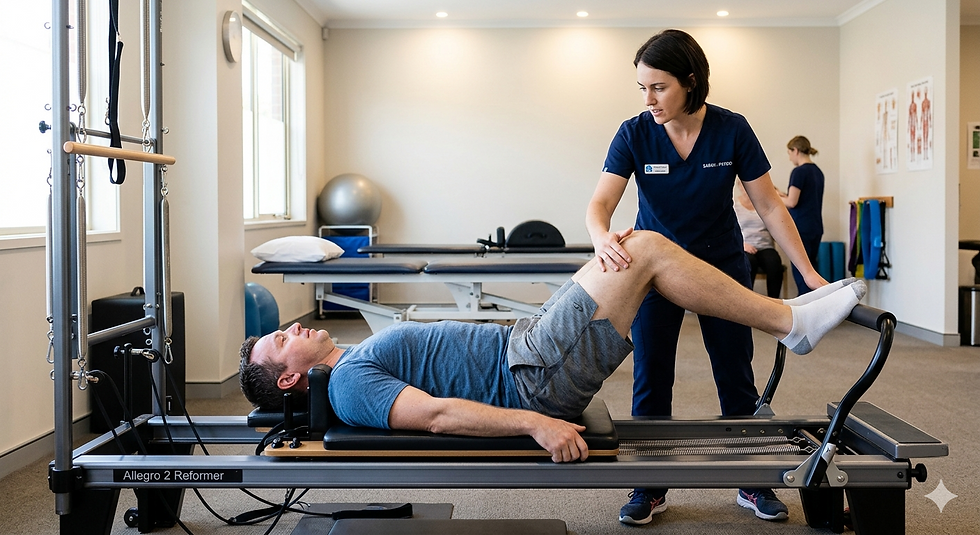
The good news is that postural pain responds well to targeted movement. Clinical Pilates, when delivered with physiotherapy oversight, is one of the most effective tools available for addressing the muscle imbalances and movement habits that contribute to postural discomfort.
This article explains how postural pain develops, what the research tells us about movement as a management strategy, and how clinical Pilates can help you move more comfortably in your daily life.
What Is Postural Pain?
The term postural pain is commonly used to describe discomfort that arises from how we hold and move our bodies over time. While posture itself is far more complex than simply sitting up straight, the patterns in which we load our joints and use our muscles throughout the day do have a genuine impact on pain and comfort.
Prolonged sitting, repetitive movements, sedentary work habits, and reduced physical activity all contribute to the kind of muscle imbalances that make postural pain more likely. Common areas affected include the neck and upper back, the lower back, the shoulders, and the thoracic spine.
It is important to note that postural pain is rarely caused by a single factor. It is usually the result of a combination of reduced load tolerance in certain muscle groups, altered movement patterns, and often a general reduction in physical activity over time.
Why Movement Matters
One of the most well supported findings in pain science over the past two decades is that movement is medicine. Avoiding movement in response to pain often leads to further deconditioning, which in turn reduces the body's capacity to tolerate load and increases sensitivity to discomfort.
This does not mean that any movement is appropriate for everyone at all times. The type, volume, and quality of movement matters. This is where physiotherapy assessment and clinical Pilates programming become valuable.
How Clinical Pilates Addresses Postural Pain
Clinical Pilates is different from general fitness Pilates in that it is prescribed and overseen by a physiotherapist who has assessed your specific presentation. Rather than following a generic class program, your movement program is designed around your needs, your movement patterns, and your goals.
For postural pain specifically, clinical Pilates targets several key areas.
Strengthening Underactive Muscle Groups
Postural pain is frequently associated with muscle groups that are not working as efficiently as they could be. The deep neck flexors, the thoracic extensors, the middle and lower trapezius, and the deep stabilisers of the lumbar spine are commonly underloaded in people who spend significant time at a desk or in repeated postures throughout the day.
Clinical Pilates exercises can be prescribed to specifically recruit and load these muscles in a controlled, progressive way. Over time, this improves the body's ability to sustain posture and reduce the fatigue related discomfort that many people associate with a long working day.
Improving Thoracic Mobility
The thoracic spine, which is the mid section of the spine running from the base of the neck to the lower back, is one of the most commonly stiff regions in people with postural pain. Reduced thoracic mobility places additional demand on the neck and lower back, which are more mobile by design and can become overloaded when the thoracic region is not contributing adequately to overall movement.
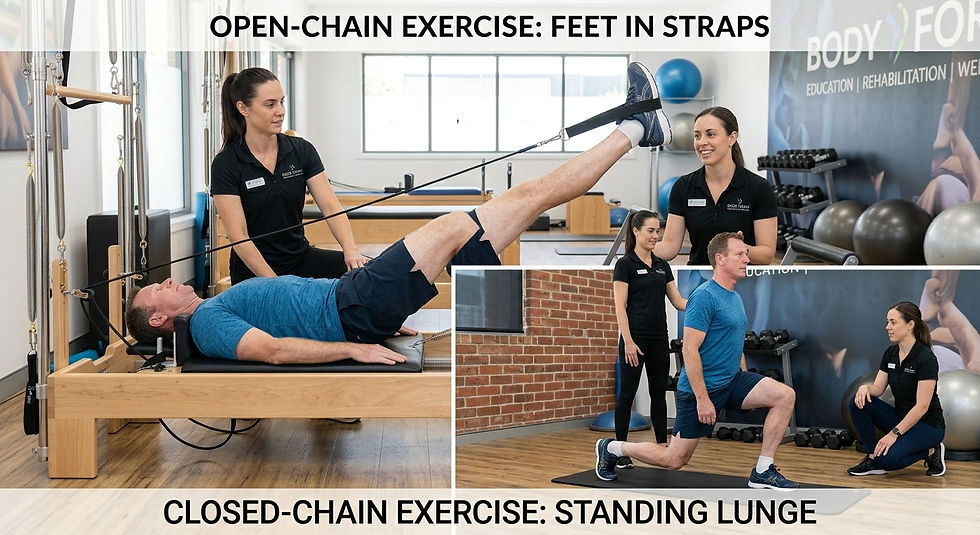
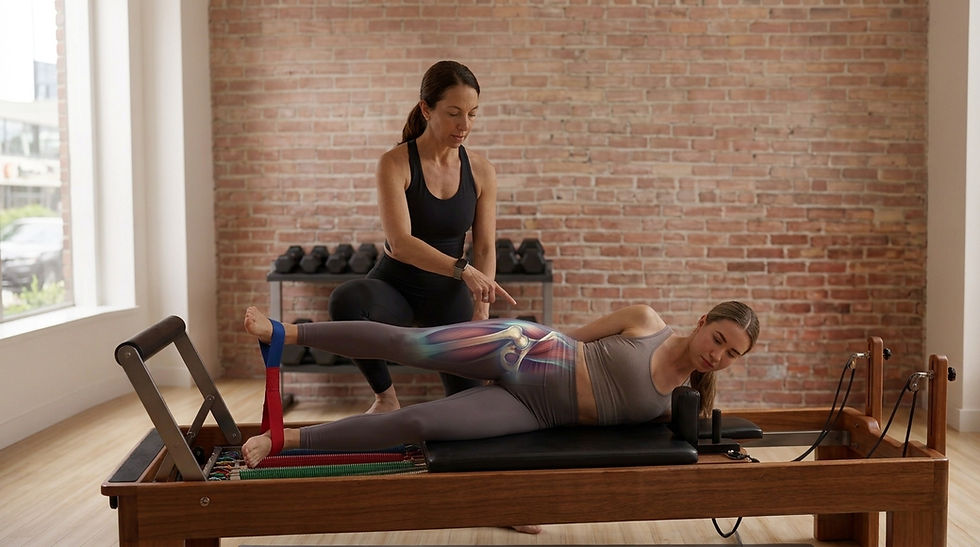
Pilates equipment, particularly the reformer, is well suited to thoracic mobility work. Exercises can be designed to gently load the thoracic spine into extension, rotation, and lateral flexion in ways that are safe and effective even for people who have not exercised in some time.
Building Better Movement Strategies
One of the most valuable aspects of a clinical Pilates program is the education component. Learning how to move more efficiently, how to distribute load across the body rather than concentrating it in one area, and how to build awareness of habitual movement patterns can make a significant difference to long term outcomes.
This is not about achieving perfect posture. It is about building the physical capacity and movement awareness to sustain comfortable, functional posture throughout your day.
What to Expect in a Clinical Pilates Session
A clinical Pilates session for postural pain typically involves a combination of the following:
Equipment based exercises on the reformer, trapeze table, or other Pilates apparatus
Targeted strengthening for specific muscle groups identified in your physiotherapy assessment
Mobility and flexibility work appropriate to your presentation
Movement education and home program guidance
Sessions are usually conducted in small groups or on an individual basis, depending on the studio. Class sizes in a clinical Pilates setting are kept deliberately small to allow for individualised attention and appropriate exercise modification.
Practical Takeaways
Postural pain is common and responds well to targeted, progressive movement
Clinical Pilates is physiotherapy led and individualised, which sets it apart from general fitness Pilates
Strengthening underactive muscles and improving thoracic mobility are key priorities for most people with postural pain
Avoiding movement is rarely helpful and often makes postural pain worse over time
A physiotherapy assessment before starting Pilates ensures your program is both appropriate and effective
Take the Next Step
If you are managing postural pain and are looking for a movement approach grounded in physiotherapy principles, a clinical Pilates assessment at Body Form is a good place to start. Our team works with you to understand your specific presentation and build a program that fits your life and your goals.

Comments