


Core Stability in Pilates: Common Myths and What the Evidence Actually Shows
"Pull your belly button to your spine." "Engage your core." "A strong core will fix your back pain."
These phrases are repeated across studios, gyms, and online platforms. They sound authoritative and have been passed along through generations of fitness instruction. But several of the most widely held beliefs about core stability are either oversimplified or no longer supported by current research.

Understanding what the evidence actually shows can help you move more confidently, train more effectively, and get better results from your Pilates practice.
What Is the Core?
The term "core" is used loosely across the fitness and wellness industry, and that lack of precision causes considerable confusion.
From a physiotherapy perspective, the core is not simply the abdominal muscles. It is a system of muscles that work together to manage pressure and load throughout the trunk. This system includes:
The deep abdominals (transversus abdominis)
The pelvic floor
The diaphragm
The deep spinal muscles (multifidus)
These muscles coordinate with one another and with the larger, more superficial muscles of the trunk, hips, and back. Core function is not about isolated tension. It is about coordination, timing, and appropriate response to load.
Common Core Stability Myths
Myth 1: You Should Always Draw Your Belly Button to Your Spine
The instruction to hollow the abdomen was taught widely for decades as a method of activating the transversus abdominis and protecting the spine. While this muscle plays an important role, hollowing in isolation can actually reduce trunk stability by decreasing pressure within the abdomen.
Current evidence suggests that for many activities, a degree of abdominal bracing creates more appropriate trunk stability than hollowing alone. The right approach depends on the task, the load being managed, and the individual.
Myth 2: Core Strength Directly Equals Back Pain Relief
This is one of the most persistent myths in movement and rehabilitation. The relationship between core muscle strength and back pain is far more complex than it may appear.
Research consistently shows that the timing and coordination of muscle activation matters more than raw strength. A person with strong, well-developed abdominal muscles can still experience significant back pain, while someone with relatively modest core strength may be entirely free from pain. Back pain is shaped by many factors including load tolerance, movement habits, sleep quality, stress, and overall physical capacity. Core training plays a role, but it is not a standalone solution.
Myth 3: A Flat Stomach Means a Strong Core
The shape of the abdomen tells us very little about core function. Visible abdominal tone is shaped primarily by body composition and genetics, not by how well the core musculature is performing its stabilising role.
Pursuing aesthetic flatness can lead to unhelpful habits, including holding the breath during movement, maintaining inappropriately high levels of sustained tension, and avoiding exercises that involve spinal movement. Over time, these habits can reduce functional stability rather than improve it.
Myth 4: More Core Work Is Always Better
There is no direct relationship between the volume of core training and clinical outcomes. Excessive core work can create rigidity in the trunk, which reduces the natural load transfer that occurs during whole-body movement.
In a carefully structured Pilates programme, core training is integrated within purposeful movement patterns. The core is trained in the context of how it actually functions: as part of a coordinated system responding to constantly changing demands.
Myth 5: Core Training Is Only for People with Back Pain
Core awareness and coordination are relevant for everyone, regardless of whether they have experienced pain. Active people, those navigating pregnancy, and those managing the physical demands of ageing all face changing demands on their trunk musculature. A thoughtful, progressive approach to core training is valuable across the lifespan.
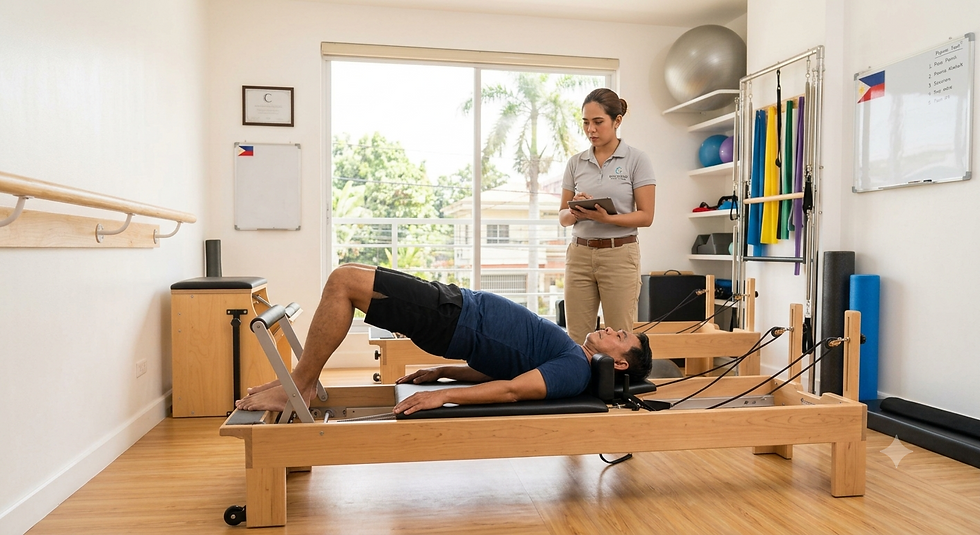
What Clinical Pilates Targets
In a setting guided by physiotherapy principles, core training is not about crunches, planks, or holding tension for prolonged periods. It is about:
Teaching appropriate muscle coordination during movement
Matching the level of core activation to the demands of each exercise
Progressing load and complexity gradually over time
Addressing individual differences in breathing patterns, pelvic position, and movement habits
This is why clinical Pilates produces different outcomes from a general fitness class. The focus is always on function, not form in isolation.
Practical Takeaways
"Engage your core" is not a precise or universally helpful instruction. What the core needs to do depends entirely on the task at hand.
Abdominal hollowing is one tool, not a universal principle. Bracing and coordination strategies are equally important parts of the picture.
Back pain and core strength are not always directly related. A comprehensive approach addresses load tolerance, movement habits, and overall physical capacity.
Abdominal appearance is not a reliable indicator of core function.
Core training works best when it is integrated within purposeful, progressive movement, not practised in isolation.
Looking for Clinical Guidance?
At Body Form, our Pilates programmes are guided by physiotherapy principles and designed around how your body actually works. If you would like to understand more about how your core functions and how to train it effectively, we would love to support you.


Comments