Body Form® Education
How Do I Build a Career as a Pilates Instructor?
Build the skills first. Choose where you want to teach. Keep learning.
The short answer
Build the Skills First. The Career Follows.
Written by Kira-Leigh Rule, Physiotherapist and Founder of Body Form® Education. Last updated 14 November 2026.
You build a Pilates teaching career in stages. Choose a qualification that matches where you want to teach, complete it, check what your employer and insurer require, then keep learning. Body Form® Education builds the teaching skills: 250+ hours for one certification and 365+ hours for Mat + Reformer, including 70 apprentice hours per discipline, 30 of them practice teaching. Host studios may recruit or recommend graduates, but Body Form® Education does not guarantee employment.
| At a glance | What happens |
|---|---|
| 1. Decide where you want to teach | A Pilates studio, a fitness facility, a rehab or health setting, or your own business |
| 2. Choose your qualification | Mat, Reformer or the Mat + Reformer Double Certification, Hybrid or Fully Online |
| 3. Train | 17 modules, practical training, apprentice hours, assessments and a Final Theory Examination within 8 months of access. Many students finish between 4 and 6 months |
| 4. Check local requirements | What your employer, insurer and any association require where you plan to teach |
| 5. Start teaching, within scope | Safe teaching and adaptation, with referral when a client needs clinical input |
| 6. Keep learning | CPD certifications and 1:1 mentoring |
After the course
After You Certify: What the Certificate Allows
Your certificate shows you completed a Physio-led teacher training program and passed every assessment. It is the same certificate whether you studied Hybrid or Fully Online. You may apply for professional teaching work after all requirements are passed, the course is paid in full and the certificate is issued. Practice teaching before then stays unpaid.
What the certificate does not do is decide who employs you or insures you. Studios, fitness facilities, insurers and associations each set their own rules, and they differ by country. First Aid and insurance are not included in tuition.
| Ask | What to find out before you plan |
|---|---|
| The studio or facility | Which qualifications they accept, whether they ask for First Aid, how they audition or trial new instructors and what they expect you to bring |
| Your insurer | Whether your qualification and the classes you plan to teach are covered, and what cover costs where you live |
| Your association or registration body | Whether you need to join, register or log CPD hours to teach under its name |
| The country you plan to teach in | Whether local rules apply. The teach Pilates internationally page and the recognition and careers FAQ explain what we can and cannot say |
The full accreditation statement, and how to verify it, is on the accreditation page. Recognition is one input to an employer's decision, not a guarantee of it.
While you train
The Skills the Training Builds
A teaching career needs more than good exercises. The 17 modules are designed and directed by a Physiotherapist, and they cover the parts of the job that sit around the movement itself.
Programming and Class Design
- Module 7
- Lesson planning and sequencing, progressive overload and layering
- Warm-ups and cool-downs, flow creation, programming for fatigue, props and music
Cueing and Communication
- Module 8
- Verbal, visual and tactile cueing
- Motor learning, pre-cueing, language selection and client communication
Injuries, Pregnancy and Special Populations
- Modules 6, 9 and 10
- Movement assessment, injury screening, red flags, exercise modification and referral pathways
- Pregnancy and postnatal Pilates, older adults, children and disability
Building Your Pilates Career
- Module 14
- Employment, CV and interview preparation
- Social media, networking, preventing burnout and professional growth
Client Care and Professional Practice
- Modules 15 and 16
- Client education, behaviour change, professional communication and building trust
- Duty of care, risk management, health and safety, legal responsibilities and professional standards
Customer Service and Business Skills
- Module 17
- Client retention and professional presentation
- Communication and studio professionalism
See every module on the curriculum page and the thinking behind it in The Body Form® Method.
The standard we train to
The Real-Body Ready Instructor
Body Form trains you to teach any body with confidence. The standard we train to is that you observe, identify, select, cue, adapt and refer.
- 01
Observe
Observe how a client moves.
- 02
Identify
Identify common compensations.
- 03
Select
Select the right regression, progression or alternative.
- 04
Cue
Cue for position, load, range and intent.
- 05
Adapt
Adapt for injury, pregnancy, postnatal recovery and mixed ability.
- 06
Refer
Know when to refer or seek clinical input.
Body Form education supports safe teaching and adaptation. It does not qualify graduates to diagnose, treat or provide clinical care.
Class design
You write the classyou will be employed to teach.
Programming
Class Design: Plan It, Teach It, Adjust It
Every discipline ends with a programming assessment, so the work you hand in is a full class, planned and taught.
2 Written Programming Assessments
- Per discipline
- A new 45 to 50 minute class plan each time
- Sequencing, progressions, layering and modifications on paper
2 Practical Teaching Assessments
- Per discipline
- You teach the class and film one continuous, unedited take
- Assessment 1 needs at least 2 participants, Assessment 2 at least 4
- Assessment 2 includes a simulated third-trimester pregnancy and a shoulder or back injury
What Is Marked
- Programming and exercise selection
- Cueing and teaching technique
- Modifications and class structure
- How well you apply what you have learnt
That is the skill the assessments test: build a class that suits the people in the room, cue it clearly and adapt it when someone needs something different. The rules, filming requirements and deadlines are on the assessments and apprentice hours page, and practical training explains what happens on a practical day.
Different settings
Where You Can Teach
Where you teach shapes which qualification suits you. These are the settings our courses are built around.
| Setting | What it asks of you | Where the training points |
|---|---|---|
| Pilates studio | Planning and teaching full group classes, and cueing a room of different bodies | Mat, Reformer or the Mat + Reformer Double Certification. Assessment 2 has you teach a class to at least 4 people at once. The Double and the Full Comprehensive give the widest entry-level foundation and the most employment flexibility. That is flexibility, not a promise of work |
| Fitness facility | Functional strength patterns, props and class formats built for fitness-style programs | Mat and Reformer teach squat, lunge, push, pull and hinge patterns with props such as dumbbells. Barre uses ballet principles in a fitness class setting (the Barre qualification has no formal external recognition). Studio Equipment + Clinical Pilates assesses a filmed group fitness circuit |
| Rehab and health settings | Screening, modifying and knowing when to refer, within scope | Studio Equipment + Clinical Pilates builds on rehabilitation reasoning. Health professionals can read Pilates teacher training for Physios and health professionals |
| Your own business | Client retention, professional presentation, studio professionalism and the business side of teaching | Modules 14 and 17, plus career and business topics in 1:1 mentoring. The Full Comprehensive Clinical Pilates Teacher Training (450+ hours, Fully Online with onsite training at selected locations) covers Mat, Reformer and Studio Equipment in one pathway |
Host Studios
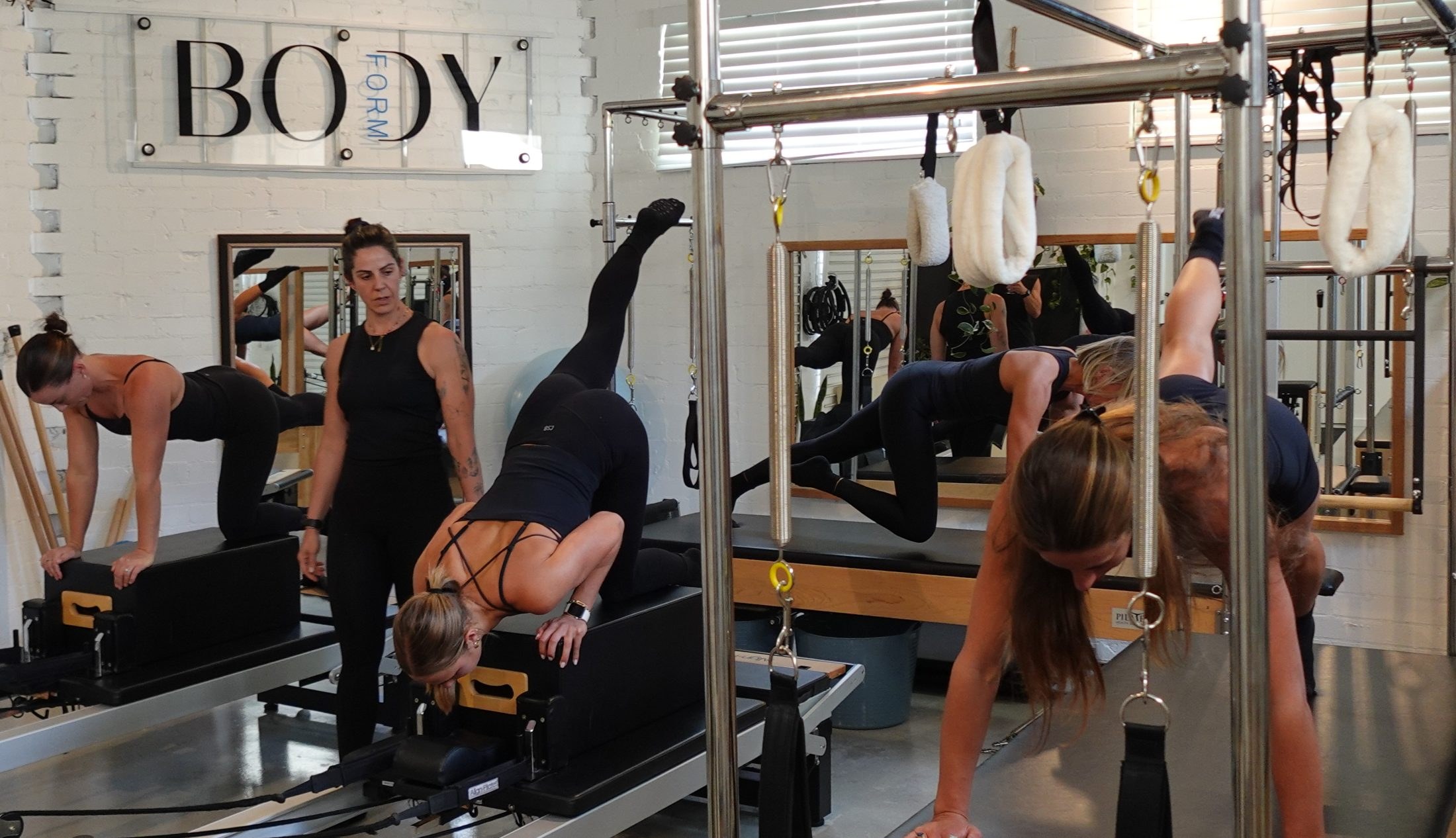
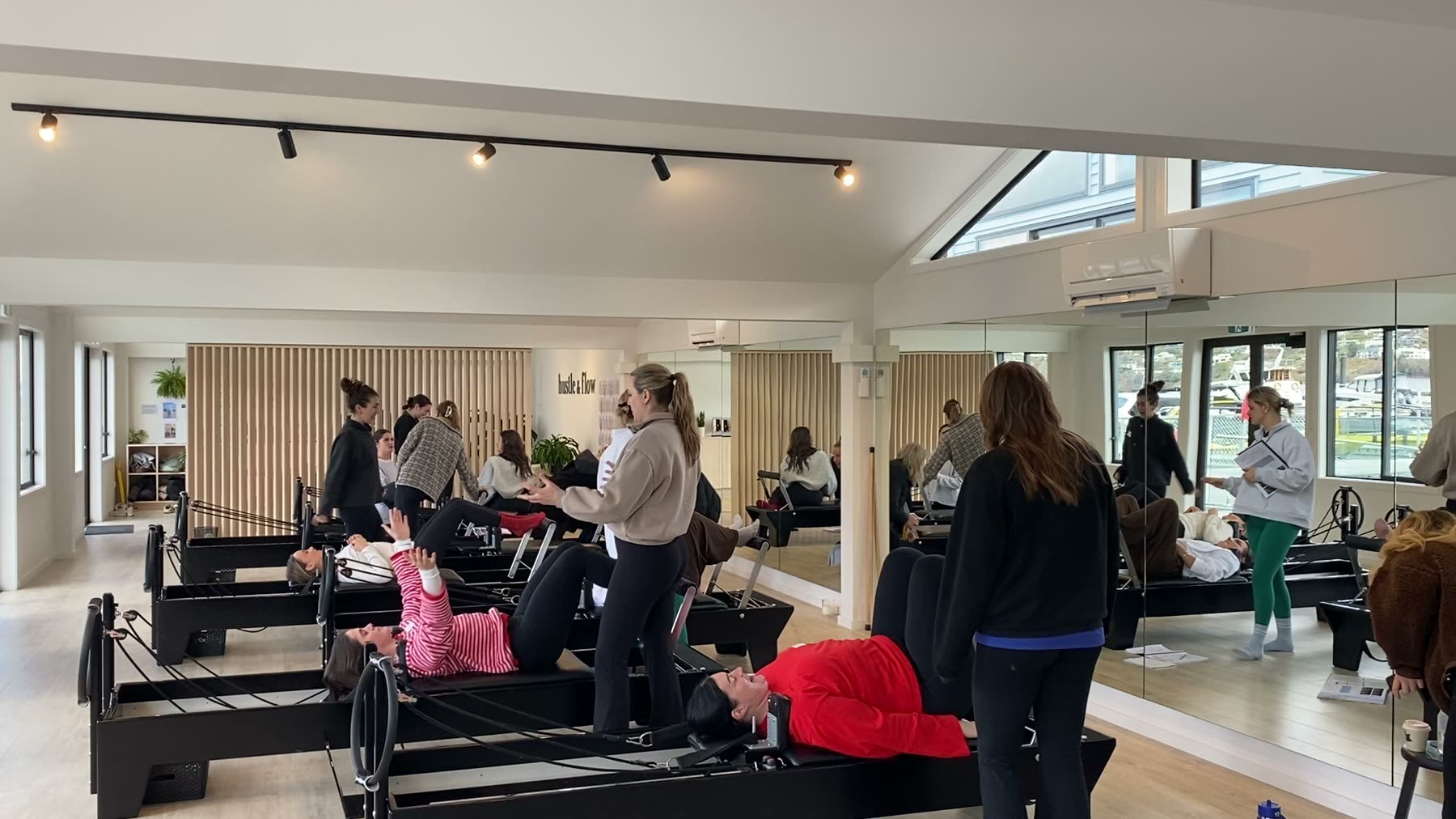
Hybrid practical days run in host studios across 18 cities, with a local Master Trainer. You spend your practical days inside a Pilates studio, teaching real exercises to a partner and getting live feedback. See locations and dates for where intakes run.
Running a Studio
I have opened and grown multiple Pilates studios, so I know what a studio needs from its instructors: people who can program with purpose, modify confidently and communicate professionally. If you own a studio, you can also host an intake or train your team with studio CPD workshops.
Keep learning
Keep Learning: CPD and Mentoring
Teacher training gives you the foundation. CPD is how you keep growing as your clients and classes change. Every certification is online and self-paced, with an educator assessment and a Body Form® Education Certificate of Completion. CPD does not replace an entry-level teacher training qualification.
| CPD certification | Who it helps |
|---|---|
| Strength Pilates Principles | Instructors who want evidence-based strength training inside Mat and Reformer classes |
| Advanced Injury Modification | Instructors who want certainty with injured clients: our flagship CPD |
| Comprehensive Pre and Postnatal Pilates | Instructors teaching pregnant and postnatal clients |
| Applied Anatomy and Biomechanics | Instructors who want anatomy to change how they teach and program |
| Spinal Anatomy and Injuries | Instructors with back pain and spinal condition clients |
| Specialist Third Trimester Pilates | Instructors with clients in the final stage of pregnancy |
The Programming & Cueing Mastery Certification is coming soon. See all CPD certifications.
1:1 Mentoring
Separate one-on-one mentoring is available. It is a one-hour private online session with me, for instructors who are already certified and want more confidence, clarity and depth. Sessions are tailored to you: injury management and modifications, prenatal and postnatal Pilates, strength training principles, class planning and programming, or career and business mentoring. See 1:1 mentoring.
Honest limits
What I Cannot Promise
I cannot promise you an income, a visa, insurance cover or professional registration, and I will not quote salary figures, because the rules and the work differ by country and by employer. Check what applies where you plan to teach.
If you are choosing between providers, ask each one the same questions: our guide to choosing a course lists them, and trust, quality and student protection shows how we answer them ourselves.
Questions
What does a Pilates teaching career actually look like?
It starts with a qualification, then real teaching hours, then a decision about where you want to teach: a Pilates studio, a fitness facility, a rehab or health setting, or your own business. Most instructors keep learning as their clients and classes change, which is where CPD and mentoring come in.
Can I start teaching before I graduate?
Practice teaching before graduation must stay unpaid. You may apply for professional teaching work after all requirements are passed, the course is paid in full and the certificate is issued.
Will Body Form® Education get me a job?
No provider can honestly promise that, and we do not. What the training builds is the skill set you take into an interview or a studio trial: planning a class, cueing it, adapting it and knowing when to refer. Where you teach, and whether a studio hires you, is between you and that studio.
Which course gives me the most options?
The Mat + Reformer Double Certification and the Full Comprehensive Clinical Pilates Teacher Training give the widest entry-level foundation and the most employment flexibility, because you are qualified to teach more than one discipline. It is flexibility, not a promise of work. If you are not sure, the guide to choosing a course walks through the decision.
Can I teach in another country?
Graduates are on six continents, but no provider can guarantee acceptance by every employer, insurer, professional body or country. Check with your employer or insurer first. The teach Pilates internationally page has more.
Is there ongoing support after I graduate?
Yes. You can keep learning through CPD certifications, and separate one-on-one mentoring is available to instructors who want more personalised guidance. The Fully Online course is self-paced and does not include scheduled one-on-one mentoring.
I am changing careers. Where do I start?
There is no previous Pilates, anatomy or fitness qualification required to start. The career changers guide covers the worries that come with a change, from time to confidence.
Do I need my own insurance and First Aid?
First Aid and insurance are not included in tuition. Requirements vary by employer and insurer, so ask the studio or facility you plan to teach in what they need from you.
Accredited and Recognised
Body Form® Education teacher training is ITTAP accredited through the Pilates Method Alliance, mapped with AUSactive in Australia, and audited and verified by Pilates Aotearoa in New Zealand. This applies whether you complete Mat, Reformer or the full comprehensive pathway. Employment, insurance, visa and professional registration requirements vary by country and employer, so check the requirements where you plan to teach. CPD certifications are continuing education for qualified instructors.
Recognition and accreditation