Body FormEducation Free guides

Body Form Education

Curriculum:
17 Online Modules

The 17 physiotherapy-led online modules in Body Form Education's Pilates teacher training, plus the exercise curriculum for Mat, Reformer, Studio Equipment and Barre.

The 17 modules

  • Body Form Education's online theory is 17 physiotherapy-led modules (136+ hours) that are the same for Mat, Reformer, Studio Equipment and Barre: anatomy, movement assessment, programming, cueing, pregnancy and postnatal, special populations, career and business skills.
  • Practical education then applies the theory to each exercise on the equipment you are certifying in.

Real students, real practical days

Inside a Mat Intake

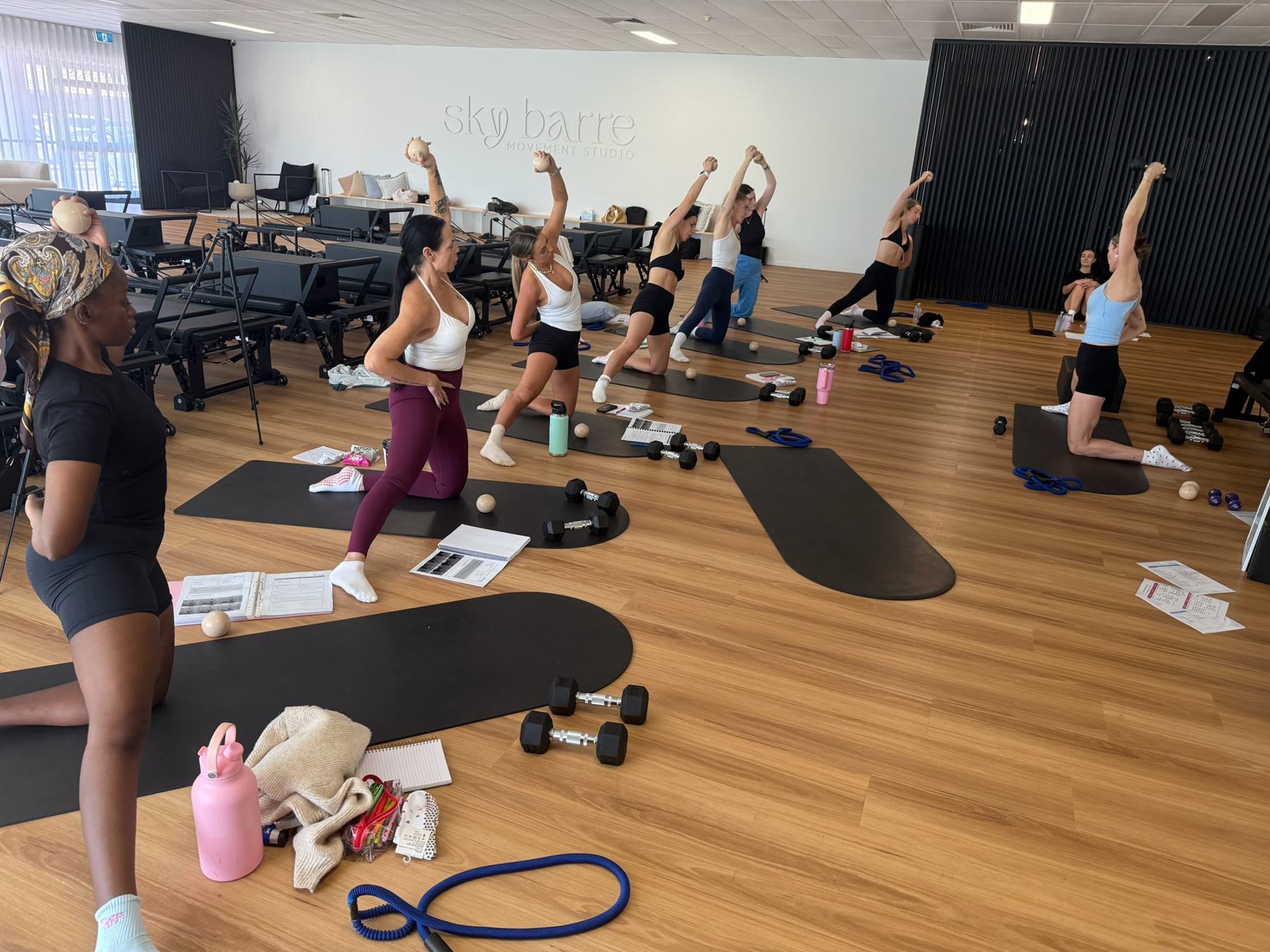
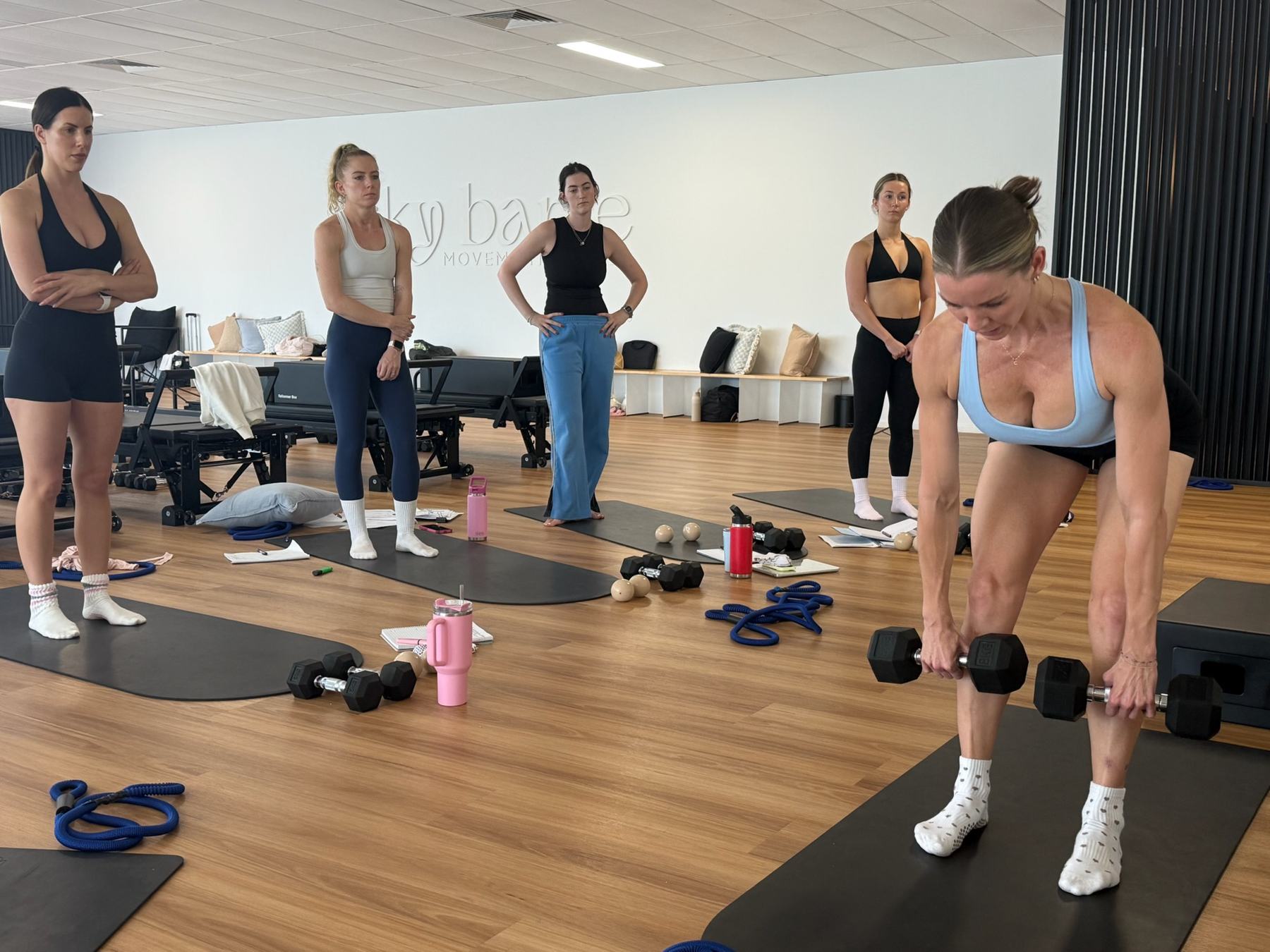
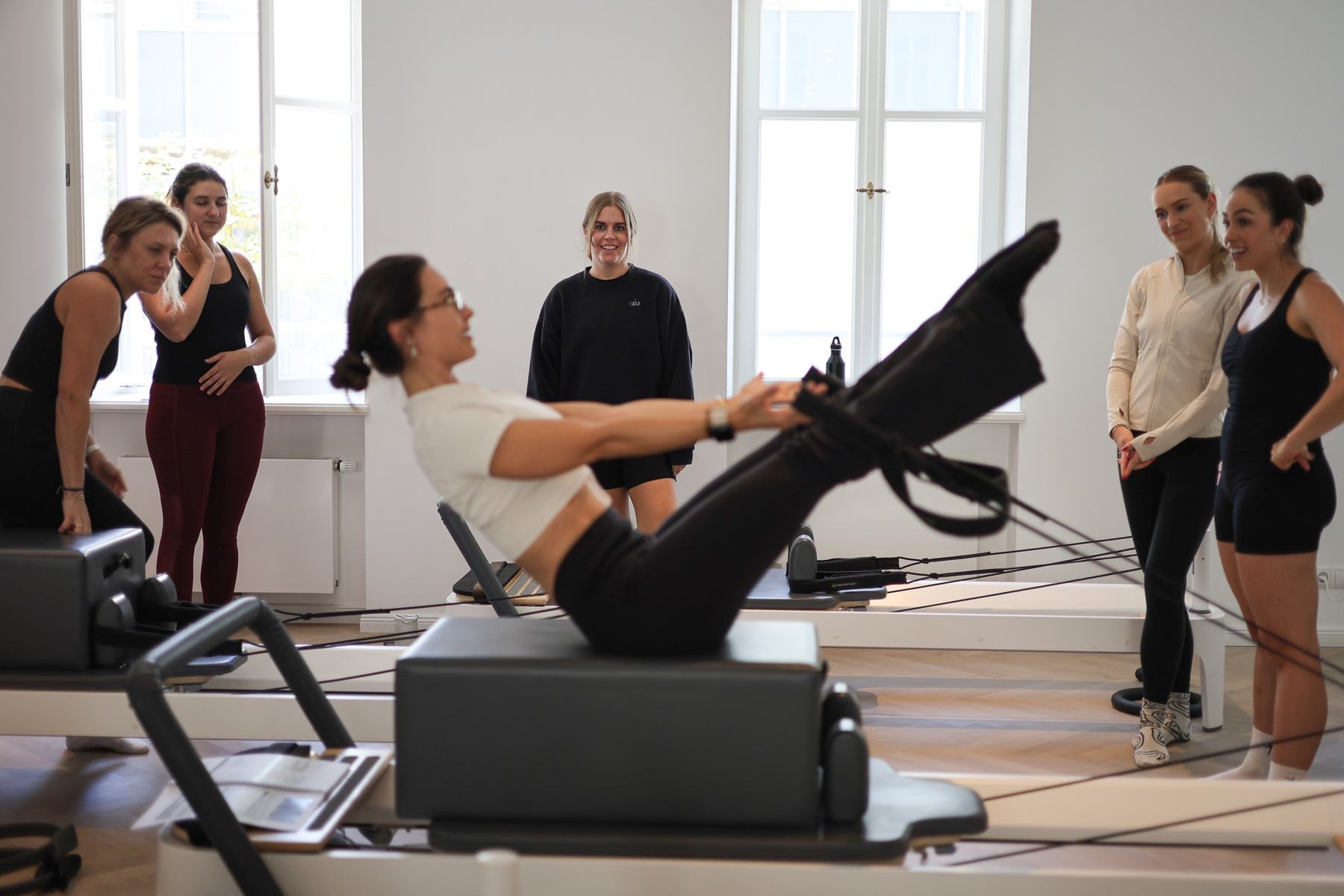
Mat days are hands-on: teaching practice, cueing, observation and live feedback with your Master Trainer, on the floor with your cohort.

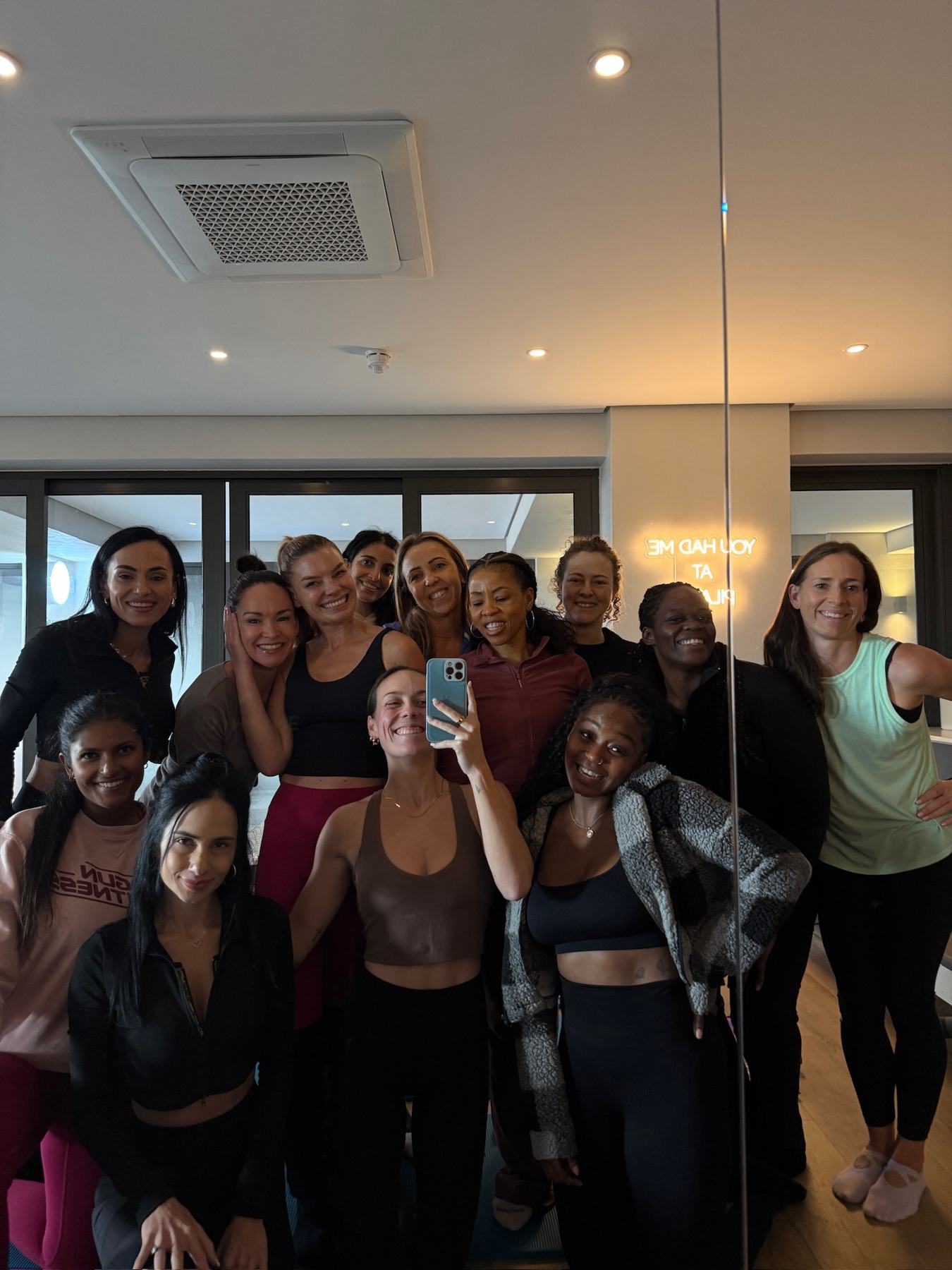
  • A recent Body Form intakeRecorded at a recent intake
  • Physio-ledTaught by experienced educators

Find an intake Free guides

The format

How You'll Learn

In person

Practical Days

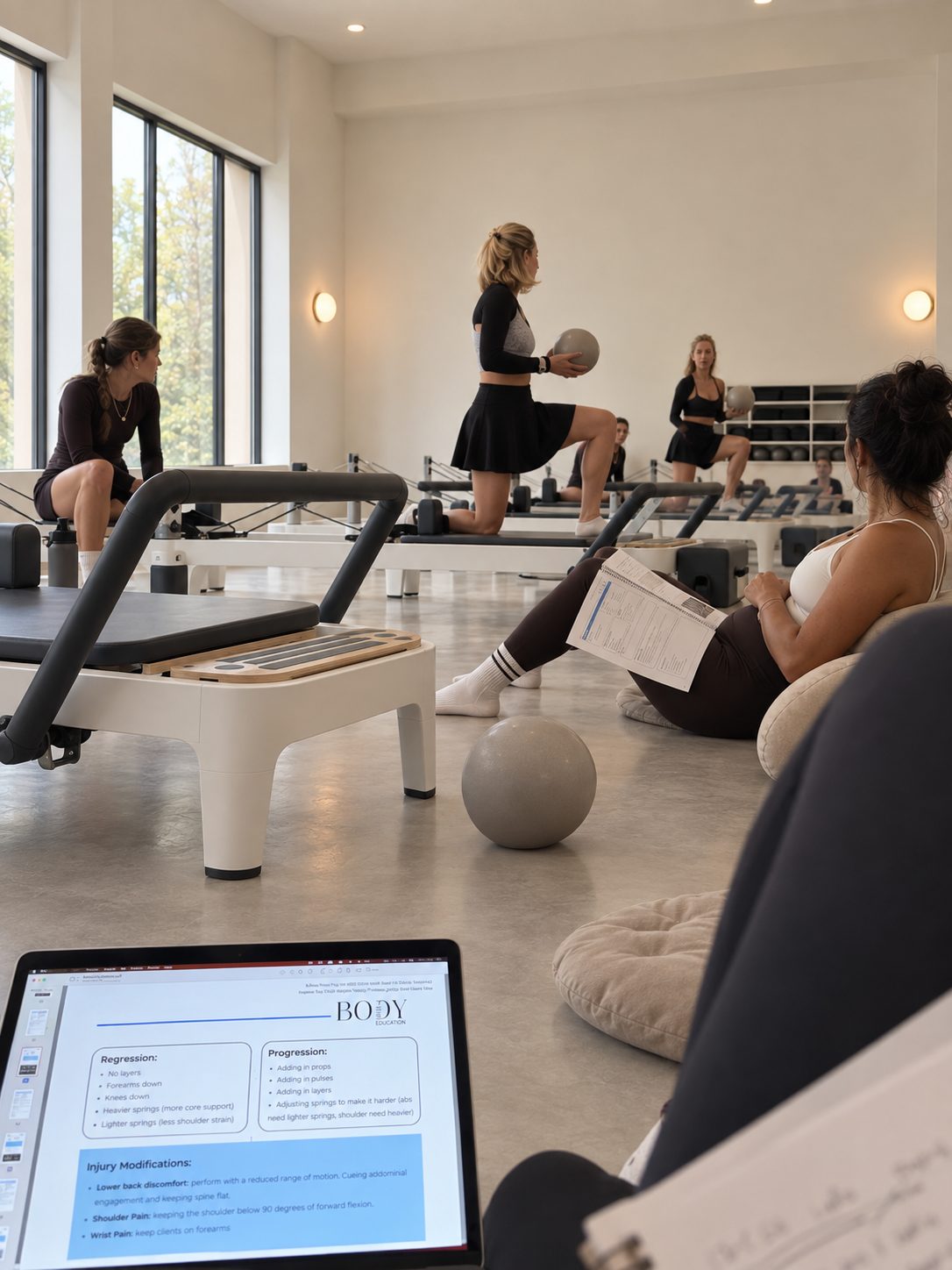
Hands-on days on the mat and apparatus with your Master Trainer, reviewing what you have learnt online and coaching real bodies with live feedback. Ask questions in real time and build friendships that last.
Online

Self-Paced Theory

Work through 17 modules and the exercise libraries in your own time, revisit them whenever you need, and show you are studio ready through your assessments.

The big picture

17 Modules At a Glance

Foundations

01Foundations of Professional Pilates Teaching
02Anatomical Terminology and Body Systems
03Bones, Muscles, Joints, Ligaments and Tendons
04Range of Motion and Flexibility

Clinical Thinking

05Spinal Anatomy, Core and Trunk Function
06Movement Assessment, Injuries and Exercise Modification

Teaching Craft

07Programming and Class Design
08Cueing and Communication

Different Clients

09Pregnancy and Postnatal Pilates
10Special Populations

Body Systems

11Breathing and Cardiopulmonary Function
12The Nervous System and Motor Control

Context and Career

13The History and Evolution of Pilates
14Building Your Pilates Career
15Client Care and Education
16Health, Safety and Professional Practice
17Customer Service and Business Skills

The 17 Modules

Module 1: Foundations of Professional Pilates Teaching
  • Course orientation
  • professional expectations
  • scope of practice
  • student success framework
  • assessment preparation
  • professional ethics
Module 2: Anatomical Terminology and Body Systems
  • Anatomical position and terminology
  • planes and directions of movement
  • body systems
  • functional application to Pilates
Module 3: Bones, Muscles, Joints, Ligaments and Tendons
  • Bone structure
  • joint classifications and actions
  • muscle anatomy and contractions
  • tendons
  • ligaments and fascia
  • functional movement
Module 4: Range of Motion and Flexibility
  • Mobility and flexibility
  • active and passive range
  • factors influencing movement
  • improving movement quality
Module 5: Spinal Anatomy, Core and Trunk Function
  • Spinal anatomy
  • core and trunk biomechanics
  • neutral spine and imprint
  • intra-abdominal pressure
  • core stability
Module 6: Movement Assessment, Injuries and Exercise Modification
  • Movement assessment
  • common dysfunctional patterns
  • injury screening
  • clinical reasoning
  • contraindications and red flags
  • exercise modification
  • referral pathways
Module 7: Programming and Class Design
  • Programming principles
  • lesson planning and sequencing
  • progressive overload
  • layering
  • warm-ups and cool-downs
  • flow creation
  • programming for fatigue
  • props and music
Module 8: Cueing and Communication
  • Verbal
  • visual and tactile cueing
  • motor learning
  • pre-cueing
  • language selection
  • client communication
  • combining cueing strategies
Module 9: Pregnancy and Postnatal Pilates
  • Pregnancy physiology
  • trimester considerations
  • pelvic floor
  • abdominal separation
  • exercise and equipment modification
  • safe programming
  • postnatal return to movement
Module 10: Special Populations
  • Older adults
  • children
  • disability
  • communication
  • exercise adaptation
Module 11: Breathing and Cardiopulmonary Function
  • Breathing mechanics
  • heart and lungs
  • breath cueing
  • applying breathing to Pilates
Module 12: The Nervous System and Motor Control
  • Nervous system anatomy
  • motor control
  • movement coordination
  • functional application
Module 13: The History and Evolution of Pilates
  • The origins of Pilates
  • the original repertoire
  • how the industry and teaching environment have evolved
Module 14: Building Your Pilates Career
  • Employment
  • CV and interview preparation
  • social media
  • networking
  • preventing burnout
  • professional growth
Module 15: Client Care and Education
  • Client education
  • behaviour change
  • professional communication
  • building trust
Module 16: Health, Safety and Professional Practice
  • Duty of care
  • risk management
  • health and safety
  • legal responsibilities
  • professional standards
Module 17: Customer Service and Business Skills
  • Client retention
  • professional presentation
  • communication
  • studio professionalism

Mat Exercise Curriculum

Functional core and spinal foundations (bridges, dead bug, standing rolldown), planking and weight-bearing strength, upper-body push and pull, lower-body functional strength, side-lying, kneeling and prone work, plus the complete original Mat repertoire from the Hundred to Control Balance, and then beyond it into the functional, dynamic movement seen across Pilates today (squat, lunge, push, pull and hinge, with props such as dumbbells).
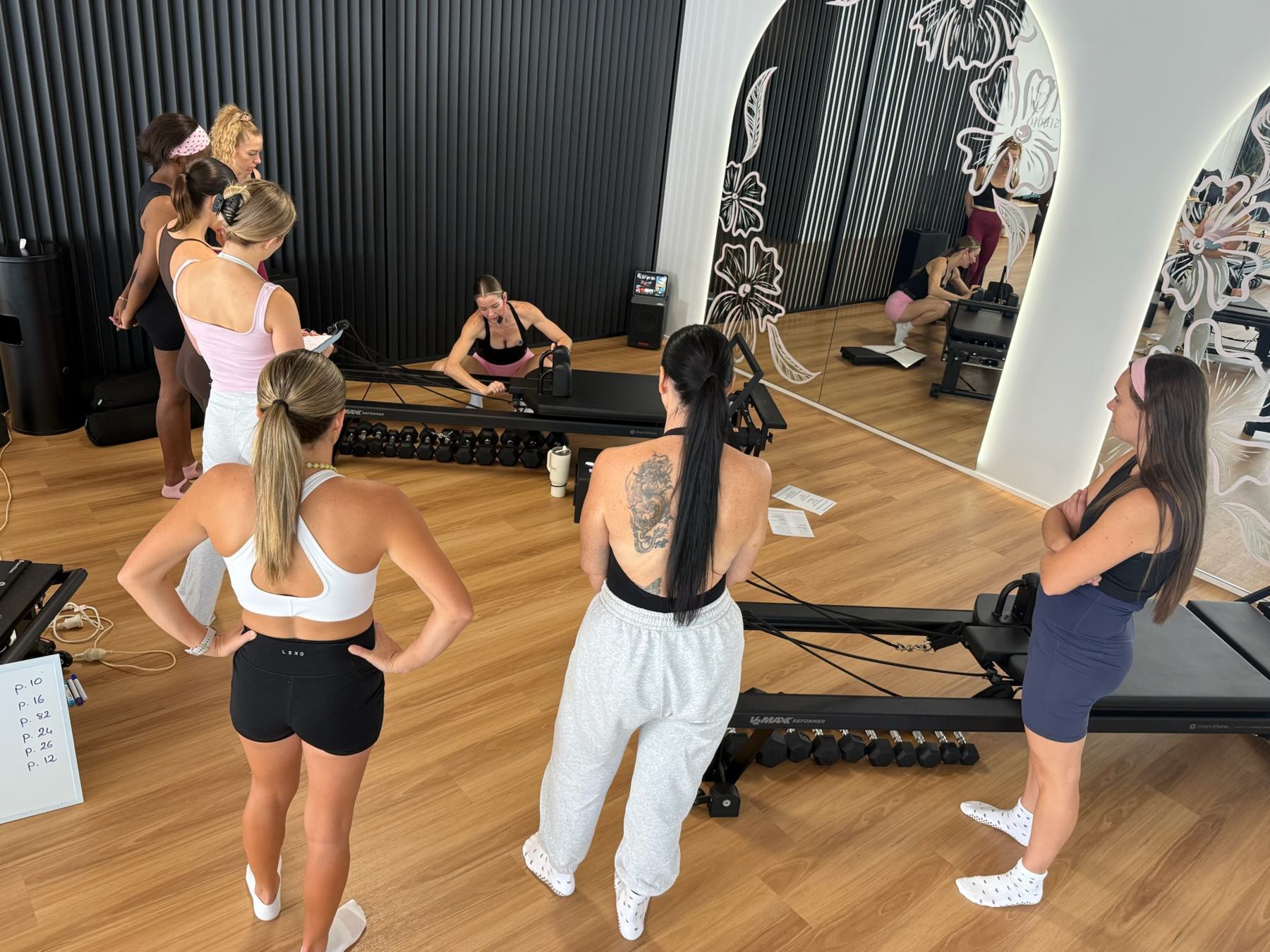
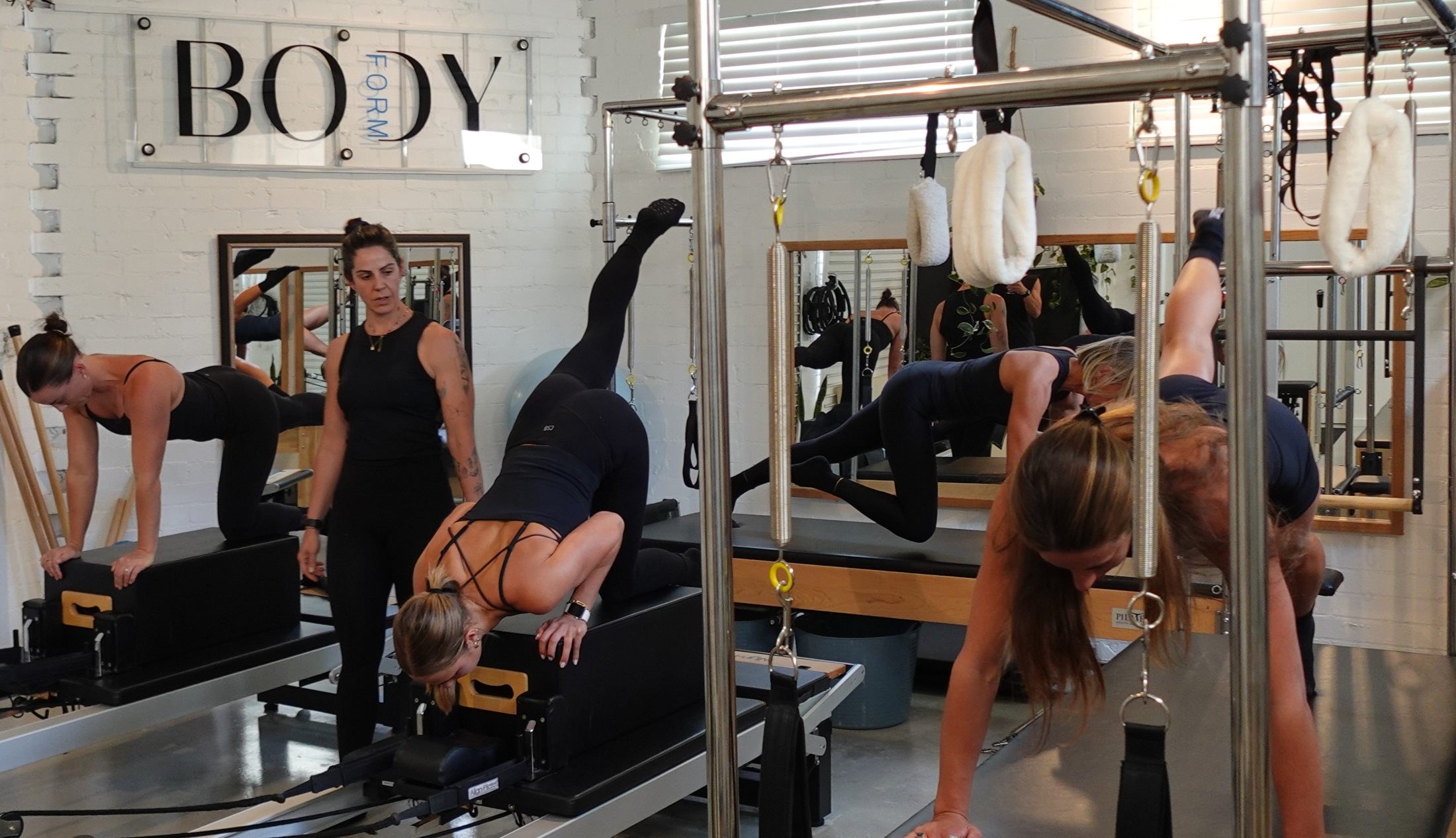
Students and trainer working on Reformers during a Body Form Education intake
Practical days
Students and trainer working on Reformers during a Body Form Education intake
Hands-on coaching
Students and trainer working on Reformers during a Body Form Education intake
Real classes

Reformer Exercise Curriculum

Footwork, supine foundations and core, planking and integrated strength, box and trunk programming, standing lower-body strength, upper-body push and pull in straps, dumbbell integration, jumpboard programming, the complete original Reformer repertoire from Up Stretch to Arabesque, and then beyond it into functional, dynamic movement patterns.

Studio Equipment and Barre

Studio Equipment covers the Trapeze Table (Cadillac), Wunda Chair, Ladder Barrel and Spine Corrector, taught with the same method: purpose, setup, cueing, compensations, progressions, injury and pregnancy modifications and programming. Barre covers foundational to advanced Barre exercises with functional strength programming.

The Body Form way

Learn to think like an instructor,not to follow choreography.

You graduate with

Skills That Set You Apart

  • Pilates fundamentals
  • Applied anatomy
  • Safe, inclusive teaching
  • Class planning
  • Progression and regression
  • Communication and coaching
  • Technique and correction
  • Professional confidence

Apprentice hours, for each discipline

10Hours of observation
30Hours of self-practice
30Hours of practice teaching

Knowing Pilates and teaching Pilates are different skills. This is where the second one is built.
How Every Exercise Is Taught

  • Name and context
  • Clear demonstration
  • Setup, alignment and equipment
  • Technique and cueing
  • Real-client compensations
  • Regressions
  • Progressions and layering
  • Injury modifications
  • Pregnancy and postnatal modifications
  • Programming integration
  • Purposeful prop use
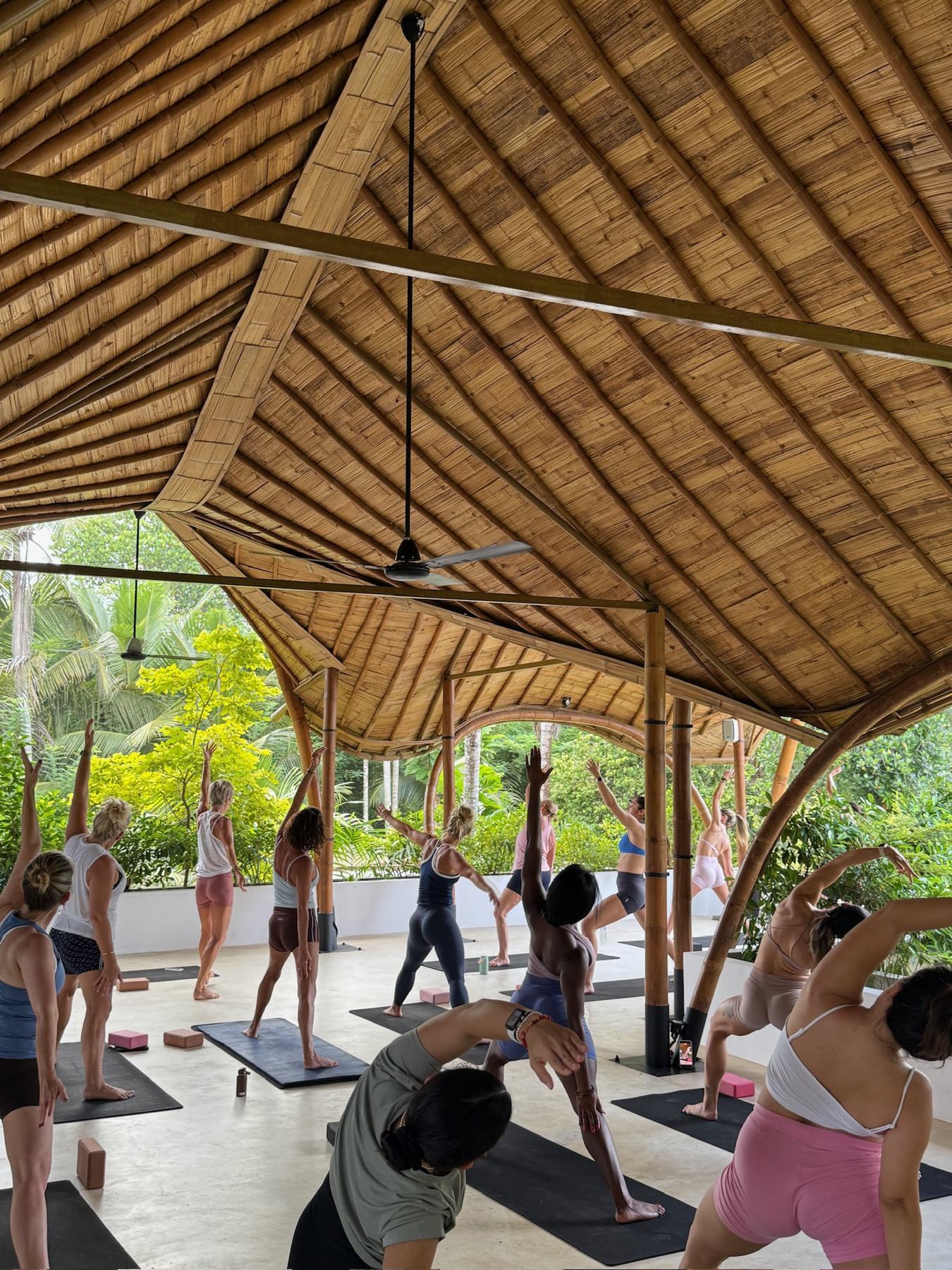
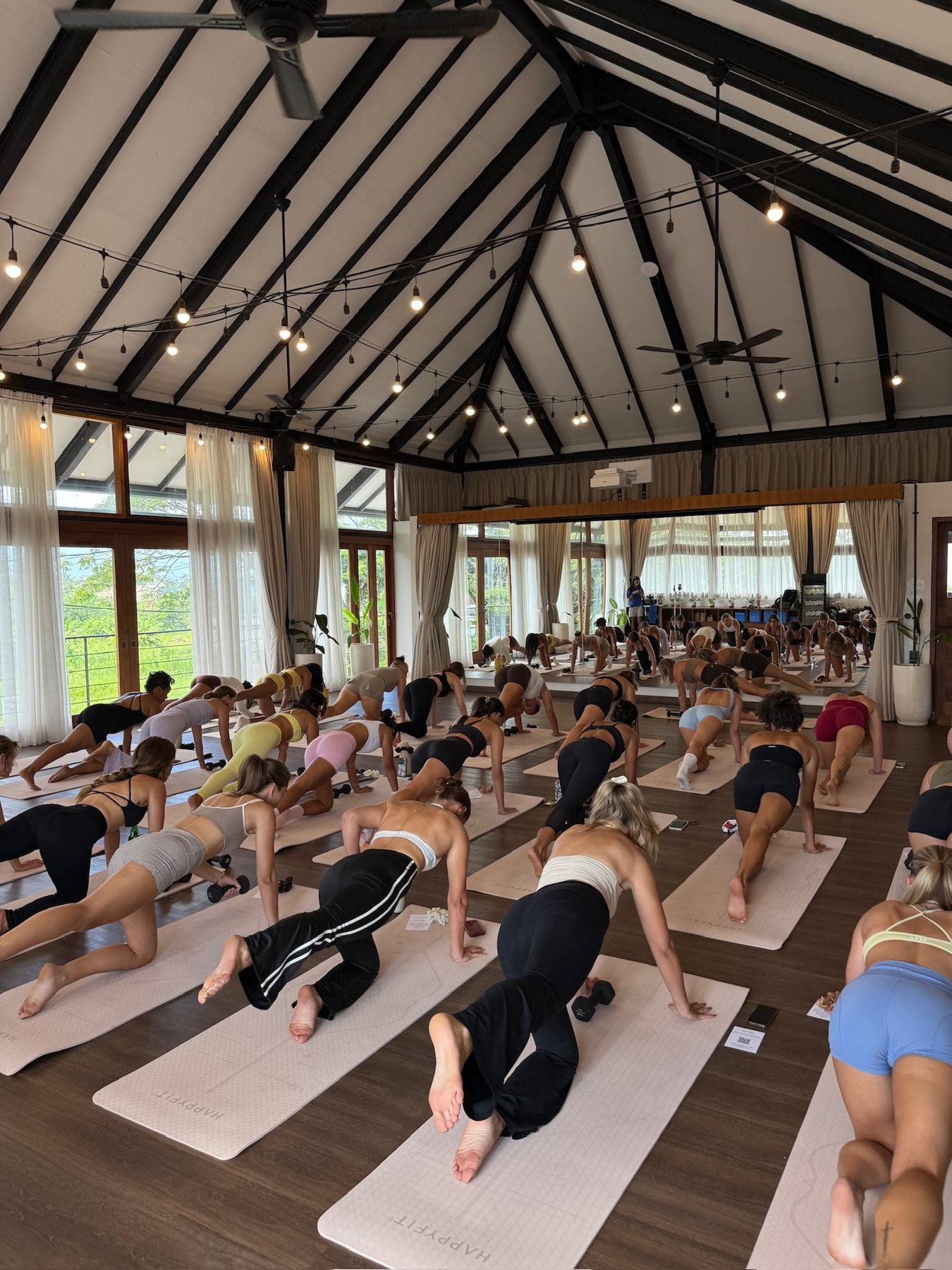
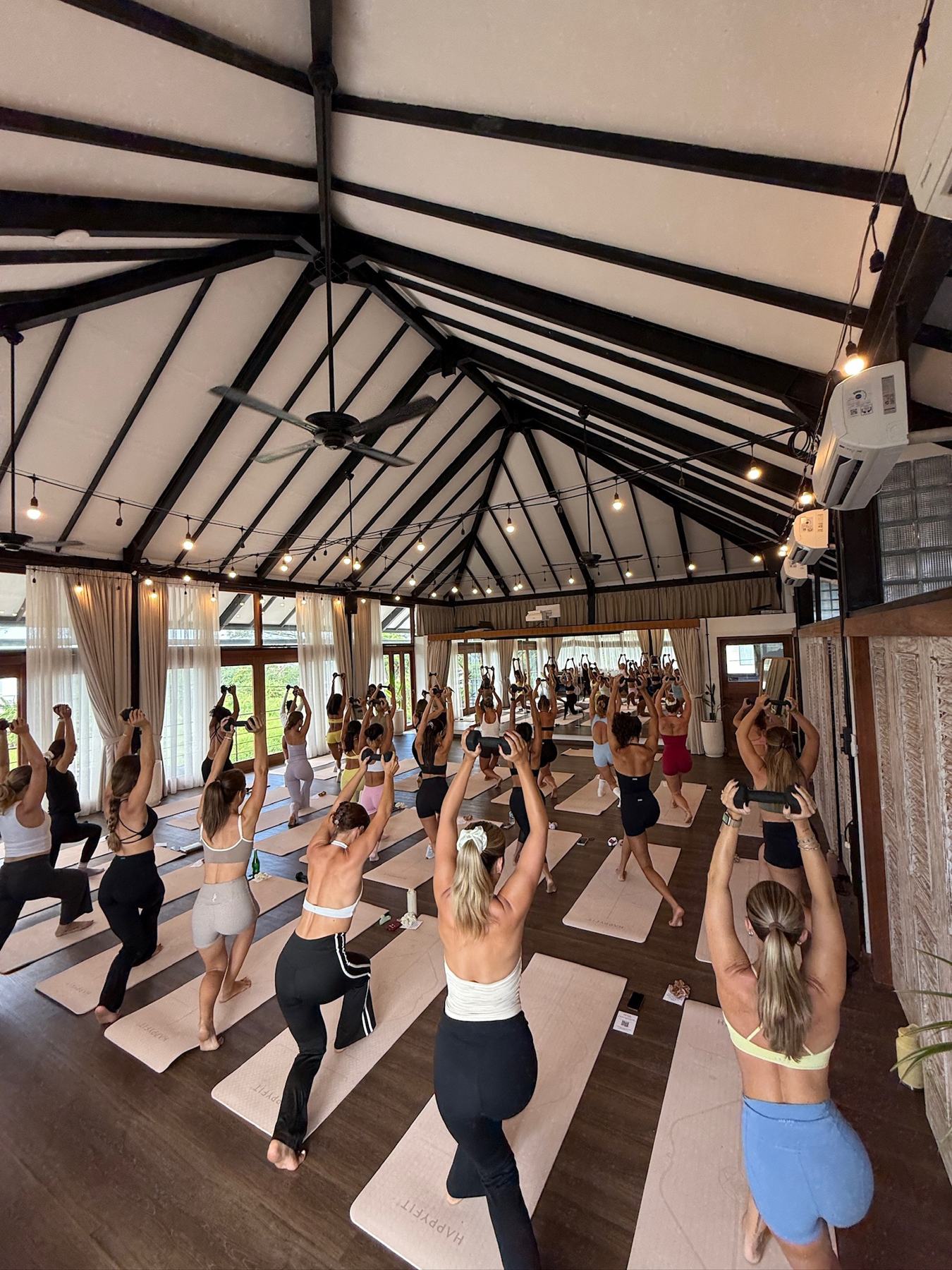
Students practising Mat Pilates on a Body Form Education practical day
Practical days
Students practising Mat Pilates on a Body Form Education practical day
Hands-on coaching
Students practising Mat Pilates on a Body Form Education practical day
Real classes

Your study materials

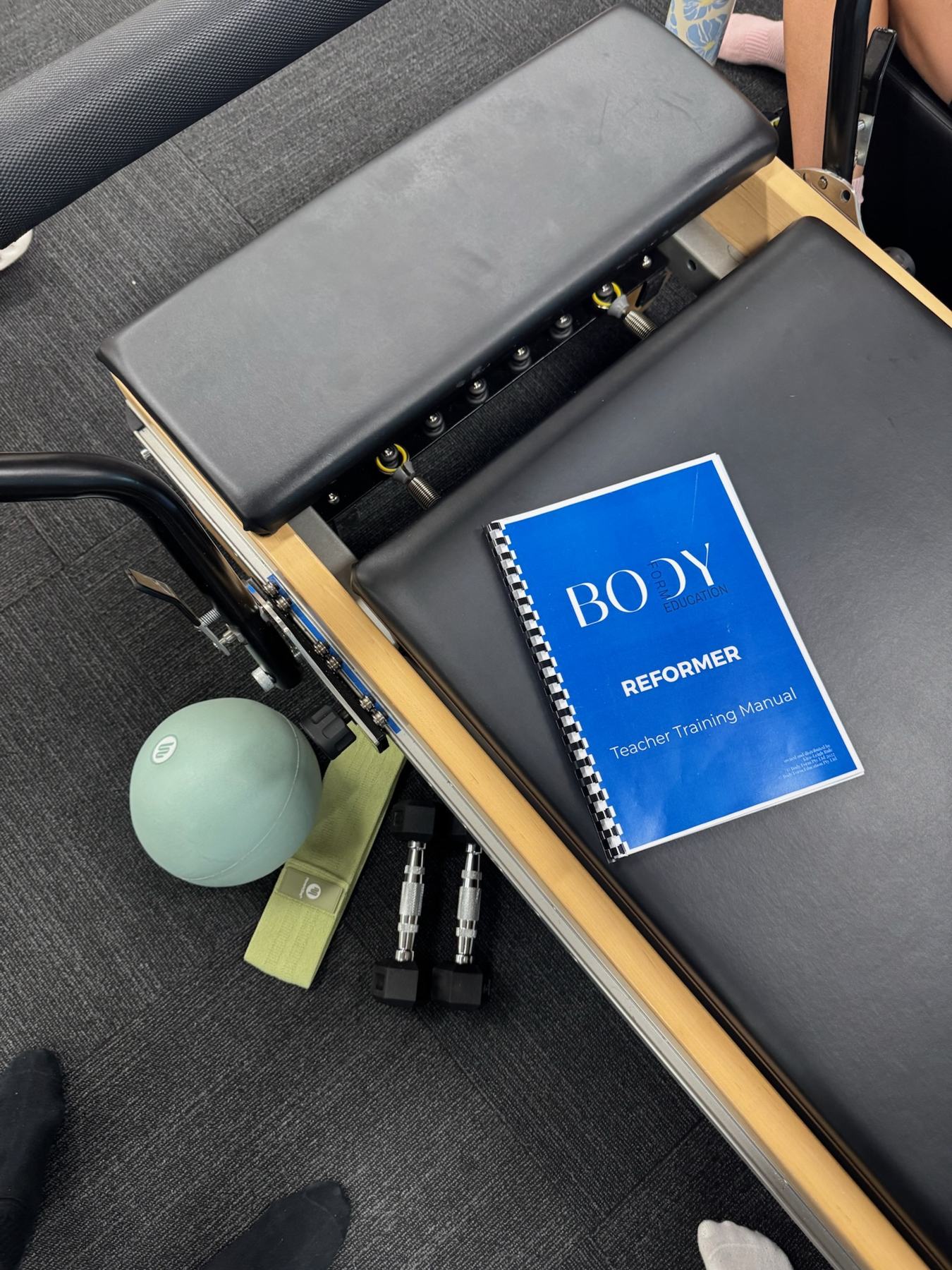
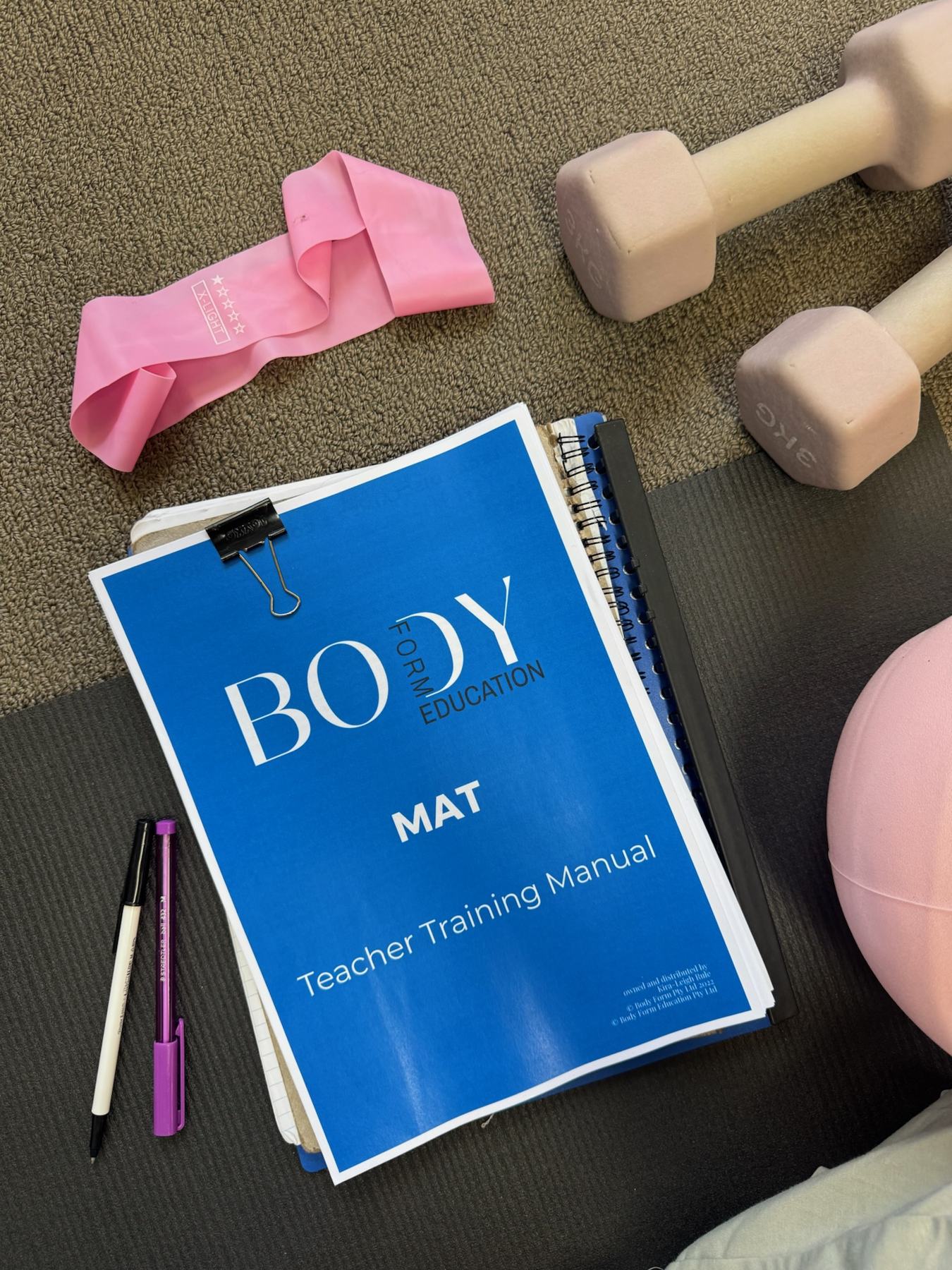
The Body Form Teacher Training Manuals

Theory, Mat and Reformer manuals sit alongside the online modules and exercise libraries. Digital manuals are part of your enrolment; printed copies are an optional extra.
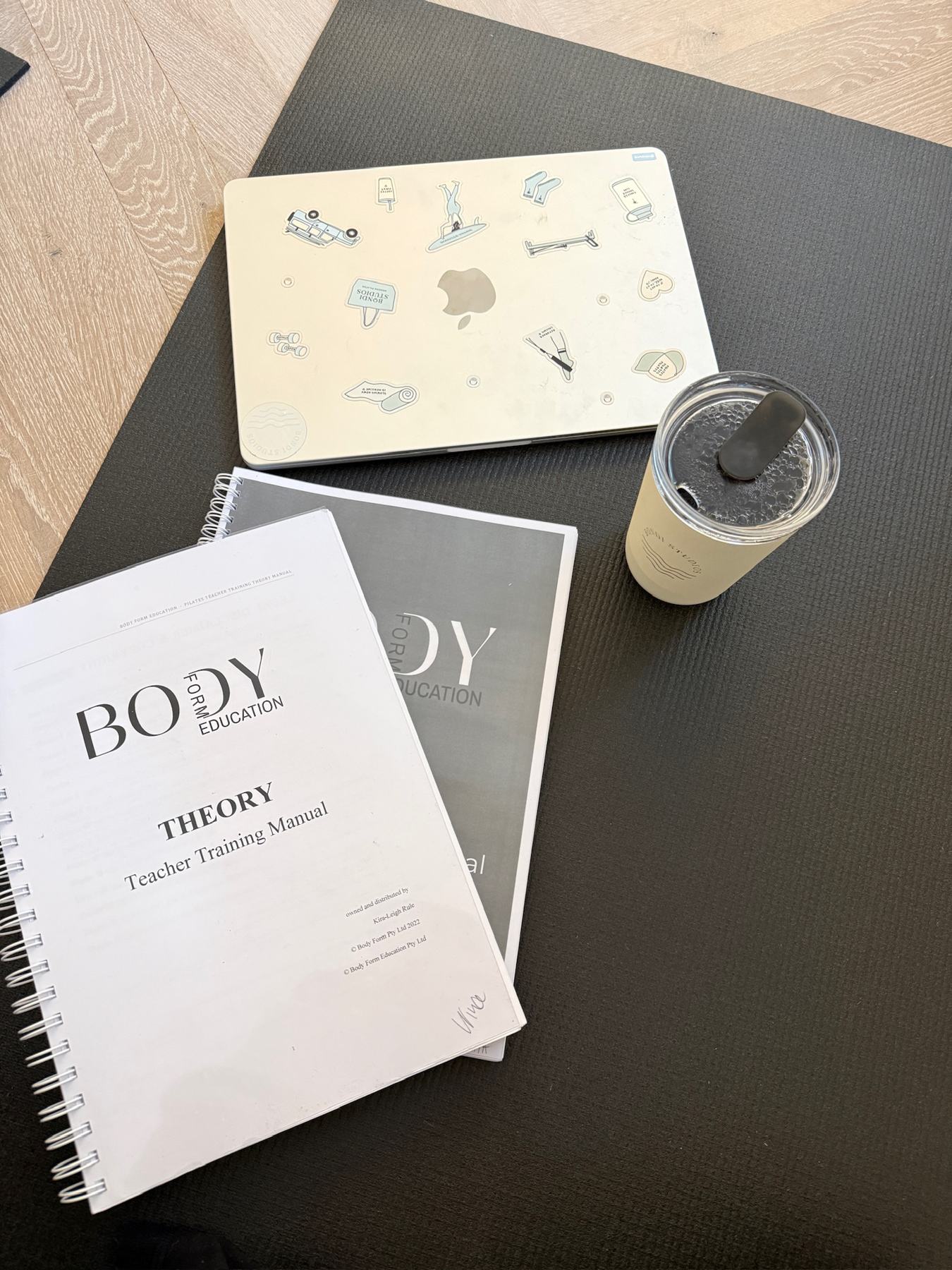
Body Form Education Theory teacher training manual
Theory
Body Form Education Mat teacher training manual
Mat
Body Form Education Reformer teacher training manual
Reformer

Practical training

Learn How to Teach, Not Just What to Teach

The online curriculum gives you the science behind movement. Practical days are where you learn to apply it in a real class. For every exercise you cover, you learn:
  • The purpose of the exercise and when to use it
  • The primary muscles and movement patterns involved
  • Correct setup and teaching technique
  • Progressions and regressions for different ability levels
  • Common client compensations and why they occur
  • How to manage common complaints, like knee pain in squats or lower back discomfort in bridging
  • Injury modifications that keep class flow and never isolate the client
  • Pregnancy and postpartum considerations: when an exercise becomes uncomfortable, why, and how to change it
  • Where the exercise sits in a larger class plan
  • How to layer exercises to build challenge
  • When and how to bring in props
Students and trainer working on Reformers during a Body Form Education intake

Your reference library

Exercise Libraries You Keep Using

Throughout your enrolment you have unlimited access to demonstration libraries across Mat, Reformer, Studio Equipment and Barre, from classical repertoire through to contemporary functional movement. Every exercise is broken down in the same way:

  • Purpose and training outcome
  • Primary muscles and biomechanics
  • Correct setup and positioning
  • Teaching points
  • Progressions and regressions
  • Injury modifications
  • Pregnancy and postpartum considerations
  • Programming ideas
  • Common technique errors and how to fix them

Recognition

Accredited and Recognised

Body Form Education Teacher Training has ITTAP and PMA International accreditation which means all qualifications leave graduates with Global Recognition to teach Pilates all across the world. Additionally on a National level we have taken it even further and our qualifications are also mapped with AUSactive in Australia and recognised through Pilates Aotearoa in New Zealand. This means our students are receiving qualifications that are not only Physio-led education but internationally accredited that has gone through rigorous testing through 3 accreditation companies to ensure you are truly getting beyond the level of understanding you need to be a confident Pilates instructor.

Recognition and accreditation
  • ITTAP: International Teacher Training Accreditation for Pilates
  • Pilates Method Alliance
  • AUSactive CPD Provider
  • Pilates Aotearoa Education Provider
  • Australian Physiotherapy Association

Read the full statement

Start here

Not Sure Which
Course or City?

Two free ways to find out more.
Add your details once and we email everything straight away.

Find your course