Body Form Education
Pilates Teacher Training FAQ
Answers to the questions prospective students ask most.
Every question, one place
Find Your Answer
Choosing a Course Page for This Topic →
Can a complete beginner enrol in Pilates teacher training?
Yes. No previous Pilates, anatomy, fitness or health-professional qualification is required for entry-level Mat or Reformer teacher training. You should expect professional study, physical practice, practice teaching and assessment.
Do I need to be fit or flexible?
No. Teaching is not a performance test. Your body size, strength, flexibility and injury history do not determine whether you can become an effective instructor. You are assessed on planning, communicating, observing, managing and adapting a class, not on performing every advanced exercise.
Can I complete Reformer without Mat first?
Yes. Reformer is a standalone entry-level qualification and Mat is not a prerequisite.
Should I do Mat and Reformer together?
If you want a broad teaching career the Mat + Reformer Double Certification gives the widest entry-level foundation. It includes the shared online theory once, then separate Mat and Reformer practical education, exercise libraries, apprentice hours and assessments.
Can I add a second certification later?
Yes. A single certification can be upgraded to the Double Certification. Contact Head Office for the price difference.
Is there a minimum age or English level?
Students must be at least 16, and students under 18 need parent or guardian consent. All content, communication and assessments are in English.
Is First Aid required?
First Aid is not an enrolment or graduation requirement and is not included in tuition. Check what your region, employer and insurer require.
Do CPD courses qualify me to teach?
No. Continuing Professional Development courses expand existing knowledge. They do not replace an entry-level Mat, Reformer or approved teacher-training qualification.
Am I too old to become a Pilates instructor?
No. There is no age requirement. Students range from people starting a new career through to health professionals, fitness professionals and career changers later in life. Success comes from willingness to learn, clear communication and developing your teaching, not from your age or athletic background.
Can I become a Pilates instructor as a career change?
Absolutely. Many students come from healthcare, education, corporate roles and hospitality. The course gives you a structured pathway from the foundations of movement to confidently teaching professional classes, whether you want a new career, fewer hours or your own business.
Which certification should I start with?
If you are new to Pilates, start with Mat, Reformer or the combined Mat + Reformer. For a boutique studio career, the combined pathway gives the broadest foundation and flexibility. Studio Equipment and Barre are usually completed after your first qualification, or through Recognition of Prior Learning if you already hold a qualification.
Hybrid and Fully Online Page for This Topic →
What is the difference between Hybrid and Fully Online?
Both complete the same curriculum and competency requirements and receive the same qualification. Hybrid adds scheduled face-to-face practical days with a local Master Trainer. Fully Online students learn practical content through the Live Exercise videos and Exercise Libraries.
Is Fully Online easier or shorter?
No. Fully Online students complete the same curriculum, apprentice hours, assessments and competency standards as Hybrid students.
Is Fully Online live or self-paced?
Fully Online learning is self-paced and predominantly prerecorded, with academic questions answered through Kajabi lesson comments and Head Office.
Can I move between pathways?
A Fully Online student may be able to upgrade to Hybrid, considered individually and with the price difference paid. A Hybrid student cannot move to Fully Online. Enrolments cannot be transferred to another intake or location.
What if the host studio cancels or reschedules?
You will be offered a transfer to another intake or conversion to the Fully Online pathway.
How do I get my pay-in-full discount for an in-person intake?
Click Secure my spot on your location page, add your details, and you land on a thank-you page showing your pay-in-full discount and payment plan options. The same details are emailed to you automatically.
Hours, Timing and Workload Page for This Topic →
How many hours is the course?
The published course load is 250+ hours for a single certification and 365+ hours for Mat + Reformer. The calculated total is 251.5+ and 365.5+ hours. It includes 136+ shared online hours across 17 modules, 14 practical hours per discipline, 30+ hours of Exercise Library learning per discipline, 70 apprentice hours per discipline and the Final Theory Examination of about 1.5 hours.
Is it 250 hours of online lectures?
No. It includes the online modules, practical education, Exercise Libraries, observation, self-mastery, practice teaching, programming and teaching assessments, and the Final Theory Examination.
How long do I have to finish: 8 months or 12 weeks?
Both numbers are correct and they measure different things. You have 8 months of portal access from your enrolment date and must finish everything within it. For Hybrid students only, you also have 12 weeks per discipline after your final practical day to pass both assessments: Assessment 1 is due 3 weeks after, Assessment 2 is due 6 weeks after. Fully Online students have no individual assessment deadlines, only the 8 months.
Can I study while working full time?
Yes. The online learning is self-paced within the 8-month access period. Success depends on regular weekly time for theory, physical practice, apprentice hours and assessment preparation.
Can I finish early?
Yes. You graduate once every requirement has been completed and passed. Some students finish in three to five months with substantial time to dedicate. This is an example, not a guarantee.
Can the course be paused?
No. The 8-month access period runs from enrolment. Extension or reinstatement after expiry involves a fee and is considered individually.
How much time should I study each week?
It varies, because the online learning is self-paced. Many students finish while working full time by setting aside regular weekly time for theory, self-practice and apprentice hours, and completing everything inside the 8-month access period.
Do I need to finish the online learning before my practical days?
No. You can attend practical training at any point in your 8 months. Many students do some online study first and finish the rest afterwards, so they can apply what they are learning straight away.
Practical Training and Equipment Page for This Topic →
How much practical training is there?
Each discipline includes 14 practical hours, usually delivered across two or three intensive days. Hybrid students attend in person with 100% attendance required.
What if I miss a practical day?
The missed education must be completed privately with the Master Trainer before assessment submission, paid by the student at the trainer's hourly rate.
Do I need to own a Reformer?
No, but you need reliable access to suitable Reformers for practical learning, self-mastery, practice teaching and assessments, through a studio, workplace, hire agreement or home studio. Body Form Education does not arrange or pay for external access.
What do the assessments need?
Each discipline has two written class plans and two teaching videos of 45 to 50 minutes. Assessment 1 needs at least two clients. Assessment 2 needs at least four clients at once, one simulating a third-trimester pregnancy and one a shoulder or back injury, with one suitable Reformer per client for Reformer.
How many attempts do I get?
Each assessment has three attempts in total: the original submission plus up to two resubmissions. Enrolment does not guarantee graduation.
Do I need my own Pilates equipment?
Hybrid students: no, all equipment is provided on practical days. You only need access to equipment for practice teaching and assessment outside those days. Fully Online students: yes, you need access to the equipment for your chosen certification to complete practical learning and assessments.
Recognition and Careers Page for This Topic →
What accreditation does Body Form Education hold?
Body Form Education Teacher Training has ITTAP accreditation. ITTAP assesses teacher-training programs against standards for curriculum, hours, practical experience, assessment and trainer requirements. See the Recognition page for the full statement and links.
Is the qualification recognised in Australia and New Zealand?
Body Form Education Pilates qualifications are mapped with AUSactive in Australia and recognised through Pilates Aotearoa in New Zealand.
Can I teach internationally?
Graduates teach across multiple countries. International recognition supports portability and credibility, but no provider can guarantee acceptance by every employer, insurer, professional body or country. Check with your employer or insurer first if it matters.
Will I get a job?
Host studios may recruit or recommend graduates, but Body Form Education does not guarantee employment. A Mat + Reformer qualification generally gives broader flexibility.
When can I start teaching?
You may apply for professional teaching work after all requirements are passed, the course is paid in full and the certificate is issued. Practice teaching before graduation must stay unpaid.
What is the difference between accreditation and recognition?
Accreditation means a course has been formally assessed against a professional organisation's standards. Recognition means a qualification is accepted or acknowledged by a professional body, employer or industry organisation. Requirements differ between countries, associations and employers, so check what applies where you plan to teach.
Do graduates get ongoing support?
Yes. Graduates can keep learning through new CPD certifications, educator support during their access period and an international community of instructors who care about evidence-informed teaching.
Fees, Payments and Policies Page for This Topic →
What does tuition include?
Online learning and quizzes, practical education, digital manuals, Exercise Libraries, standard assessment marking and feedback, the Final Theory Examination and certification after successful completion. Printing manuals, travel, studio hire, First Aid and insurance are separate.
Are there payment plans?
Yes: pay in full, 12 weekly payments or 6 monthly payments. Plans cost more than paying in full, discounts apply to eligible pay-in-full purchases only and codes cannot be combined. You cannot pay part upfront and finance the rest.
What happens if a payment fails?
Course access is immediately revoked until the payment is processed. The certificate is released only after a payment plan is paid in full.
What is the refund and transfer policy?
Course fees are non-refundable because online content is provided immediately and Hybrid intakes have limited capacity. Enrolments cannot be transferred to another person, intake or location.
What currency will I pay?
The currency is shown before purchase. Hybrid pricing varies by location. Fully Online pricing is in Australian dollars.
RPL and Experienced Instructors Page for This Topic →
Who can apply for Recognition of Prior Learning?
Qualified Pilates instructors holding an official qualification in the same discipline with completed final examinations, and eligible health professionals such as physiotherapists, chiropractors, osteopaths, exercise physiologists and doctors. Attendance certificates alone are not enough.
What does RPL change?
Qualified instructors on an approved pathway have apprentice hours, entry-level assessments and the Final Theory Examination waived and receive an Advanced Certificate of Completion. Health professionals without a Pilates qualification complete all requirements. Discounts of up to 40% for Hybrid or 25% for Fully Online may apply.
Does a Mat qualification give me Reformer RPL?
No. RPL is discipline-specific. Mat does not automatically provide Reformer recognition or the reverse.
Studio Equipment, Barre and CPD Page for This Topic →
What do I need before Studio Equipment + Clinical Pilates?
A formal Mat or Reformer qualification. Either one is enough; you do not need both.
Which apparatus does Studio Equipment cover?
Trapeze Table (Cadillac), Wunda Chair, Ladder Barrel and Spine Corrector. Choose individual apparatus or the full bundle.
Are Studio Equipment and Barre the same length as Mat and Reformer?
Yes. Each is published at 250+ hours and shares the same 17-module theory curriculum, the same apprentice hour structure and the same assessment timing.
Is Barre formally recognised?
No formal external recognition applies to the Barre qualification. You graduate with a Body Form Education Barre Teacher Training certificate. Mat, Reformer and Studio Equipment share the recognition described on the recognition page.
Who are the CPD certifications for?
Qualified Pilates instructors (and eligible health professionals) who are insured to teach. They do not replace an entry-level teacher training qualification.
How long do I keep access to a CPD certification?
Unlimited access to the course materials, so you can return as your teaching evolves.
Can I complete more than one CPD certification?
Yes. Enrol in as many as you like and complete them at your own pace.
No match yet. Ask our team and we will answer within one business day.
Real students, real practical days
Inside a Mat Intake
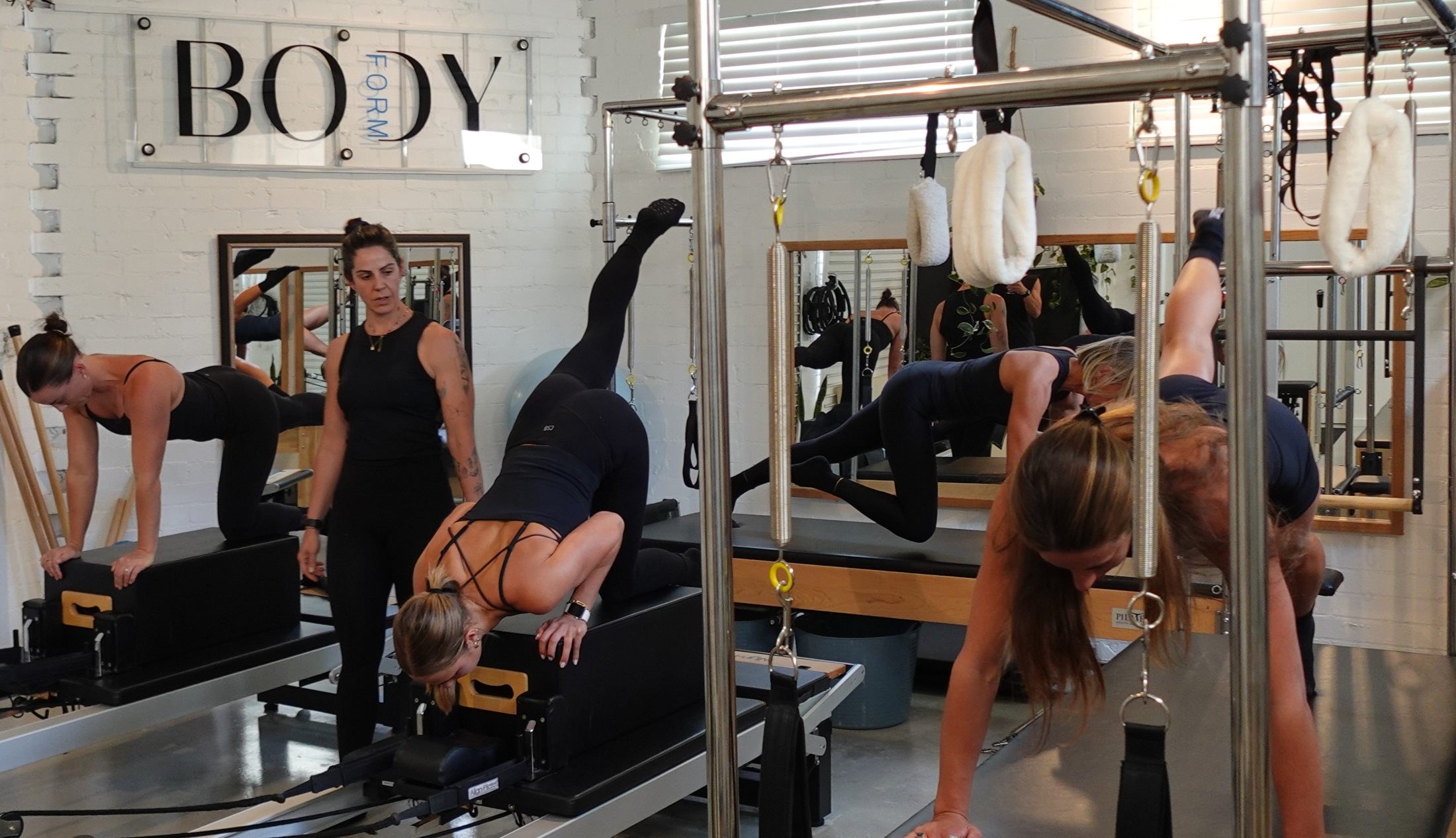
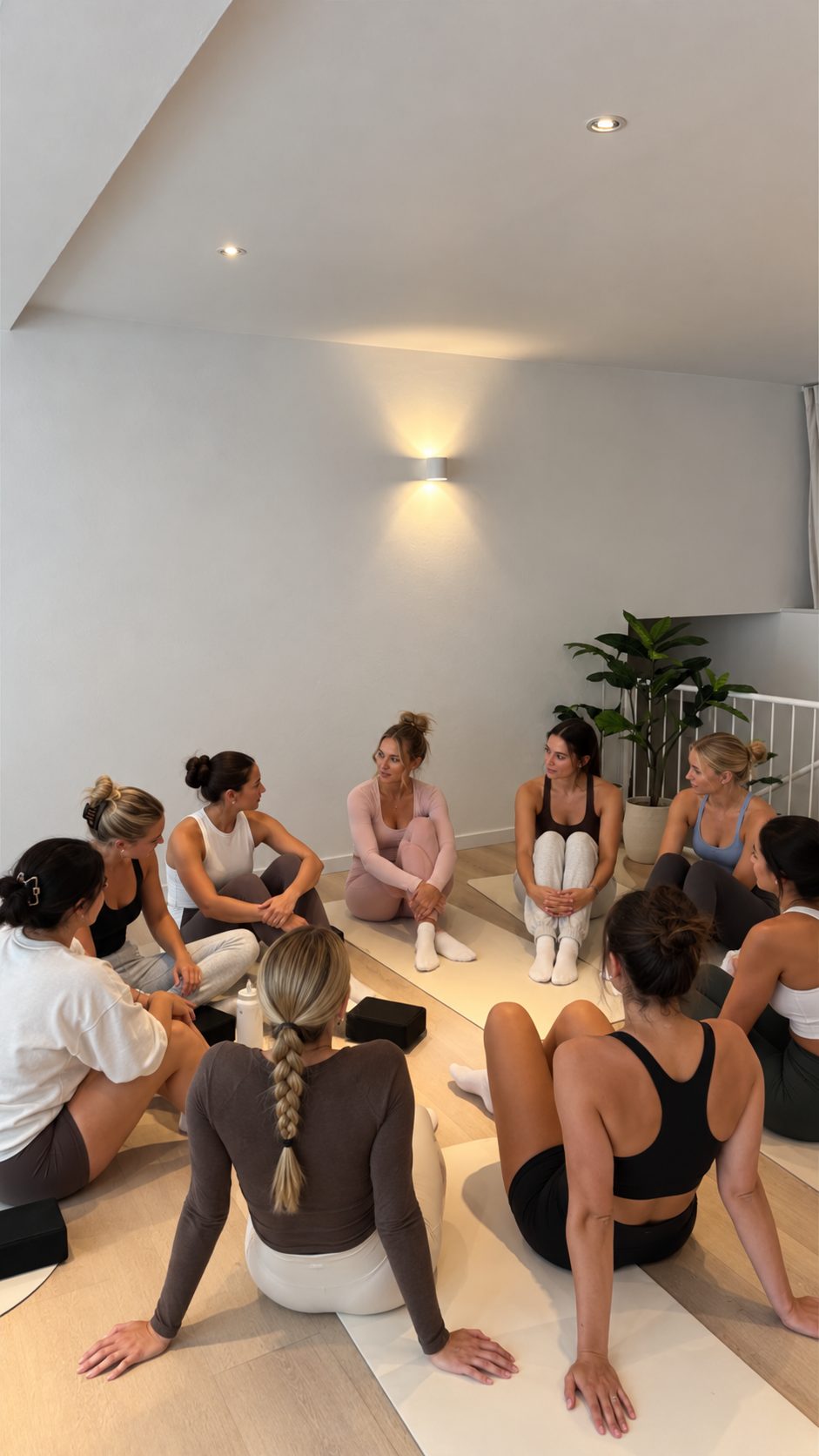
Mat days are hands-on: teaching practice, cueing, observation and live feedback with your Master Trainer, on the floor with your cohort.
- A recent Body Form intakeRecorded at a recent intake
- Physio-ledTaught by experienced educators
Recognition
Accredited and Recognised
Body Form Education Teacher Training has ITTAP and PMA International accreditation which means all qualifications leave graduates with Global Recognition to teach Pilates all across the world. Additionally on a National level we have taken it even further and our qualifications are also mapped with AUSactive in Australia and recognised through Pilates Aotearoa in New Zealand. This means our students are receiving qualifications that are not only Physio-led education but internationally accredited that has gone through rigorous testing through 3 accreditation companies to ensure you are truly getting beyond the level of understanding you need to be a confident Pilates instructor.
Recognition and accreditation