Body Form®Education Free guides

Body Form® Education

How to Choose a Pilates Teacher Training Course

Six questions, one checklist and the fine print, so you can compare any provider fairly, including us.

Things to compare6
Graduates580+
Google reviews242+ five-star
Intake cities18, plus Fully Online
Countries11+

The short answer

What to Compare Before You Choose

Written by Kira-Leigh Rule, Physiotherapist and Founder of Body Form® Education. Last updated 14 November 2026.

To choose a Pilates teacher training course, compare six things: whether it teaches you to understand movement or only to memorise exercises, how anatomy is applied, which client groups it covers, how much teaching practice you get, whether you learn to program a class, and whether the qualification is recognised where you plan to teach. Price and dates matter too, but they do not tell you how well you will be prepared to teach.

Then check the practical details: total hours, assessment, support, access, total cost, refund wording and what the certificate says. Ask them all the same questions, write the answers down side by side and choose the course that fits how you want to teach and how you want to study.

580+graduates
242+five-star Google reviews
18intake cities, plus Fully Online
11+countries

The teaching

Six Questions About How You Will Learn to Teach

Price, practical days and accreditation matter, but none of them tell you how well you will be prepared to teach. These six questions get closer to that.

Will I learn to understand movement, or only memorise exercises?

What to look for

Learning exercises is only one part of becoming an instructor. Look for education that teaches why an exercise is chosen, when to change it and how to adapt it for the person in front of you.

Body Form® Education

The Body Form® Method is to understand movement first, then teach exercises. Graduates move from memorising exercises to understanding movement, and from following class plans to writing them. Read The Body Form® Method.

Is anatomy applied, or only named?

What to look for

Anatomy should change the way you teach. Look for a course that links it to movement quality, exercise selection, cueing and programming, not just muscle names.

Body Form® Education

Applied anatomy and biomechanics is the first of the six principles of the Method. It runs through 17 online modules and is used for exercise selection, cueing and programming. See the 17 modules.

Will I learn to work with different clients?

What to look for

Most instructors teach far more than healthy, injury-free clients. Look for training that covers pregnancy, postnatal recovery, common musculoskeletal conditions and mixed-ability classes, and teaches you when to refer on.

Body Form® Education

Exercise adaptation covers musculoskeletal conditions, pregnancy, postnatal recovery and different abilities, and you are assessed on it: one filmed class includes a simulated third-trimester pregnancy and a shoulder or back injury. Body Form® Education supports safe teaching and adaptation. It does not qualify graduates to diagnose, treat or provide clinical care.

Does the practical training build teaching skills?

What to look for

Performing exercises well is not the same as teaching them. Look for repeated teaching practice with feedback, so observation, cueing, communication and class management are all practised, not just explained.

Body Form® Education

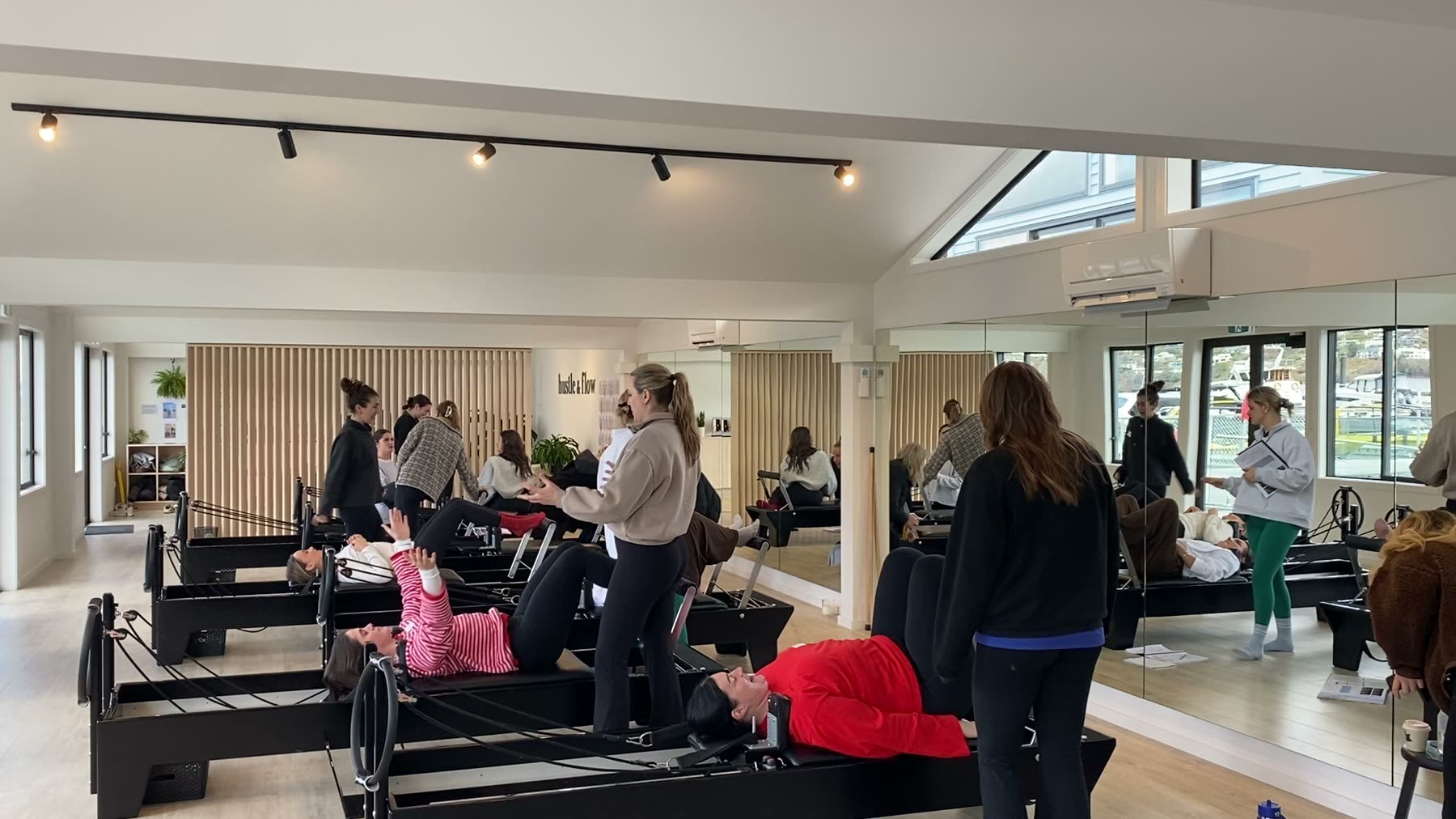
On a practical day the Master Trainer teaches a block of about five exercises or 45 minutes of content, then you practise teaching it to a partner while they observe and coach. Fully Online students learn from recorded practical training filmed at real intakes and delivered by Kira-Leigh Rule. See assessments and apprentice hours.

Will I learn to program a class?

What to look for

Teaching one exercise and designing an effective class are different skills. Look for sequencing, progressions, regressions and load management, and for a chance to be assessed on a whole class.

Body Form® Education

You are assessed on programming a whole class, on paper and on film, and the training covers how fatigue, props and music change a class.

Is the qualification recognised where I want to teach?

What to look for

If you plan to teach overseas or across different settings, check how the qualification is recognised and whether the curriculum prepares you for studio, fitness and rehabilitation work.

Body Form® Education

Body Form® Education teacher training is ITTAP accredited through the Pilates Method Alliance, mapped with AUSactive in Australia, and audited and verified by Pilates Aotearoa in New Zealand. Employment, insurance, visa and professional registration requirements vary by country and employer, so check the requirements where you plan to teach.

The checklist

A Checklist You Can Use on Any Provider

Ask every provider these twelve questions.

CheckWhat to askBody Form® Education
Recognition where you will teachWhich body accredits the program, what does that cover and can I check it on that body's own website? Do the employers and insurers where I plan to teach accept it?

ITTAP accredits programs, not individual teachers. You can verify each body on its own website: the Pilates Method Alliance, AUSactive and Pilates Aotearoa.

In New Zealand, graduating from a Pilates Aotearoa-verified certification makes you eligible to apply for professional instructor registration and provides 20 CPD points.

Employers and insurers set their own criteria, so confirm with them. Accreditation and recognition.

Total hours and how they are made upHow many hours is it, and how many of them are lectures, practical training, teaching practice and assessment?

Mat and Reformer are 250+ hours each, the Mat + Reformer Double is 365+ hours and the Full Comprehensive is 450+ hours.

A single certification combines 136+ online theory hours across 17 modules, 14 practical hours, 30+ Exercise Library hours and 70 apprenticeship hours, plus a Final Theory Examination of about 1.5 hours. The Double shares the theory once. Double: 28 practical hours and 140 apprenticeship hours in total (60 of them practice teaching). Course hours explained.

Practical days and apprenticeship hoursHow many practical days are there, where and who runs them? How many hours of real teaching practice must I log, and do I find the people to teach?

Hybrid: 14 practical hours per discipline, usually 2 to 3 intensive days with a local Master Trainer, with 100% attendance. Fully Online: recorded practical training.

Every student logs 70 apprenticeship hours per discipline: 10 of observation, 30 of self-practice and 30 of practice teaching, which you organise yourself.

Assessment method and number of attemptsWhat is assessed, how and by whom? How many attempts do I get, and how long until I hear back?

Per discipline: 2 written programming assessments, 2 practical teaching assessments (filmed 45 to 50 minute classes) and one online Final Theory Examination. You get three attempts at each assessment.

A Master Trainer marks against assessment criteria and marking rubrics within about two weeks of submission, for Hybrid and Fully Online students alike.

Who designed the course and who teaches itWho designed the course, who teaches the practical days and who marks the assessments?

Physiotherapy-led means designed and directed by a Physiotherapist. Body Form® Education was founded by Kira-Leigh Rule, Physiotherapist.

Hybrid practical days are run by a local Master Trainer, and each location page names the trainer for that city. Meet our Master Trainers.

Support and feedbackWhat support do I get, how do I reach someone and what feedback comes with each assessment?

Hybrid: in-person coaching and an intake WhatsApp group with your Master Trainer. Fully Online: questions answered through lesson comments in your learning portal and by the education team.

Every assessment comes with detailed written feedback. Fully Online is self-paced with no compulsory live classes and no scheduled one-on-one mentoring included. One-on-one mentoring is available separately.

Access periodHow long do I have access, can I pause it and what happens if I need longer?

8 months from enrolment, and it cannot be paused. Many students finish between 4 and 6 months.

Spread across the full 8 months, a single certification is about 7 hours a week and the Double is about 10 to 11 hours a week. One standard 3-month extension is available to every student, for 30% of standard upfront tuition. Beyond 11 months is a new enrolment or an individual approval.

Price and payment plansWhat is the total price in my currency, what do payment plans add and what is not included?

Fully Online: Mat or Reformer AUD $2,350, the Double AUD $3,950 and the Full Comprehensive AUD $5,950. In person in Australia: Mat or Reformer AUD $2,950 and the Double AUD $4,950. AUD prices include GST for Australian buyers. There is no GST outside Australia. Prices outside Australia are set by location in local currency.

Pay in full, in 12 weekly payments or in 6 monthly payments. Plans include a financing charge, so paying in full costs less. Pricing and payment plans.

Refund wordingWhat exactly does the refund policy say, and can I transfer my place? Can I read the full wording before I pay?

Unless required by law, course fees are non-refundable. Enrolments cannot be transferred to another person, intake or location.

If a host studio cancels or reschedules a Hybrid intake, you are offered a transfer to another intake or a move to Fully Online.

What the certificate saysWhat is the certificate called, does it name the discipline and when is it issued?

You graduate with a certificate in your discipline, for example the Certificate in Mat Pilates Teacher Training Qualification. It is the same certificate whether you study Hybrid or Fully Online.

It is released once every requirement is passed and the course is paid in full.

Style of Pilates taughtDoes it teach the original repertoire, a contemporary approach or both? Will I be able to teach other styles?

The complete original repertoire first, then beyond it into functional and dynamic movement patterns (squat, lunge, push, pull and hinge) and teaching with props.

In person or Fully OnlineCan I complete it online, in person or both, and is the qualification the same either way?

Both. Hybrid has in-person intakes in 18 cities, and Fully Online is available from anywhere. The curriculum, assessments and qualification are the same. Hybrid vs Fully Online.

Courses, prices and dates can change. The terms at checkout apply to your enrolment. We are happy to answer every one of these in writing: email contact@bodyform.com.au or message us on WhatsApp.

Which course

Mat, Reformer, Double or Full Comprehensive

All four are entry-level teaching qualifications with no prerequisite and 8 months of access from enrolment. Fully Online prices are in AUD. AUD prices include GST for Australian buyers. There is no GST outside Australia.

CourseHoursFully OnlineIn person, AustraliaChoose it if
Mat250+AUD $2,350AUD $2,950You want to teach floor-based classes or start with the least equipment. A Pilates mat is the main essential, and you can add a resistance band, small ball, light weights and a ring gradually.
Reformer250+AUD $2,350AUD $2,950You plan to teach on Reformers. Mat is not a prerequisite. You need reliable access to Reformers for practice teaching and assessments.
Mat + Reformer Double365+AUD $3,950AUD $4,950You want the widest entry-level foundation. The shared theory is completed once. Save AUD $750 Fully Online compared with buying Mat and Reformer separately.
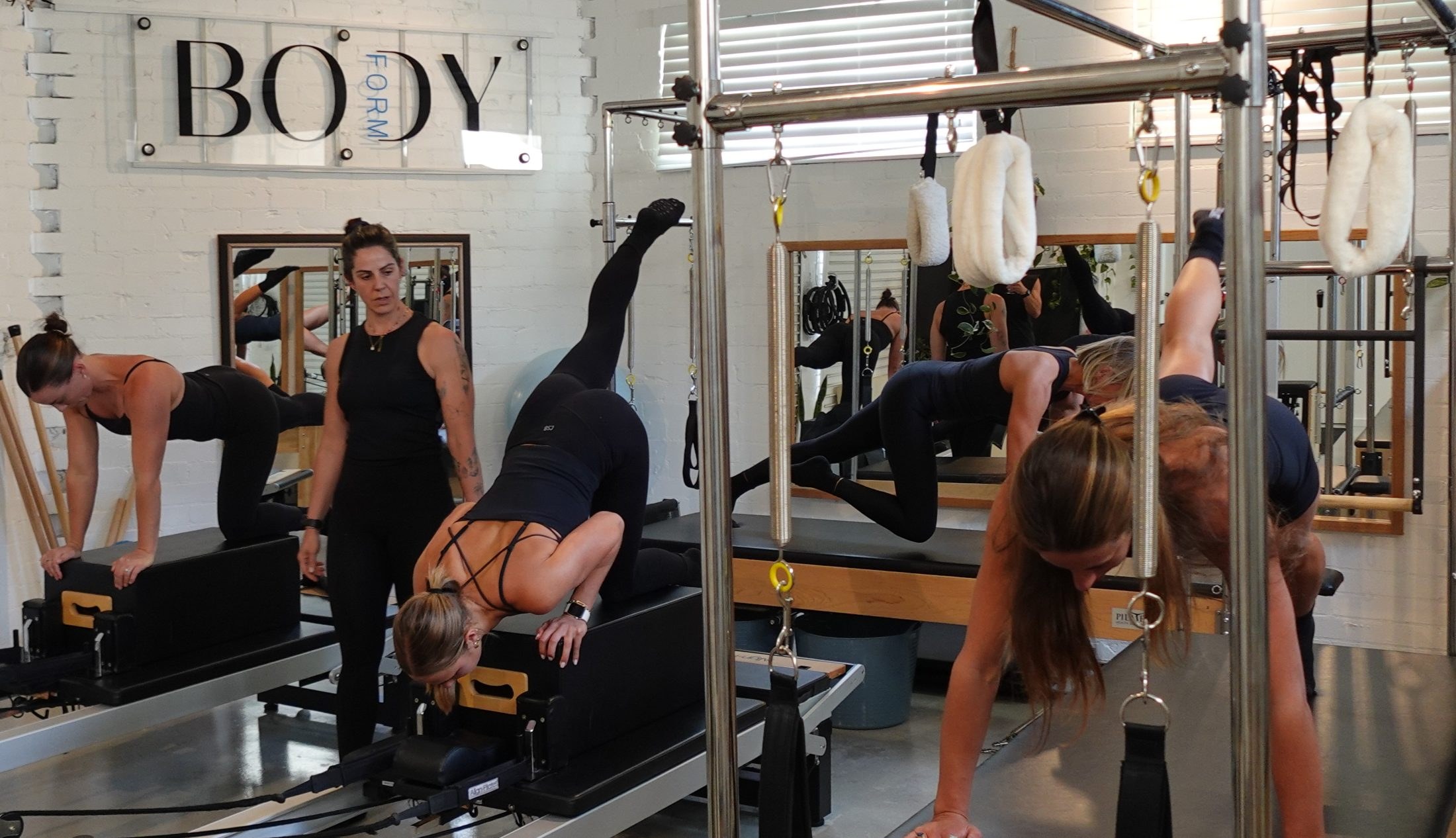
Full Comprehensive Clinical Pilates450+AUD $5,950Fully Online, with onsite training at selected locationsYou want Mat, Reformer and Studio Equipment (Trapeze Table or Cadillac, Wunda Chair, Barrels and Spine Corrector) in one enrolment, starting from the beginning with no prerequisite.

Starting small, adding later

  • You can start with Mat or Reformer and upgrade to the Double. Email the address you enrolled with and say which one you are doing, and Body Form® Education confirms the upgrade options and pricing.
  • You do not restart. Completed coursework and assessments for that discipline still count.

Other qualifications

How you study

In Person or Fully Online

Both pathways complete the same 17 modules and the same assessments, and earn the same Body Form® Education qualification. Neither is easier or shorter. The difference is how you learn the practical skills.

In person (Hybrid)Fully Online
Practical skills14 practical hours per discipline, usually 2 to 3 intensive days at a host studio with a local Master Trainer. 100% attendance is required.Recorded practical training from real intakes, a library of exercise demonstrations and recorded classes, all in the learning portal. You can pause, rewind and revisit.
Live classesScheduled practical days.No compulsory live classes.
Assessment deadlinesDeadlines run from your final practical day, with both assessments passed within 12 weeks.No individual assessment deadlines. Everything is completed within your 8 months.
EquipmentProvided on practical days. You need access to equipment for practice teaching and assessments.You need access to the equipment for your discipline for practical learning and assessments.
SupportIn-person coaching and an intake WhatsApp group.Lesson comments in your learning portal, the education team and detailed written feedback.
Where and when18 cities across Australia, New Zealand, Asia, Europe, North America and Africa. Dates are on the locations page.From anywhere in the world. Instant access when you enrol.

In person suits you if

  • You learn best with hands-on correction and a cohort beside you.
  • There is an intake in a city you can reach.
  • You want a Master Trainer in the room while you practise teaching.

Fully Online suits you if

  • You live far from an intake, or the dates do not suit.
  • You want to study around work or family at your own pace.
  • You want to start today.

A Fully Online student may be able to upgrade to Hybrid, with the price difference paid. A Hybrid student cannot move to Fully Online. See Hybrid vs Fully Online, the Fully Online page and the locations and dates.

The Body Form® way

Great instructors don't simply know exercises.They understand movement.

The fine print

Then Check the Fine Print

These are the details that decide how a course feels once you have paid.

What the price includes

  • Online learning and quizzes
  • Practical education
  • Digital manuals and Exercise Libraries
  • Standard assessment marking and feedback
  • The Final Theory Examination
  • Your certification after successful completion

What is not included

  • Printing manuals (optional)
  • Travel and accommodation
  • Studio or equipment hire for practice and assessments
  • First Aid and professional insurance
  • Late fees, extensions or portal reinstatement
  • Private make-up training or additional coaching

Payment plans

  • You cannot pay part upfront and finance the rest, and plans cannot be paused.
  • If a payment fails, course access is revoked until it is processed.
  • The certificate is released once a payment plan is paid in full.

Missed or cancelled days

  • If a host studio cancels or reschedules, you are offered another intake or a move to Fully Online.
  • If you miss a practical day, the missed education is completed privately with the Master Trainer before you submit assessments, at the trainer's hourly rate.

Questions

How do I choose a Pilates teacher training course?

Compare what you will be taught, how much teaching practice you get, how you are assessed, whether the qualification is recognised where you plan to teach, what it costs in total and whether you want to study in person or online. Ask every provider the same questions and compare the answers side by side. Price and dates matter, but they do not tell you how well you will be prepared to teach.

Are more hours always better?

Not on their own. Ask how many hours are lectures, practical training, teaching practice and assessment. At Body Form® Education, 250+ hours is not 250 hours of lectures: a single certification is 136+ online theory hours across 17 modules, 14 practical hours, 30+ Exercise Library hours and 70 apprenticeship hours, plus the Final Theory Examination.

Is in person always better than online?

No. Neither is better for everyone. In person suits people who learn best with hands-on correction and a cohort, and Fully Online suits people who live far from an intake or want to start today. At Body Form® Education both pathways earn the same qualification.

How can I check a provider's accreditation?

Ask which body accredits the program and what it covers, then check on that body's own website. Employers and insurers set their own criteria, so confirm with them where you plan to teach. Each of our recognition bodies is listed on the accreditation page.

Do I need Mat before Reformer?

No. Reformer is a standalone entry-level qualification and Mat is not a prerequisite. Read the full answer.

Does the certificate look different if I study online?

No. Hybrid and Fully Online students receive the same certificate. It is released once every requirement is passed and the course is paid in full.

What if there is no intake near me?

Fully Online is available from anywhere. Where a city has no dates yet you can join the waitlist. People on a waitlist get first access to offers and are first to hear when dates are confirmed.

Can I ask Body Form® Education these questions before I enrol?

Yes. Email contact@bodyform.com.au or message us on WhatsApp, and ask for any answer in writing. You can also get the four free guides and watch the course sneak peek with Kira-Leigh.

Next step

Find the Right Course for You

Two free ways to find out more.
Add your details once and we email everything straight away.

Find your course