Body Form® Education
Practical Training: Hands-On Teaching, in Person or Online
14 practical hours per discipline, then 70 apprenticeship hours with real people.
The short answer
How Practical Training Works
Written by Kira-Leigh Rule, Physiotherapist and Founder of Body Form® Education. Last updated 14 November 2026.
Hybrid students attend 14 practical hours per discipline, usually across 2 to 3 intensive days with a local Master Trainer, and 100% attendance is required. You do your theory online first, so practical days are spent moving, teaching a partner and getting feedback. Fully Online students learn the same practical content through recorded practical training and a demonstration library, and film their own teaching. Every student then completes the apprenticeship and is assessed by teaching real people.
| At a glance | Practical training |
|---|---|
| Practical hours | 14 per discipline, Mat or Reformer, with separate practical hours for each discipline in the Mat + Reformer Double Certification |
| Hybrid | Usually 2 to 3 intensive days per discipline with a local Master Trainer. 100% attendance. Equipment provided |
| Fully Online | Recorded practical training, an exercise demonstration library and recorded classes. No compulsory live classes |
| Apprenticeship | 70 hours per discipline: 10 observation, 30 self-practice and 30 practice teaching, which you organise yourself |
| Assessments | 2 written programming assessments and 2 practical teaching assessments per discipline |
| Qualification | The same Body Form® Education certificate whether you study Hybrid or Fully Online |
Two pathways
Hybrid and Fully Online Side by Side
Both pathways build the same practical skills and lead to the same qualification. What differs is where you learn the exercises and how you get feedback along the way.
| Hybrid | Fully Online | |
|---|---|---|
| Practical learning | 14 practical hours per discipline, face to face, usually across 2 to 3 intensive days | Recorded practical training from real intakes, an exercise demonstration library and recorded classes, all in your learning portal |
| Who teaches | A local Master Trainer, in the room with your cohort | Kira-Leigh Rule, a Physiotherapist, in the recorded practical training |
| Feedback | Live on the day from your Master Trainer, then written feedback on every assessment | Written feedback on every assessment, and the education team answers your questions |
| Attendance | 100% attendance at practical days | No compulsory live classes. You never arrange your week around a class time |
| Equipment | Provided on practical days | You need access to the equipment for your chosen certification |
| Assessment deadlines | Set after your final practical day | No individual deadlines, everything within 8 months |
Not sure which suits you? Read Hybrid vs Fully Online, or see where the next intake is on Locations and Dates.
In person
What a Practical Day Looks Like
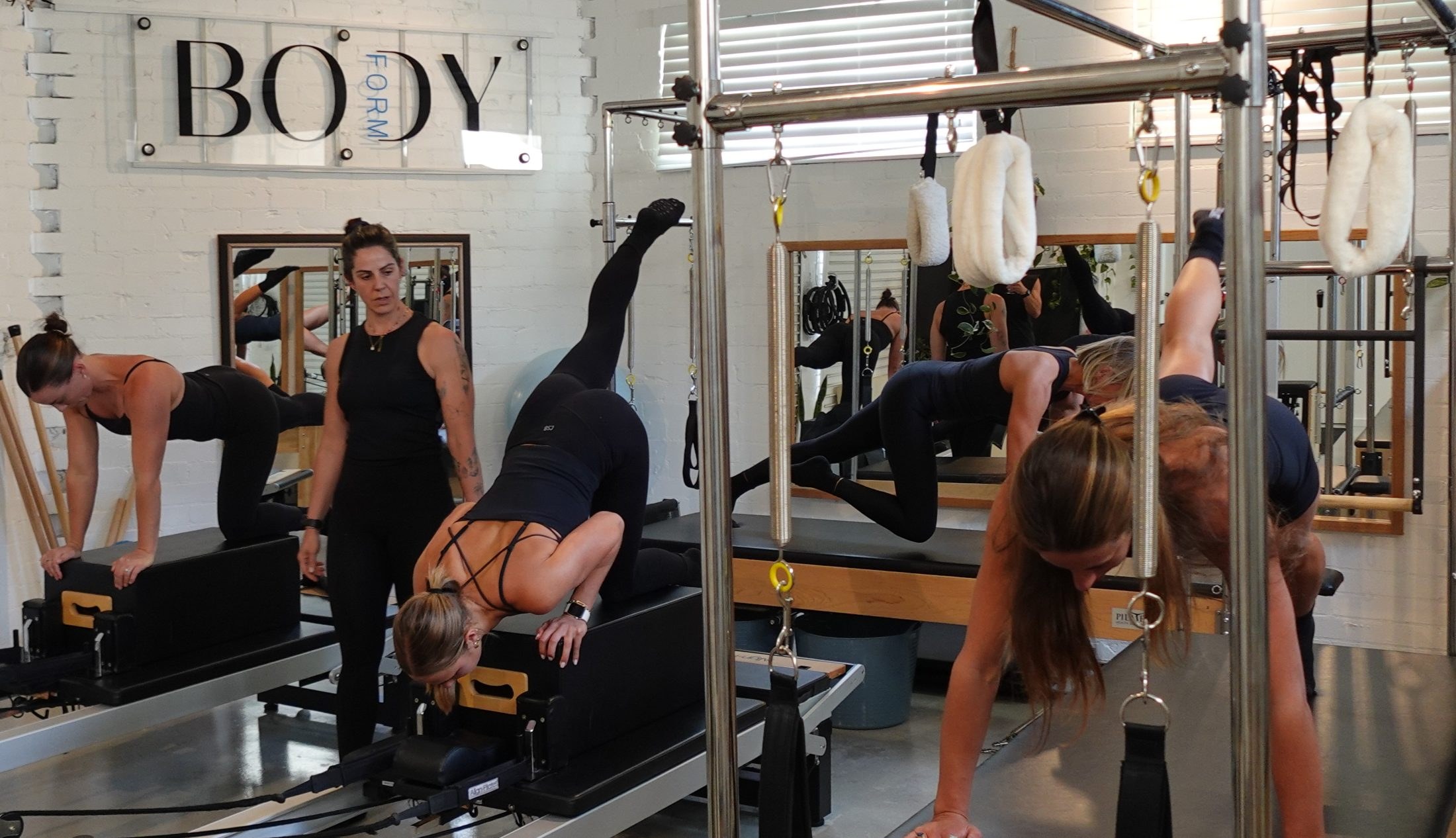
The theory was delivered online, so practical days apply knowledge rather than repeating lectures. Every block ends with you teaching.
The Framework for Every Exercise
For every exercise your Master Trainer covers these twelve things. The aim is clinical reasoning and teaching decisions, not memorising a list of exercises.
- Name and demonstration
- Setup and alignment
- Movement execution and cueing
- Common compensations
- Real-time corrections: verbal, visual and tactile
- Regressions
- Progressions and layering
- Injury modifications
- Pregnancy and postnatal modifications
- Props and variations
- Programming application
- Questions and discussion
How a Teaching Block Works
The day is built from teaching blocks. Each block is about five exercises or 45 minutes of content, whichever comes first, and then you practise teaching it.
- 1
Learn the block
Your Master Trainer teaches about five exercises, or 45 minutes of content, using the framework above.
- 2
Choose an exercise
You and a partner pick one exercise from the block. Ideally it is one you feel less confident teaching.
- 3
Teach each other
You take about five minutes each to set up, instruct and cue your partner.
- 4
Get coached
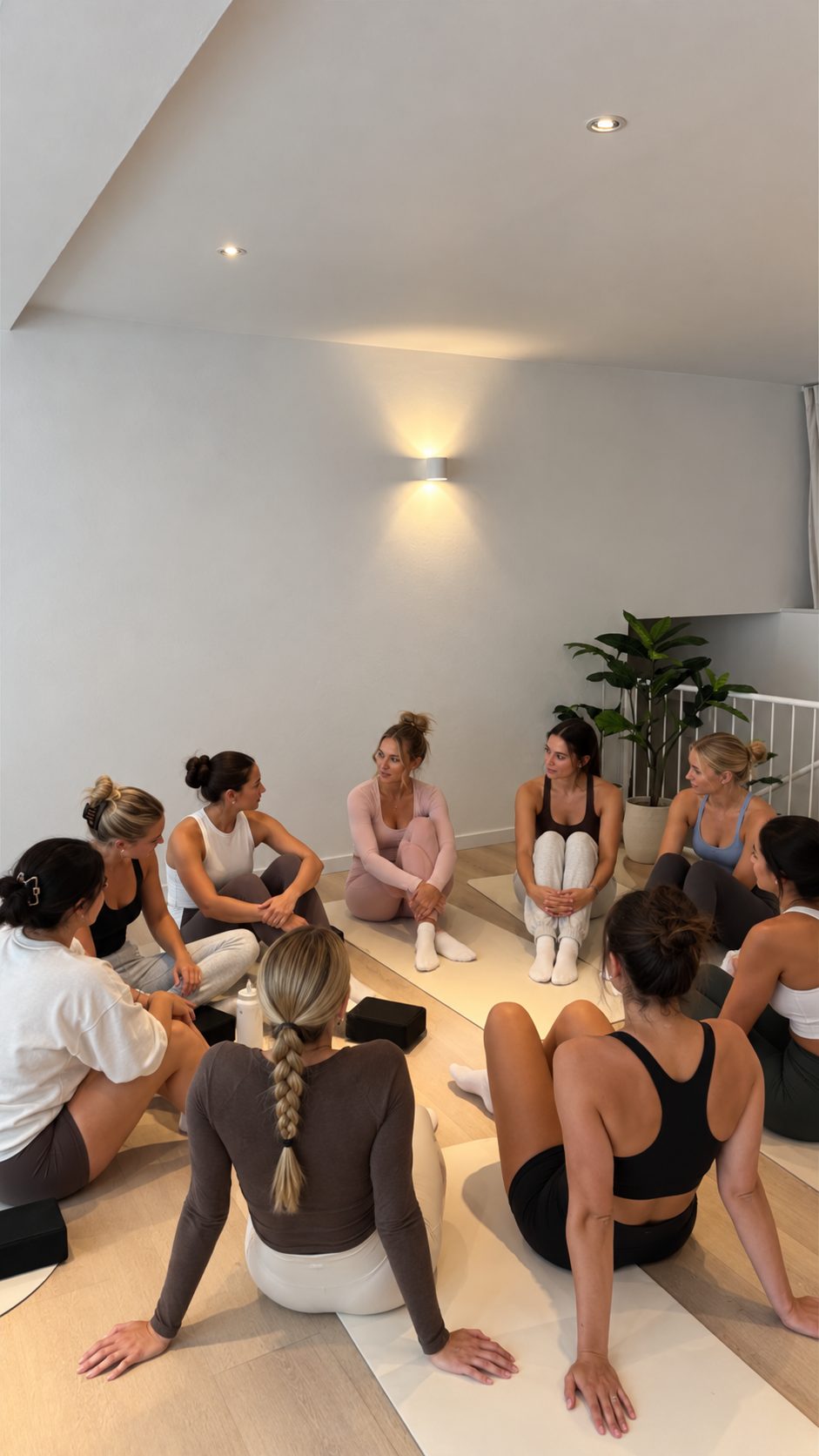
Partner practice runs for about 10 to 15 minutes while the Master Trainer moves around, observes and coaches.
- 5
Debrief, then repeat
A short group debrief closes the block. The pattern repeats through the day.
An Example Reformer Day One
This is an illustrative running order for one example practical day, a Reformer Day One, 9:00 am to 4:00 pm. Your intake may use a different number of days, usually 2 to 3. Exact break times can be adjusted by group and venue.
| Illustrative time | What happens |
|---|---|
| 9:00 to 9:25 | Welcome, introductions, facilities and safety briefing, expectations |
| 9:25 to 10:25 | Block 1: footwork and foundations, plus partner practice |
| 10:25 to 10:35 | Morning break |
| 10:35 to 11:35 | Block 2: supine and abdominal repertoire, plus partner practice |
| 11:35 to 12:35 | Block 3: planks and plank progressions, plus partner practice |
| 12:35 to 1:05 | Lunch, about 30 minutes. Bring food or buy nearby. No catering is provided |
| 1:05 to 2:05 | Block 4: advanced plank and full-body repertoire, plus partner practice |
| 2:05 to 2:15 | Afternoon break |
| 2:15 to 3:15 | Block 5: abdominals and box work, plus partner practice |
| 3:15 to 4:00 | Consolidation, programming discussion, questions, review, and preparing for Day Two |
Illustrative only.
Mat and Reformer
What Each Practical Day Covers
Each discipline has 14 practical hours, and the number of practical days is usually 2 to 3. Here is an example practical day for each discipline, with what a Day One and a Day Two cover in an example run of days of about seven hours.
Reformer Day One
Footwork, abdominals and planks.
Footwork (double, single, side-lying), roll downs, bridging, supine arms in straps, mid-back and abdominal work, legs in straps, and adapting crunches and dead bugs to the Reformer. Front and side plank setups, spring choices and plank progressions. Abdominal and box repertoire: gutter abdominals, roll down and reach, seated roll backs, oblique box side overs and Box Teaser.
Reformer Day Two
Standing lower body and upper-body repertoire.
Standing splits, squats and skaters, forward and reverse lunges, scooters, Russian splits, flying splits, side-lying leg work, kickbacks, kickaways and semicircle. Then pushing, pulling, rotational, kneeling and prone work: chest flys, shoulder presses, triceps, rows, bicep curls, chest expansion, woodchoppers, Draw the Sword and prone box work.
Mat Day One
Functional core and upper body.
Functional Mat repertoire first: bridges, supine arms, crunches and dead bugs. Then spinal rotation, roll downs, planks, side planks, shoulder taps, knee hovers, pikes and trunk loading, and functional upper body and kneeling work: rows, triceps, bicep curls, shoulder work, side-kneeling, prone work and push-ups.
Mat Day Two
Functional lower body and the original repertoire.
Standing leg lifts, lunges, squats, skaters, RDLs, side-lying leg work, kickbacks and kneeling leg work. Then the original repertoire: the Hundred, Roll Up, Roll Over, Single Leg Circle, Rolling Like a Ball, Spine Stretch, Swan, Teaser, Swimming and more advanced exercises.
“The level of detail provided in both the pre learning and during the practical days was excellent.”
Hannah M., Sydney graduate
See the course pages for the full curriculum: Mat, Reformer and the Mat + Reformer Double Certification.
The Body Form® way
Real classes. Real clients.Real educator feedback.
Before the day
What to Bring
Practical days are full training days with breaks through the day, so pack for the whole day.
Your Pack List
- Comfortable Pilates or activewear
- Grip socks
- A water bottle
- Lunch and snacks. Bring food or buy nearby, as no catering is provided
- Your student manual: download it from the learning portal beforehand and bring it on a laptop or tablet, or print it
- A notebook and pen, optional
Do the Theory First
We recommend working through the modules up to Programming & Cueing before practical days (it is needed to unlock the ability to submit your video assessments), but it is not compulsory before the practical days.
You arrive knowing the language and the anatomy, so the day is about applying it. Your 8 months of access start on the day you enrol, so you can begin straight away.
If you miss a day, you make it up privately with the Master Trainer before assessment submission, paid by the student at the trainer's hourly rate.
Your timeline
Before and After Your Practical Days
Your practical days sit in the middle of your 8 months of access. Here is how the weeks around them work for a Hybrid student, per discipline.
- 1
Study online
Start the 17 modules the day you enrol. We recommend working through the modules up to Programming & Cueing before practical days (it is needed to unlock the ability to submit your video assessments), but it is not compulsory before the practical days.
- 2
Attend your practical days
14 practical hours with your Master Trainer, usually across 2 to 3 days. 100% attendance is required.
- 3
Submission 1
Due 3 weeks after your final face-to-face day: a written class plan and a filmed teaching video of 45 to 50 minutes.
- 4
Submission 2
Due 6 weeks after your final face-to-face day: a completely new class plan, filmed and taught again.
- 5
Marked, then pass
Both submissions must be passed within 12 weeks of your final practical day.
Resubmissions are due within 1 week of your feedback. Extension and late fees apply if you miss a deadline, and the rules are on the assessments and apprentice hours page. The online theory, apprenticeship hours and Final Theory Examination do not have to be finished before Submissions 1 and 2. They sit inside your 8 months.
Real people
Your 70 Apprenticeship Hours
Each discipline requires 70 apprenticeship hours, and practice teaching is part of them. You organise them yourself, anywhere that suits you.
| Type | Hours | What it involves |
|---|---|---|
| Observation | 10 | Watch a qualified instructor teach. Up to 4 hours may be online |
| Self-practice | 30 | Take classes as a client. This can be fully online |
| Practice teaching | 30 | Teach other people, unpaid, with signed waivers |
| Total | 70 | Logged separately for each discipline. Double: 28 practical hours and 140 apprenticeship hours in total (60 of them practice teaching) |
Where to Do Them
- Pilates studios that accommodate student instructors
- Home or private settings with friends, family or volunteers
- Suitable community or private spaces
- Other appropriate places with the equipment you need
- For Reformer practice teaching you need access to a Reformer
What Counts as Practice Teaching
- Actively instructing another person, not doing the exercises yourself
- Practise within your current competence
- Get your participant's consent
- Make sure the environment is safe
When and How
- Start after you officially enrol
- Do them before or after your practical days, though I recommend some foundational knowledge first
- Work alongside the online modules, at your own pace
- Record every hour in your apprenticeship logbook
- All hours must be complete before your certificate is awarded
You do not need to complete your hours at a Body Form host location. The full breakdown is on the assessments and apprentice hours page.
The Body Form® way
Knowing Pilates and teaching Pilatesare different skills.
Online
How Fully Online Students Learn Practical Skills
Fully Online students build practical skill in four ways, all inside the learning portal, with no compulsory live classes.
- 1
Recorded practical training
Real practical training from Body Form intakes, delivered by Kira-Leigh Rule, a Physiotherapist. It is edited into individual videos you can pause, rewind and revisit for as long as you have access.
- 2
Exercise demonstration library
Setup and technique, progressions and regressions, layering and combinations, injury and pregnancy modifications, equipment, spring and prop considerations, teaching cues, and ways to make an exercise harder or easier.
- 3
Recorded classes and real programming
Recorded classes and real class programming from actual Pilates classes. See how sequencing, layering, transitions and coverage of each body area fit together.
- 4
How to progress exercises
You are taught how to progress an exercise, not just memorise it, so you can choose the right next step for the person in front of you.
Then You Teach
You put it into practice with your practice teaching hours and your filmed classes. For each practical assessment you film yourself teaching a complete 45 to 50 minute class with participants. The recording must be continuous and unedited, and you submit it through the student learning portal with your written lesson plan. No travel to a training location is needed.
What Online Does Not Include
- No in-person practical days and no cohort in the room
- No scheduled one-on-one mentoring. You can contact the education team with questions, and separate one-on-one mentoring is available to instructors who want more personalised guidance
Read the full detail on Fully Online teacher training.
How your teaching is assessed
Assessments in Plain Language
Assessment tests the work you are training to do: planning a class and teaching it. It is the same for Hybrid and Fully Online students.
| What you do | Participants | |
|---|---|---|
| Written programming assessment 1 | Write a new 45 to 50 minute class plan | Written work, no participants |
| Practical teaching assessment 1 | Teach that class and film one continuous, unedited take of 45 to 50 minutes | At least 2 participants |
| Written programming assessment 2 | Write a completely new 45 to 50 minute class plan | Written work, no participants |
| Practical teaching assessment 2 | Teach the new class and film it in one continuous take | At least 4 participants, including a simulated third-trimester pregnancy and a shoulder or back injury |
What Is Marked
- Programming
- Exercise selection
- Cueing
- Teaching technique
- Modifications
- Class structure
- How well you apply what you have learnt
Who Marks It
- A Master Trainer marks your assessment within about two weeks of submission
- Marking uses assessment criteria and marking rubrics
- If it needs more development, the feedback tells you what to improve
Attempts and Participants
- Three attempts in total at each assessment
- Participants are family, friends or community volunteers, who cannot be charged and who sign a waiver
- For Reformer, one suitable Reformer per participant in Assessment 2
The Mat + Reformer Double has both sets, four class plans and four filmed classes in total. Filming rules and fees are on the assessments and apprentice hours page.
Questions
How much practical training is there?
Each discipline includes 14 practical hours, usually across 2 to 3 intensive days for Hybrid students, with 100% attendance required. Fully Online students learn the same practical content through recorded practical training and an exercise demonstration library.
Is it all lectures?
No. The theory is delivered online, so practical days apply knowledge instead of repeating lectures. You spend the day moving, teaching a partner and getting feedback from your Master Trainer.
What if I miss a practical day?
The missed education must be completed privately with the Master Trainer before assessment submission, paid by the student at the trainer's hourly rate. Private make-up training is not included in the course price.
Do I need to finish the online modules before my practical days?
We recommend working through the modules up to Programming & Cueing before practical days (it is needed to unlock the ability to submit your video assessments), but it is not compulsory before the practical days.
Do I need my own equipment?
Hybrid students: no, all equipment is provided on practical days, and you only need access for practice teaching and assessments outside those days. Fully Online students: yes, you need access to the equipment for your chosen certification.
Where do I do my 30 practice teaching hours?
You organise them yourself, and you do not have to complete them at a Body Form host location. Good places are Pilates studios that accommodate student instructors, your home or a private setting with friends, family or volunteers, and suitable community or private spaces with the equipment you need. Practice teaching means actively instructing another person within your current competence, with their consent, in a safe environment. For Reformer you need access to a Reformer.
How are my teaching skills assessed?
Each discipline has 2 written programming assessments and 2 practical teaching assessments, with three attempts at each. You plan a class, then teach it and film one continuous, unedited take of 45 to 50 minutes, with at least 2 participants for the first and at least 4 for the second. A Master Trainer marks your work within about two weeks of submission against assessment criteria and marking rubrics, and written feedback tells you what to improve.
Is the qualification different if I study Fully Online?
No. Hybrid and Fully Online students complete the same curriculum, apprenticeship hours and assessments, and the certificate is the same. It does not show which pathway you studied.
Accredited and Recognised
Body Form® Education teacher training is ITTAP accredited through the Pilates Method Alliance, mapped with AUSactive in Australia, and audited and verified by Pilates Aotearoa in New Zealand. This applies whether you complete Mat, Reformer or the full comprehensive pathway. Employment, insurance, visa and professional registration requirements vary by country and employer, so check the requirements where you plan to teach. CPD certifications are continuing education for qualified instructors.
Recognition and accreditation