


Why Strength Training Matters More as We Age
One of the biggest misconceptions around ageing is that slowing down is inevitable. While certain physiological changes do occur over time, many of the declines people associate with ageing are more closely related to reduced strength, reduced activity, and loss of confidence in movement rather than age itself.

Strength training is one of the most evidence-supported tools we have for maintaining independence, reducing injury risk, and improving quality of life as we age. Clinical Pilates, particularly when combined with progressive resistance training, is an effective and accessible way to build strength safely across every decade of life.
What Happens to the Body as We Age?
From around our 30s onward, muscle mass naturally begins to decline if it is not challenged regularly. This process, known as sarcopenia, contributes to:
- Reduced balance
- Loss of mobility
- Increased fall risk
- Reduced bone density
- Joint stiffness
- Decreased confidence with daily movement
The good news is that the body remains highly adaptable. Strength can still be improved significantly well into later decades of life when appropriate resistance training is introduced consistently.
Why Strength Matters Beyond the Gym
Strength is not just about lifting heavy weights or athletic performance. It directly affects daily function.
Strength supports:
- Getting up from the floor safely
- Climbing stairs comfortably
- Carrying groceries
- Maintaining posture
- Improving balance and reaction time
- Supporting joints during movement
- Reducing the likelihood of falls and fractures
For many people, maintaining independence is one of the most important health goals as they age, and strength is central to that outcome.
How Clinical Pilates Supports Strength Development
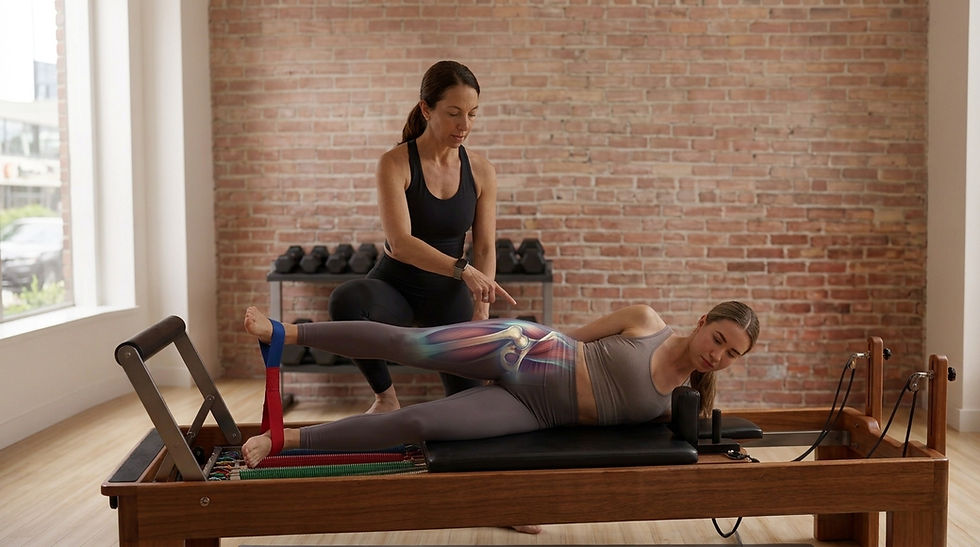
At Body Form, we combine physiotherapy-informed Pilates with progressive strength principles.
This includes:
- Reformer and equipment-based resistance training
- Weight-bearing exercises for bone health
- Single-leg stability work
- Functional strength patterns
- Progressive loading appropriate to the individual
Unlike a generic gym environment, every program is adapted around the client's injury history, mobility, and goals.
The Role of Bone Density
Strength training becomes particularly important around menopause and older age because of the relationship between muscle loading and bone health.
Research consistently supports resistance training as one of the most effective non-pharmaceutical interventions for maintaining and improving bone density.
This is one reason why our programs integrate load-based work rather than relying solely on stretching or low-resistance movement.
Practical Takeaways
- Strength declines with age if it is not trained
- Strength training improves mobility, balance, posture, and confidence
- Clinical Pilates can safely build strength at any age
- Resistance training is important for bone density and fall prevention
- It is never too late to begin building strength
Ready to Get Stronger?
At Body Form, our physiotherapy-led Pilates and strength programs are designed to help you move well, feel strong, and maintain independence for the long term.


Comments