


How Physiotherapy and Pilates Work Together for Lasting Results
If you have ever attended physiotherapy and also enjoyed Pilates, you may have noticed that the two approaches share a common foundation: a respect for how the body moves as a whole system. Yet many people experience them as separate worlds, visiting their physiotherapist for pain management and attending a Pilates class for general fitness.

At Body Form, we see it differently. When physiotherapy and Pilates are delivered together under the same clinical framework, they become significantly more powerful than either approach on its own.
This blog explores why the two disciplines complement each other so well, and what that means for someone seeking lasting physical health.
Different Disciplines, Shared Principles
Physiotherapy is a regulated healthcare profession focused on assessing, diagnosing, and treating musculoskeletal, neurological, and cardiorespiratory conditions. A physiotherapist uses clinical reasoning to identify the root cause of pain or dysfunction and prescribes treatment accordingly.
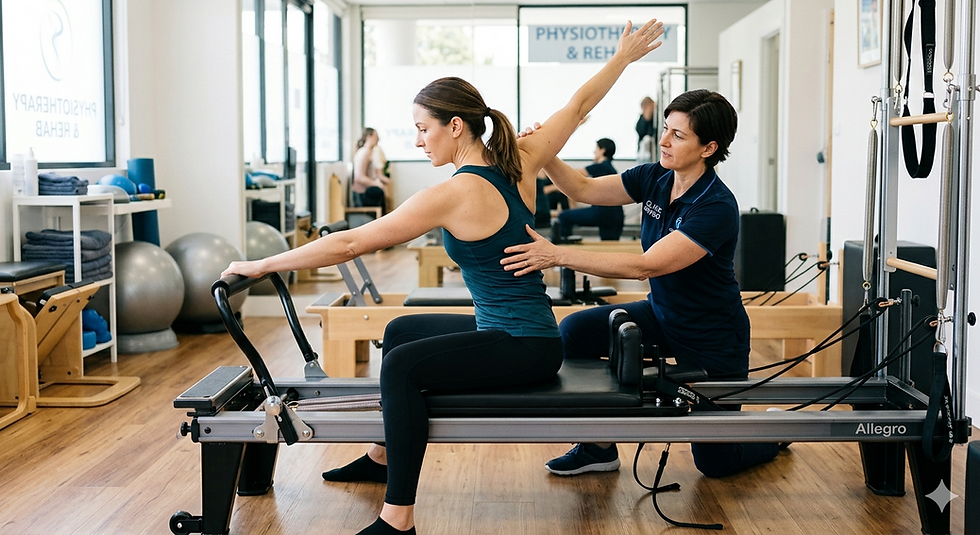
Pilates, in its traditional form, is a movement method developed in the early twentieth century that emphasises breath, alignment, and controlled movement. Clinical Pilates adapts this method using physiotherapy principles, making it highly appropriate for rehabilitation, injury prevention, and special populations such as postnatal women and those managing persistent pain.
Both disciplines share a commitment to intentional, controlled movement. Both prioritise how the body moves rather than simply how much it moves. This makes the integration of the two a natural and highly effective fit.
What Physiotherapy Offers the Pilates Client
Physiotherapy provides the clinical foundation that Pilates benefits from. Before a client begins a Pilates programme at Body Form, a thorough physiotherapy assessment allows us to identify:
Areas of joint restriction or muscle imbalance
Movement patterns that may be contributing to pain or dysfunction
Any conditions that require modified programming
Baseline strength and load capacity
This clinical picture means that every Pilates programme we design is tailored to where the individual body actually is, rather than where a generic class plan assumes it should be.
What Pilates Offers the Physiotherapy Client
Physiotherapy treatment addresses acute presentation well, but sustained physical health requires an ongoing movement practice. Pilates fills that gap.
For someone who has completed a course of physiotherapy treatment, a supervised Pilates programme provides:
Progressive strength and stability training that continues the rehabilitation process
A structured, low impact environment for building physical capacity
Improved body awareness and movement quality that translates to everyday activity
A sustainable exercise habit that supports the outcomes achieved through physiotherapy
For many clients, Pilates becomes the bridge between completing their physiotherapy discharge and maintaining the strength and mobility they have worked hard to achieve.
The Clinical Pilates Difference
Not all Pilates is created equal. Clinical Pilates, as practised at Body Form, is delivered by instructors with physiotherapy training. This means that clinical reasoning sits at the heart of every session, not just the movement itself.
A Clinical Pilates instructor with physiotherapy training can:
Recognise when a client's symptoms are changing and adjust programming accordingly
Apply sound biomechanical principles to exercise selection and cueing
Understand the healing continuum and progress clients at clinically appropriate rates
Communicate effectively with referring physiotherapists and other health professionals
This level of clinical integration is what sets a genuine Clinical Pilates programme apart from a standard fitness class that happens to use Pilates equipment.
Who Benefits from Combining Physiotherapy and Pilates?
The combined approach is well suited to a wide range of individuals, including:
Those recovering from injury or surgery who need a structured return to movement
People with chronic musculoskeletal conditions such as lower back pain, neck pain, or hip disorders
Postnatal women rebuilding strength after pregnancy and birth
Those with osteoporosis or reduced bone density who benefit from load bearing exercise
Anyone who wants to move better and feel stronger with proper clinical guidance
Take Aways
Physiotherapy and Pilates are most powerful when they operate within the same clinical framework
A physiotherapy assessment before beginning Pilates ensures your programme is designed around your actual physical needs
Clinical Pilates is not a generic fitness class. It is a structured, evidence informed movement programme
The transition from physiotherapy treatment to ongoing Pilates is a natural and recommended progression for many clients
If you have a current musculoskeletal condition, always seek clinical guidance before beginning any new exercise programme
At Body Form, our Clinical Pilates sessions are informed by physiotherapy and designed to work alongside your treatment goals. Whether you are recovering from injury, managing a chronic condition, or simply want to move with greater confidence, our team is here to guide you. Visit our website to book your initial assessment.


Comments