For years, women have been told that the answer to staying fit through their 40s, 50s and beyond is to eat less and do more cardio.
Walk more.
Run more.
Do another high-intensity class.
Choose lighter weights.
Keep moving, but don't lift too heavy.
Then perimenopause or menopause arrives and suddenly the things that used to work do not necessarily feel as effective anymore.
Recovery may feel different.
Strength can begin to change.
Muscle becomes harder to maintain.
Body composition may shift.
Joints or tendons may become more noticeable.
And behind the scenes, something particularly important is happening to bone.
This does not mean that menopause inevitably leads to weakness, weight gain, osteoporosis or declining physical function.
But it does mean that the type of exercise we prioritise becomes increasingly important.
And one of the most valuable things women can do through perimenopause, menopause and beyond is strength training.
Not because women need to fight ageing.
But because muscle, bone, balance and physical capacity respond to what we ask them to do.
If we want to maintain them, we need to give the body a reason to keep them.
What Happens to the Body During Menopause?
Menopause is defined as the point when a woman has gone 12 consecutive months without a menstrual period, where this is not explained by another cause.
The years leading into menopause are known as perimenopause.
During this transition, hormone levels fluctuate and eventually ovarian production of hormones including oestrogen declines significantly.
Most people associate these hormonal changes with symptoms such as:
hot flushes
night sweats
sleep disruption
mood changes
changes to the menstrual cycle
But oestrogen also has effects throughout the musculoskeletal system.
That means the menopause transition can influence:
bone
muscle
tendons
joints
recovery
body composition
This is one reason exercise becomes such an important part of healthy ageing.
What Happens to Muscle During Menopause?
Muscle mass naturally tends to decline as we age.
This age-related loss of muscle is often referred to as sarcopenia when it becomes clinically significant.
Menopause does not suddenly switch muscle off.
However, the combination of ageing, hormonal changes, reduced activity and insufficient resistance training can make maintaining muscle increasingly challenging.
That matters because muscle does far more than change how your body looks.
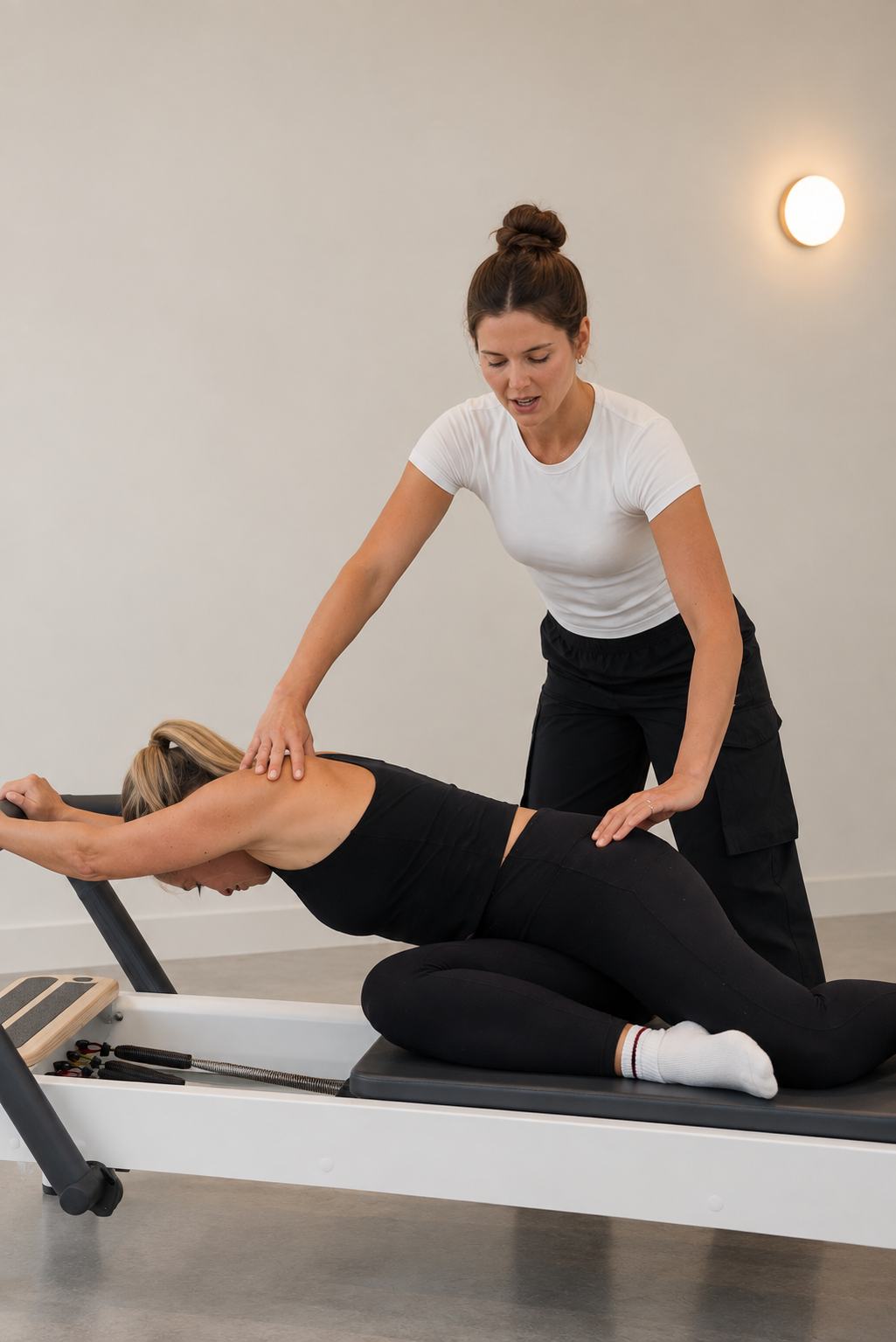
Muscle helps you:
climb stairs
get off the floor
lift groceries
carry children or grandchildren
travel
walk uphill
exercise
maintain balance
protect independence
Muscle is functional tissue.
Maintaining it is one of the most useful investments you can make in your future physical capacity.
Strength
and Muscle Mass Are Not Exactly the Same Thing
It is also worth distinguishing between muscle mass and strength.
They are related, but they are not identical.
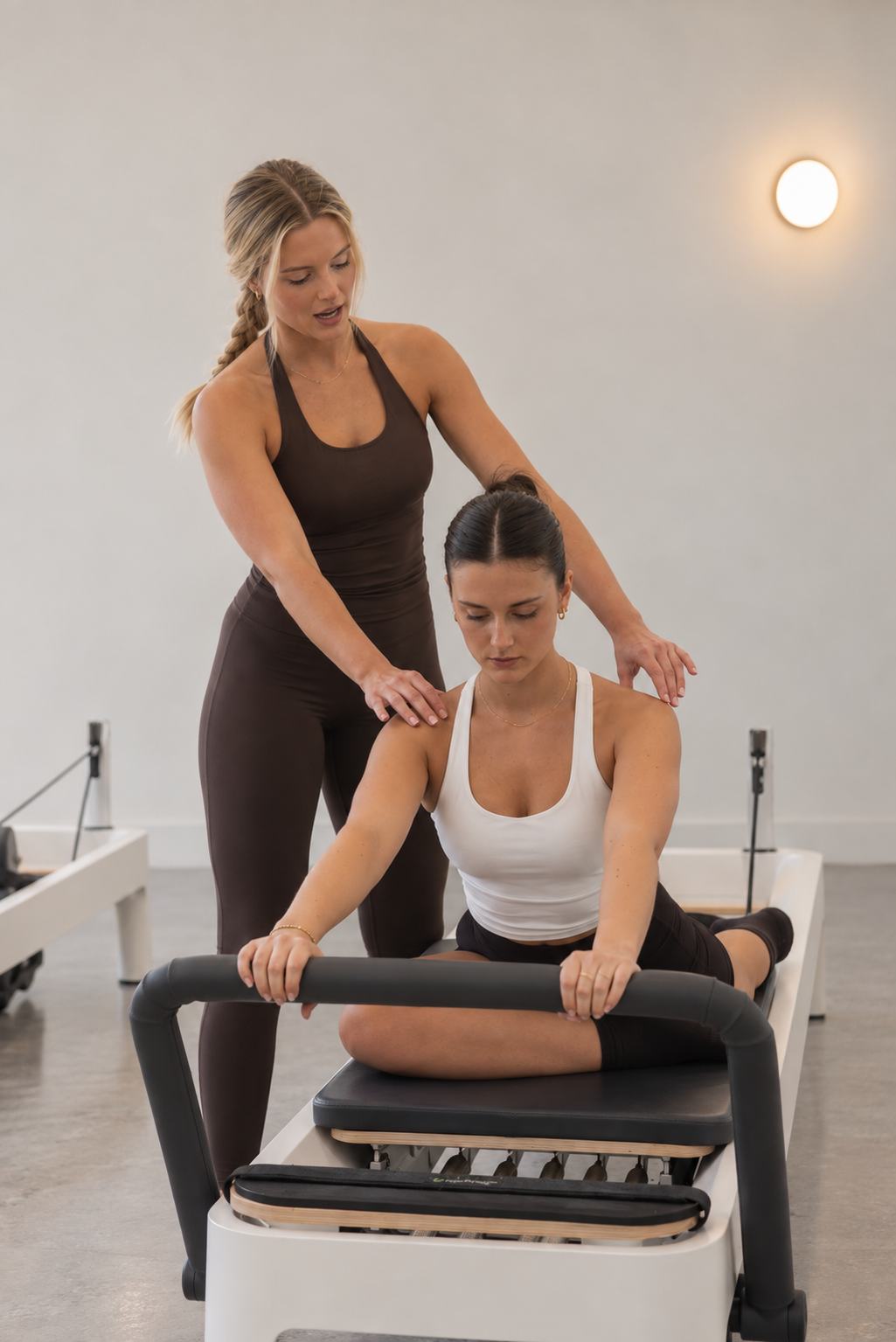
You can lose strength through changes in:
muscle size
neurological function
activity levels
coordination
power
This is why simply trying to "tone" muscles is not enough.
We want women to maintain the ability to actually produce force.
That requires resistance.
Why Bone Health Becomes Particularly Important
Bone is living tissue.
It is constantly being broken down and rebuilt through a process called bone remodelling.
Oestrogen plays an important role in this process.
As oestrogen declines around menopause, the balance between bone formation and bone resorption can change, and bone loss can accelerate.
Over time, this can contribute to:
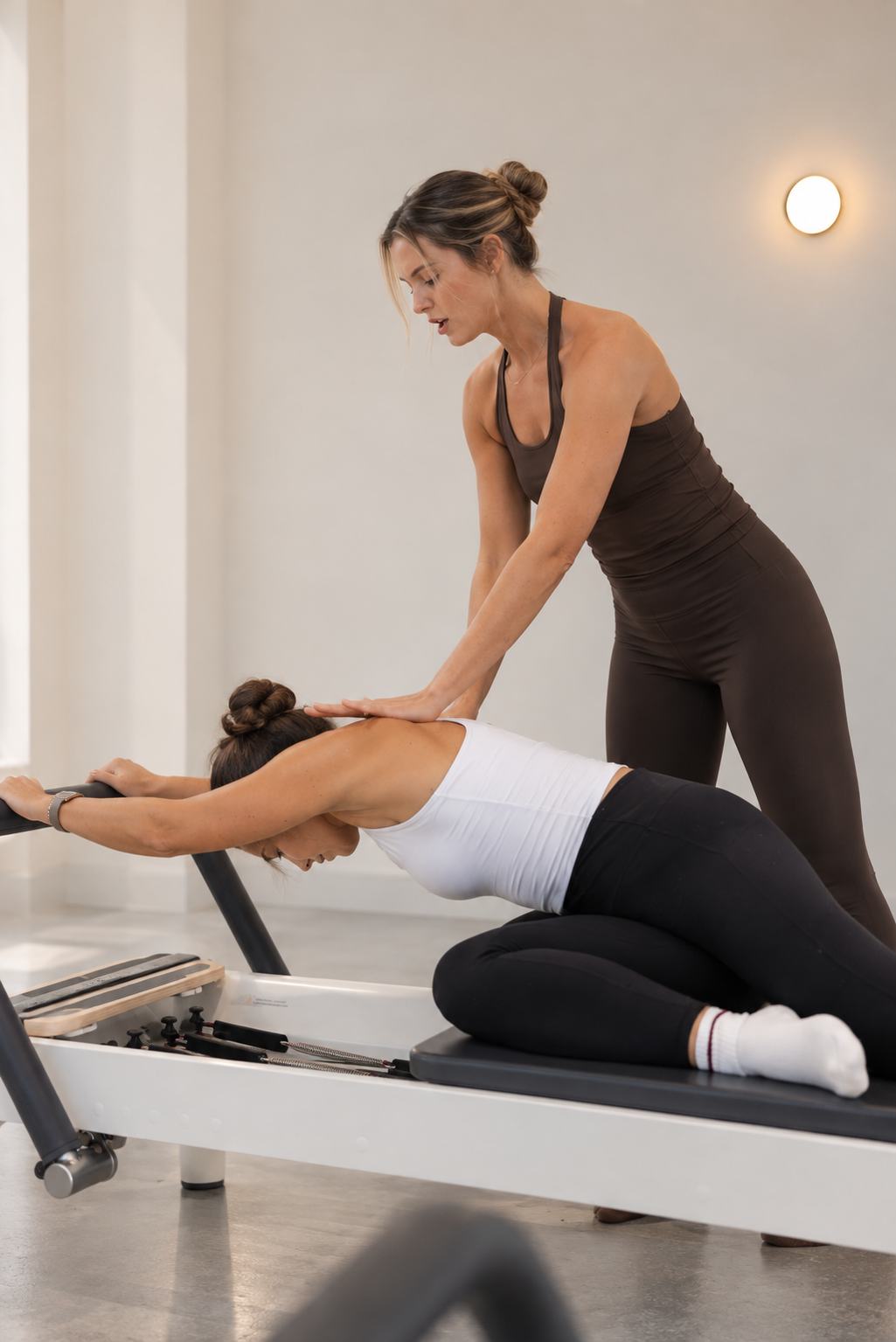
osteopenia
osteoporosis
increased fracture risk
This is one of the reasons menopause is such an important window for thinking seriously about bone health.
What Is Osteopenia?
Osteopenia means bone mineral density is lower than expected but has not reached the diagnostic threshold for osteoporosis.
It is often discovered through a bone-density scan.
Being diagnosed with osteopenia does not mean a fracture is inevitable.
It does mean that bone health deserves attention.
Exercise can form an important part of management alongside appropriate medical and nutritional care.
What Is Osteoporosis?
Osteoporosis is a condition characterised by reduced bone strength and an increased risk of fracture.
Common fracture sites include:
hip
spine
wrist
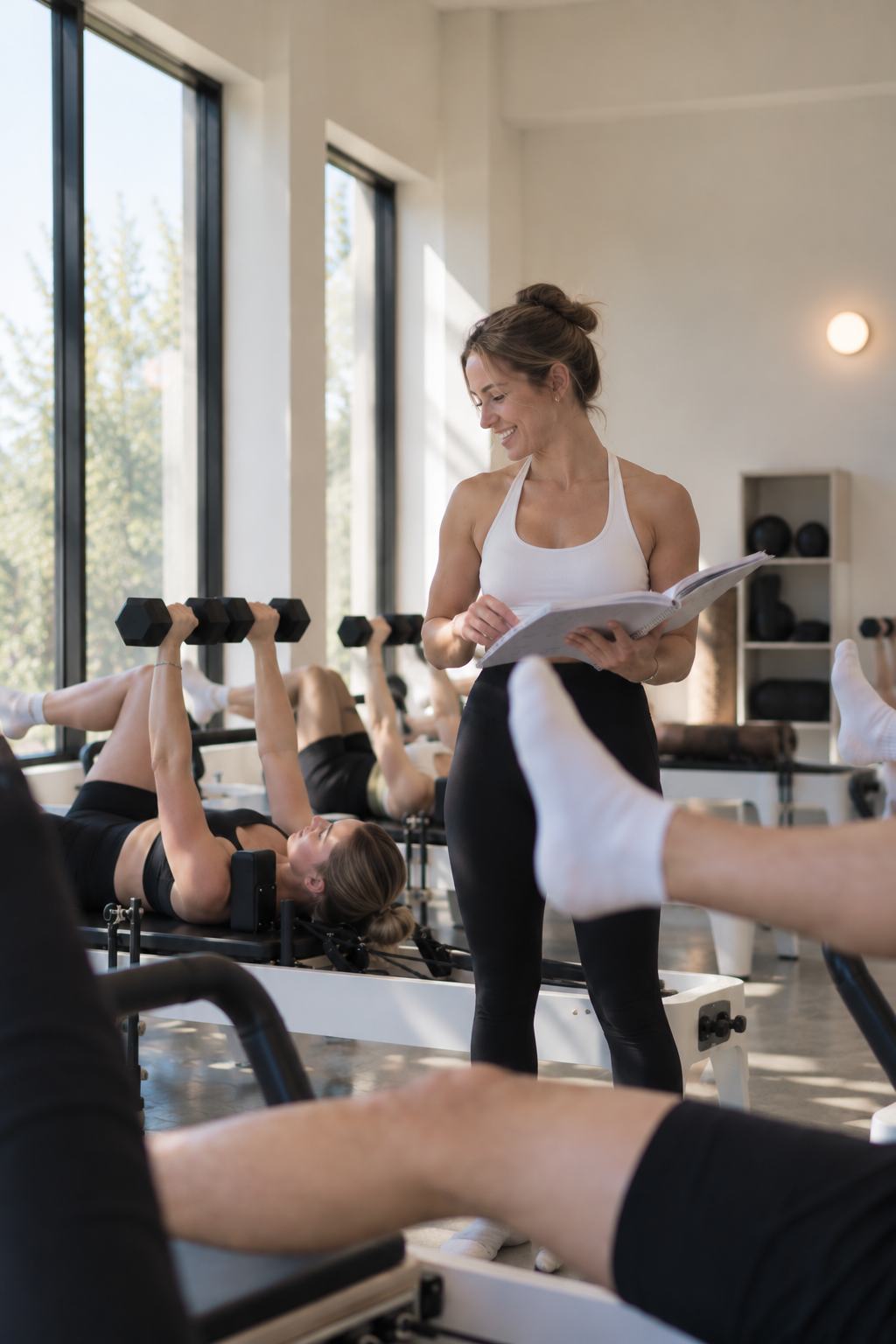
One of the challenges with osteoporosis is that you may not know you have it until bone density is assessed or a fracture occurs.
That is why risk assessment and prevention matter.
Bone Needs Load
This is one of the most important concepts to understand.
Bone adapts to mechanical loading.
If we want to stimulate bone, we need to expose it to appropriate physical forces.
That is one reason resistance training and weight-bearing exercise are so important.
Bone does not respond simply because an exercise feels tiring.
It responds to the mechanical stimulus being placed through it.
This distinction becomes particularly important when discussing Pilates.
Is Pilates Good for Bone Density?
Pilates can provide many valuable benefits, including:
strength
balance
coordination
mobility
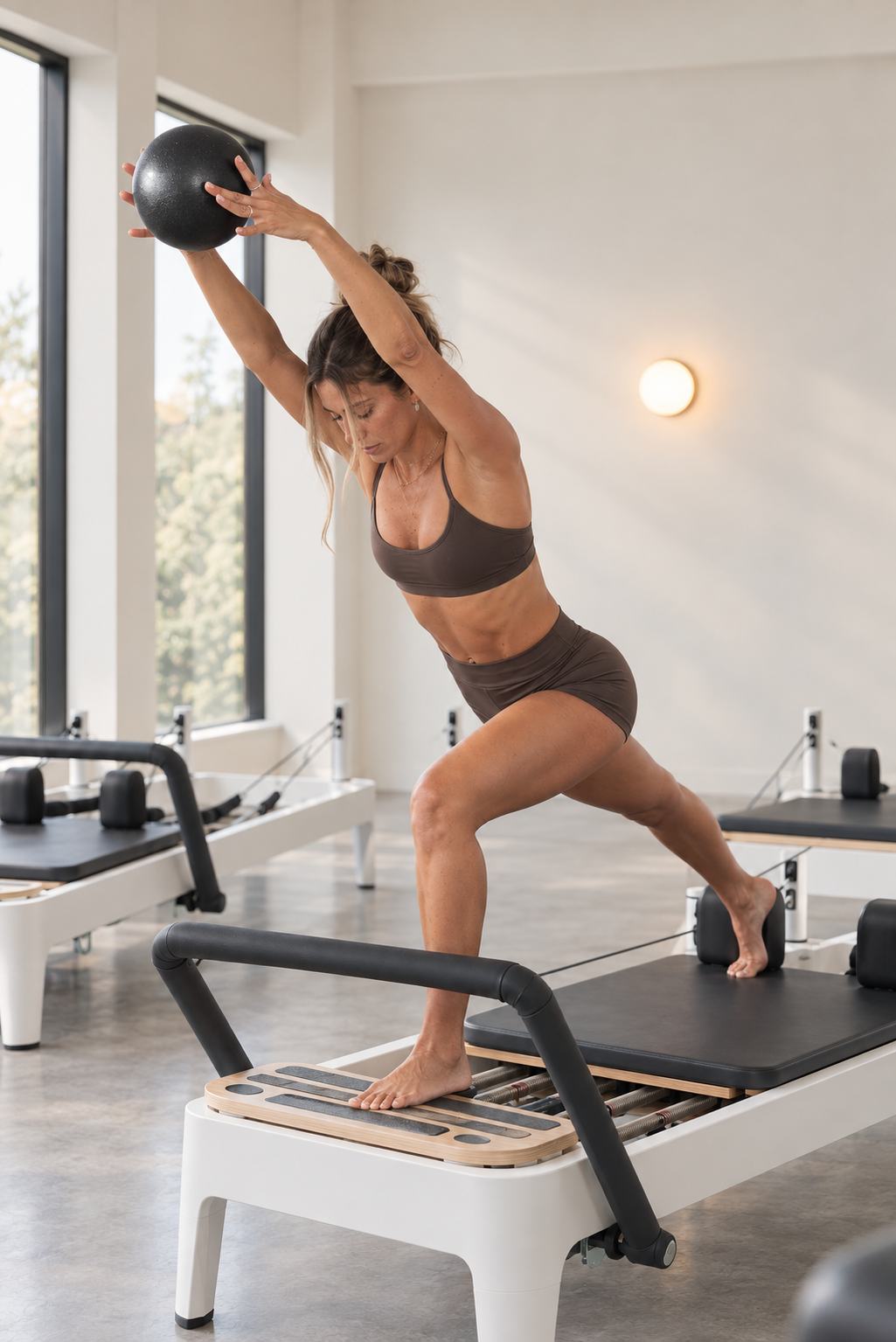
posture
body awareness
confidence with movement
All of those can be useful as we age.
However, not every Pilates exercise creates the same stimulus for bone.
A very light, low-load Pilates session may not provide sufficient mechanical loading to optimise bone adaptation on its own.
This does not mean Pilates is "bad for bones".
It means the dose matters.
For women focused on bone health, Pilates may be most useful when it forms part of a broader programme that includes appropriately progressive resistance and weight-bearing exercise.
Why Body Form Combines Pilates
and Strength
This is exactly why our approach at Body Form is not:
Pilates OR strength training.
We integrate both.
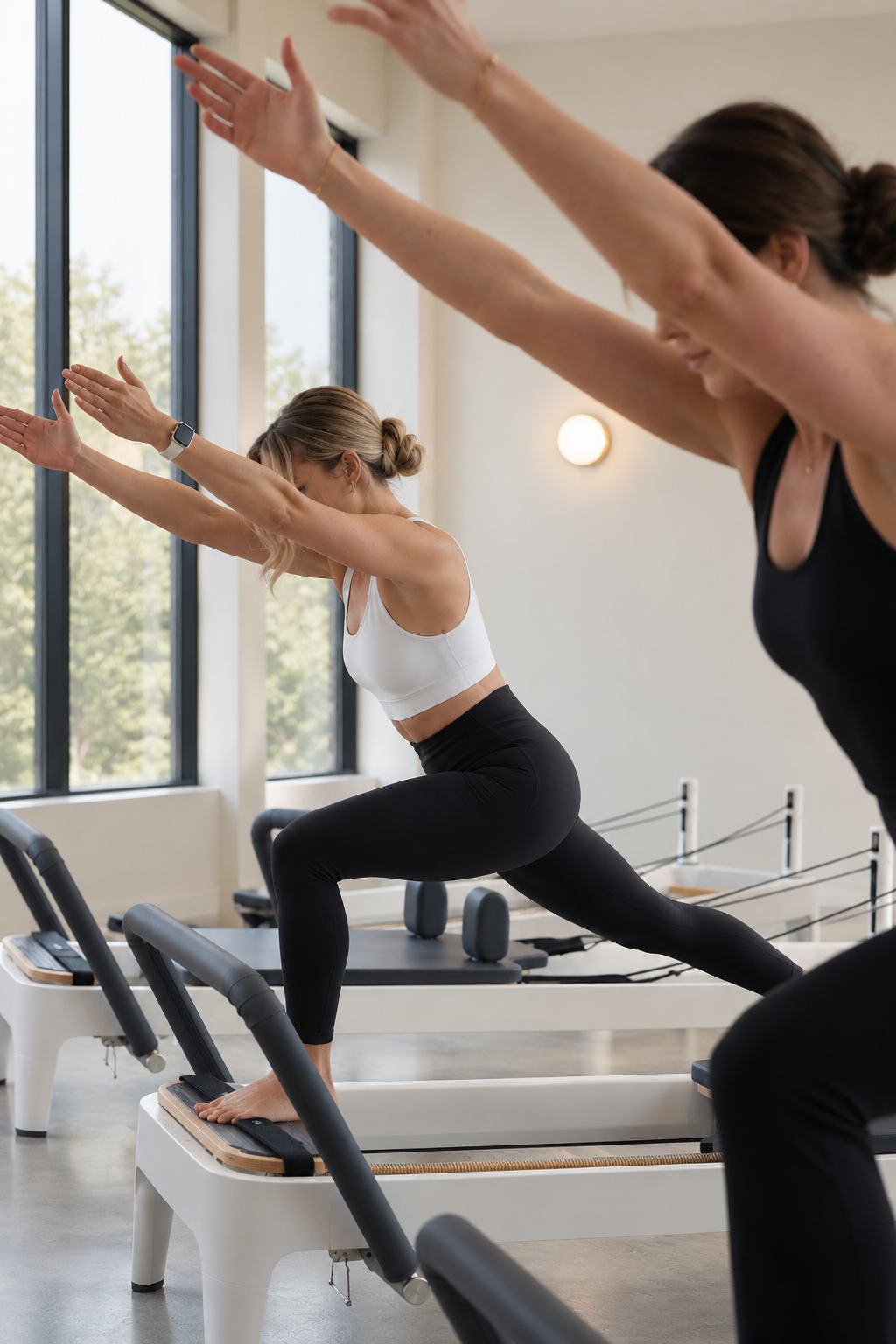
Pilates equipment gives us enormous flexibility for:
movement
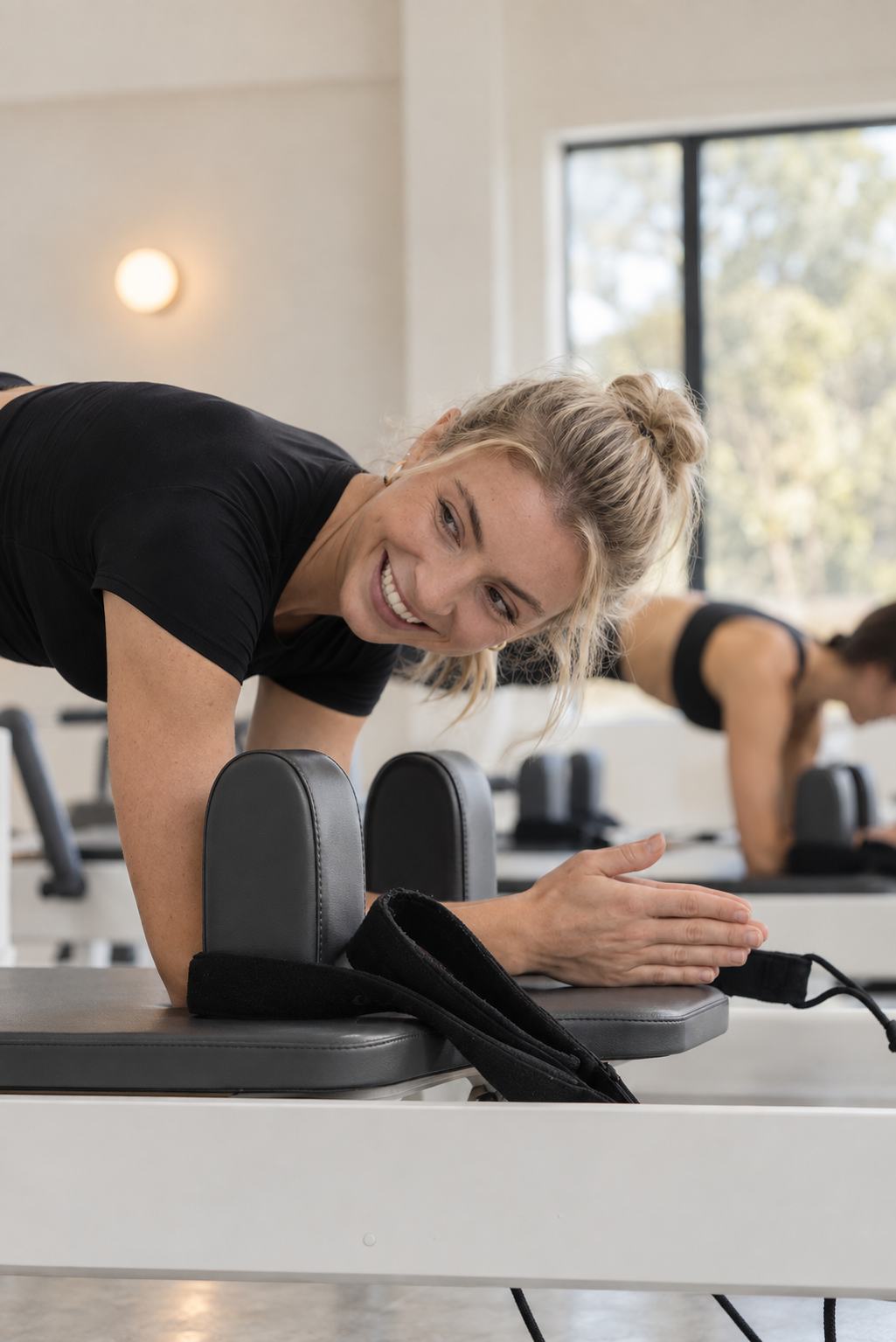
control
rehabilitation
balance
strength
exercise modification
But when a client needs more external resistance, we can also introduce:
dumbbells
free weights
loaded functional exercises
progressive resistance
We want the training stimulus to match the goal.
If the goal is getting stronger, the programme needs to progressively challenge strength.
What Does Strength Training Actually Mean?
Strength training does not automatically mean:
bodybuilding
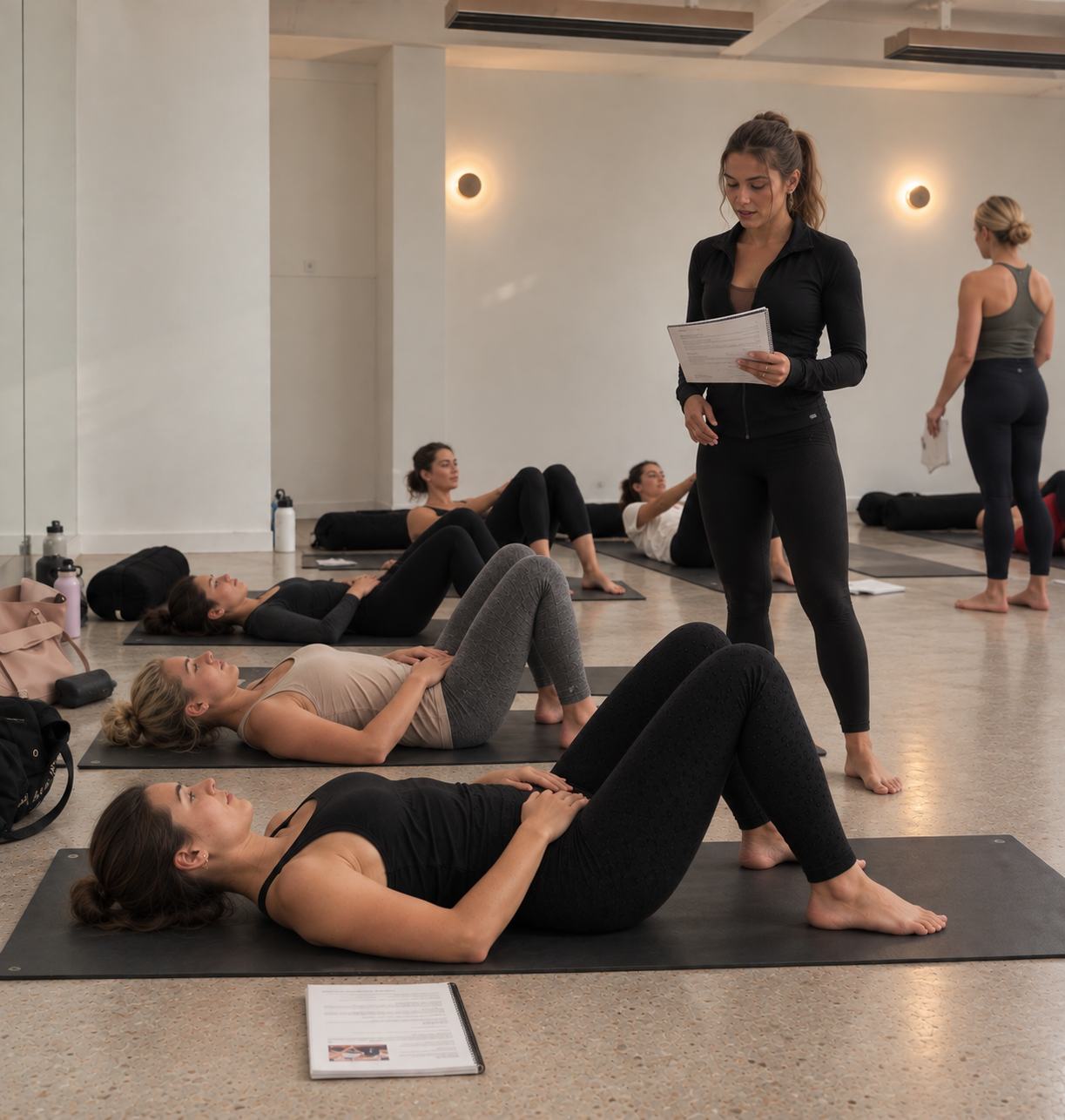
lifting enormous barbells
training to exhaustion
high-impact boot camps
Resistance training simply means your muscles are working against an external resistance.
That resistance may come from:
weights
springs
machines
cables
resistance bands
body weight
The important part is that the resistance is sufficiently challenging for the individual and can be progressed over time.
Why "Light Weights
for Women" Is Outdated Advice
Women have spent decades being marketed tiny dumbbells and endless high-repetition workouts because heavier resistance was supposedly too masculine, too dangerous or would make them "bulky".
That messaging has not served women well.
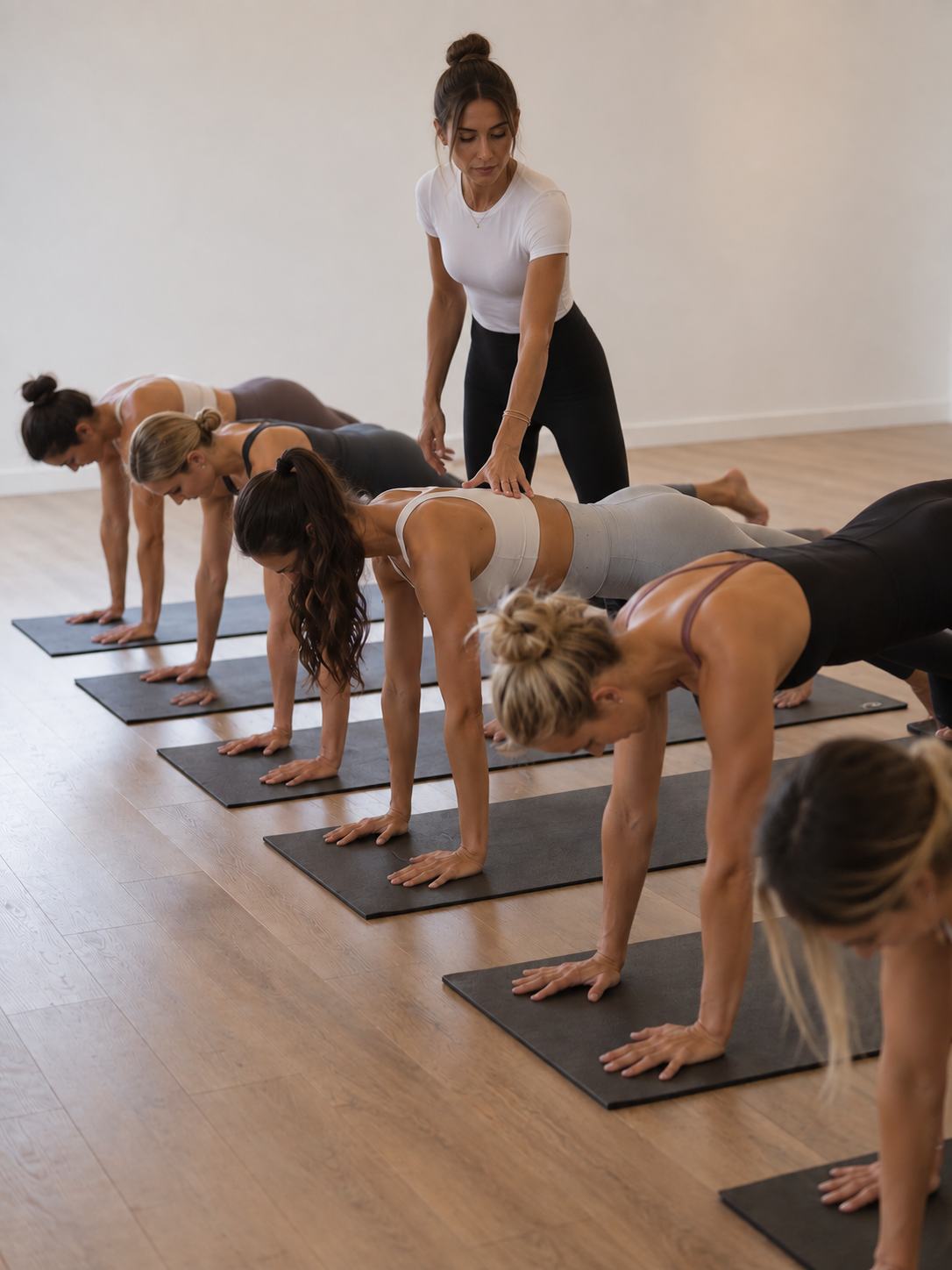
Especially as we age.
If we want to maintain strength, our bodies need a meaningful reason to adapt.
A weight that was challenging six months ago may eventually become easy.
When that happens, continuing with exactly the same resistance forever provides less reason for further adaptation.
This is why progressive overload matters.
What Is Progressive Overload?
Progressive overload means gradually increasing the training stimulus as your body adapts.
That may involve increasing:
resistance
repetitions
sets
range
exercise difficulty
For example:
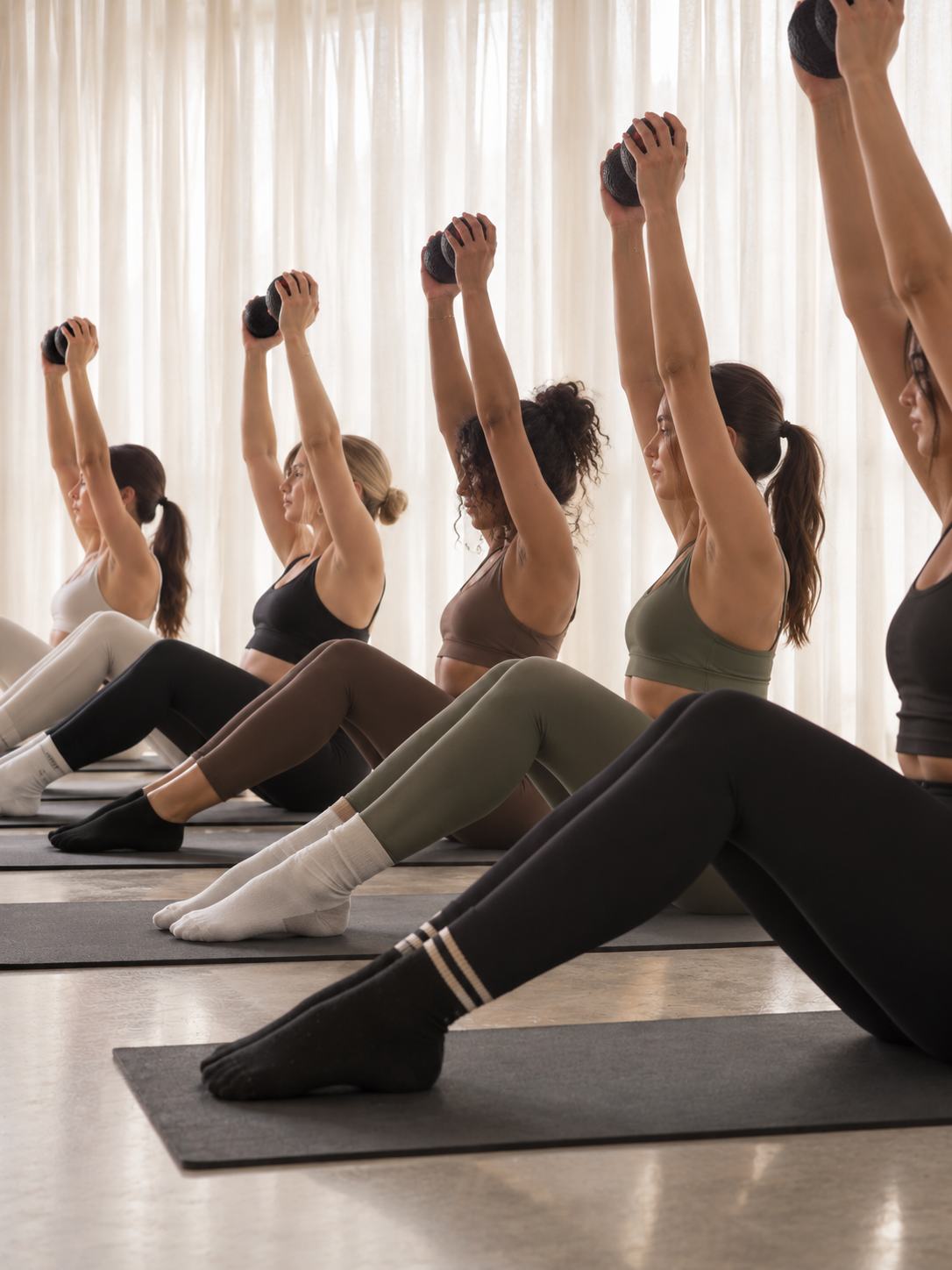
You may begin a squat using body weight.
Then add support and improve range.
Then add a dumbbell.
Then gradually increase the dumbbell weight.
Progression should be appropriate.
But without progression, strength improvements eventually plateau.
You Are Not Too Old to Get Stronger
This is worth stating clearly.
Getting older does not mean strength training stops working.
Older adults can improve:
strength
muscle function
balance
physical capacity
with appropriately prescribed resistance training.
The starting point may differ between individuals.
But the principle remains the same:
the body adapts to appropriate challenge.
What About Women Who Have Never Lifted Weights?
You do not need previous gym experience to start strength training.
You also do not need to walk into a gym and immediately lift something heavy.
A beginner programme may start with:
sit-to-stands
supported squats
Reformer resistance
step-ups
rows
light loaded carries
basic pushing and pulling
The goal is to establish:
technique
confidence
tolerance
and then progressively build from there.
Everyone starts somewhere.
Why Cardio Alone Is Not Enough
Cardiovascular exercise is extremely valuable.
Walking, cycling, swimming and running can support:
cardiovascular health
fitness
mental wellbeing
metabolic health
general activity
You do not need to stop doing cardio.
But cardio and resistance training create different adaptations.
Walking may improve your walking endurance.
It does not necessarily provide enough stimulus to maximise upper-body strength or maintain muscle across the whole body.
This is why a complete exercise programme should usually include more than one type of training.
"But I Walk Every Day, Isn't That Enough?"
Walking is excellent.
Please keep walking.
But if your goal includes maintaining:
muscle
strength
bone
power
then walking alone may not provide the full stimulus you need.
Think of walking and strength training as complementary rather than competing.
You can do both.
Why Muscle Matters for Bone Too
Muscles produce force on bones through their attachments.
When muscles contract against resistance, those forces contribute to the mechanical environment experienced by bone.
This is one reason resistance training can support both muscular and skeletal health.
Building strength is not just about muscles.
The musculoskeletal system adapts together.
What About Impact Exercise?
Depending on the individual, impact can also provide a useful stimulus for bone.
This may include activities such as:
hopping
jumping
running
skipping
multidirectional impact
But impact is not appropriate for every person in exactly the same way.
Considerations include:
current bone density
fracture history
joint health
pelvic floor symptoms
balance
previous injuries
training experience
For some women, impact can be introduced gradually.
For others, modifications may be required.
This is where individualised programming becomes valuable.
Strength Training Is Also About Fall Prevention
Bone strength is only one side of fracture prevention.
We also want to reduce the likelihood of falling.
Strength training can help improve the physical qualities required to:
climb stairs
step over obstacles
recover balance
get up from the floor
respond when you trip
This is why healthy ageing programmes should include:
strength
balance
coordination
mobility
power
rather than focusing only on flexibility.
Why Power Matters as We Age
Strength is your ability to produce force.
Power relates to how quickly you can produce that force.
That distinction becomes increasingly important with age.
Imagine you trip over a curb.
You do not have ten seconds to slowly generate force.
Your body needs to respond quickly.
Appropriate power training may involve exercises such as:
faster sit-to-stands
purposeful step-ups
controlled faster concentric movements
appropriately prescribed impact
Power training does not mean reckless exercise.
It means maintaining the ability to move with intent and speed where appropriate.
Menopause Does Not Mean Exercise Should Become Permanently Gentle
This is one of the biggest messages we want women to understand.
Getting older does not automatically mean:
lighter weights
smaller movements
slower exercise
avoiding challenge
Your programme should reflect your:
health
experience
symptoms
medical history
goals
not simply your age.
Some women in their 50s and 60s are extremely experienced lifters.
Others are starting resistance training for the first time.
Both deserve programming that matches the individual.
What About Joint Pain During Menopause?
Some women report increased:
joint aches
stiffness
musculoskeletal discomfort
during the menopause transition.
This can understandably make people hesitant to exercise.
But pain does not automatically mean exercise needs to stop.
Often, the programme can be adjusted by modifying:
resistance
range
exercise choice
volume
frequency
while still maintaining an appropriate training stimulus.
Persistent or significant symptoms should be assessed rather than simply accepted as "part of getting older".
Tendons Can Become More Noticeable Too
Tendons are another important part of the conversation.
Women around midlife may experience conditions involving:
Achilles tendon
gluteal tendons
rotator cuff
patellar tendon
Hormonal changes may form part of a much broader picture involving:
age
training load
strength
recovery
activity changes
The answer is rarely to stop loading tendons indefinitely.
Tendons generally need appropriately progressed load to maintain and improve capacity.
Why Recovery May Feel Different
Many women notice that they do not recover from exercise exactly as they did in their 20s.
There can be multiple reasons.
The menopause transition may coincide with:
sleep disruption
increased work responsibilities
caring responsibilities
stress
changes in training history
reduced recovery time
If night sweats are disrupting sleep, for example, recovery may feel noticeably different.
That does not mean you cannot train hard.
It means programming needs to consider the whole person.
More Exercise Is Not Always Better
If your body feels different, the answer is not necessarily adding another HIIT session.
Training needs:
stimulus + recovery.
Without adequate recovery, continually adding exercise may simply create more fatigue.
A good programme considers:
training frequency
intensity
sleep
recovery
overall activity
individual tolerance
The goal is not to accumulate the maximum amount of exercise possible.
It is to create enough stimulus to adapt.
What About Protein?
Protein supports muscle protein synthesis and provides amino acids required for muscle tissue.
As we age, adequate dietary protein becomes particularly relevant when combined with resistance training.
However, nutritional needs are individual.
If you have specific dietary requirements, medical conditions or concerns about your intake, seek advice from an appropriately qualified health professional such as an
Accredited Practising Dietitian.
Exercise and nutrition work together, but they are not interchangeable.
You cannot out-supplement a lack of meaningful resistance training.
Does Strength Training Make You Bulky?
This fear still prevents many women from lifting enough resistance.
Building large amounts of muscle is not something that accidentally happens after a few strength sessions.
Significant hypertrophy requires:
training stimulus
sufficient volume
progression
time
appropriate nutrition
For most women entering midlife, the greater concern is not accidentally developing too much muscle.
It is losing muscle and strength that they will wish they had maintained later.
What If I Have Osteopenia or Osteoporosis?
You can still exercise.
In fact, exercise is an important part of management for many people with low bone density.
However, programming should consider:
bone density
fracture history
balance
strength
current exercise experience
medical history
Certain movements or loading strategies may need to be modified depending on individual fracture risk and presentation.
The answer is not simply to become sedentary.
It is to exercise intelligently.
If you have osteoporosis or a history of fragility fracture, seek appropriately qualified
guidance before making major changes to your exercise programme.
Is Pilates Safe for Osteoporosis?
Pilates can often be adapted for people with osteoporosis, but the programme needs to be appropriate.
Not every traditional Pilates exercise is automatically suitable for every person with low bone density.
Exercise selection may need to consider:
spinal loading
repeated or loaded spinal flexion
rotation
balance
fall risk
resistance
fracture history
This is one reason instructor education and individual assessment matter.
At Body Form, we can modify Pilates and strength training according to the client's presentation rather than applying one generic programme to everyone.
Why Balance Training Matters
Balance often gets ignored until someone starts noticing it deteriorate.
But balance is trainable.
Balance relies on multiple systems, including:
vision
vestibular input
proprioception
strength
reaction time
A strong healthy-ageing programme should deliberately challenge balance rather than assuming strength training alone will cover it.
This might include:
single-leg work
changing base of support
stepping
controlled direction changes
reducing external support where appropriate
Why Clinical Pilates Can Be Valuable During Menopause
Clinical Pilates offers a useful environment for women who want to become stronger but need more individual support.
It can be particularly helpful for someone who:
has previous injuries
is nervous about weights
has osteoporosis or osteopenia
experiences joint pain
is returning to exercise
wants more supervision
has pelvic floor considerations
Pilates equipment gives us the ability to modify support and resistance.
But importantly, we can then progress the exercise as capacity improves.
The Reformer Is Not Just
for Stretching
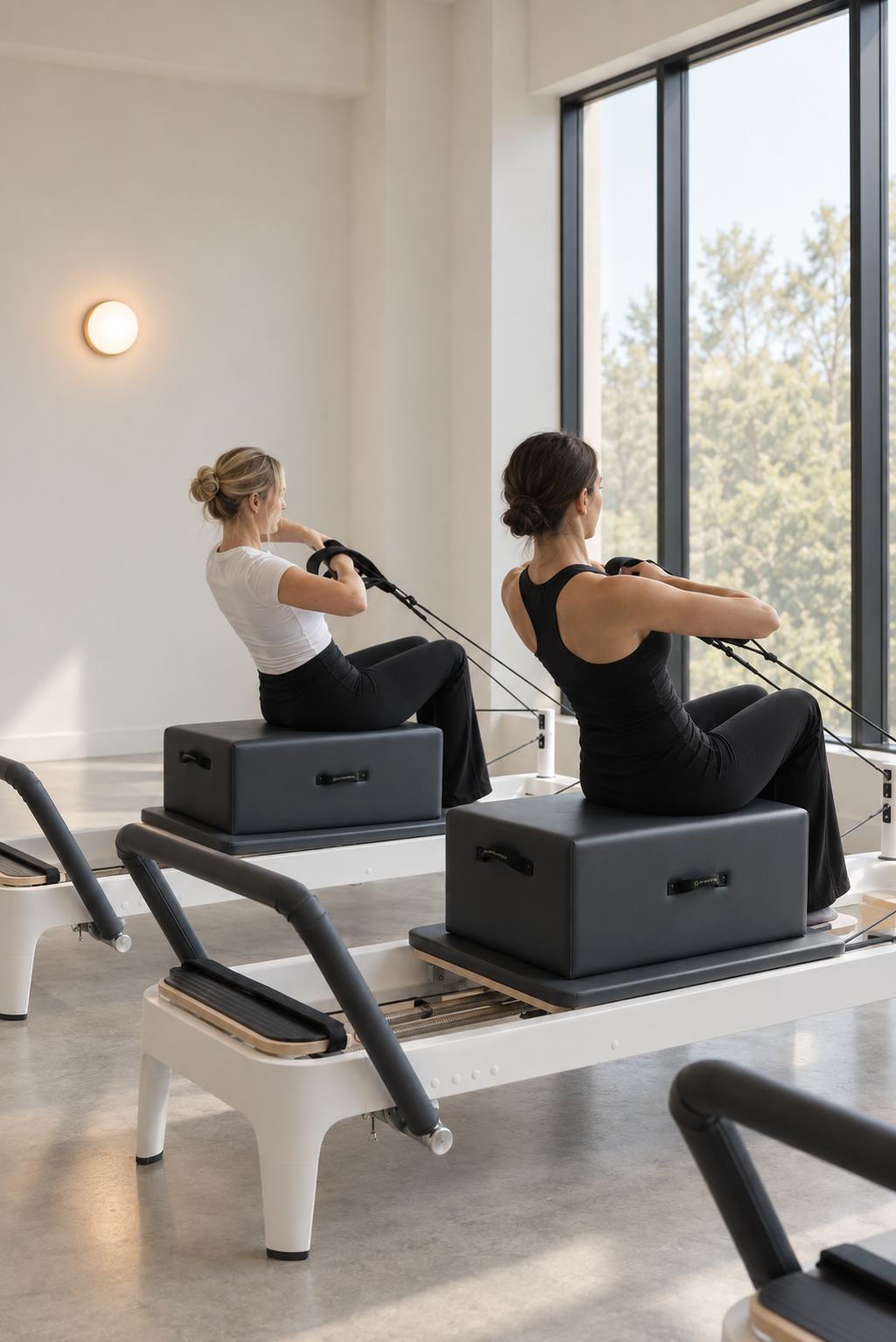
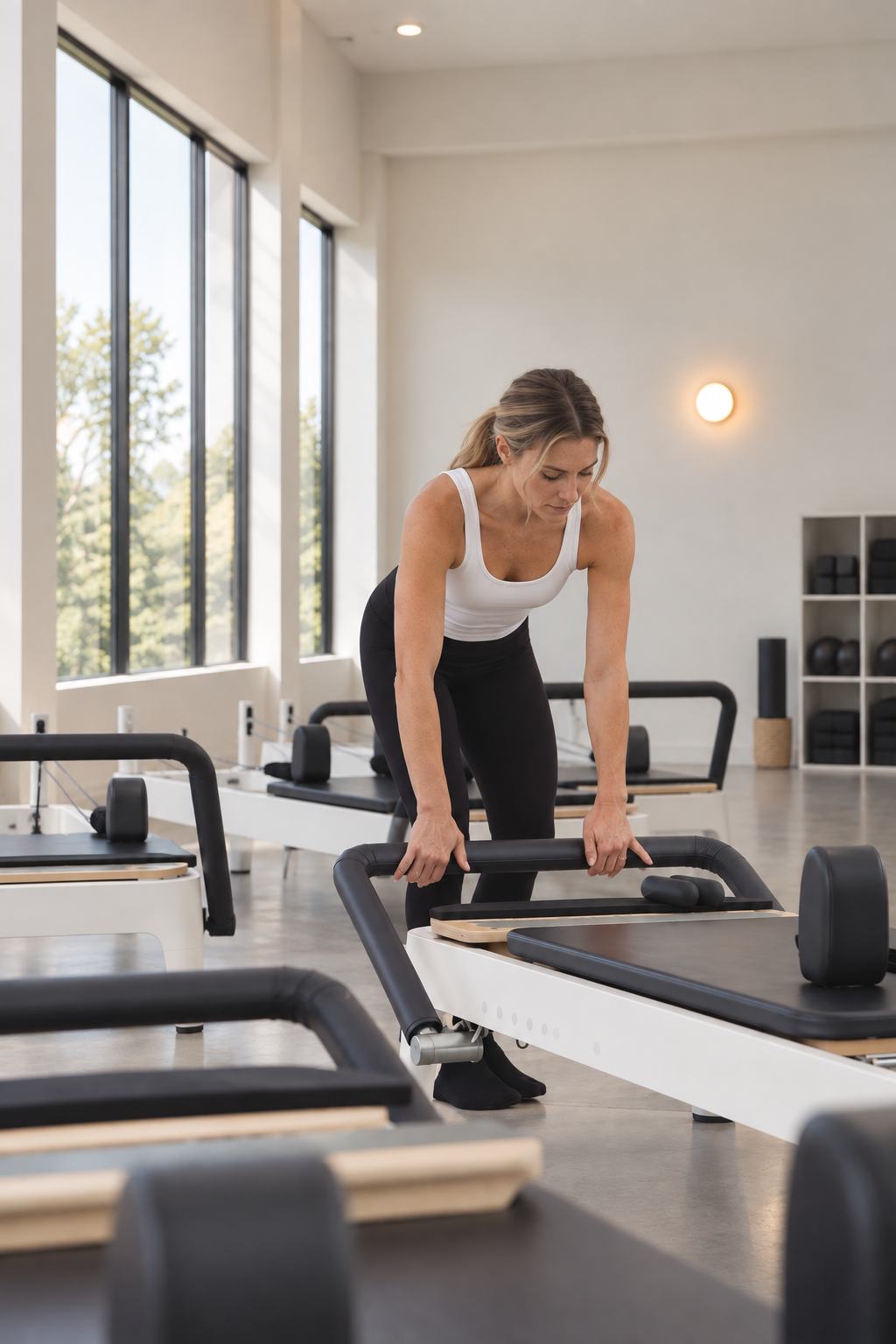
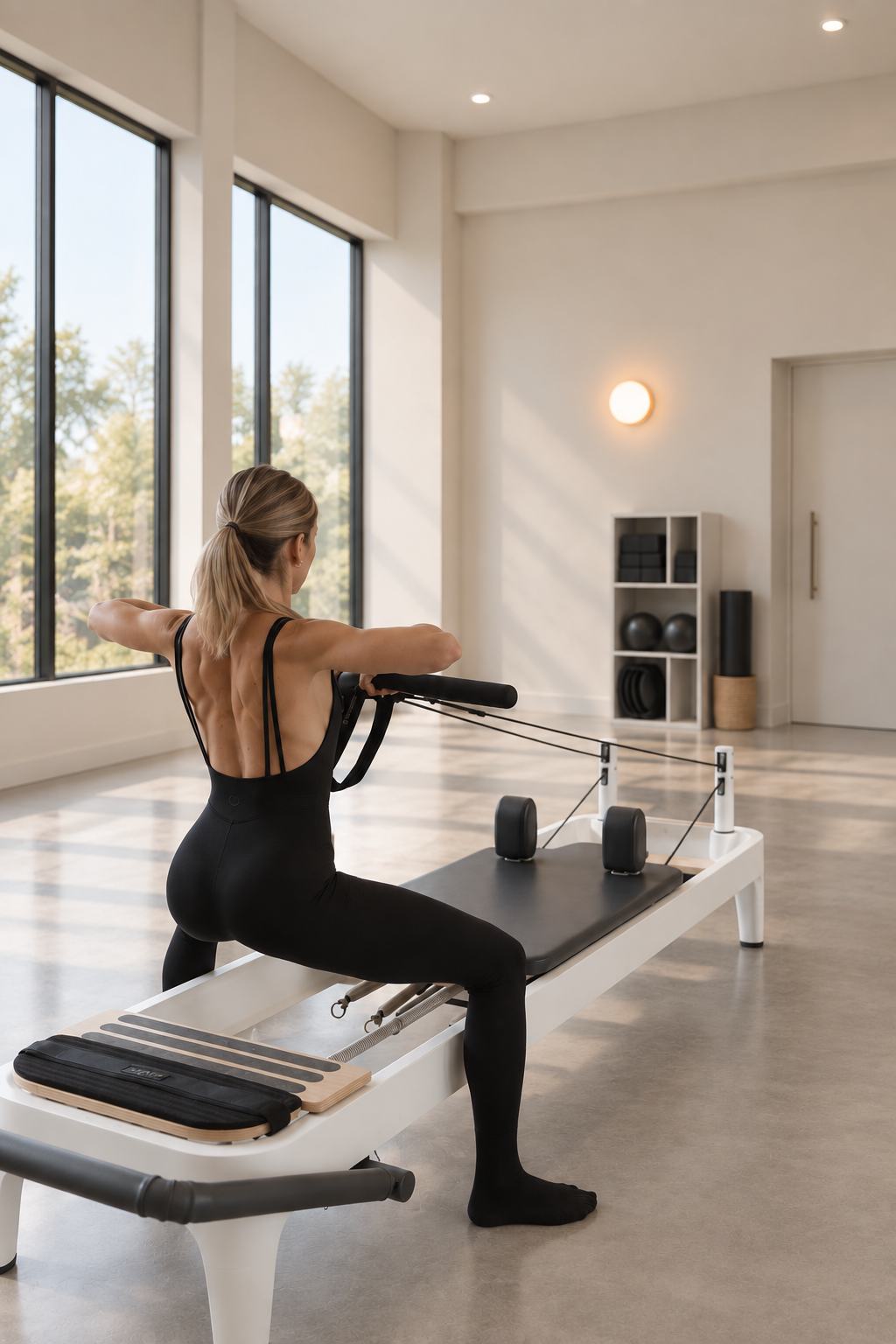
The Reformer can be an excellent resistance-training tool when used appropriately.
Springs can challenge:
legs
hips
trunk
upper body
and exercises can be progressed through:
resistance
leverage
range
unilateral loading
complexity
However, there may also be times when adding external weights provides a more appropriate strength stimulus.
That is why we do not limit ourselves to one method.
Pilates
and Strength Training Can Work Together
You do not need to choose:
Pilates OR weights.
Pilates can offer:
movement variety
mobility
control
balance
resistance
Strength training can add:
higher external loads
progressive resistance
measurable strength progression
Together, they can create a comprehensive programme.
This is the approach we use at Body Form.
What Should a Menopause Exercise Programme Include?
There is no single perfect menopause workout.
But a well-rounded programme may include a combination of:
Progressive Resistance Training
To support muscle and strength.
Weight-Bearing Exercise
To support musculoskeletal health.
Appropriate Impact
Where suitable for bone stimulus and physical function.
Balance Training
To maintain stability and reduce fall risk.
Power
To maintain the ability to generate force quickly.
Cardiovascular Exercise
To support cardiovascular health and fitness.
Mobility
To maintain useful range of motion.
The exact balance will depend on the individual.
How Often Should Women Strength Train?
There is no single prescription that fits every woman.
Frequency depends on:
training experience
programme design
recovery
health
other physical activity
For many people, strength training multiple times per week can provide an effective foundation.
What matters is that the sessions are:
consistent
appropriately challenging
progressive
One extremely hard session every few weeks is unlikely to be as useful as sustainable training performed regularly.
How Heavy Should You Lift?
"Heavy" is relative.
A heavy weight for a beginner may be light for an experienced lifter.
Rather than choosing a number based on age or gender, resistance should be selected according to the individual and the exercise.
A useful question is:
Are the final repetitions genuinely challenging while you can still perform the exercise appropriately?
If you can comfortably perform endless repetitions, the resistance may no longer provide the strength stimulus you think it does.
You Do Not Need to Train to Failure Every Session
Strength training needs to be challenging.
It does not mean every exercise needs to be performed until you physically cannot complete another repetition.
The appropriate intensity depends on:
experience
goal
exercise
programme
recovery
There is a large middle ground between:
"This feels easy"
and
"I cannot move tomorrow."
Good programming lives there.
What If I Have Pelvic Floor Symptoms?
Pelvic floor symptoms do not automatically mean you cannot lift weights.
Symptoms such as:
leaking
heaviness
pressure
discomfort
deserve assessment.
Exercise may need to be modified initially, but the goal is often to help you gradually return to meaningful loading rather than permanently avoiding resistance.
A Women's Health Physiotherapist can help assess your individual presentation.
What If I Have Never Exercised Consistently?
Starting now still matters.
You do not need to undo decades of inactivity in one month.
Begin with what you can tolerate.
Build consistency.
Then progress.
For someone completely new to exercise, the first goal may simply be learning foundational movements and becoming comfortable with resistance.
Over time, those movements can become increasingly challenging.
Strength Is About More Than Exercise
Imagine yourself at 70, 80 or 90.
What do you want to be able to do?
Travel?
Carry your own suitcase?
Get off the floor?
Play with grandchildren?
Garden?
Walk hills?
Surf?
Play tennis?
Live independently?
Strength training is not simply preparation for your next workout.
It is preparation for those things.
Muscle Is a Retirement Fund
for Your Body
A useful way to think about muscle is as physical reserve.
You want to enter later life with as much useful physical capacity as reasonably possible.
Illness happens.
Injuries happen.
Periods of inactivity happen.
Having more strength and muscle before those events gives you greater reserve.
You are not simply training for today.
You are building capacity for the decades ahead.
Menopause Is an Opportunity to Change the Goal
For many women, exercise has historically been framed around:
burning calories
losing weight
making the body smaller
Menopause can be an opportunity to completely change that conversation.
What if the goal became:
becoming stronger?
Maintaining bone.
Maintaining muscle.
Improving balance.
Protecting independence.
Having enough physical capacity to keep doing the things you love.
That is a much more useful long-term reason to train.
Practical Takeaways
Muscle mass and strength can decline with age, making resistance training increasingly important.
Menopause-related hormonal changes can accelerate bone loss.
Bone needs appropriate mechanical loading.
Pilates can support strength, mobility, balance and confidence, but the intensity of the programme matters.
Very light exercise is not automatically sufficient for bone or strength goals.
Progressive resistance training should become a priority through midlife and beyond.
Cardio is valuable but does not replace strength training.
Walking is excellent but should ideally be complemented by resistance training.
Appropriate impact may support bone health for some women.
Balance and power are important components of healthy ageing.
Menopause does not mean exercise needs to become permanently gentle.
Joint and tendon symptoms can often be managed through appropriate load modification rather than complete rest.
Recovery matters.
Strength training and Pilates can complement one another.
Osteopenia and osteoporosis do not mean you should stop exercising.
Exercise should be individualised when fracture risk, pelvic floor symptoms, injury or other health considerations are present.
It is never too late to begin building strength.
Train for the Body You Want to Have
in 10, 20 and 30 Years
The conversation around menopause and exercise needs to move beyond:
"How do I stop gaining weight?"
Your muscle matters.
Your bone matters.
Your strength matters.
Your balance matters.
Your ability to get yourself off the floor at 80 matters.
And these are physical qualities we can actively train.
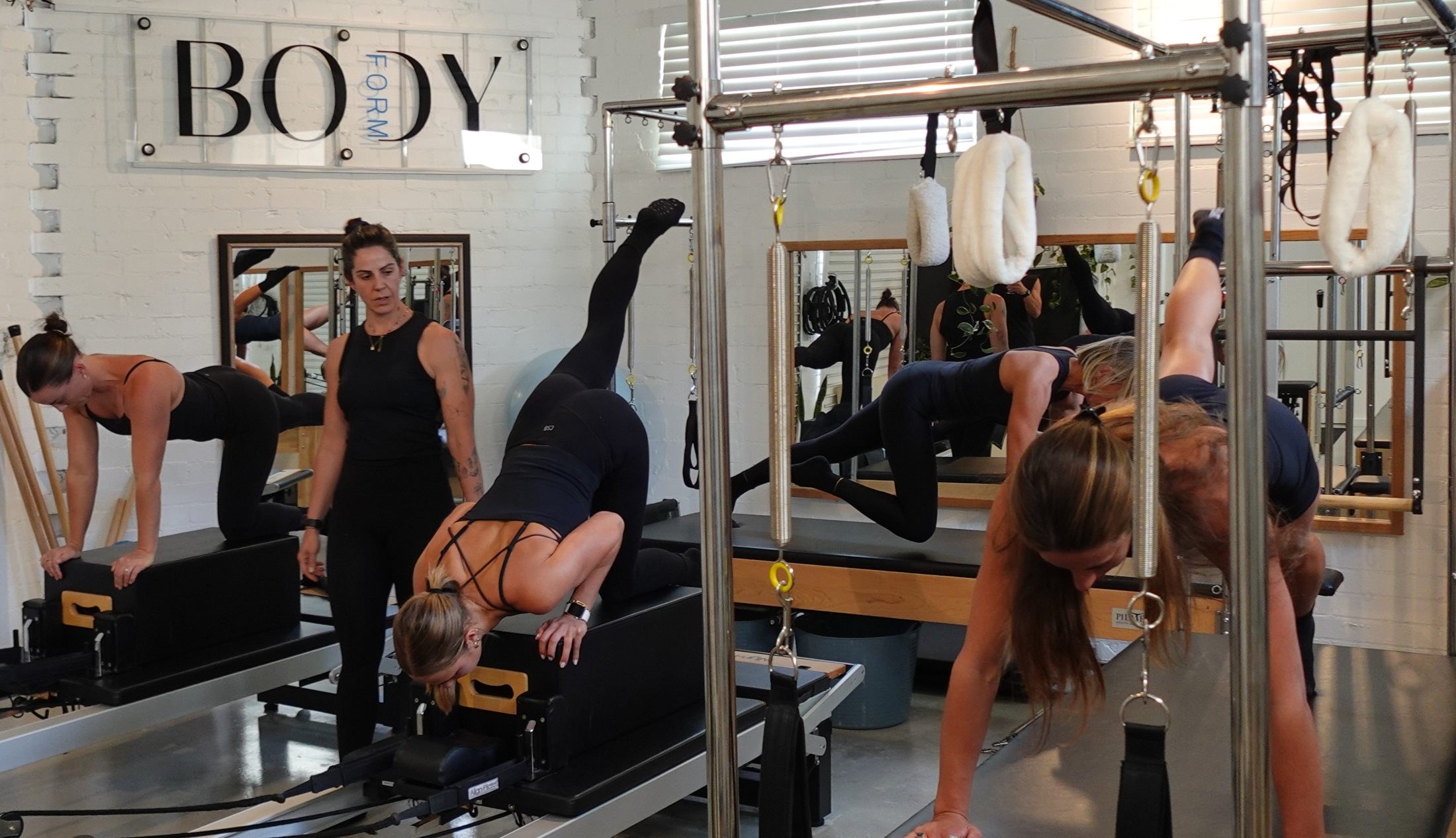
At Body Form Physiotherapy & Clinical Pilates, our approach combines Physiotherapy-informed Pilates with progressive strength training so women are not simply exercising , they are building meaningful physical capacity.
Our sessions can incorporate:
Reformer
Trapeze Table
Wunda Chair
Spine Corrector
free weights
functional strength exercises
balance and mobility training
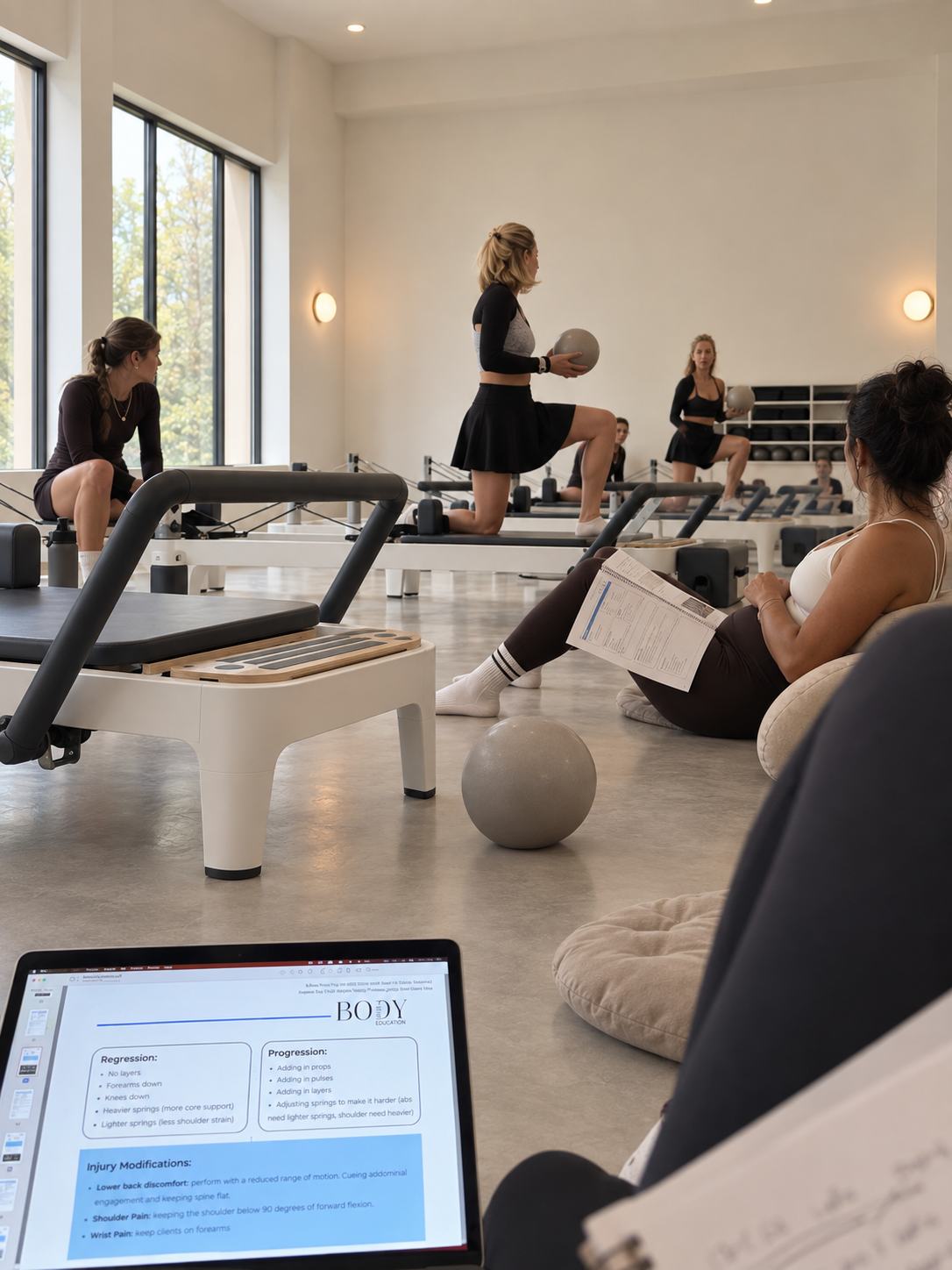
Our small-group classes are capped at just six clients, allowing our instructors to provide individual guidance and progression rather than expecting every woman in the room to train identically.
For women wanting more individualisation, we also offer semi-private sessions, private sessions and Physiotherapy, including Women's Health Physiotherapy where appropriate.
Body Form also offers our Strong Through Menopause programme, designed specifically around the physical priorities that become increasingly important through midlife.
You do not need to be strong before you start.
You do not need previous Pilates experience.
You do not need to know how to lift weights.
You simply need an appropriate starting point and a programme that progresses with you.
If you are approaching perimenopause, currently going through menopause or are well beyond it, there is enormous value in starting now.
The goal is not simply to exercise more.
The goal is to become stronger for the life you still have ahead of you.