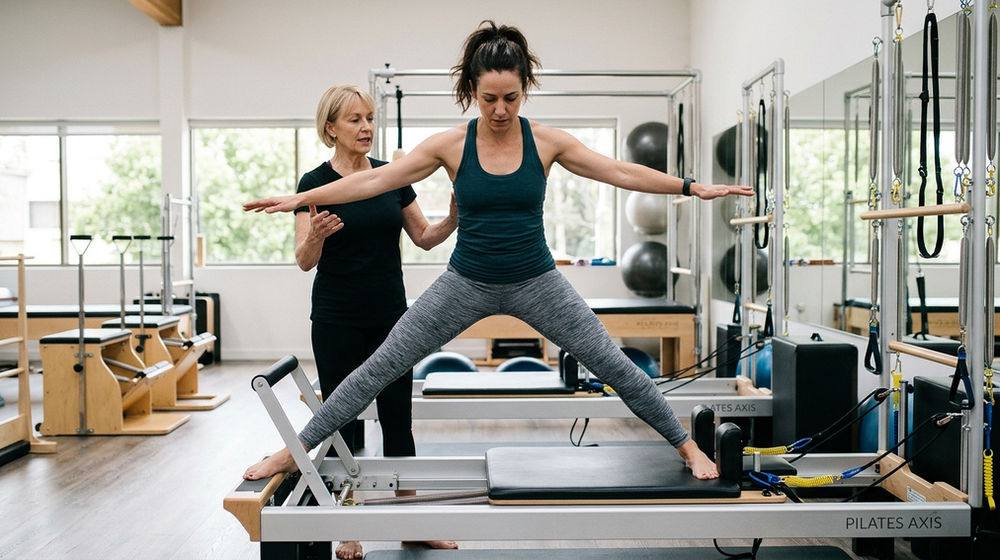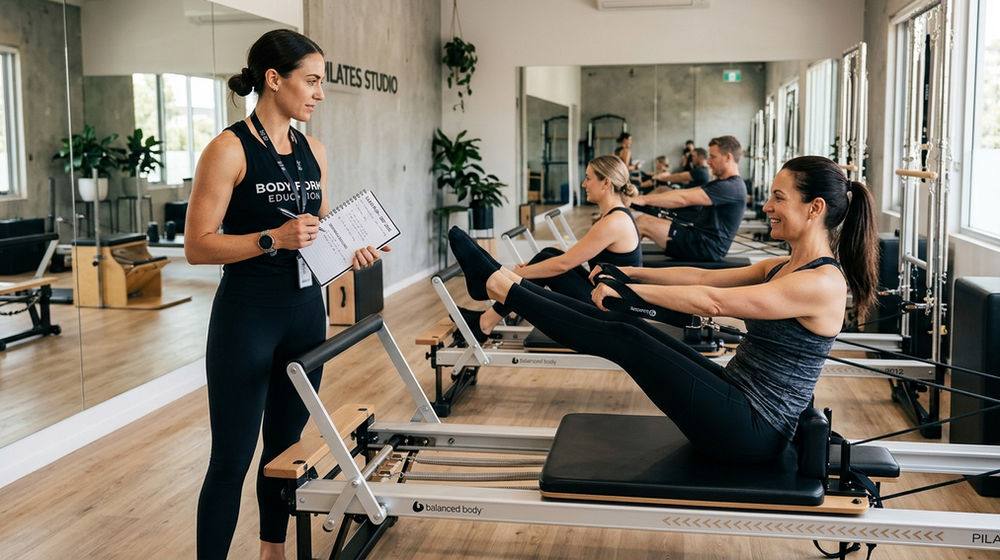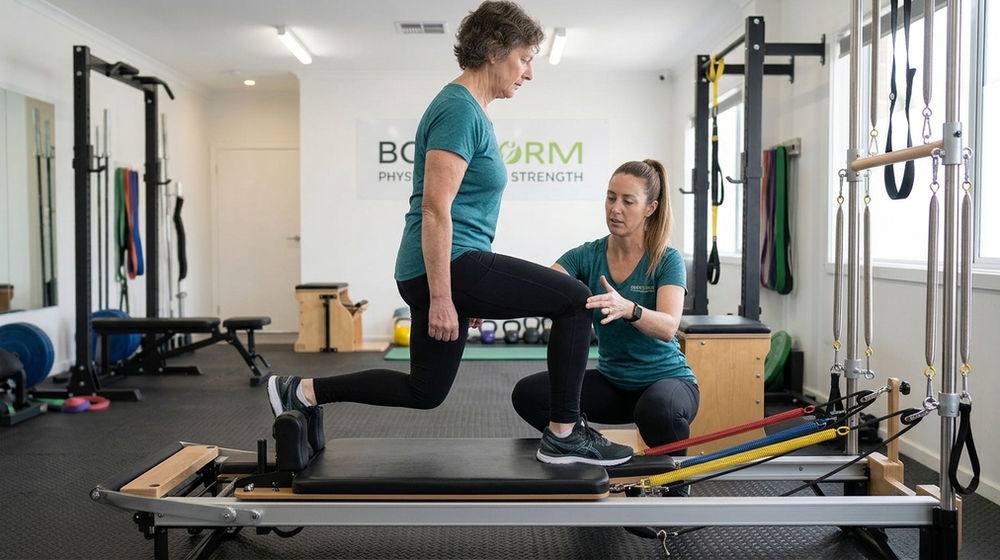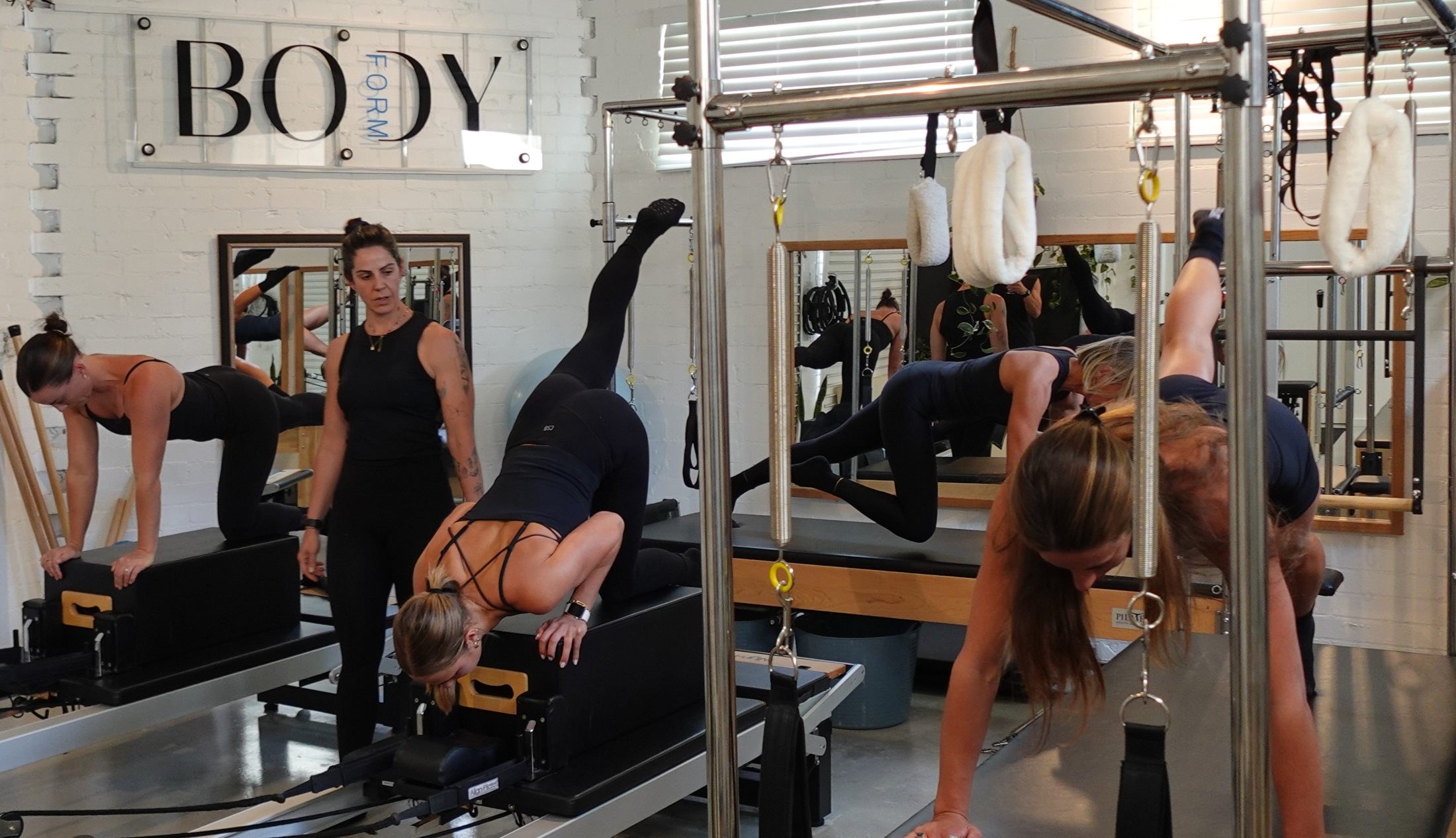
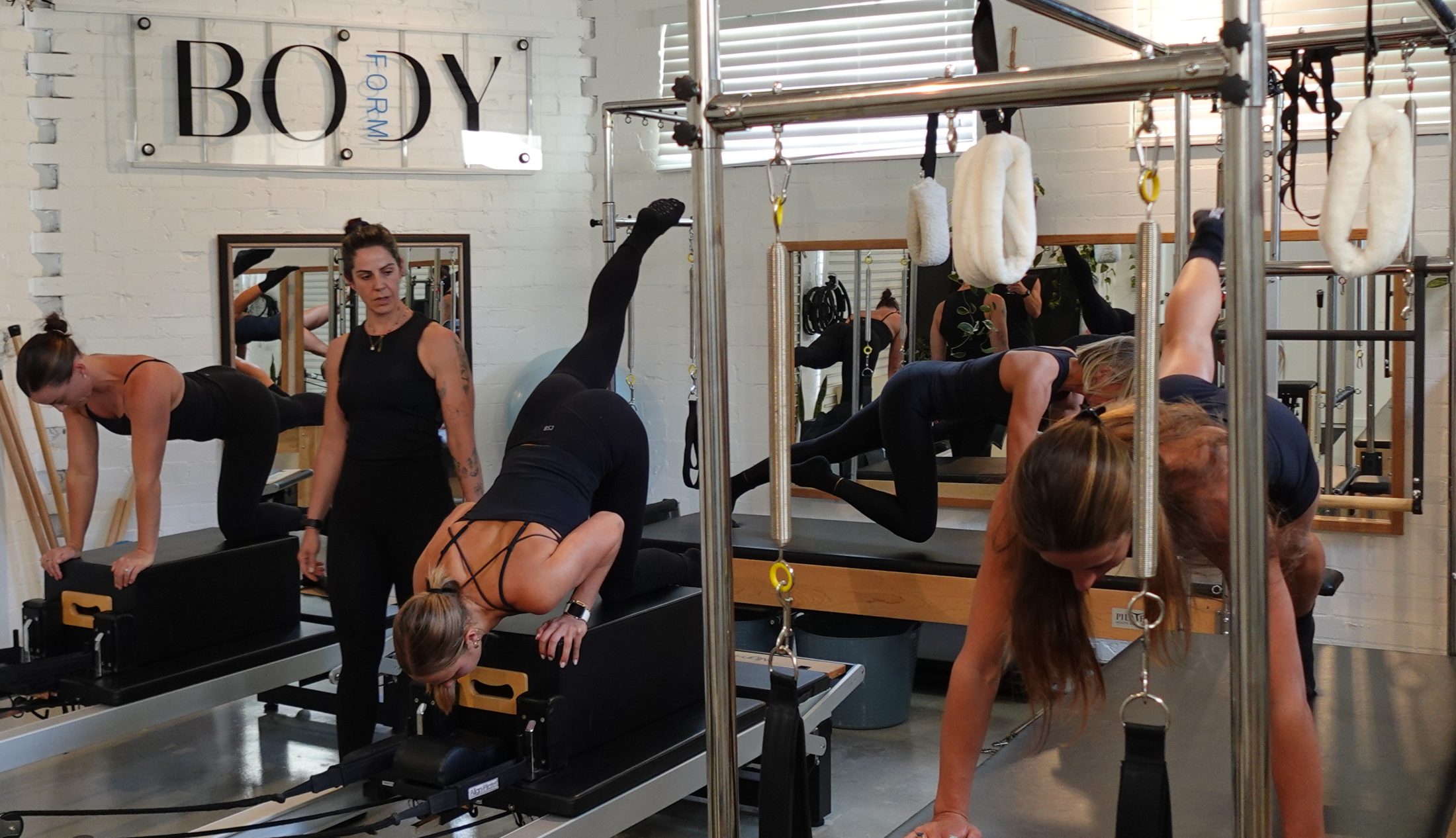
“Keep your pelvis completely still.”
“Lock your ribs down.”
“Don't let your knee move.”
“Pull your shoulder blades down and back.”
“Stabilise your core.”
If you teach Pilates, you have probably used some version of these cues.
The intention is usually good. We want clients to move with control. We want them to manage load appropriately. We want to reduce unnecessary movement when the goal of an exercise requires a particular body region to remain relatively controlled.
But somewhere along the way, stability has become synonymous with staying completely still.
And they are not the same thing.
A stable joint is not necessarily a joint that does not move.
A stable spine is not a spine that remains neutral during every exercise.
A stable scapula is not one that is permanently pulled down and back.
A stable pelvis does not need to remain completely motionless whenever the legs move.
In many tasks, stability actually requires movement.
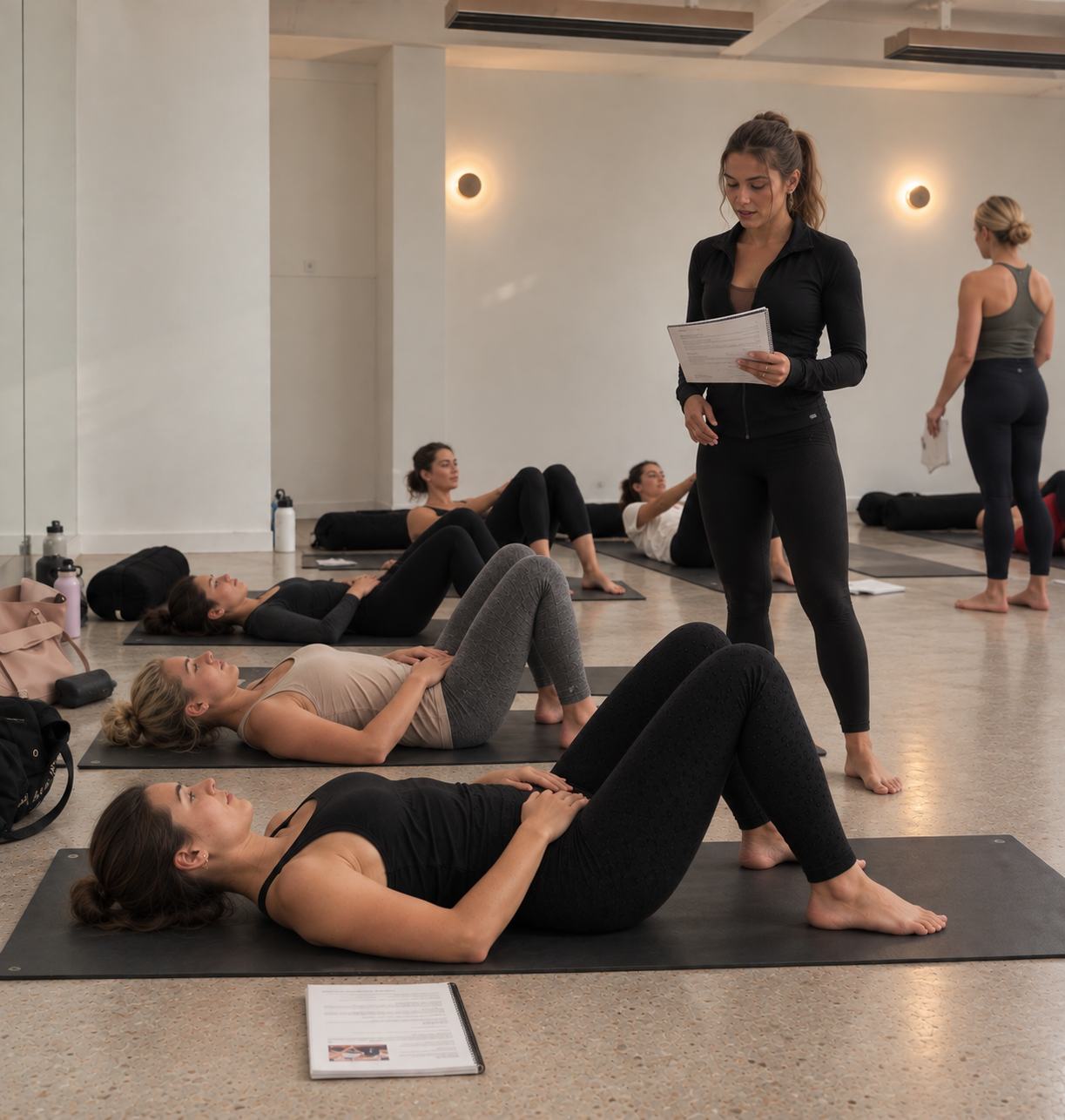
The body needs to be able to create movement, allow movement, control movement and respond to external forces depending on the task.
Understanding this changes the way we programme Pilates.
Instead of asking:
“How do I stop this part of the body from moving?”
we can ask:
“What movement does this task require, and can the client control it appropriately?”
That is a much more useful definition of stability.
What Does Stability Actually Mean?
In exercise, stability is often used to describe the ability to maintain or control the position and movement of a body region when forces are acting upon it.
Sometimes that means resisting movement.
Sometimes it means allowing movement while controlling its direction, speed or range.
Consider standing on one leg.
Your ankle is not completely motionless.
Your foot is not completely motionless.
Your knee, hip and trunk are not completely motionless.
Small adjustments occur continuously as your body keeps its centre of mass appropriately positioned over its base of support.
If you attempted to make every joint completely rigid, balance would not necessarily improve.
Your ability to respond to changes in position is part of what allows you to remain upright.
This is the first distinction Pilates instructors need to understand:
Stability is not the absence of movement. It is the ability to manage movement and force appropriately for the task.
Stability
and Mobility Are Not Opposites
Pilates education sometimes presents mobility and stability as though the body needs to choose between them.
One region should move.
Another should stabilise.
That framework can occasionally be useful when teaching a particular exercise, but it becomes problematic when we turn it into a permanent rule about how the body functions.
A joint can require both mobility and stability.
Your shoulder needs enough mobility to reach overhead, but it also needs the muscular capacity to control that movement.
Your hip needs mobility to walk, squat and lunge, but it also needs to produce and manage force.
Your spine needs to flex, extend, rotate and side-bend, while also being able to resist those movements when a task requires it.
Mobility without sufficient control may limit performance.
But stability without movement capacity is not necessarily the goal either.
We need both.
What Is Dynamic Stability?
Dynamic stability refers to the ability to maintain appropriate control while movement is occurring.
Think about running.
The body is moving rapidly.
The pelvis moves.
The spine moves.
The arms move.
The legs move.
The foot changes shape as it interacts with the ground.
Yet the person still needs sufficient control to repeatedly accept and produce force.
This is dynamic stability.
Now compare that with holding a plank.
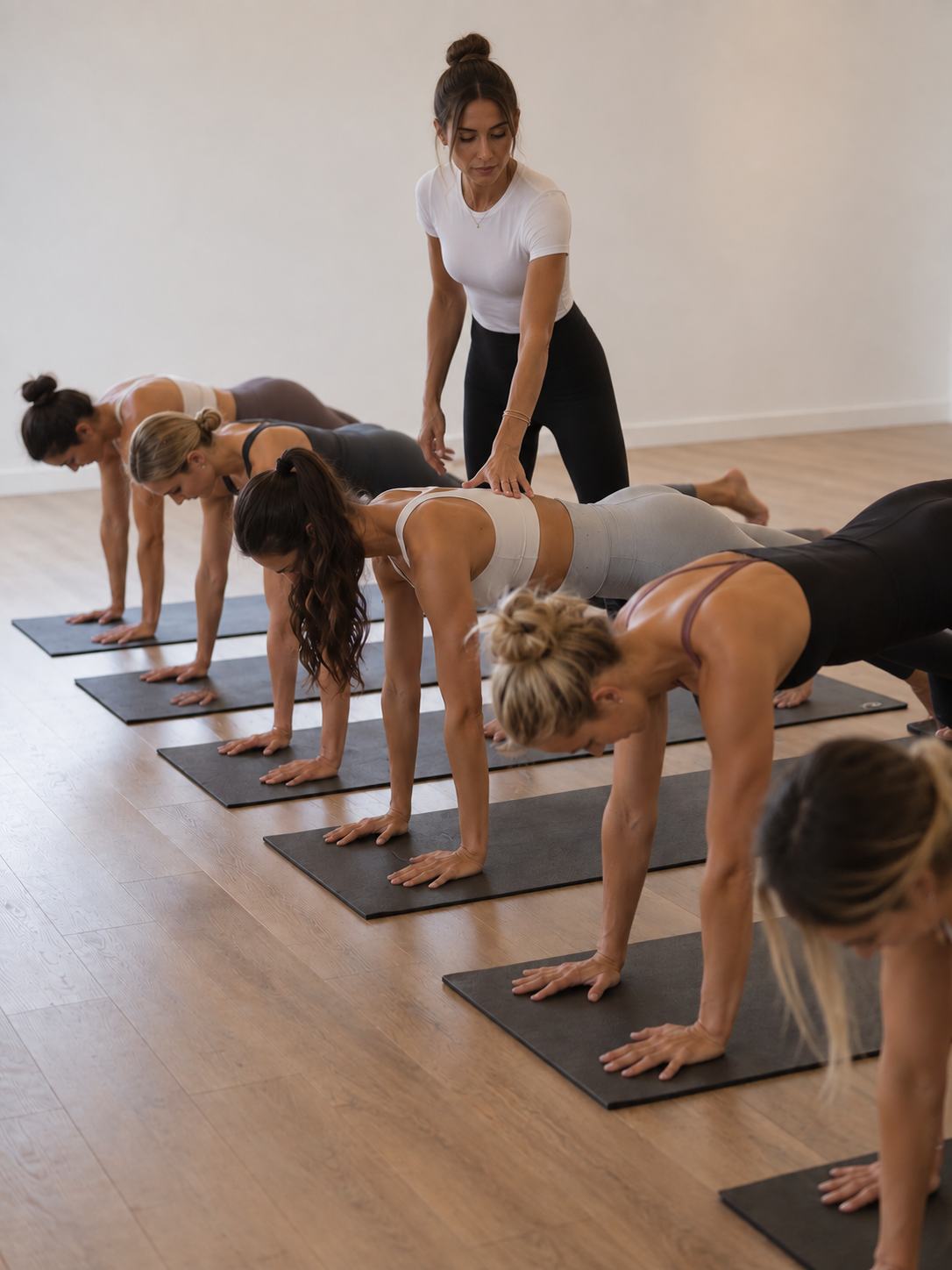
The task asks the client to maintain a relatively consistent body position against gravity.
That involves a more static stability demand.
Both involve stability.
But they are not training exactly the same thing.
This is why someone can be excellent at holding static positions and still struggle with control during faster, more complex movement.
Why This Matters in Pilates
Pilates contains a large number of exercises where we deliberately ask one region of the body to remain relatively controlled while another region moves.
That can be extremely useful.
The problem arises when instructors begin interpreting any movement outside the intended region as failure.
A pelvis moves slightly during leg movement?
“Unstable.”
A scapula moves during arm elevation?
“Unstable.”
A knee moves medially during a squat?
“Unstable.”
A client's ribs change position while breathing?
“Poor core control.”
Human movement is more complex than that.
Before correcting movement, we need to understand whether the movement actually interferes with the goal of the exercise.
Stop Cueing “Stability” Until You Know What You Want Stable
“Stabilise” sounds like a technical cue.
But on its own, it tells the client almost nothing.
What exactly are you asking them to do?
Stabilise what?
Against what force?
In which direction?
For what purpose?
Before cueing stability, ask yourself:
Which joint or body region am I referring to?
What movement am I trying to control?
What external force is acting on the body?
Does this region actually need to remain still?
How much movement is acceptable?
Why does controlling this movement matter for the exercise?
Is the client currently unable to perform the task, or do they simply look different from my demonstration?
If you cannot answer those questions, “stabilise” may simply be a vague cue rather than useful instruction.
Pelvic Stability:
Does the Pelvis Need to Stay Completely Still?
Pelvic stability is one of the most common concepts taught in Pilates.
Consider a supine exercise where the client moves one leg while attempting to maintain a relatively consistent pelvic position.
As the leg moves, forces are transferred through the hip and pelvis.
The trunk and surrounding musculature contribute to controlling the position.
In this context, limiting excessive pelvic movement may be part of the exercise goal.
That is completely reasonable.
But that does not mean the pelvis should never move when the legs move.
During walking and running, pelvic movement is normal.
During many loaded exercises, the pelvis changes position as part of the task.
During spinal movement, the pelvis and lumbar spine interact.
So the question is not:
“Can this client keep their pelvis perfectly still?”
It is:
“Can this client control the pelvis appropriately for the movement I am asking them to perform?”
That distinction matters.
What If the Pelvis Moves During a Supine Leg Exercise?
Imagine a client performing a supine leg-lowering exercise.
As the leg moves towards the floor, the pelvis begins to change position substantially and the lumbar spine extends beyond the range you intended for the exercise.
What does that tell you?
It does not necessarily mean the client has a “weak core”.
It tells you that the current exercise demand exceeds their ability or willingness to maintain the position you selected for this particular task.
There could be several reasons.
The lever may be too long.
The range may be too large.
The resistance may be too high.
The client may not understand the task.
They may be fatigued.
The chosen position may not be comfortable.
Your job is not to immediately label the movement as dysfunction.
Your job is to decide whether maintaining the position is actually important to the exercise goal and, if it is, adjust the demand appropriately.
Should the Spine Always Stay Neutral?
No.
The spine is designed to move.
Flexion, extension, rotation and lateral flexion are normal spinal movements.
Neutral spine can be a useful position for many exercises, particularly when the goal is to resist movement while external forces act on the trunk.
But neutral is not the only safe or functional position for the spine.
If we teach clients that their spine must always remain neutral under load, we may unintentionally teach them that spinal movement is dangerous.
A comprehensive movement programme can include both:
Exercises where the spine resists movement, and
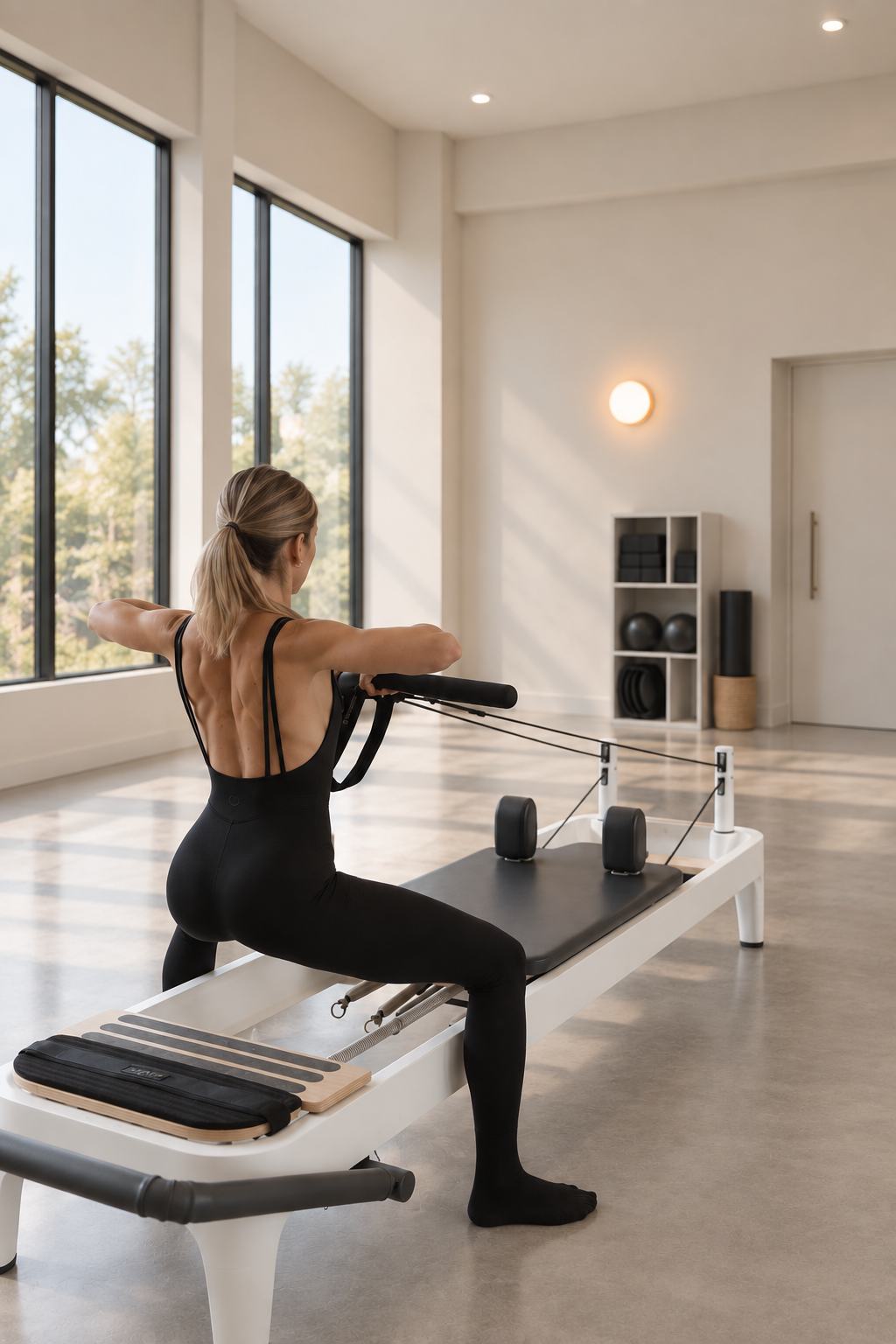
Exercises where the spine deliberately moves under appropriate load.
The appropriate choice depends on the client, the exercise and the goal.
Core Stability Does Not Mean Bracing as Hard as Possible
“Engage your core” is probably one of the most common instructions in Pilates.
But what does it actually mean?
Different tasks require different levels and strategies of trunk muscle activity.
Walking across the room does not require the same trunk stiffness as performing a heavily loaded lift.
Breathing comfortably during a low-load mobility exercise does not require maximal abdominal bracing.
If clients are taught to brace as hard as possible during every movement, we are not necessarily improving their stability.
We may simply be teaching one strategy.
Good trunk control includes the ability to scale muscular effort according to the demands of the task.
Sometimes the appropriate amount of effort is relatively low.
Sometimes substantially more force is required.
More tension does not automatically equal more stability.
What Does the Core Actually Stabilise?
The word “core” itself is broad.
Depending on the context, people may use it to describe abdominal muscles, spinal musculature, pelvic floor, diaphragm or the broader muscles around the trunk and pelvis.
Rather than telling a client to “use their core”, it can be more useful to identify the actual task.
Are you asking them to resist trunk extension?
Control rotation?
Maintain pelvic position while a limb moves?
Transfer force between the upper and lower body?
Control spinal flexion?
These are different demands.
When we define the task, our exercise selection and cueing become much clearer.
Scapular Stability Does Not Mean Pinning the Shoulder Blades Down
This is another major area where the idea of stability can become unnecessarily rigid.
Clients are frequently told:
“Pull your shoulders down.”
“Keep your shoulder blades back.”
“Don't let your shoulders move.”
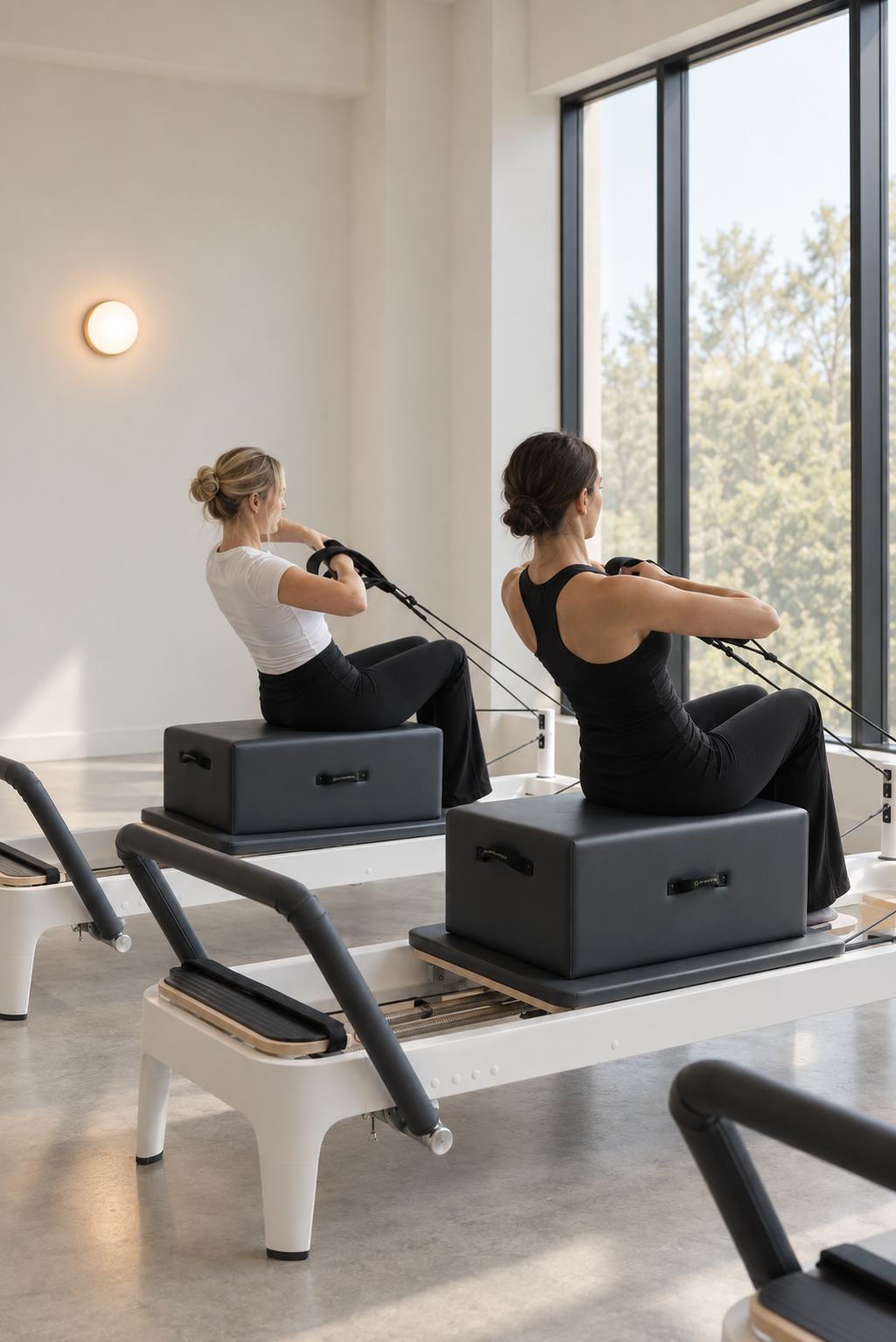
The scapula is supposed to move.
During arm elevation, the scapula contributes to the overall movement of the shoulder complex.
It needs to upwardly rotate and move in coordination with the humerus and surrounding structures.
Trying to hold the scapula permanently down and back while raising the arm can interfere with the movement you are trying to achieve.
Scapular stability therefore does not mean scapular immobility.
It means the shoulder complex can appropriately control and coordinate movement under the demands placed upon it.
What About “Shoulders Away From Your Ears”?
This cue can occasionally help a client reduce unnecessary elevation if that is interfering with the exercise.
But it should not become a universal rule.
The scapula may need to upwardly rotate and elevate as the arm moves overhead.
If we repeatedly tell clients that their shoulders must remain as far from their ears as possible, we can create unnecessary tension and restrict normal movement.
Instead of automatically correcting elevation, ask:
Is this movement actually inappropriate for the task?
Sometimes the answer is yes.
Sometimes the shoulder is simply moving.
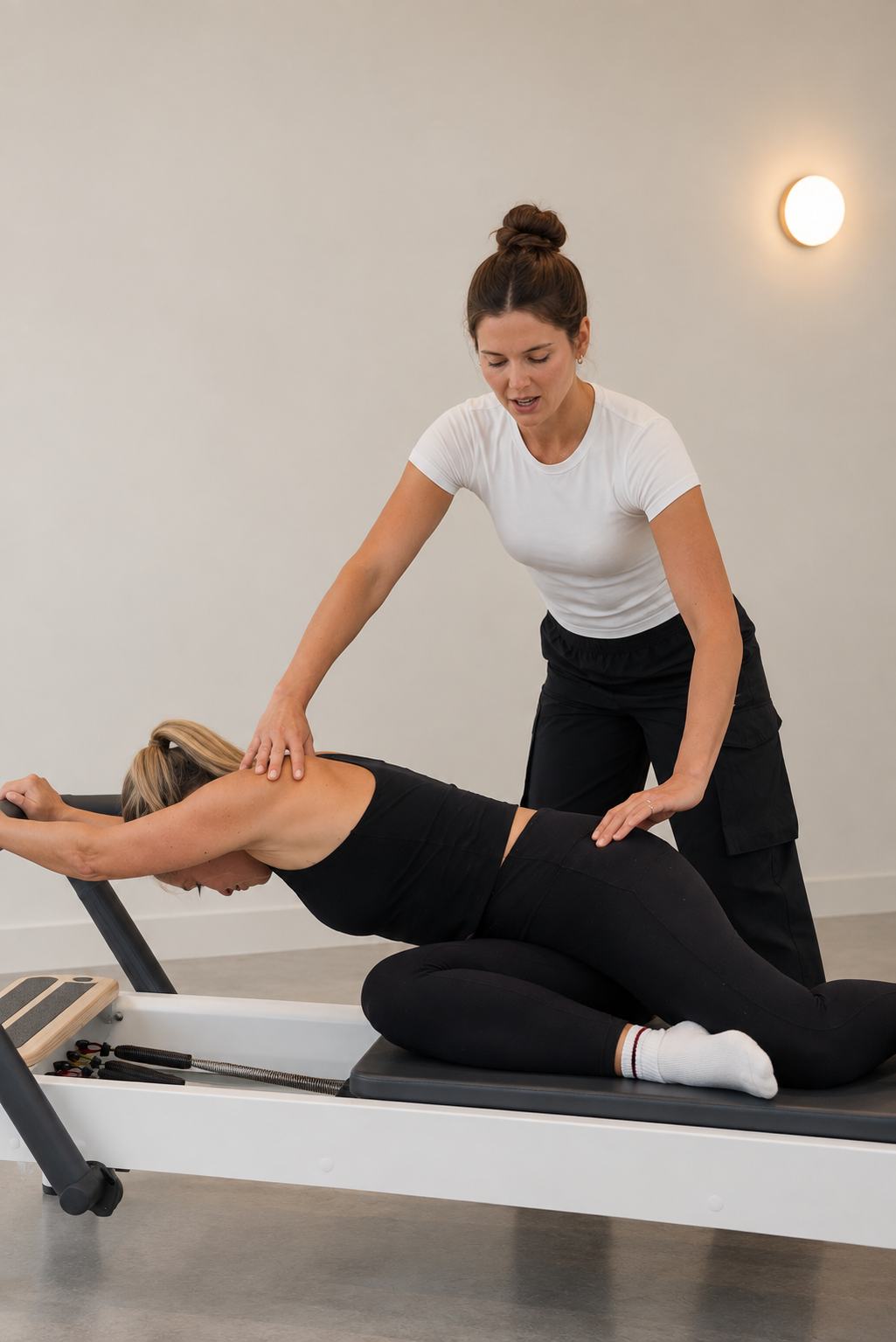
Scapular Stability in a Plank
A plank provides a good example of dynamic control at the shoulder.
The scapulae should not simply be pinned together.
The shoulder girdle needs to manage force from the floor while the trunk and upper limb maintain the required position.
If you add movement, such as shoulder taps or a moving carriage, the stability demand changes again.
The client may need to resist trunk rotation while simultaneously controlling forces through the shoulder.
That is very different from simply squeezing the shoulder blades together.
Understanding the task gives us better cues.
Does a Stable Knee Stay Perfectly Straight?
Knee stability is another area where visual rules often replace actual reasoning.
You may hear:
“Never let the knee move in.”
“Keep the knee directly over the second toe.”
“Don't let the knee wobble.”
There are situations where controlling knee movement is relevant.
But human movement does not occur in perfectly straight lines.
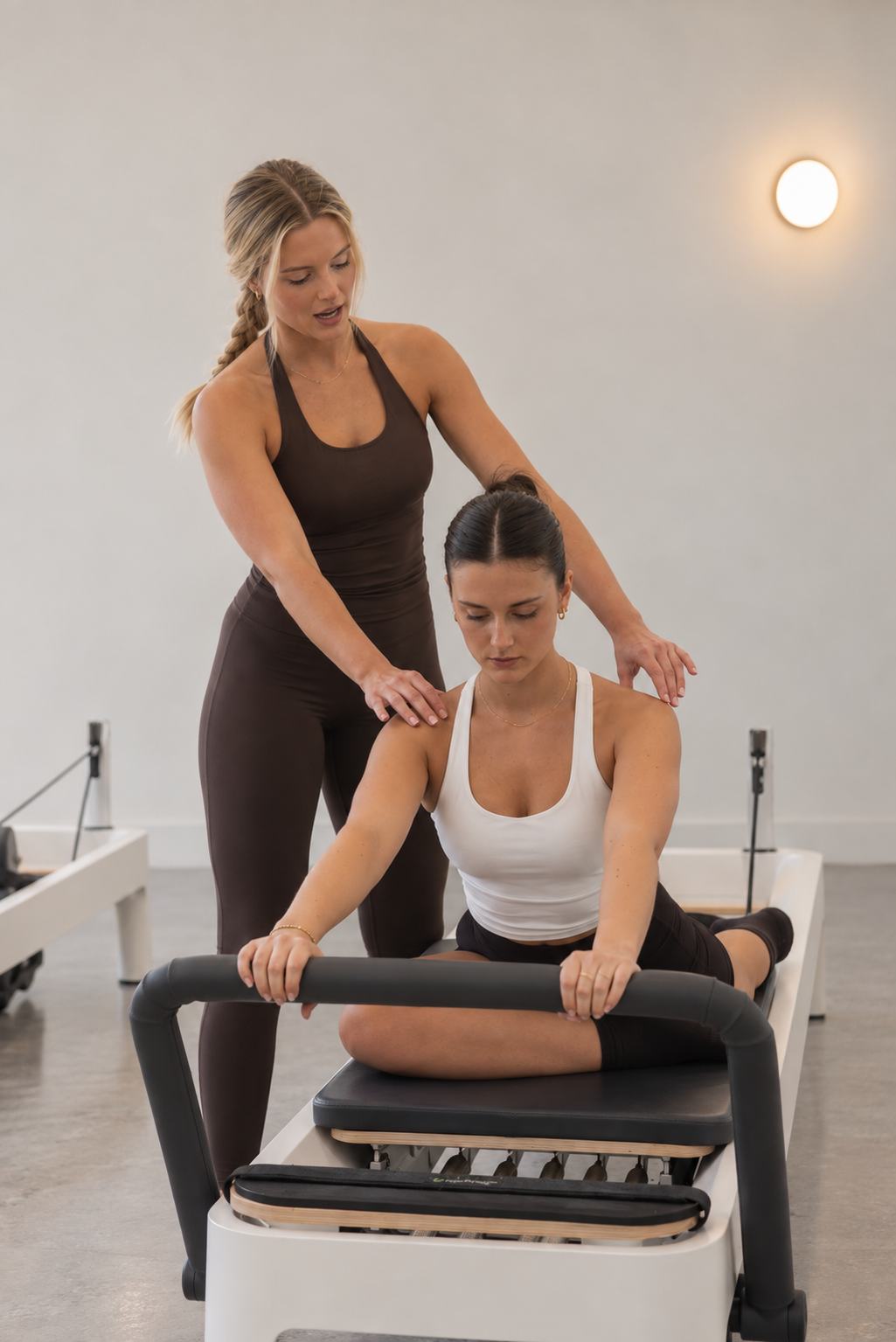
The hip, knee, ankle and foot all move in multiple planes.
A small amount of medial or lateral movement does not automatically indicate instability or injury risk.
Instead, consider whether the client can manage the task.
Are they losing balance?
Does the movement increase substantially as fatigue develops?
Are they unable to control the intended range?
Is the movement associated with pain?
Does changing the strategy improve the task?
These questions are more useful than correcting every millimetre of movement.
What About Knee Valgus?
Dynamic knee valgus is often used to describe a combination of movements in which the knee appears to move medially relative to the hip and foot.
It is frequently treated as something that must always be corrected.
But the significance of the movement depends on context.
Some degree of movement may occur normally during functional tasks.
The presence of visible knee valgus alone does not tell you whether a client is injured, weak or performing the exercise incorrectly.
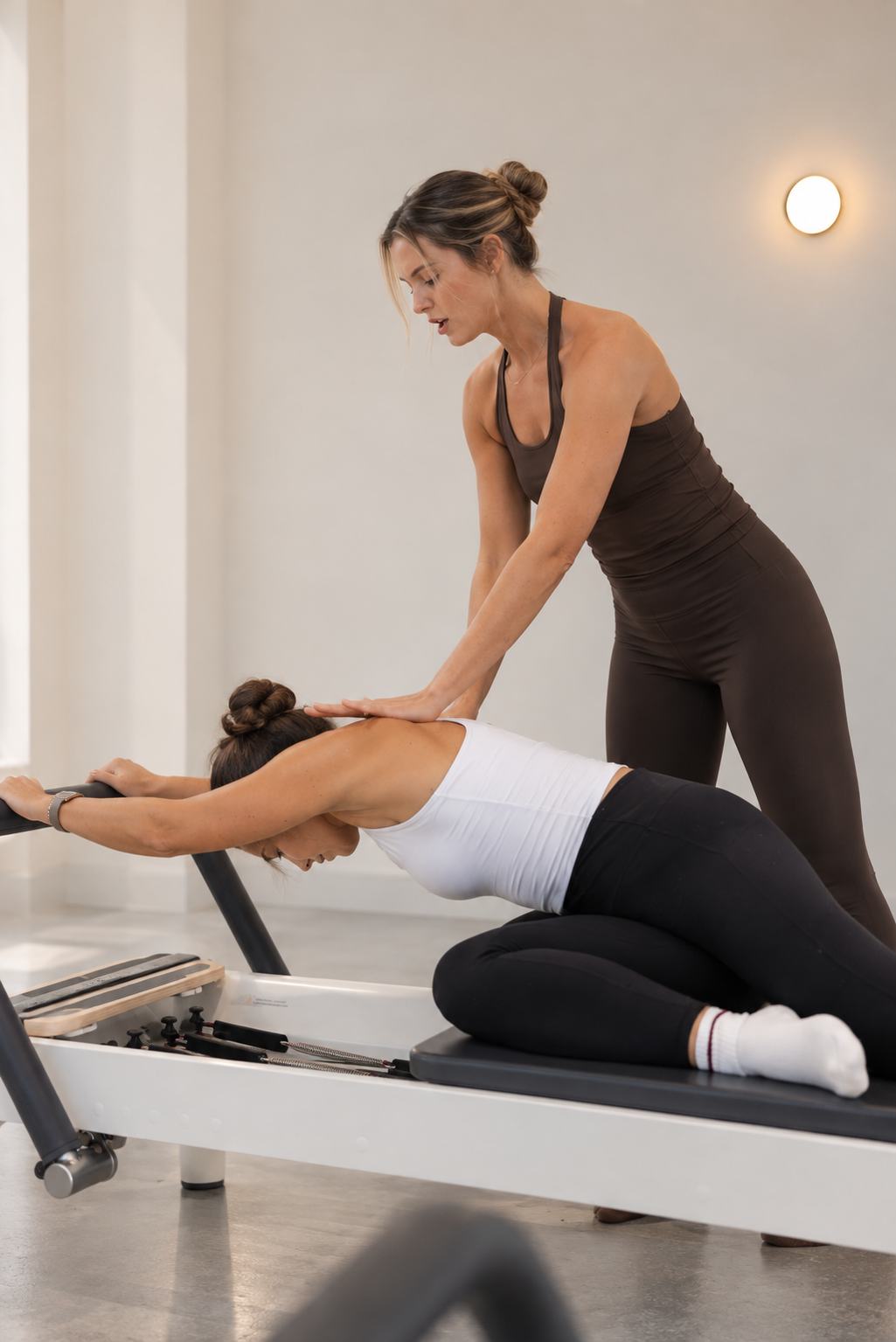
If the movement is substantial, associated with symptoms, interfering with the task or relevant to a specific rehabilitation goal, modifying it may be useful.
But instructors should avoid diagnosing “weak glutes” simply because a knee moves inwards.
Foot Stability Does Not Mean Keeping the Foot Rigid
The foot is another region that needs both movement and control.
During weight-bearing, the foot adapts to the surface and changes shape as load moves through it.
Pronation is a normal movement.
The arch does not need to remain at exactly the same height throughout every standing exercise.
Cueing clients to grip their toes or rigidly hold an artificial arch may not improve function.
Instead, think about whether the foot can accept load, adapt to the surface and contribute to the task.
For some clients, foot strength or control may need to be developed.
For others, the movement you are observing may simply be normal variation.
Is Pronation a Sign of Instability?
Not automatically.
Pronation is part of normal foot mechanics.
Different people demonstrate different amounts of pronation due to anatomy, mobility and movement strategy.
A pronating foot is not automatically a weak foot.
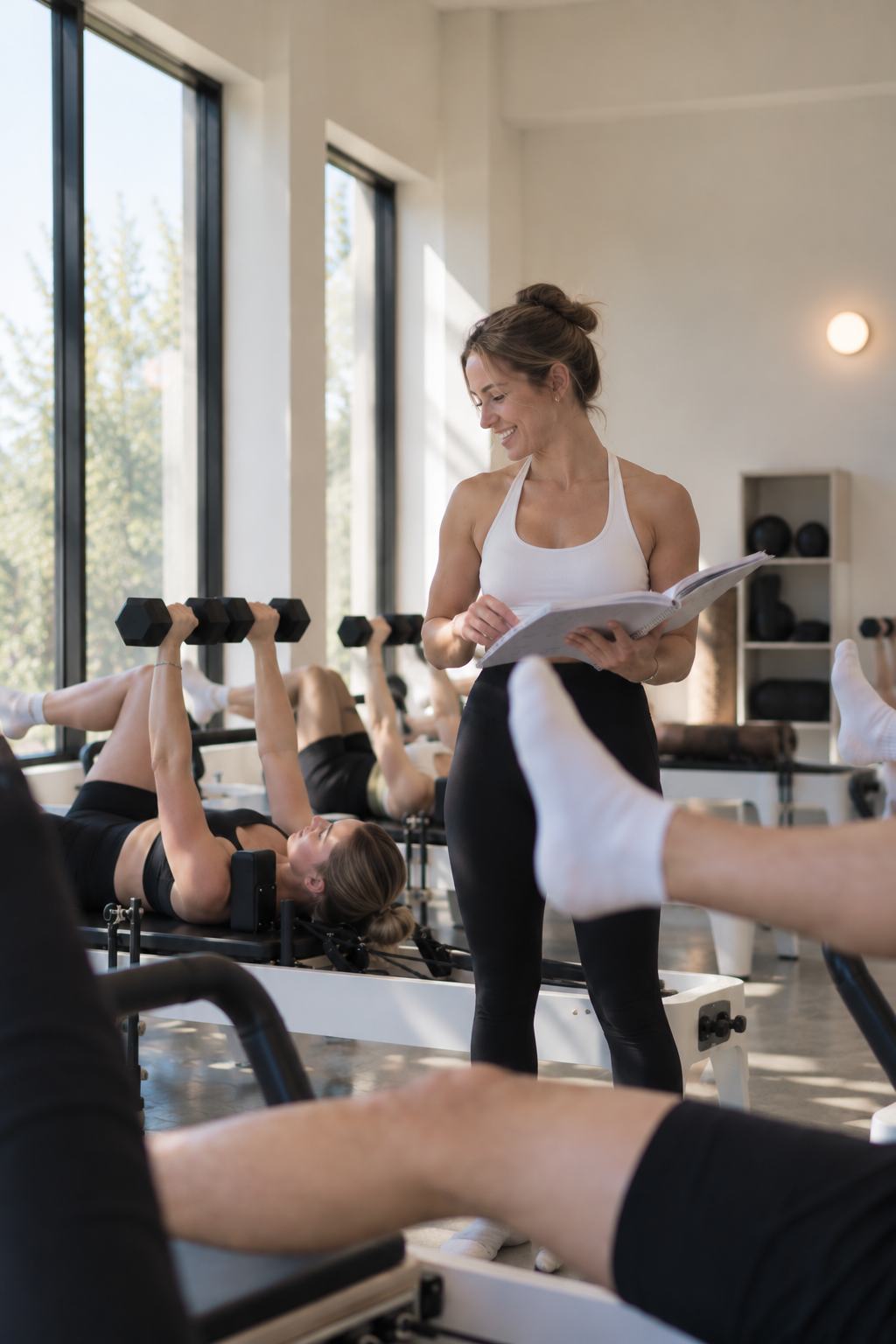
It is also not automatically the cause of knee, hip or back pain.
If a client's foot mechanics appear relevant to their symptoms or performance, they can be assessed in context.
But telling every client to lift their arches and prevent pronation is not evidence of better stability training.
Static Stability Versus Dynamic Stability
This distinction is particularly important for Pilates programming.
A client might be able to hold a perfect-looking single-leg balance position for 30 seconds.
That demonstrates a particular capacity.
Now ask them to:
Reach.
Rotate.
Catch a ball.
Step sideways.
Move the opposite leg.
Respond to an unpredictable cue.
Carry a load.
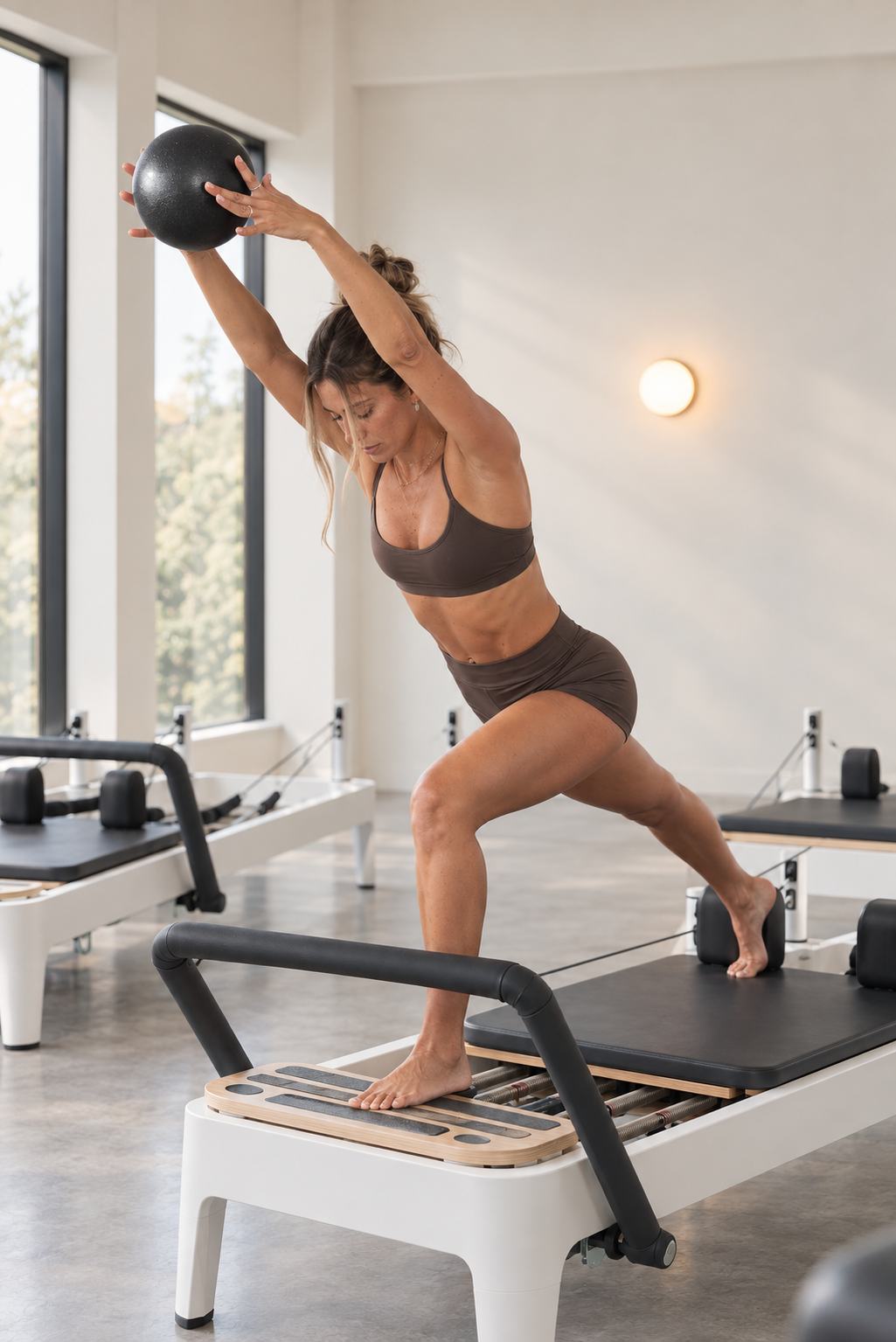
Their ability to maintain control may change dramatically.
Why?
Because dynamic stability requires the body to respond while forces and positions are changing.
If the client's real-world goal involves movement, eventually their stability training should involve movement too.
Why Planks Are Not the Only Way to Train Core Stability
Planks can be useful exercises.
They require the trunk to resist movement while forces act through the upper and lower body.
But trunk stability is not one universal capacity that can be completely trained through planks.
Consider the demands of:
Carrying a heavy bag in one hand.
Running.
Lifting something from the floor.
Performing a loaded squat.
Throwing.
Reaching overhead.
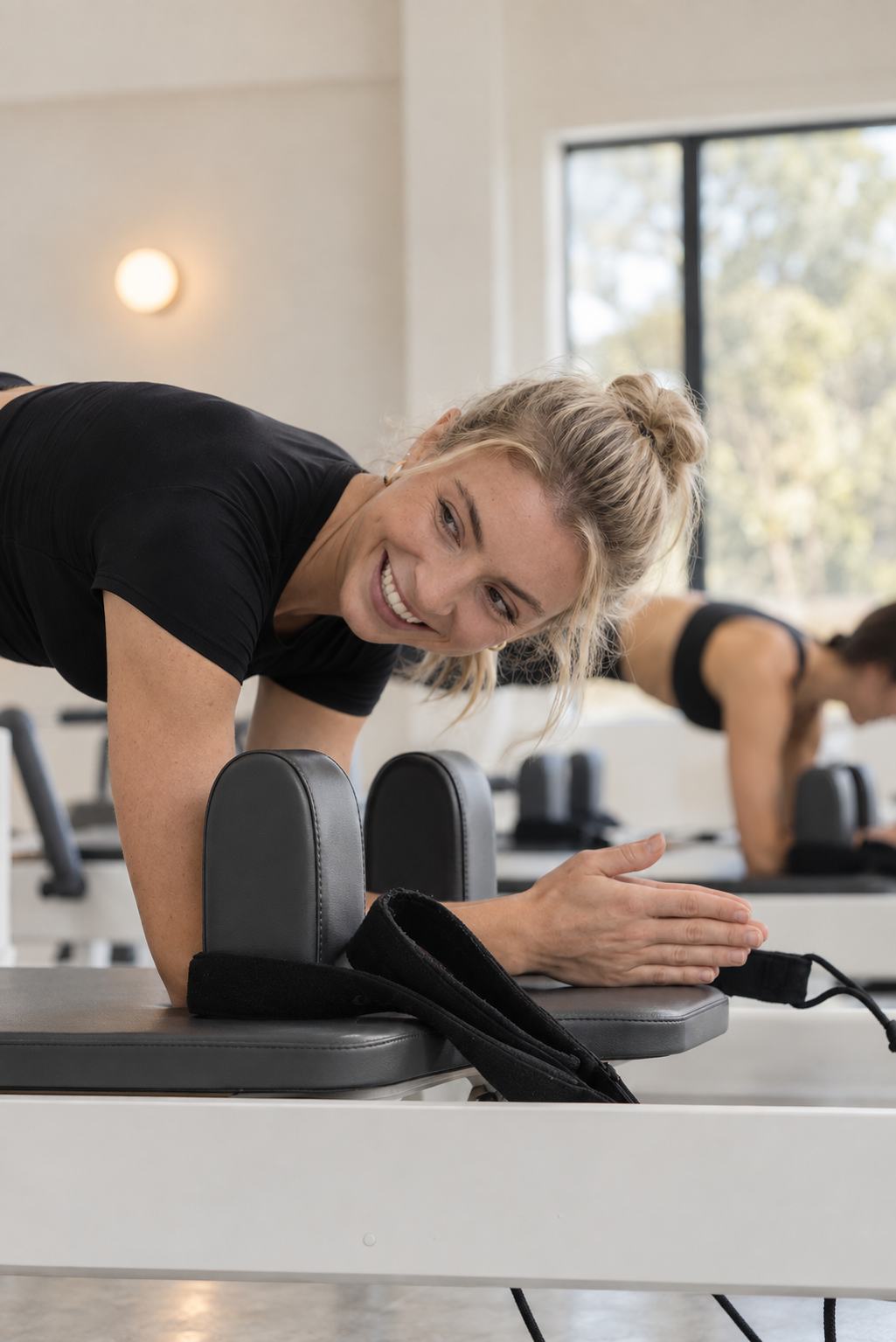
Rotating during sport.
The trunk has to respond differently in each situation.
This is why good programming exposes clients to different directions of force and different movement demands rather than simply increasing plank duration indefinitely.
Anti-Extension, Anti-Rotation
and Anti-Lateral Flexion
These terms describe exercises where the trunk muscles produce force to resist particular movements.
Anti-extension: resisting the tendency for the spine or pelvis to move into excessive extension under the chosen task.
Anti-rotation: resisting rotational forces.
Anti-lateral flexion: resisting side-bending forces.
These can be useful ways to programme trunk stability.
For example, a loaded unilateral carry may challenge the trunk to resist lateral flexion.
A unilateral press may create a rotational demand.
A plank variation may challenge the trunk against extension.
But these exercises should exist alongside exercises where the spine actually moves.
Resisting rotation does not mean rotation itself is bad.
Stability Should Be Specific to the Task
This is where the concept becomes useful for programming.
Instead of asking:
“What are the best stability exercises?”
ask:
“Stable for what?”
A client who wants to return to running needs the ability to control forces repeatedly during gait.
A client who wants to lift heavier weights needs trunk and lower-limb control under increasing external resistance.
An older adult may need the ability to recover balance when their centre of mass moves unexpectedly.
A dancer may require control through large ranges of movement.
A postnatal client may be rebuilding the ability to manage pressure and load during increasingly demanding tasks.
Those goals require different types of stability.
There is no single “stability exercise” that trains everything.
When Is Keeping Something Still Actually Useful?
None of this means instructors should stop teaching controlled positions.
There are plenty of situations where deliberately limiting movement is useful.
For example, you might ask a client to maintain a relatively stable pelvis during a supine leg exercise because the goal is to challenge trunk control as the lever changes.
You might ask a client to resist trunk rotation during a unilateral loaded exercise.
You might use an isometric position during rehabilitation.
You might temporarily constrain movement to help someone learn a new skill.
The important distinction is that stillness should be purposeful.
We should know why we are asking the client not to move.
When Does Movement Become a Compensation?
“Compensation” is another word instructors often use without defining.
Technically, the body constantly adapts movement according to the task.
Not every adaptation is problematic.
If a client changes their trunk position slightly as resistance increases, that may simply be a strategy for managing the load.
It becomes more relevant when the strategy prevents them from achieving the intended exercise goal, produces unwanted symptoms or substantially changes the task.
Instead of saying:
“You're compensating.”
Ask:
“Is this strategy stopping us from training what I intended?”
If the answer is no, you may not need to correct it.
Movement Quality Does Not Mean Everyone Looks the Same
Two people can perform the same exercise with different movement strategies and both be performing it appropriately.
Limb proportions vary.
Joint structure varies.
Mobility varies.
Previous training experience varies.
A person with long femurs may squat differently from someone with shorter femurs.
Someone with a different shoulder structure may use a slightly different arm path overhead.
Good movement quality is not about forcing every client into an identical shape.
It is about whether they can achieve the intended task with an appropriate level of control.
When Should You Correct Movement?
Before correcting something, ask yourself three questions.
1. Is the Movement Causing or Reproducing a Relevant Symptom?
If a particular strategy consistently provokes a client's symptoms and another strategy allows them to perform the task more comfortably, modification may be useful.
2. Is the Movement Preventing the Intended Training Stimulus?
If the goal is lower-body strength but the client is using substantial upper-body support to complete every repetition, the exercise may no longer provide the stimulus you intended.
3. Is the Movement Creating a Safety Issue?
If the client is losing balance, cannot control the equipment or is unable to safely complete the task, intervention is appropriate.
If none of these apply, consider whether you are correcting movement because it actually needs changing or simply because it does not match the picture in your head.
Stability
and Strength Are Not the Same Thing
A client can appear unstable because the exercise exceeds their strength capacity.
Imagine someone performing a heavy split squat.
As fatigue increases, they begin moving more and struggling to control the final repetitions.
You could call this a stability problem.
But perhaps they simply do not have enough strength to manage that resistance.
If you place them on an unstable surface, you have not necessarily solved the problem.
You may simply reduce how much force they can produce.
Strength contributes to our ability to control movement.
This is why instructors need to consider whether the limitation is actually balance, coordination, strength, mobility or some combination.
Stability
and Balance Are Not the Same Thing Either
These terms overlap but should not be treated as identical.
Balance generally refers to the ability to maintain or recover control of the body's centre of mass relative to the base of support.
Joint stability refers more broadly to the ability of a joint or body region to manage forces and movement appropriately.
You can challenge joint stability without substantially challenging balance.
For example, a supine loaded arm exercise may require shoulder and trunk control without requiring the client to prevent themselves from falling over.
Understanding the difference helps us select exercises more deliberately.
Does an Unstable Surface Improve Stability?
Sometimes unstable surfaces can provide a useful balance or control challenge.
But making the environment less stable does not automatically make an exercise a better stability exercise.
Imagine your goal is to improve lower-body strength.
You take a squat that the client can perform with meaningful resistance and move them onto an unstable surface.
They now need to reduce the load dramatically because balance becomes the limiting factor.
Have you progressed the strength exercise?
Not necessarily.
You have changed the exercise.
It may now provide a greater balance challenge and a lower strength stimulus.
Neither is inherently better.
The question is which one matches your goal.
More Difficult Does Not Mean More Appropriate
Pilates instructors are exceptionally creative.
We can make almost any exercise harder.
Add a ball.
Reduce the springs.
Stand on one leg.
Close the eyes.
Add rotation.
Move the carriage.
Add a weight.
Combine three exercises together.
But complexity is not the same as progression.
A more complicated exercise is only useful if the additional challenge develops something relevant.
If the client spends the entire exercise trying not to fall over when the intended goal was shoulder strength, the instability may be interfering with the stimulus.
Ask what you are trying to train before adding difficulty.
How to Progress Stability Training
There are many ways to increase a stability demand.
Depending on the exercise, you might change:
Resistance.
Base of support.
Lever length.
Range of movement.
Movement speed.
External support.
Direction of force.
Number of moving limbs.
Unilateral versus bilateral loading.
Predictability.
Task complexity.
But you do not need to change all of these simultaneously.
A good progression changes the demand enough to create adaptation while allowing the client to continue performing the intended task.
Example: Progressing Pelvic
and Trunk Control
Imagine a client performing a supine leg movement while maintaining a selected trunk and pelvic position.
You could progress the task by:
Moving one leg through a small range.
Increasing the range.
Lengthening the leg lever.
Moving both legs.
Adding external resistance.
Changing the body position.
Progressing towards a more functional task where trunk control is required under load.
Notice that the end goal does not have to be performing increasingly elaborate supine abdominal exercises forever.
Eventually, the client may need to control their trunk while standing, carrying, lifting or moving dynamically.
Example:
Progressing Shoulder Stability
You might begin with a supported upper-limb exercise where the client learns to control
the shoulder under relatively low load.
You could then increase resistance.
Introduce weight-bearing.
Change the arm position.
Add movement of another body part.
Introduce unilateral loading.
Progress towards overhead work.
The progression depends on the client's goals.
A person returning to swimming requires different shoulder demands from someone whose primary goal is comfortable everyday movement.
Example:
Progressing Lower-Limb Stability
A client may begin with a supported split squat.
As they improve, you could reduce external support, increase resistance, change the range or introduce a more dynamic task.
If their goal involves running or sport, later-stage exercises may need to include landing, hopping and directional changes.
Standing on a moving Reformer carriage is not automatically the final destination of lower-limb stability training simply because it is difficult.
Cue the Task, Not the Fear
Language matters.
Compare:
“Don't let your knee collapse.”
with:
“Keep pressure through the foot as you control the descent.”
Compare:
“Don't let your back move.”
with:
“Maintain this trunk position while the leg moves.”
Compare:
“Lock your shoulders down.”
with:
“Reach the arm overhead and allow the shoulder blade to move with it.”
The second versions tell the client what to do rather than implying that movement outside a rigid position is dangerous.
We want clients to develop confidence in movement, not fear every deviation from an idealised posture.
Stop Treating Stability as a Body Part
Clients sometimes say:
“I need to work on my core stability.”
“My hips are unstable.”
“My shoulders aren't stable.”
But stability is not simply something a body part either has or does not have.
It is task-dependent.
Someone may have excellent trunk control during a plank but struggle under heavy unilateral loading.
Someone may balance beautifully on one leg while stationary but struggle during a landing.
Someone may control their shoulder well during low-load Reformer work but struggle when lifting something heavy overhead.
Instead of labelling a region unstable, identify the task the person currently struggles to control.
That gives you something meaningful to train.
A Better Framework
for Pilates Instructors
The next time you are about to cue a client to “stabilise”, work through this framework.
What Is the Task?
What movement is the client actually trying to perform?
What Needs to Move?
Identify the joints or body regions where movement is required.
What Needs to Be Controlled?
Is there a particular movement you want the client to resist or limit?
Why?
How does that control contribute to the exercise goal?
What Force Is the Client Managing?
Consider body weight, gravity, spring resistance, external weights and momentum.
Can the Client Currently Manage It?
If not, is the limiting factor strength, mobility, balance, coordination, understanding or something else?
What Is the Simplest Useful Progression?
Change the variable that best develops the capacity you want rather than simply making the exercise more complicated.
This is stability training with intention.
Common Stability Cueing Mistakes
Mistake 1: Treating movement as instability. A body region can move while remaining appropriately controlled.
Mistake 2: Cueing every client to brace harder. The amount of muscular activity required depends on the task.
Mistake 3: Keeping the scapula permanently down and back. The scapula needs to move during normal shoulder motion.
Mistake 4: Treating neutral spine as the only stable spinal position. The spine needs both movement and the capacity to resist movement.
Mistake 5: Calling every knee movement a compensation. Movement variation needs context.
Mistake 6: Preventing normal foot pronation. The foot is designed to adapt under load.
Mistake 7: Confusing balance with stability. They overlap but are not interchangeable.
Mistake 8: Assuming an unstable surface creates better stability training. It changes the task and may reduce other training demands.
Mistake 9: Adding complexity instead of progression. More difficult is not automatically more useful.
Mistake 10: Correcting movement without knowing why. A correction should relate to symptoms, safety or the intended training goal.
Professional Reflection:
What Are You Actually Trying to Control?
The word “stability” can sound sophisticated while hiding vague programming.
If you tell a client to stabilise their pelvis, what movement are you asking them to control?
If you tell them to stabilise their shoulder, what force are they responding to?
If you call their knee unstable, what task are they unable to perform?
If you add an unstable surface, what physical quality have you actually progressed?
The more specific you become, the better your programming becomes.
Sometimes we want stillness.
Sometimes we want movement.
Sometimes we want the client to resist movement.
Sometimes we want them to move through a large range while maintaining control.
All of those can involve stability.
The goal is not to create a body that never moves out of position.
The goal is to create a body capable of managing the positions, movements and forces that matter to the person in front of you.
Key Teaching Takeaways
Stability does not mean complete stillness.
A joint can move while remaining appropriately stable.
Stability and mobility are not opposites.
Dynamic stability involves controlling the body while movement and forces are changing.
The pelvis does not need to remain motionless during every leg movement.
Neutral spine is useful for some exercises but is not the only safe or stable spinal position.
Core stability does not mean maximal abdominal bracing during every exercise.
The scapula needs to move during normal shoulder movement.
Knee movement does not automatically indicate poor stability.
Pronation is a normal foot movement and does not automatically indicate instability.
Static and dynamic stability are different capacities.
Stability, balance and strength overlap but are not interchangeable.
Unstable surfaces are a programming tool, not an automatic progression.
More complex exercises are not necessarily better exercises.
Movement corrections should relate to the client's symptoms, safety or the intended training goal.
Before cueing “stability”, define what needs to be controlled and why.
Learn to Understand Movement Rather Than Memorising Corrections
One of the biggest shifts you can make as a Pilates instructor is moving away from memorised rules about what every body should look like.
Pelvis neutral.
Ribs down.
Shoulders back.
Knees perfectly aligned.
Arches lifted.
Core switched on.
Those cues may have a purpose in a particular exercise for a particular client.
But they are not universal rules for human movement.
Through the Applied Anatomy & Biomechanics Certification at Body Form Education, we teach instructors to understand why movement occurs, how forces interact with the body and how exercise setup changes what the client is actually being asked to control.
The goal is not simply to learn more anatomy terminology.
It is to be able to look at an exercise and ask better questions.
What needs to move?
What needs to control movement?
Where is the resistance coming from?
What is the intended training stimulus?
And does the exercise I have chosen actually deliver it?
For instructors wanting to take this further into class design and exercise selection, our Programming & Cueing Mastery Certification develops the practical skills required to turn that understanding into purposeful programming and clearer coaching.
Because good Pilates instruction is not about stopping movement.
It is about understanding it.
Explore the Applied Anatomy & Biomechanics Certification through Body Form Education and develop the confidence to analyse movement, understand biomechanics and programme beyond memorised rules.