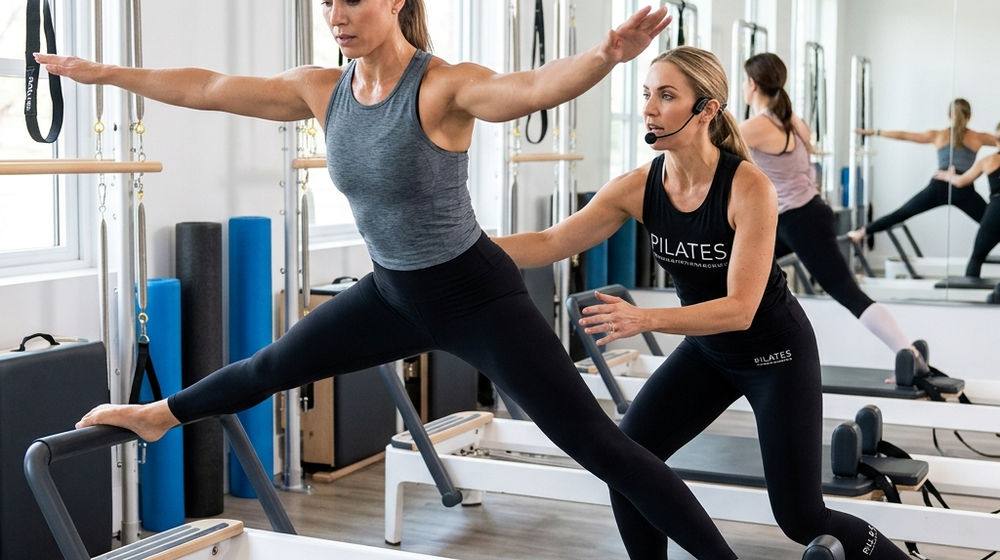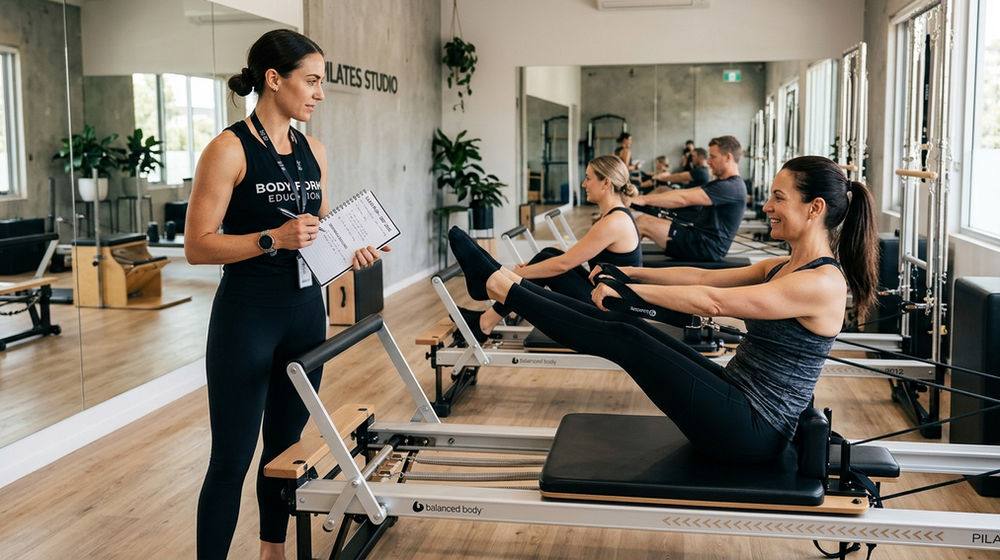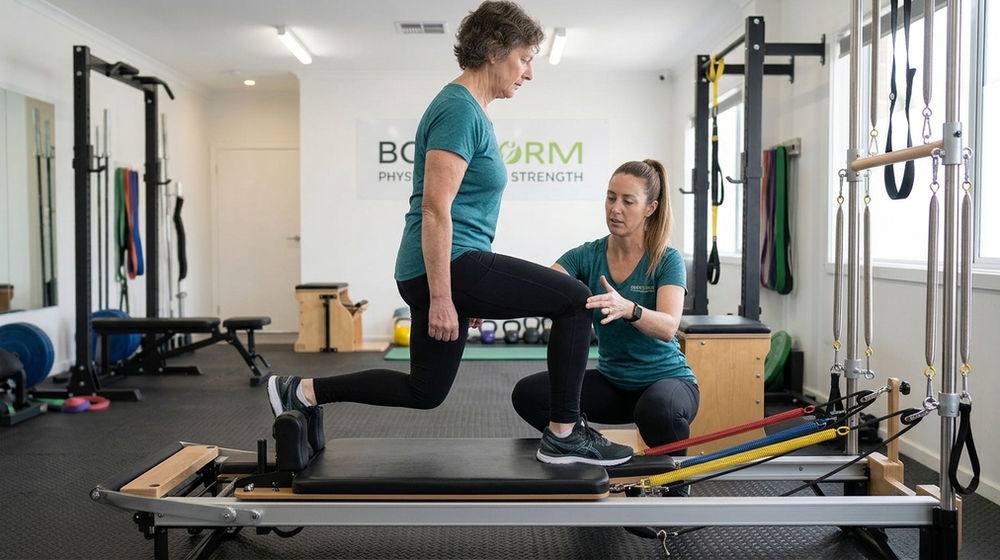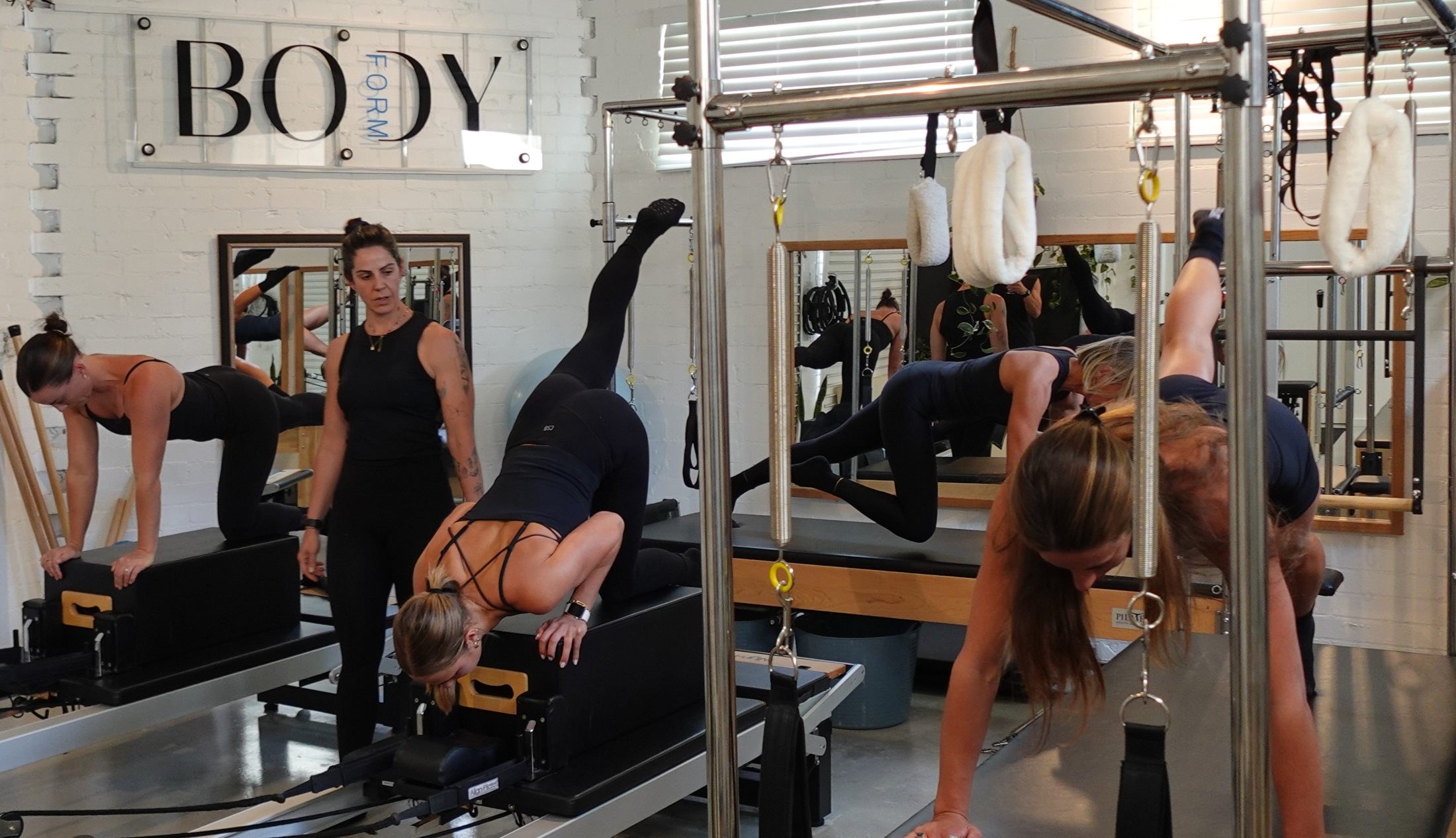
Take a squat.
Put it on one leg.
Add a foam pad.
Hold a ball.
Close one eye.
Add rotation.
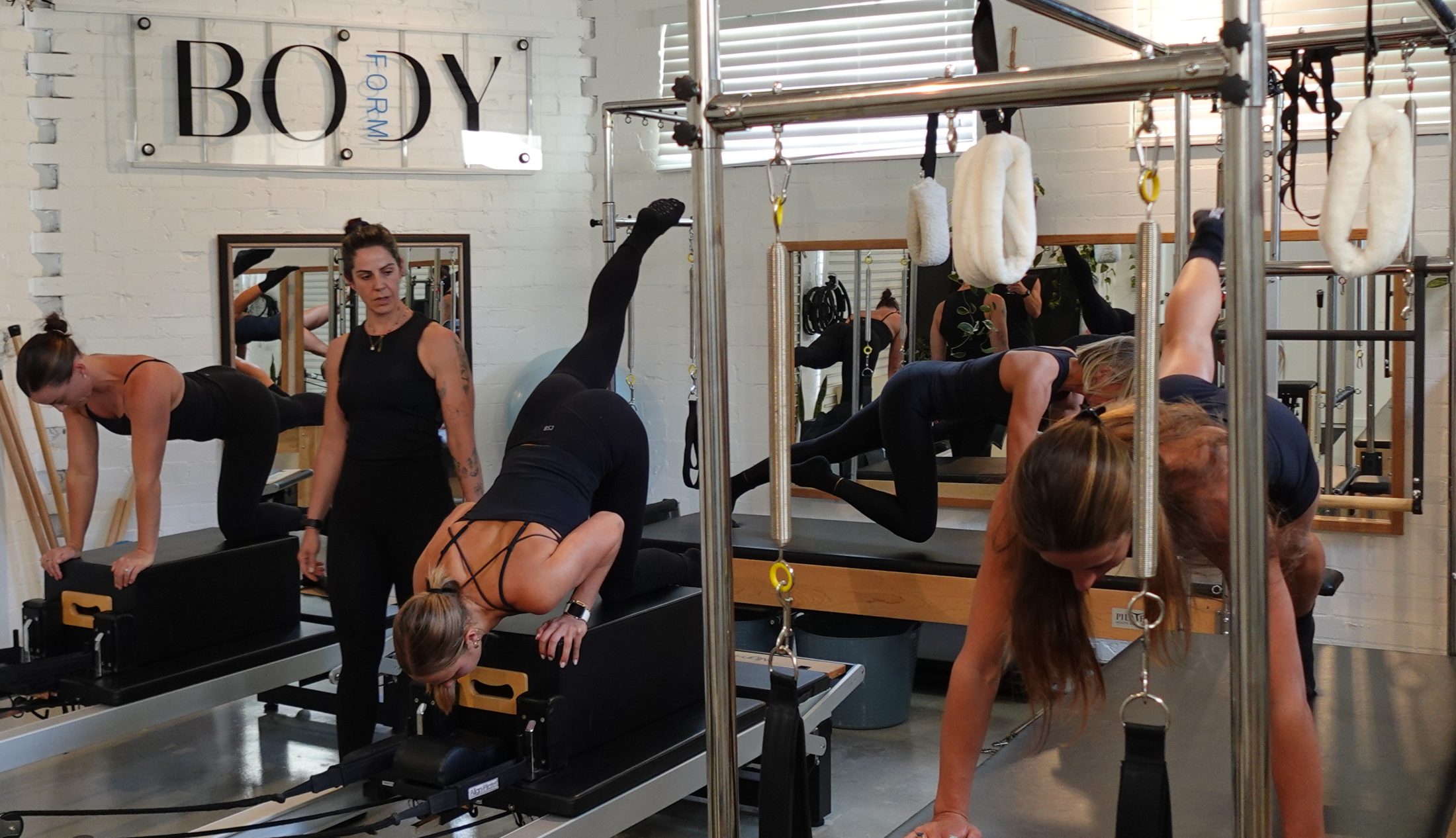
Now put it on a moving Reformer carriage.
Is it better balance training?
Or have we just made the exercise increasingly difficult to perform?
Pilates instructors are exceptionally good at creating instability.
We have moving carriages, springs, boxes, balls, unstable surfaces and endless opportunities to reduce someone's base of support.
And because the exercise becomes harder, it is easy to assume we have progressed it.
But harder does not automatically mean better.
If your goal is to improve balance, you need to understand what balance actually requires and which variable you are changing.
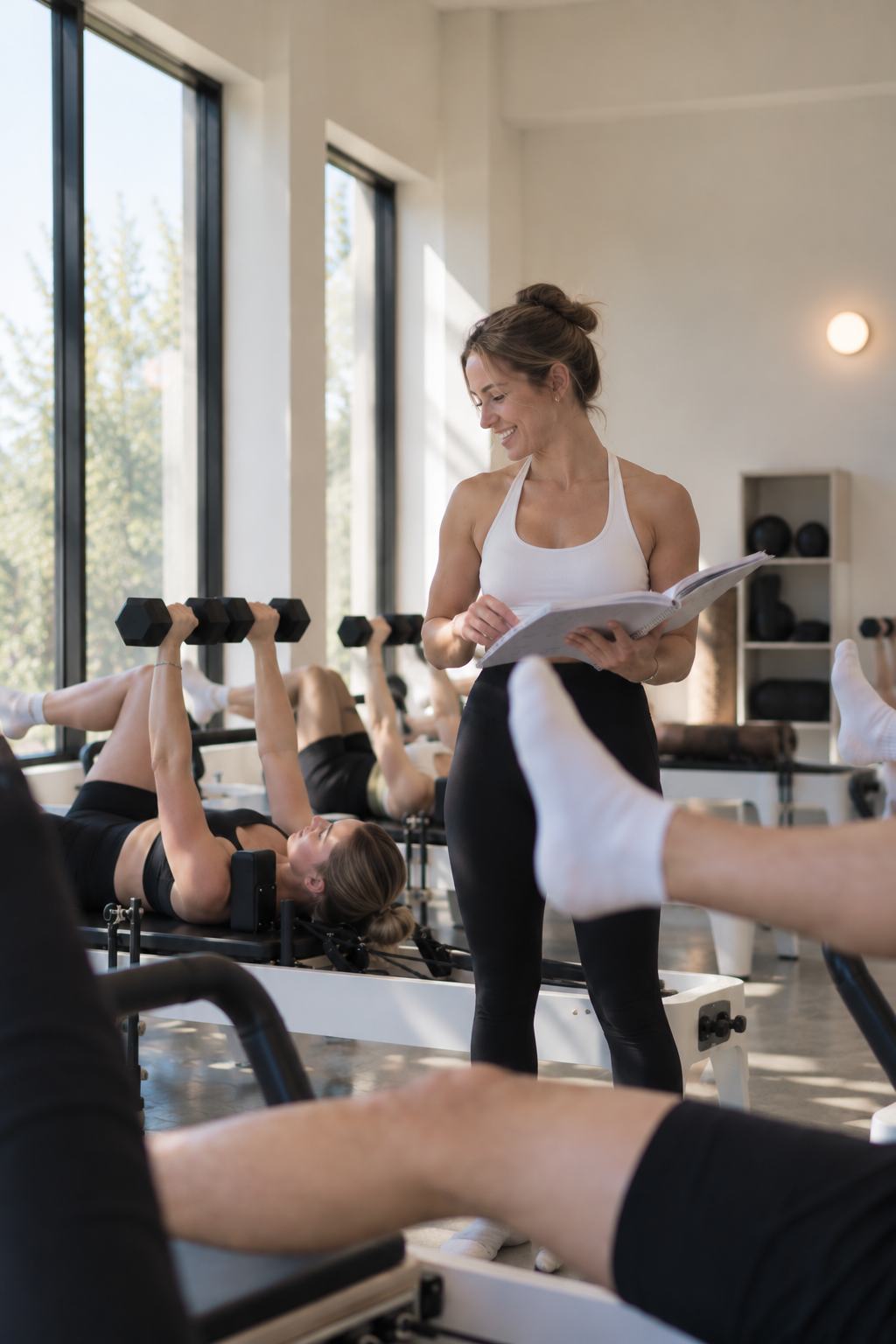
If your goal is strength, adding instability may actually reduce your ability to train strength because the client can no longer tolerate as much resistance.
If your goal is coordination, the most unstable variation may be so difficult that the client spends the entire exercise trying not to fall rather than practising the movement you intended.
Instability is not inherently good or bad.
It is simply a programming variable.
The question Pilates instructors need to ask is:
What am I actually trying to train?
What Is Balance?
Balance is commonly described as our ability to maintain or recover control of our body's centre of mass relative to our base of support.
That sounds technical, but you use balance constantly.
When you stand.
When you walk.
When you step off a curb.
When you reach for something.
When you change direction.
When you recover after being bumped.
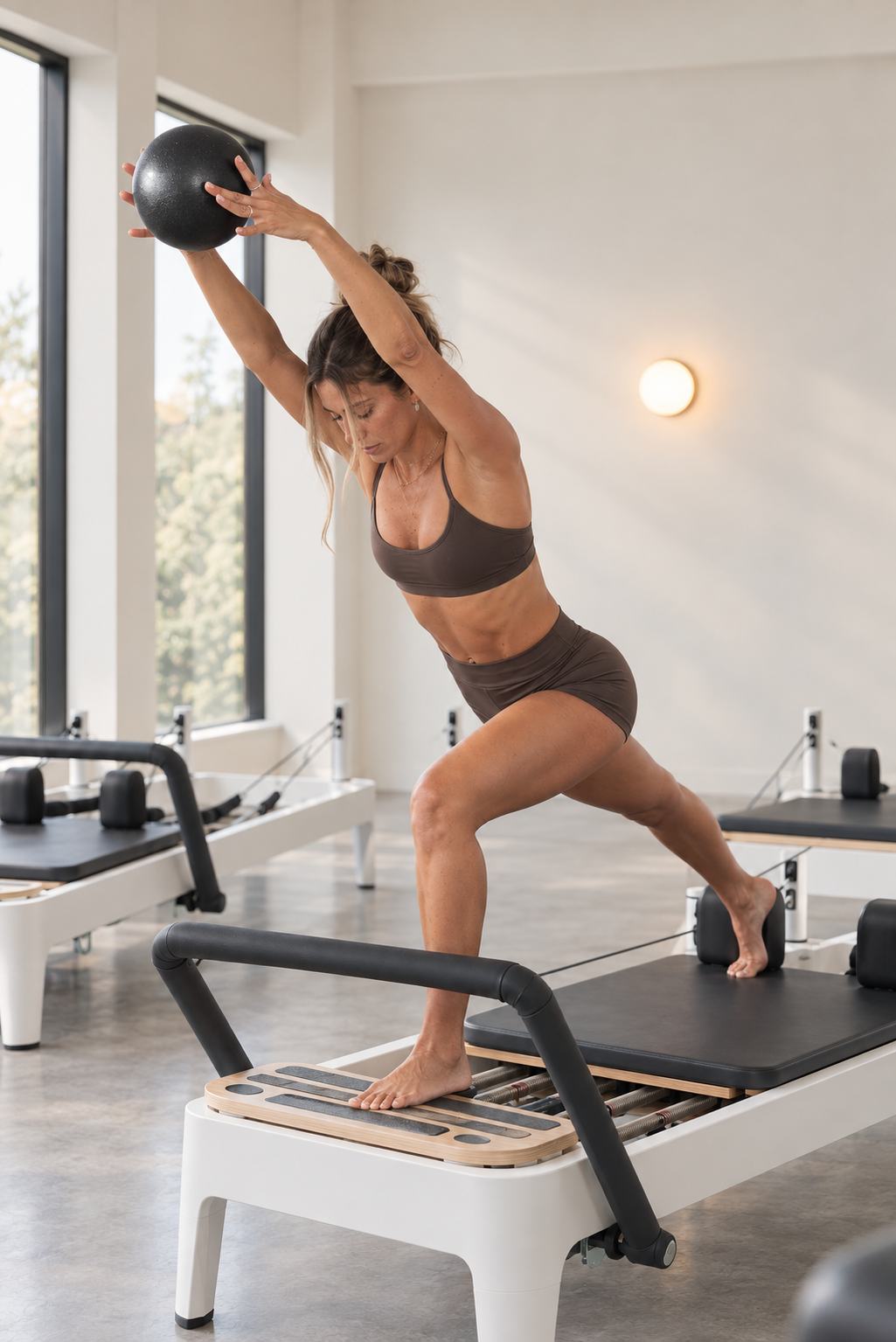
When you move from one foot to the other.
Your nervous system uses information from multiple sensory systems to understand where your body is and how it is moving.
Your muscles then need to produce appropriate responses to maintain or recover control.
Balance therefore involves much more than simply having strong ankles or a strong core.
It requires sensory information, motor responses, strength, coordination and the ability to adapt to the task and environment.
What Is Your Centre of Mass?
Your centre of mass refers to the point around which your body's mass is distributed.
Its position changes as your body position changes.
Raise your arms overhead and your centre of mass changes.
Lean forwards and it moves.
Hold a weight in one hand and the distribution of mass changes again.
When we manipulate body position during an exercise, we can change the balance
demand because the client has to manage their centre of mass differently relative to their base of support.
This is one reason two exercises that use the same legs can feel completely different from a balance perspective.
What Is a Base of Support?
Your base of support is the area beneath and between the points where your body contacts the supporting surface.
Standing with both feet apart provides a relatively large base of support.
Bring your feet together and the base becomes smaller.
Move into a tandem stance and it changes again.
Stand on one leg and the base becomes considerably smaller.
Generally, reducing the base of support increases the balance challenge because the
client has less area within which to control their centre of mass.
This gives Pilates instructors one simple way to manipulate balance without immediately reaching for an unstable prop.
Why Single-Leg Exercises Challenge Balance
Standing on one leg reduces your base of support.
Your body now has to maintain its centre of mass over a much smaller area.
The ankle, knee, hip and trunk all contribute to controlling the position.
But this does not mean every single-leg exercise is automatically a balance exercise.
Imagine a heavy supported single-leg press where the client has substantial external support.
The balance demand may be relatively small even though only one leg is producing most of the force.
Now compare that with unsupported single-leg standing.
The strength demand may be much lower, but the balance demand may be higher.
The number of feet on the floor does not tell you the complete training stimulus.
Static Balance
and Dynamic Balance Are Different
Standing on one leg without moving is an example of a relatively static balance task.
Now imagine standing on one leg while reaching the other leg in multiple directions.
The base of support remains small, but your centre of mass is moving.
The balance challenge has changed.
Dynamic balance involves controlling the body while movement occurs.
This matters because most real-world balance tasks are dynamic.
Walking is dynamic.
Running is dynamic.
Stepping over something is dynamic.
Changing direction is dynamic.
Recovering from a trip is dynamic.
Static single-leg balance can be useful, but it is not the entire picture.
Is Standing
on One Leg Good Balance Training?
It can be.
For someone who currently struggles to maintain single-leg stance, simply standing on
one leg may provide an appropriate challenge.
But eventually the body adapts.
If the person can comfortably hold the position for a long period without meaningful challenge, repeatedly performing exactly the same exercise may provide little additional
stimulus.
You can then manipulate the task.
Perhaps the client reaches.
Moves the opposite leg.
Turns their head.
Carries a load.
Steps.
Responds to a cue.
The progression should reflect what you are trying to develop.
The goal is not to stand on one leg for increasingly ridiculous lengths of time simply because it is called balance training.
Why Making the Surface Unstable Changes the Exercise
Place someone on a foam pad or another unstable surface and you change the sensory and mechanical demands of the task.
The body has to respond to a less predictable support surface.
This may provide a useful balance challenge in some programmes.
But it is important to understand that you have changed the exercise.
You have not simply made the original exercise “better”.
If a client could previously squat with meaningful resistance but now needs to remove almost all of the load because they cannot stay balanced on the unstable surface, the strength stimulus has changed.
That may be completely appropriate if balance is the goal.
It may be less useful if your goal was developing lower-body strength.
Why Instability Can Reduce Strength Output
To produce high levels of force, it is often useful to have a stable environment from
which to push or pull.
When the environment becomes increasingly unstable, the client may need to dedicate more attention and muscular effort to maintaining balance.
As a result, they may be unable to use the same external resistance.
Imagine a client performing a heavy split squat while holding onto a support.
They can produce substantial force through the lower body.
Now remove the support, put the front foot on an unstable surface and ask them to maintain the same load.
They may no longer be able to.
Does that mean the second exercise is harder?
From a balance perspective, probably.
Does it mean it provides a better strength stimulus?
Not necessarily.
This is why exercise difficulty and training stimulus are not the same thing.
Are Unstable Exercises Better
for Core Strength?
Not automatically.
Instability can increase the demand on trunk musculature in certain tasks because the body has to manage additional movement or external forces.
But this does not mean the most unstable exercise produces the best core-strength stimulus.
If the instability is so high that the client has to substantially reduce resistance or shorten the movement, you may have changed what limits the exercise.
A heavy unilateral carry performed on stable ground can create a substantial trunk demand.
You do not necessarily need to stand the client on a wobble board to make their core work.
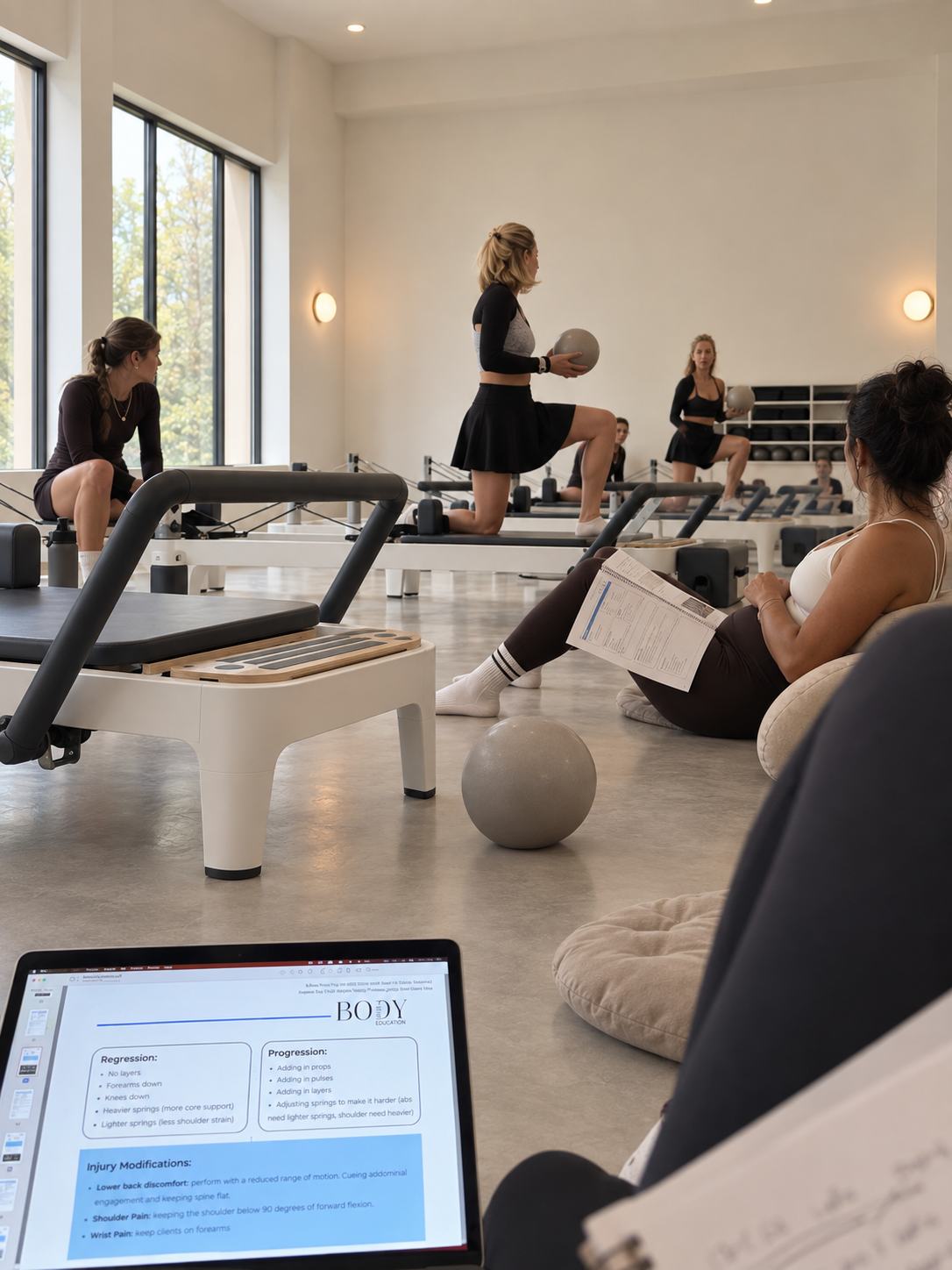
Again, ask:
What am I trying to train?
What Systems Contribute to Balance?
Balance relies on information from several systems.
Visual System
Vision gives us information about our environment and our position within it.
This is why balance often becomes more difficult when you close your eyes.
But closing the eyes is not automatically an appropriate progression for every client.
It changes the sensory information available for the task.
That should be purposeful.
Vestibular System
The vestibular system in the inner ear provides information about head movement and orientation.
This contributes to our ability to maintain balance when the head and body move.
Somatosensory System
Sensory information from muscles, joints, skin and other tissues helps the nervous system understand body position and interaction with the support surface.
All of these systems contribute to balance.
This is why balance training can be manipulated in more sophisticated ways than simply asking someone to stand on something wobbly.
What Is Proprioception?
Proprioception refers to our ability to detect information about body and joint position and movement.
It is often discussed in Pilates, rehabilitation and sports training.
You may hear instructors say an unstable surface “improves proprioception”.
But proprioception is not a single muscle you strengthen.
It is part of the sensory information the nervous system uses to organise movement.
Exercises can challenge sensory and motor systems in different ways, but simply making an exercise unstable does not automatically mean it is the most appropriate
proprioceptive training for that client.
The task still needs to relate to the capacity you want to develop.
Why Closing Your Eyes Makes Balance Harder
When vision is removed, the body has less sensory information available to help maintain orientation.
This can make a balance task substantially more difficult.
That does not mean closing the eyes is automatically the next progression after eyes-open balance.
Ask whether reducing visual input is relevant to the client's needs.
For some rehabilitation or balance programmes, it may be useful.
For other clients, progressing movement, strength, stepping or reaction demands may
be much more relevant.

A progression should not exist simply because it makes the exercise harder.
What Happens When You Move Your Head?
Head movement changes vestibular and visual demands.
Someone may be able to stand comfortably while looking straight ahead but become less stable when they turn their head.
This can be useful when programming balance because everyday movement rarely occurs with the head perfectly stationary.
We look around while walking.
We turn to speak to someone.
We scan the environment.
Again, the goal is not to add head turns randomly.
It is to understand which variable you are changing and why.
Balance Is Not Just an Ankle Skill
Pilates instructors often focus heavily on the foot and ankle during balance exercises.
The ankle certainly contributes.
But balance involves the entire body.
The hips contribute to controlling the pelvis and lower limb.
The trunk responds as the centre of mass moves.
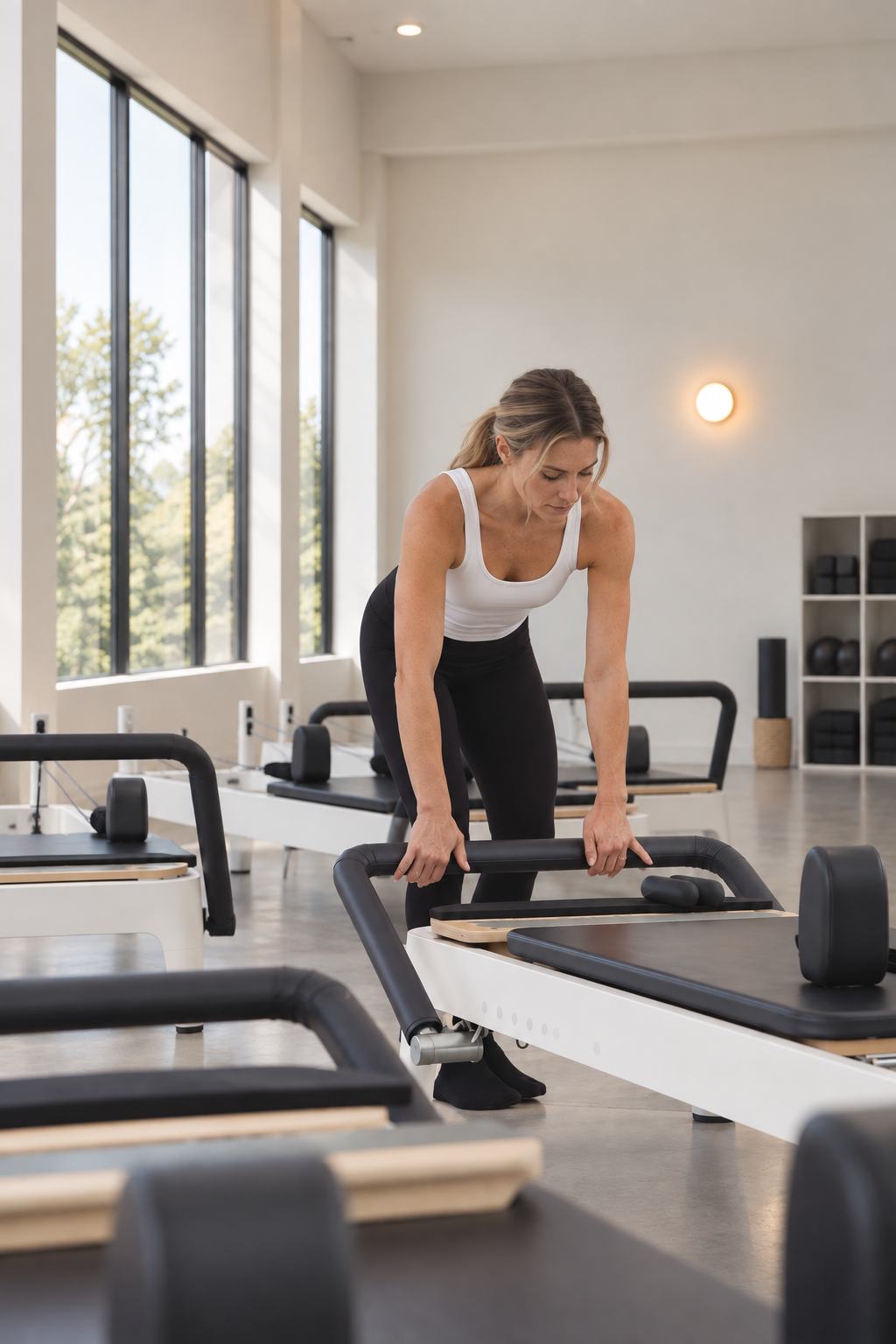
The arms may move to assist balance.
Stepping may be required when the centre of mass moves beyond the current base of support.
A client who moves their arms during a difficult balance exercise is not necessarily “cheating”.
They may be using a normal balance strategy.
Whether you want to restrict that strategy depends on the goal of the exercise.
Stop Calling Every Balance Strategy a Compensation
Imagine a client standing on one leg.
They begin to lose balance and move their arms.
You tell them:
“Keep your arms still. Don't compensate.”
But moving the arms can be a completely normal strategy for maintaining balance.
If your specific goal is to increase the lower-body or trunk demand by removing that strategy, asking them to keep the arms still may be appropriate.
But that is different from suggesting the arm movement itself is inherently wrong.
This is an important distinction.
A strategy is not automatically a compensation simply because it makes the task easier.
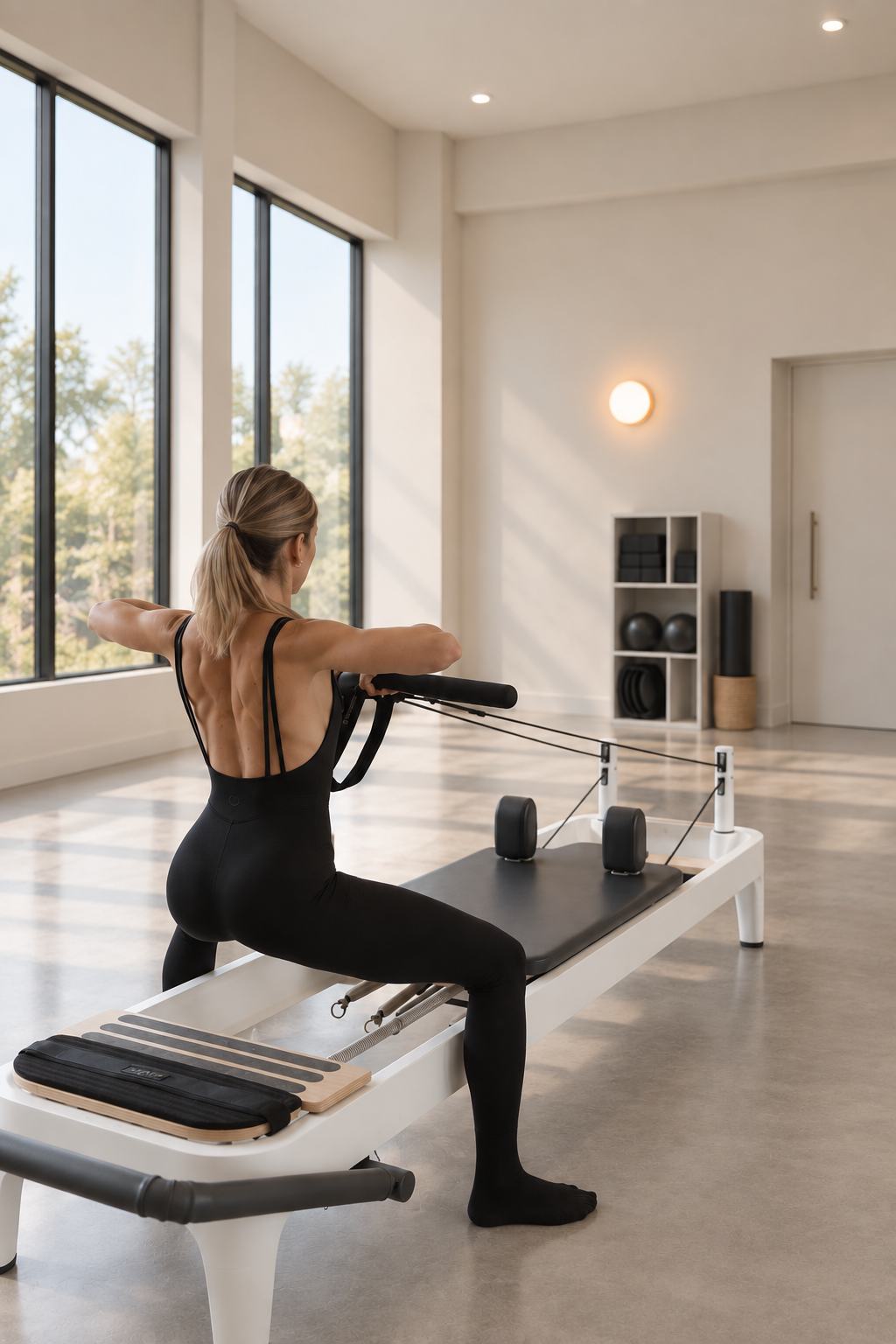
What Happens When We Add Arm Movement?
Moving the arms changes the distribution of mass and can move the body's centre of mass.
This may increase the balance challenge.
For example, standing on one leg with the arms by the sides is different from reaching one arm overhead or reaching across the body.
You can use this intentionally.
Instead of immediately placing the client on an unstable surface, keep the floor stable and manipulate the movement of the limbs.
This often creates a more functional dynamic balance task.
What Happens When We Add Rotation?
Rotation changes the relationship between different body segments and can move the centre of mass relative to the base of support.
This can increase coordination and balance demands.
But rotation should not simply be added because the exercise looks more advanced.
If the client cannot perform the original task effectively, adding rotation may create
complexity without useful progression.
First ask whether rotation is relevant to the goal.
Why External Load Can Change Balance
Holding a weight changes the distribution of mass.
A weight held close to the body creates a different demand from one held further away.
A weight held symmetrically is different from a weight held on one side.
This gives instructors another way to manipulate balance.
Imagine a client standing in a split stance.
Add a dumbbell in one hand and the trunk and lower body need to respond to an asymmetrical external load.
This can create a meaningful stability and balance challenge while still allowing substantial strength work.
You do not always need an unstable surface to make the body manage instability.
What About Moving Springs
on the Reformer?
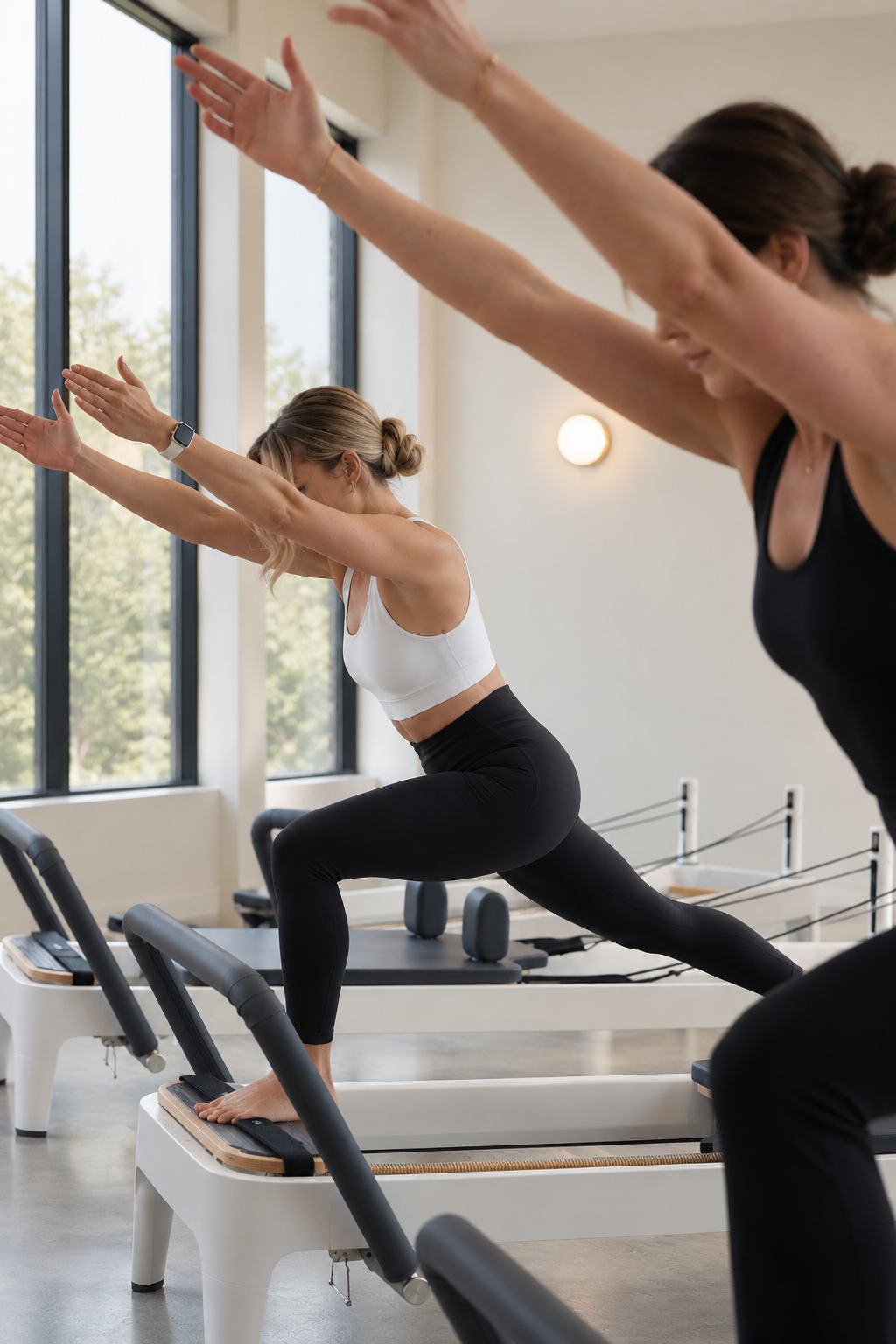
The Reformer introduces a unique programming environment because the carriage can move.
Standing on a moving carriage can create substantial balance and control demands.
But the fact that the carriage moves does not automatically make the exercise superior.
Consider what the client is actually doing.
If your goal is to improve lower-body strength but the client can only tolerate very low resistance because they are terrified of the moving carriage, balance has become the limiting factor.
That may be useful if you intentionally wanted to train balance.
It may be a poor choice if your goal was strength.
The equipment does not decide the training goal.
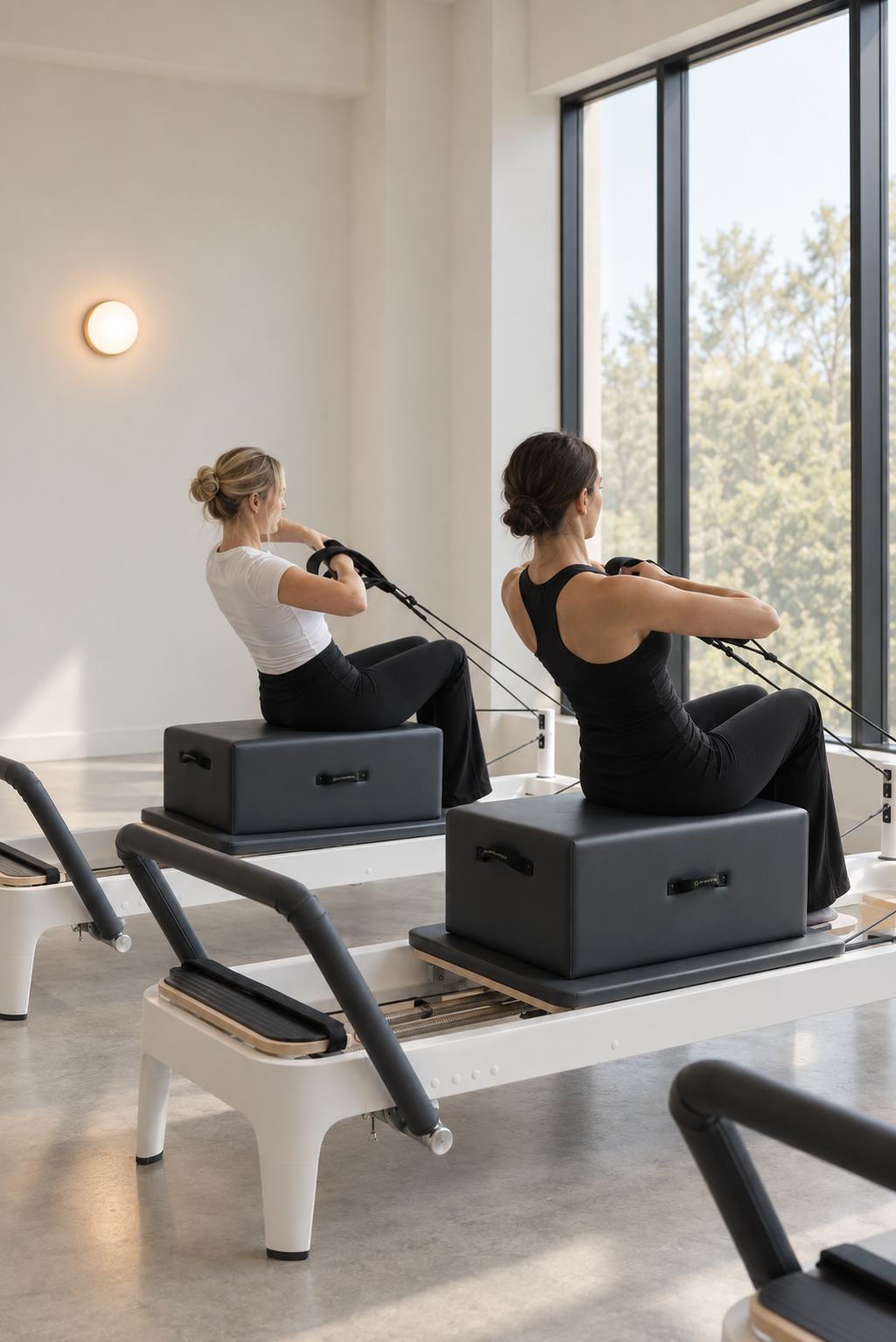
Your programming does.
Does a Lighter Spring Always Make a Standing Reformer Exercise Harder?
This is another area where instructors need to think carefully.
In some standing Reformer exercises, changing the spring resistance alters how easily the carriage moves.
A lighter spring may increase the control or balance demand because the carriage provides less resistance to movement.
But the exact effect depends on the setup, direction of force and exercise.
“Heavier equals easier” and “lighter equals harder” are not universal Reformer rules.
Ask what the springs are doing in that particular exercise.
Are they resisting movement?
Assisting a movement?
Helping stabilise the carriage?
Changing the external force the client must overcome?
Understanding the mechanics allows you to select springs based on purpose rather than memorised rules.
Are Kneeling Reformer Exercises Balance Training?
Sometimes.
But not automatically.
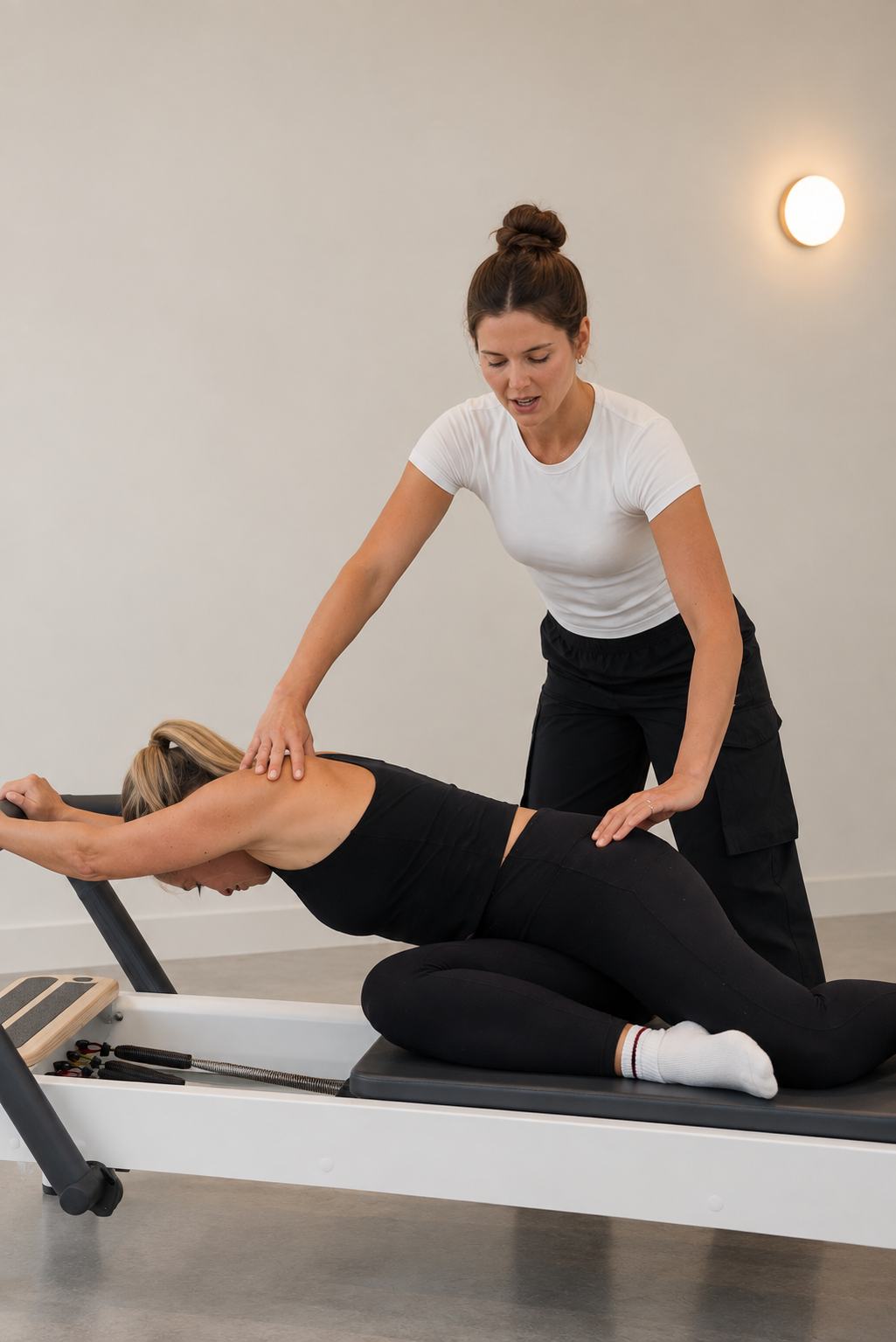
Kneeling changes the base of support and removes the feet from the task.
Depending on the exercise, this may increase demands on the trunk and hips.
But if the client is heavily supported through the hands or straps, the balance challenge
may remain relatively small.
Exercise position alone does not tell you what physical quality is being trained.
You still need to consider support, resistance, movement and the client's individual
response.
Balance Versus Strength:
Know Which One Is Limiting the Exercise
Imagine a client performing a single-leg squat.
They cannot complete the repetition.
Why?
Perhaps they cannot maintain balance.
Perhaps their quadriceps do not have enough strength.
Perhaps their ankle mobility limits the movement.
Perhaps they do not understand the task.
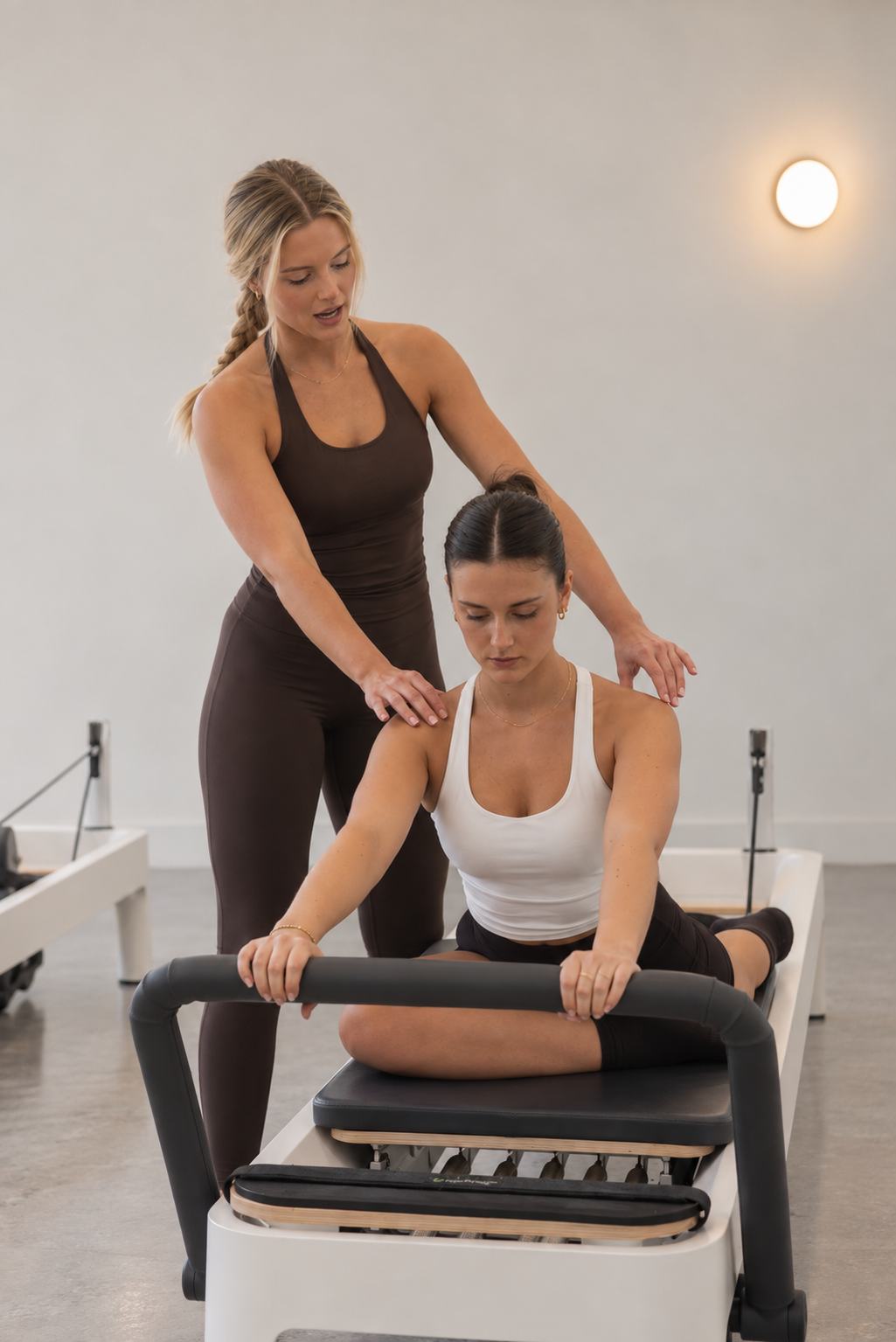
Perhaps they are afraid.
Those are different limitations.
If strength is the primary limitation, adding an unstable surface is unlikely to solve it.
You may actually need to provide more support so the client can produce greater force.
This is an important programming principle:
Sometimes adding stability allows you to train strength more effectively.
When Support Is a Progression, Not a Regression
Pilates instructors often assume that removing support makes an exercise more advanced.
From a balance perspective, it often does increase the challenge.
But if your goal is strength, adding support may allow the client to train harder.
Consider a supported split squat.
The client lightly holds a pole or stable surface.
Because they are no longer limited by balance, they can use greater external resistance
and work closer to their actual lower-body strength capacity.
The support has made the balance component easier.
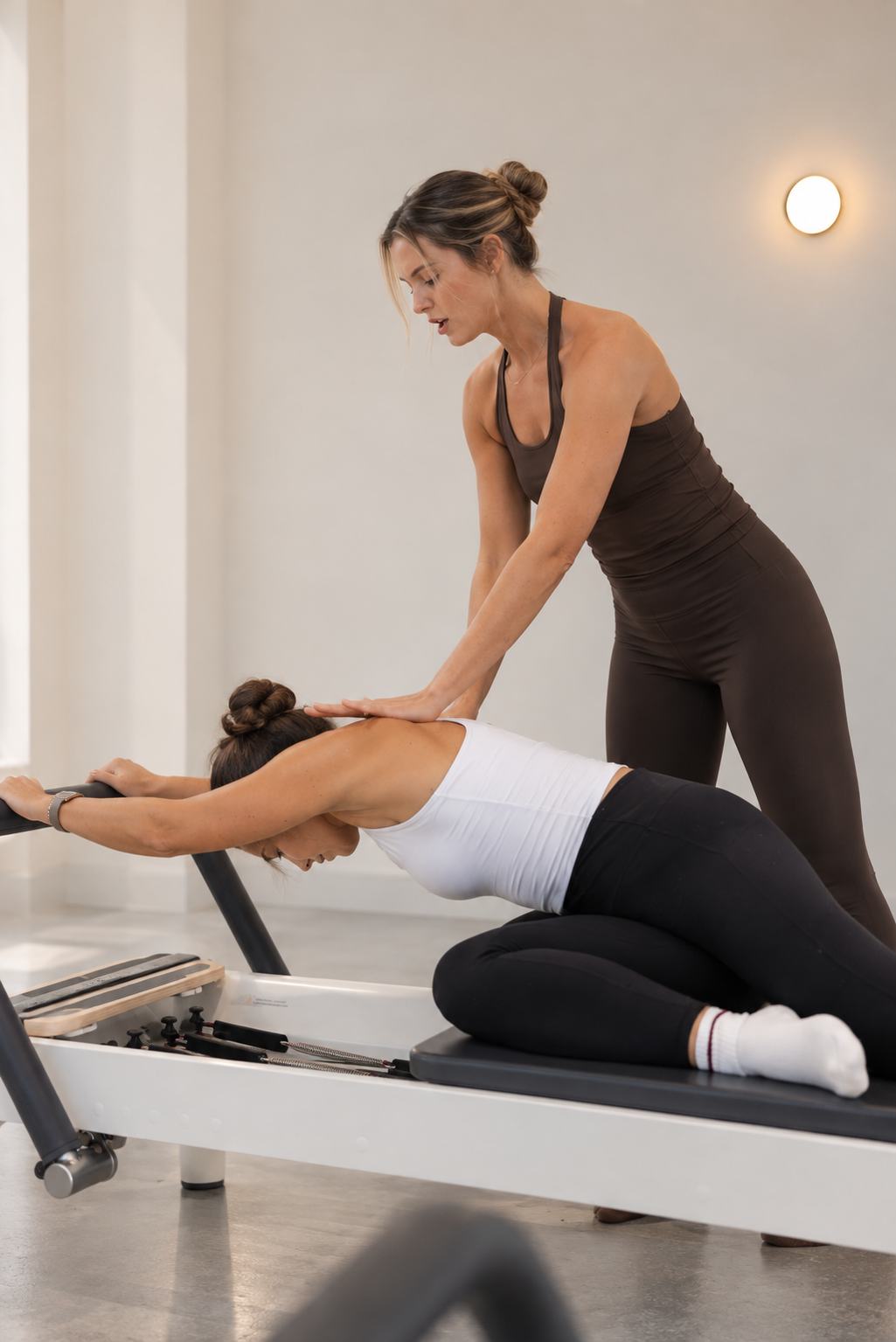
But it may have made the strength stimulus better.
So is the supported version a regression?
Not necessarily.
It is simply a different exercise prescription.
Example: Three Lunges
with Three Different Goals
Imagine three clients performing variations of a lunge.
Exercise a: Heavy Supported Split Squat
The client holds onto a stable support and uses substantial external resistance.
Balance demand is relatively low.
Lower-body strength demand is high.
Primary goal: strength.
Exercise B: Unsupported Split Squat
The client removes the support and uses a moderate resistance.
Balance demand increases.
Strength remains relevant.
Primary goal: combined strength and control.
Exercise C: Dynamic Single-Leg Lunge with Reach
The client moves through a more dynamic pattern with a changing centre of mass and minimal external support.
Balance and coordination demands increase substantially.
The external strength load may be lower.
Primary goal: dynamic balance and movement control.
Which is the most advanced?
That is the wrong question.
Which one matches the client's goal?
That is the question that matters.
Why “Advanced” Is Often a Poor Exercise Category
In Pilates, we often categorise exercises as beginner, intermediate and advanced.
That can be useful for teaching repertoire.
But when programming for individuals, “advanced” can become misleading.
An exercise might be advanced from a balance perspective but relatively low-level from
a strength perspective.
Another may require substantial strength but minimal coordination.
Another may require excellent mobility.
Another may require significant technical skill.
Calling something advanced tells you that it is difficult.
It does not tell you why it is difficult.
Good programming identifies the physical quality creating the difficulty.
Does a Bosu or Wobble Board Improve Balance?
These tools can create useful balance challenges.
But they are not essential.
A person can train balance on stable ground by manipulating base of support, body position, limb movement, visual input, external load, stepping and reaction demands.
Unstable surfaces are one option within a much larger toolbox.
They should be selected because they provide a useful stimulus, not because balance training is assumed to require something wobbly.
Is Balance Training Important
for Older Adults?
Balance can become particularly relevant as we age because maintaining the ability to move confidently, recover from disturbances and perform everyday tasks contributes to independence.
However, balance training for older adults should not simply consist of increasingly unstable standing exercises.
Strength matters.
Walking ability matters.
The ability to step matters.
The ability to respond to changes in the environment matters.
Confidence matters.
A comprehensive programme may include:
Lower-body strengthening.
Static and dynamic balance tasks.
Stepping in different directions.
Gait-related exercises.
Changes in speed and direction.
Appropriate reaction tasks.
Functional movements relevant to everyday life.
The programme should also be appropriately safe for the individual's current ability and falls risk.
Why Strength Matters for Balance
Imagine someone begins to lose balance and needs to take a quick step.
They need enough strength to move the leg rapidly, accept body weight and regain control.
Balance therefore cannot be completely separated from strength.
Someone may have excellent sensory awareness of where their body is but lack the physical capacity to produce the response required.
This is one reason progressive resistance training can be an important part of programmes aimed at maintaining function.
You cannot wobble-board your way around every strength deficit.
Balance Training for Runners
Running involves repeated single-leg support at speed.
But simply standing on one leg is not the same as running.
A runner may eventually need to manage:
Repeated impact.
Faster force production.
Changes in terrain.
Fatigue.
Directional changes.
Unexpected disturbances.
Static balance may form one small part of rehabilitation or training.
But if the goal is returning to running, exercise progression should eventually reflect the
demands of running.
Balance Training for Sport
Sport makes balance even more complex.
Athletes often need to maintain or recover control while:
Moving quickly.
Watching another player.
Handling a ball.
Changing direction.
Responding to unpredictable cues.
Being physically contacted.
Fatigued.
A beautifully controlled 60-second single-leg stance with eyes closed may demonstrate one balance capacity.
It does not prove the athlete is prepared for all of those demands.
Specificity matters.
What Is Reactive Balance?
Reactive balance is the ability to respond when something unexpectedly disturbs your position.
Perhaps you trip.
The surface moves.
Someone bumps you.
Your foot lands somewhere unexpected.
You need to respond quickly enough to recover.
Traditional Pilates exercises are often highly predictable.
The client knows exactly what movement is coming next.
That can be useful for learning and strength development, but it does not challenge every aspect of balance.
Depending on the client's goals, later-stage programming may include tasks requiring a response to an external cue or an unexpected change.
Planned Versus Unplanned Movement
This is an important distinction for instructors.
If you tell the client:
“Step right, then left, then backwards,”
they can prepare each movement.
If you instead provide an unpredictable cue indicating which direction to step, the processing and reaction demands change.
Both exercises may look similar physically.
But the nervous system is solving a different problem.
Again, exercise appearance does not tell you the entire training stimulus.
Why Dual-Task Training Changes Balance
A dual task asks the person to manage balance or movement while simultaneously completing another task.
For example, walking while responding to questions or performing a simple cognitive task.
This can change the attentional demands of movement.
Dual-task training may be relevant for some populations and goals, but it should not be added randomly simply to make an exercise harder.
As with every programming variable, ask whether it is relevant and appropriate for the individual.
When Is an Exercise Too Unstable?
There is no universal amount of instability that is too much.
But there are useful signs that the exercise may no longer be serving its intended purpose.
Ask:
Can the client still perform the movement I intended?
Has the resistance had to become so low that I have lost the desired strength stimulus?
Is the client relying entirely on external support?
Are they spending the entire exercise recovering from near-losses of balance?
Can they process my instructions while performing the task?
Is the exercise safe for their current capacity?
Does this resemble a demand they actually need?
If instability has become the only thing the client is training, make sure that was actually your intention.
Stop Progressing Five Variables at Once
Imagine a client has mastered a standing Reformer exercise.
For the progression you:
Reduce the spring.
Make it single-leg.
Add a ball.
Add rotation.
Add an overhead reach.
Speed it up.
Technically, the exercise is now harder.
But what exactly caused the difficulty?
You do not know because you changed everything at once.
Good progression is often much simpler.
Change one meaningful variable.
Observe the response.
Then decide whether another progression is appropriate.
This allows both you and the client to understand what capacity is actually improving.
How to Progress Balance Without Making It a Circus Trick
You have many options.
Change the Base of Support
Move from wider stance to narrower stance, tandem stance or single-leg support where appropriate.
Move the Centre of Mass
Introduce reaching, arm movement, trunk movement or movement of the opposite leg.
Reduce External Support
Move from two hands of support to one, then perhaps to fingertip or no support.
Add External Load
Use appropriately positioned resistance to change the body's mass distribution and force demands.
Add Movement
Progress from static positions to stepping, reaching or other dynamic tasks.
Change Speed
A slower task and a faster reactive task create different demands.
Change Sensory Information
Where appropriate, alter visual input or head position.
Introduce Predictability or Reaction
Move from pre-planned tasks towards responding to external cues when relevant.
Add Fatigue Strategically
If the person's activity requires balance under fatigue, later-stage training may need to reflect that.
You do not need to use every variable.
Choose the one that matches the adaptation you want.
How Hard Should Balance Training Be?
Balance training needs enough challenge to create adaptation.
If the client can complete the exercise indefinitely without concentration or adjustment, it may no longer be sufficiently challenging.
But the exercise does not need to involve constant near-falls either.
A useful challenge often allows the client to experience small errors and make successful corrections while maintaining an appropriate level of safety.
The exact difficulty depends on the person.
For a client with a high falls risk, safety and appropriate support are particularly important.
For a healthy athlete, the acceptable level of challenge may look very different.
Should Clients Hold Onto Something During Balance Training?
Sometimes, yes.
Support is not failure.
A client may initially need support to safely practise a movement.
You can gradually reduce it as capacity improves.
Or, as discussed earlier, you may deliberately keep support because balance is not the primary training goal.
The key is understanding why the support is there.
If you are trying to improve unsupported balance, eventually you may need to reduce it.
If you are trying to load a split squat heavily, maintaining support may be exactly what you want.
How Do You Know If Balance Is Actually Improving?
Do not only judge progress by whether the exercise looks prettier.
You can consider whether the client can:
Maintain a position for longer.
Use less external support.
Control a smaller base of support.
Move through a greater range.
Manage more external load.
Reach further.
Complete more complex movement.
Respond more effectively to perturbations.
Recover balance more confidently.
Perform the task while moving.
Transfer improvements into relevant everyday or sporting activities.
The measure you choose should reflect the goal.
The Pilates Reformer Is a Tool, Not the Goal
The Reformer gives us incredible options for changing resistance, support, movement and balance demands.
But we should not confuse being good at standing on a Reformer with being good at balance in every environment.
A client may become highly skilled at a specific Reformer exercise because they have practised it repeatedly.
That is still a useful skill.
But if their goal is to improve balance while hiking, running, playing sport or navigating everyday environments, we should consider whether the programme also prepares them for those contexts.
Equipment should help us develop capacity.
It should not define the capacity.
A Better Balance Programming Framework
Before adding a balance exercise to your class, ask:
1. What Am I Trying to Train?
Is balance actually the primary goal?
Or are you trying to train strength, endurance, mobility or coordination?
2. What Is Currently Limiting the Client?
Are they losing balance?
Or do they lack strength, range, confidence or understanding?
3. Which Balance Variable Am I Manipulating?
Base of support?
Centre of mass?
Vision?
Surface?
Movement?
External load?
Predictability?
4. Can They Still Perform the Intended Task?
If not, the progression may be too large or may have changed the exercise goal.
5. Is the Exercise Safe for This Client?
Consider their current ability, injury history, falls risk and environment.
6. Is This Relevant to Their Goal?
Does the client actually need the capacity you are training?
7. How Will I Know They Have Improved?
Decide what progression looks like before simply adding more instability.
Common Balance Programming Mistakes
Mistake 1: Assuming unstable automatically means advanced. Instability increases one type of demand but may reduce another.
Mistake 2: Confusing balance and strength. A client may fail a single-leg exercise because they are not strong enough rather than because their balance is poor.
Mistake 3: Removing support when strength is the goal. External support can allow greater force production.
Mistake 4: Using unstable surfaces for every balance exercise. Stable ground can provide substantial balance challenges.
Mistake 5: Progressing too many variables at once. You lose clarity about what actually changed the task.
Mistake 6: Treating normal balance strategies as compensations. Arm movement, trunk adjustments and stepping can be normal responses.
Mistake 7: Assuming lighter Reformer springs are always more advanced. Spring mechanics depend on the exercise setup.
Mistake 8: Training only static balance. Real-world movement often requires dynamic and reactive balance.
Mistake 9: Forgetting specificity. Standing on one leg does not prepare someone for every balance demand.
Mistake 10: Making an exercise difficult without knowing why. Difficulty should serve the training goal.
Professional Reflection:
Did You Progress the Exercise or Just Make It Harder?
This is a useful question to ask yourself whenever you design a Pilates class.
If you took away the support, what did you change?
If you reduced the spring, what did you change?
If you made the exercise single-leg, what did you change?
If you added rotation, what did you change?
If you put the client on an unstable surface, what did you change?
If the answer is simply:
“It made it harder,”
you need to go one step further.
Harder in what way?
More strength?
More balance?
More coordination?
More mobility?
More endurance?
More cognitive demand?
More technical complexity?
Those are different things.
An exercise can become more difficult while becoming less useful for the physical quality you originally intended to train.
The goal of progression is not to create the most impressive-looking variation.
It is to provide a more appropriate stimulus for the adaptation you want.
Key Teaching Takeaways
Balance involves controlling the body's centre of mass relative to its base of support.
Balance relies on visual, vestibular and somatosensory information alongside appropriate motor responses.
Static and dynamic balance are different capacities.
Standing on one leg can be useful balance training, but it is not a complete balance programme.
Unstable surfaces are one way to manipulate balance, not a requirement.
Making an exercise unstable can reduce the amount of resistance a client can use.
A harder balance exercise is not automatically a better strength exercise.
Support can improve strength training by removing balance as the limiting factor.
Arm and trunk movements are not automatically compensations during balance tasks.
Base of support, centre of mass, vision, head movement, external load, movement and predictability can all change balance demands.
Lighter Reformer springs do not universally mean a more advanced exercise.
An exercise can be advanced for balance while relatively low-level for strength.
Balance training should eventually reflect the client's actual goals.
Older adults need more than unstable-surface exercises; strength, stepping, gait and appropriate reactive tasks may all be relevant.
Running and sport require dynamic capacities that static single-leg standing cannot completely replicate.
Progress one meaningful variable at a time where possible.
Exercise difficulty and exercise effectiveness are not the same thing.
Teach the Physical Quality, Not Just the Exercise
The difference between exercise choreography and exercise programming is
understanding why you chose the exercise in the first place.
If you are training strength, the client needs enough resistance to create an appropriate strength stimulus.
If you are training balance, the task needs to challenge their ability to maintain or recover control.
If you are training dynamic stability, movement and changing forces need to be part of the task.
If you are training a client for a specific activity, eventually the programme needs to reflect the demands of that activity.
At Body Form Education, this is the type of reasoning we want instructors to develop.
Our Programming & Cueing Mastery Certification teaches instructors how to move beyond simply collecting more exercises and instead understand how to select, sequence, modify and progress movements according to the intended training outcome.
For instructors wanting to understand the biomechanics underneath those decisions, our Applied Anatomy & Biomechanics Certification explores how force, resistance, joint position and movement mechanics change what an exercise actually trains.
Because adding a wobble, reducing a spring or standing on one leg does not automatically create better programming.
You need to know what you changed.
You need to know why you changed it.
And you need to know whether it actually brings your client closer to their goal.
That is the difference between making an exercise harder and actually progressing it.