You teach a client a squat.
Their first few repetitions look controlled.
Then you increase the load.
Suddenly their knee starts moving inward.
Their pelvis shifts.
Their trunk leans.
Their movement changes.
A lot of instructors immediately respond with more cueing.
“Keep your knee out.”
“Stay square.”
“Don’t rotate.”
“Keep your ribs down.”
Sometimes that works.
Sometimes the exact same movement pattern comes straight back as soon as the exercise gets harder.
That is because movement compensation is not always a cueing problem.
Sometimes it is a capacity problem.
Sometimes it is a mobility problem.
Sometimes it is fatigue.
Sometimes it is pain.
Sometimes it is simply the way that particular body solves the movement.
One of the most useful skills a Pilates instructor can develop is learning to stop asking:
“How do I correct this?”
and start asking:
“Why might this be happening?”
That shift takes you from policing movement into actually understanding it.
What Is a Movement Compensation?
A movement compensation is simply a strategy the body uses to complete a task when the preferred or expected strategy is unavailable, inefficient or more difficult.
That definition is important because compensation is not automatically a bad thing.
The human body is designed to adapt.
If one area cannot contribute enough to a movement, another area may contribute more.
If a task becomes harder, movement may change.
If someone becomes tired, they may recruit different muscles or alter their position.
If a joint is painful, the nervous system may organise movement differently to reduce load through that region.
These are all forms of adaptation.
The presence of compensation tells us something.
It does not automatically tell us that something is wrong.
Why Pilates Instructors Become Obsessed
with “Perfect Form”
Pilates education often places enormous emphasis on alignment.
Neutral pelvis.
Square hips.
Level shoulders.
Knees tracking.
Ribs stacked.
Scapula controlled.
Spine positioned precisely.
Learning movement landmarks is useful.
They help instructors observe movement and identify changes.
The problem occurs when these landmarks become treated as universal rules rather
than reference points.
Human bodies are not identical.
People differ in:
bone structure
joint orientation
limb length
mobility
strength
previous injury
movement history
coordination
comfort
Two people can therefore perform the same exercise differently without one of them necessarily moving incorrectly.
Good coaching needs room for normal variability.
Movement Variability Is Normal
Movement variability refers to the natural differences that occur each time we perform a movement.
You do not take exactly the same step every time you walk.
Your squat will not look identical every repetition.
Your shoulder blade will not follow one perfectly repeatable path during every arm
movement.
This variability is part of a healthy movement system.
It allows the body to adapt to:
different loads
different environments
fatigue
uneven surfaces
changing speeds
unexpected demands
We should not aim to eliminate all movement variability.
The goal is to have enough movement options that the body can respond effectively to different tasks.
When Compensation Becomes More Interesting
A compensation becomes particularly useful information when it:
appears consistently
increases with load
increases with fatigue
occurs alongside pain
limits performance
prevents the intended muscle group from being sufficiently challenged
places repeated demand through a region that is already symptomatic
This is when the instructor needs to become curious.
Rather than immediately cueing the movement away, ask:
What changed?
Did the load increase?
Did the range increase?
Did the client fatigue?
Did the exercise become more complex?
Did they lose balance?
Did symptoms begin?
This is clinical reasoning in its simplest form.
Capacity Versus Task Demand
One of the easiest ways to understand compensations is through capacity versus demand.
Capacity is what the client can currently produce or tolerate.
That may include:
strength
mobility
endurance
coordination
balance
confidence
Demand is what the exercise requires.
A compensation may appear when the demand exceeds the person’s current capacity.
For example, a client may perform a bodyweight squat beautifully.
Add substantial resistance and their trunk begins leaning forwards.
That does not necessarily mean their squat technique suddenly became “bad”.
The heavier task may simply require more hip, knee and trunk strength than they currently have available.
The movement changed because the demand changed.
Example: Knee Valgus During a Squat
Knee valgus describes the knee moving inward relative to the hip and foot.
It is one of the most commonly corrected movements in Pilates and strength training.
But knee valgus itself does not automatically equal injury.
A client’s knee may move inward because of:
hip strength
foot position
ankle mobility
anatomy
fatigue
load
balance
movement preference
Imagine someone performs eight squats.
Repetitions one through five are controlled.
During repetitions six to eight, the knee begins drifting inward.
That pattern immediately gives you useful information.
The issue may be fatigue, rather than a fundamental inability to control the knee.
Your intervention could therefore be:
fewer repetitions
longer rest
lower load
improved strength over time
rather than repeating “knee out” twenty times.
Example:
Pelvic Rotation During Single-Leg Work
You have a client performing single-leg footwork or a standing scooter variation.
As the exercise becomes harder, one side of the pelvis rotates.
The immediate response might be:
“Keep your hips square.”
But why are they rotating?
Possible explanations include:
insufficient hip strength
poor pelvic control
fatigue
limited hip range
balance demands
anatomical differences
trying to shorten the lever
using trunk rotation to produce more force
Simply forcing the pelvis to remain perfectly still may not address the reason the movement appeared.
Instead, try changing one variable.
Reduce the spring resistance.
Shorten the range.
Add support.
Reduce repetitions.
If the compensation disappears, you have learned something.
The movement may have been exceeding the client’s current capacity.
Example:
Lumbar Extension During Overhead Arm Work
Another common pattern is lumbar extension when the arms move overhead.
The instructor sees the ribs lift and immediately cues:
“Ribs down.”
Sometimes that is appropriate.
But again, ask why.
The client may have:
limited shoulder flexion
limited thoracic extension
poor trunk control
insufficient shoulder strength
simply reached the end of their available arm range
The lumbar spine may be contributing movement so the arms can travel further.
Instead of repeatedly bracing the ribs down while forcing the arms overhead, you could test:
reducing arm range
decreasing load
improving thoracic mobility
changing the body position
strengthening overhead movement gradually
The compensation is giving you information.
Use it.
Example:
Shoulder Elevation During Pulling Exercises
Shoulders elevating toward the ears during rows or arm work is another frequent cueing target.
“Relax your shoulders.”
“Pull them down.”
“Keep the neck long.”
But sometimes the client is elevating because the load is too high.
They are trying to recruit additional musculature to complete the task.
If you decrease the resistance and the shoulder elevation immediately improves, you have just tested your hypothesis.
This is far more useful than giving increasingly creative cues while leaving the exercise demand unchanged.
Example:
Hip Flexor Dominance During Abdominal Work
Clients often say:
“I only feel this in my hip flexors.”
That can make instructors panic.
They assume the hip flexors are taking over and the abdominals are doing nothing.
But hip flexors are supposed to work in many Pilates abdominal exercises.
Exercises involving hip flexion will naturally recruit muscles that flex the hip.
The better question is:
Is the client able to control the movement appropriately, and is the exercise achieving its intended purpose?
If the client’s trunk position collapses as fatigue increases, perhaps the abdominal demand exceeds current capacity.
If symptoms are occurring, the exercise may need adjusting.
But simply feeling the hip flexors does not automatically mean the movement is wrong.
Why More Cueing Does Not Always Fix the Problem
This is one of the biggest lessons Pilates instructors can learn.
You cannot cue someone into strength they do not currently have.
You cannot cue them into range they do not possess.
You cannot cue away fatigue.
You cannot cue a painful joint into tolerating a load that currently exceeds its capacity.
Sometimes the client’s nervous system understands exactly what you want.
Their body simply cannot sustain it under the current conditions.
At that point, adding another verbal instruction only increases cognitive load.
Change the task.
Change the Exercise Before Changing the Cue
When a movement strategy keeps appearing despite good instruction, manipulate the exercise variables.
Try changing:
resistance
range
tempo
repetitions
support
base of support
lever length
spring setting
body position
Then watch what happens.
This turns exercise modification into a form of assessment.
If reducing the load immediately improves control, strength may be a significant
contributor.
If shortening the range helps, mobility or end-range capacity may be involved.
If providing external support fixes the movement, balance may be part of the issue.
This is far more informative than labelling the client as having “poor form”.
Load Often Reveals What Easy Exercise Hides
A client can look incredibly controlled during low-load movement.
Then you increase resistance and everything changes.
That is not necessarily a failure.
It is useful information.
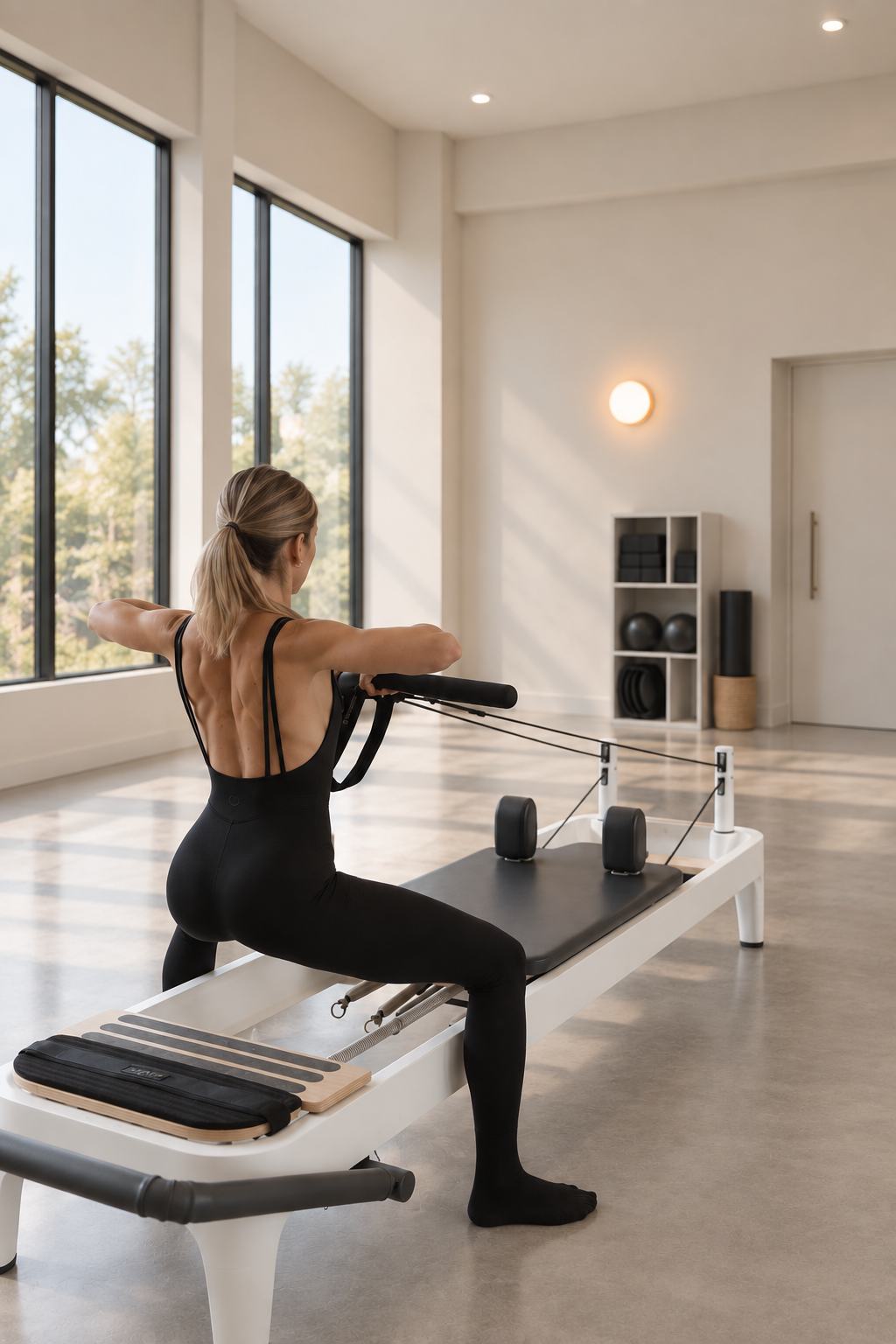
Low-load exercises may not sufficiently challenge the system to expose the client’s current limitation.
As load increases, you might see:
shaking
trunk compensation
altered joint position
reduced range
slower movement
balance loss
These responses help us understand where capacity begins to run out.
This is one reason we should not be afraid of appropriately challenging clients.
Without challenge, we may never learn what they actually need to improve.
Fatigue Is a Form of Assessment
Fatigue is incredibly revealing.
A client may demonstrate excellent movement for six repetitions and lose control by repetition ten.
That suggests they possess the movement skill.
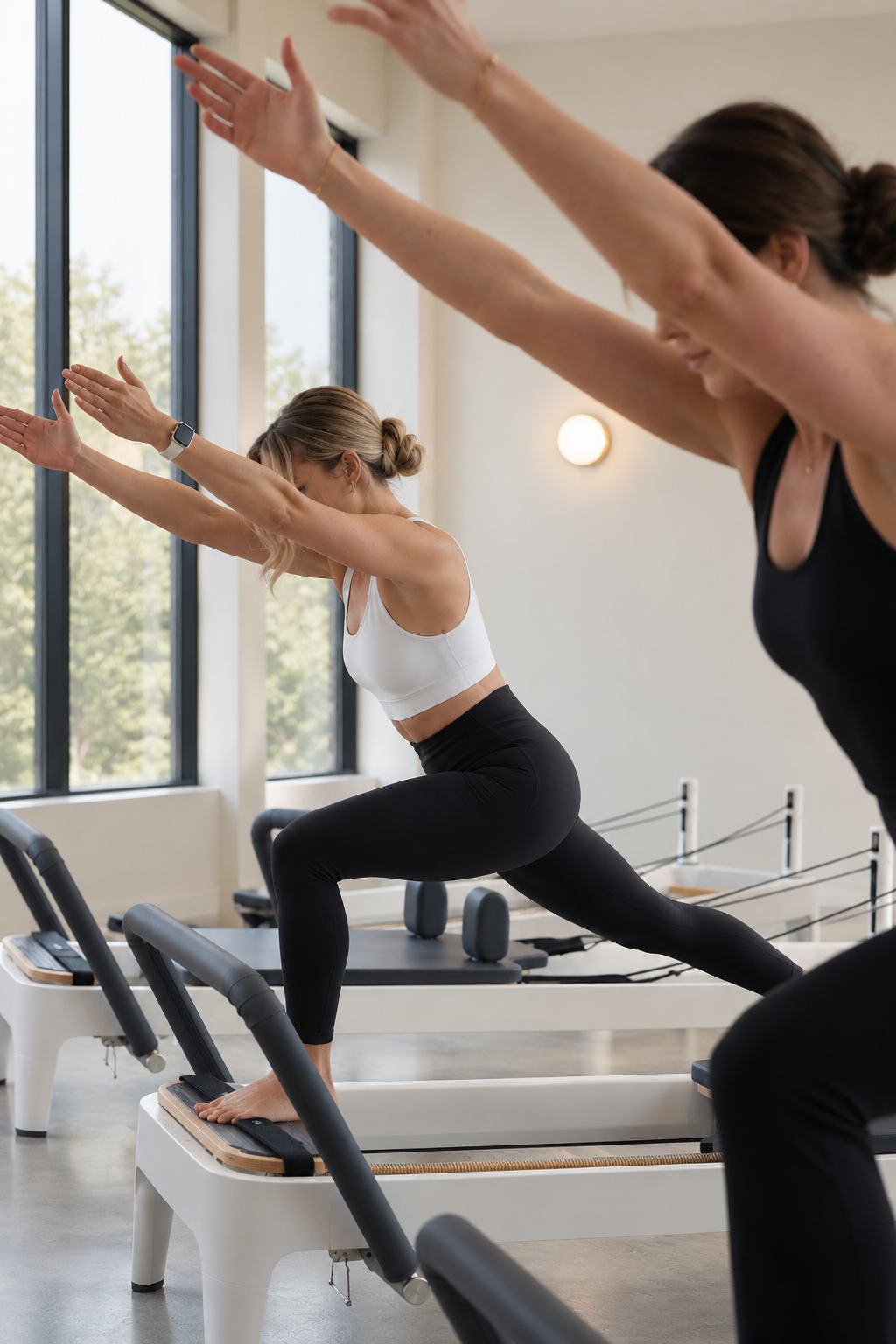
What they may lack is enough strength or endurance to maintain it.
That changes the programme.
Instead of spending weeks teaching the same technique again, you may need to improve capacity.
You could:
reduce repetitions temporarily
add another set after rest
increase strength in related exercises
gradually build endurance
The compensation appeared because the system became tired.
That is different from someone who cannot demonstrate the movement from repetition one.
Pain Can Change Movement
Pain can also alter motor behaviour.
When an area hurts, the nervous system may modify movement to protect or unload that region.
This can result in:
weight shifting
reduced range
slower movement
guarding
increased tension
greater reliance on another limb
These strategies are not necessarily dysfunctional.
They may be temporarily useful.
For example, someone with a painful knee may naturally shift weight toward the
opposite side during a squat.
The immediate goal may not be forcing perfect symmetry.
Depending on the presentation, it may be more appropriate to initially reduce the painful knee’s demand and progressively restore tolerance.
Again, context matters.
Anatomy Influences Movement Too
Sometimes a client’s movement simply reflects their anatomy.
Bone structure varies considerably between people.
Differences in:
femoral orientation
hip socket orientation
tibial structure
foot position
spinal curves
limb length
can influence how someone naturally moves.
This is why not every client should necessarily stand with their feet in exactly the same position.
One person’s comfortable squat may require slightly more turnout.
Another may naturally use a narrower stance.
Trying to force every person into one aesthetic version of “perfect alignment” ignores
anatomical variability.
Compensation Versus Substitution
It can be useful to distinguish between compensation and substitution.
Compensation generally describes the body adapting its movement strategy to complete the task.
Substitution usually refers to another movement or muscle strategy taking over to such an extent that the intended exercise changes.
For example, during a prone hip extension exercise, some lumbar movement may be normal.
But if nearly all visible movement comes from lumbar extension while the hip barely moves, the exercise may no longer be achieving its intended purpose.
That may justify changing:
range
resistance
setup
cue
exercise selection
The goal is not zero compensation.
The goal is ensuring the task still trains what you intended it to train.
Not Every Compensation Needs Fixing
This may feel uncomfortable if you were taught to correct every alignment change you see.
But not every deviation requires intervention.
Ask:
Is it painful?
Is it limiting performance?
Is it preventing the intended training stimulus?
Does it become significantly worse under load or fatigue?
Is the client unable to control it when asked?
If the answer to all of these is no, the variation may simply be normal movement.
You do not need to make every client look identical.
When Compensation Does Matter
There are absolutely times when modifying a movement strategy is appropriate.
For example, when:
the movement consistently reproduces pain
the client cannot complete the exercise effectively
the compensation becomes excessive under fatigue
the strategy repeatedly overloads a sensitive area
movement changes suddenly following injury
the task no longer matches its intended purpose
The key difference is that you’re intervening for a reason.
Not because the movement failed an aesthetic test.
Regressions Are Not a Failure
If a compensation appears because the current task exceeds the client’s capacity, regression can be an intelligent programming decision.
A regression may involve:
decreasing resistance
reducing range
adding support
shortening the lever
simplifying coordination
changing body position
The goal is to find the version the client can successfully control while still receiving an appropriate challenge.
Then build from there.
A regression isn’t making the exercise “easy”.
It is adjusting the demand so adaptation can occur.
Progressions Can Be Used as Assessment Too
Progressions don’t only make exercises harder.
They tell you what happens when demand increases.
Take a bridge.
A client may perform a bilateral bridge comfortably.
Progress to single-leg and the pelvis rotates.
That tells you something.
Perhaps unilateral hip strength is limited.
Perhaps trunk control changes when one leg is removed.
Perhaps the new load is simply too difficult.
You can then programme specifically around what you observed.
Progression becomes assessment rather than choreography.
Why Complexity Can Hide the Real Issue
Pilates classes often progress exercises by making them more complex.
Add arm choreography.
Add a ball.
Add rotation.
Add balance.
Add another movement.
But when a client struggles with a complicated exercise, it can become difficult to know what actually caused the breakdown.
Was it:
strength?
balance?
coordination?
memory?
mobility?
fatigue?
Sometimes simplifying an exercise gives you more information.
A basic movement performed under meaningful load can reveal more about someone’s physical capacity than a highly complex sequence.
Stop Treating Every Movement Difference as Weakness
Another common mistake is assuming every compensation means weakness.
Sometimes it does.
But there are many other possibilities.
It could be:
mobility
pain
anatomy
fatigue
unfamiliarity
fear
balance
exercise setup
Your job is not to diagnose every small movement difference.
Your job is to observe, modify and determine whether the client can perform the task
more effectively under different conditions.
This is practical clinical reasoning within Pilates scope.
A Better Framework for Instructors
When you notice a compensation, run through this sequence:
1. Observe
What exactly changed?
Avoid vague statements like “their form is bad.”
Be specific.
For example:
“The pelvis rotates towards the moving leg during the final three repetitions.”
That is much more useful.
2. Identify When It Happens
Does it happen:
immediately?
only under heavy load?
only at end range?
only during fatigue?
only on one side?
3. Change One Variable
Try adjusting:
load
range
support
tempo
repetitions
4. Reassess
Did the movement change?
If yes, you’ve gained information.
5. Programme Accordingly
Use that information to decide whether the client needs:
more strength
greater endurance
mobility
balance work
altered range
graded exposure
This is far more effective than immediately throwing more cues at the problem.
Cueing Still Matters
None of this means cueing is irrelevant.
A good cue can completely change someone’s movement when the issue is understanding or motor learning.
If the client does not know what you’re asking them to do, coaching is appropriate.
But once the client understands the instruction and the same compensation repeatedly appears under load, you need to consider whether the problem lies elsewhere.
One cue.
Observe.
Then modify.
Do not spend the entire set narrating everything the client is doing wrong.
The Goal Is Not Perfect Movement
Our goal as Pilates instructors should not be creating bodies that move according to one rigid template.
Our goal should be helping clients develop:
strength
confidence
movement options
load tolerance
coordination
resilience
Sometimes that means changing movement.
Sometimes it means accepting normal variation.
The skill lies in knowing the difference.
Professional Reflection
If your client’s form changes the moment an exercise becomes challenging, don’t immediately assume they forgot your cue.
The movement may be exposing the edge of their current capacity.
That gives you valuable information.
Instead of asking:
“What cue can I give?”
try asking:
“What is this movement telling me?”
Could they control it with less resistance?
Could they control it through less range?
Does it appear only with fatigue?
Does it disappear with support?
Does anatomy influence their preferred position?
This is how instructors begin moving beyond memorised corrections and start developing genuine clinical reasoning.
Key Teaching Takeaways
Movement compensation is not automatically dysfunctional.
Human movement naturally contains variability.
A client’s movement may change when exercise demand exceeds current capacity.
Load can reveal limitations that aren’t visible during easy exercise.
Fatigue often exposes strength or endurance deficits.
Pain can produce temporary protective movement strategies.
Anatomy influences how different clients perform the same exercise.
More cueing cannot solve every movement problem.
If a cue doesn’t work, change an exercise variable and reassess.
Resistance, range, tempo, support and repetitions can all help test why a compensation is occurring.
Regressions and progressions can function as assessment tools.
Complexity is not necessarily a better progression.
Not every alignment difference requires correction.
Intervene when a strategy is painful, limiting, excessively fatiguing or preventing the intended training stimulus.
The goal is not perfect movement. It is capable, adaptable movement.
Learn to Understand Movement Instead of Just Correcting It
The difference between a new instructor and a confident educator is rarely how many exercises they know.
It is how well they can watch movement and make sense of what they see.
Why did the pelvis rotate?
Why did the knee move inward only once the spring got heavier?
Why did the ribs lift when the arms moved overhead?
Why did the movement improve when you shortened the range?
Those questions require an understanding of anatomy, biomechanics, load and movement capacity.
The Applied Anatomy & Biomechanics Certification through Body Form Education was created specifically to help Pilates instructors build that skill.
Rather than memorising origins, insertions and lists of muscles, you’ll learn how anatomy actually influences movement, how to recognise compensations, understand why they may be occurring and make better decisions about cueing, regression and programming.
If you’re ready to stop looking at movement as simply “right or wrong” and start understanding the mechanics behind what you’re seeing, explore the Applied Anatomy & Biomechanics Certification through Body Form Education.