
Recognise
Observe how a client moves and identify common compensations, so you can see what each person needs.
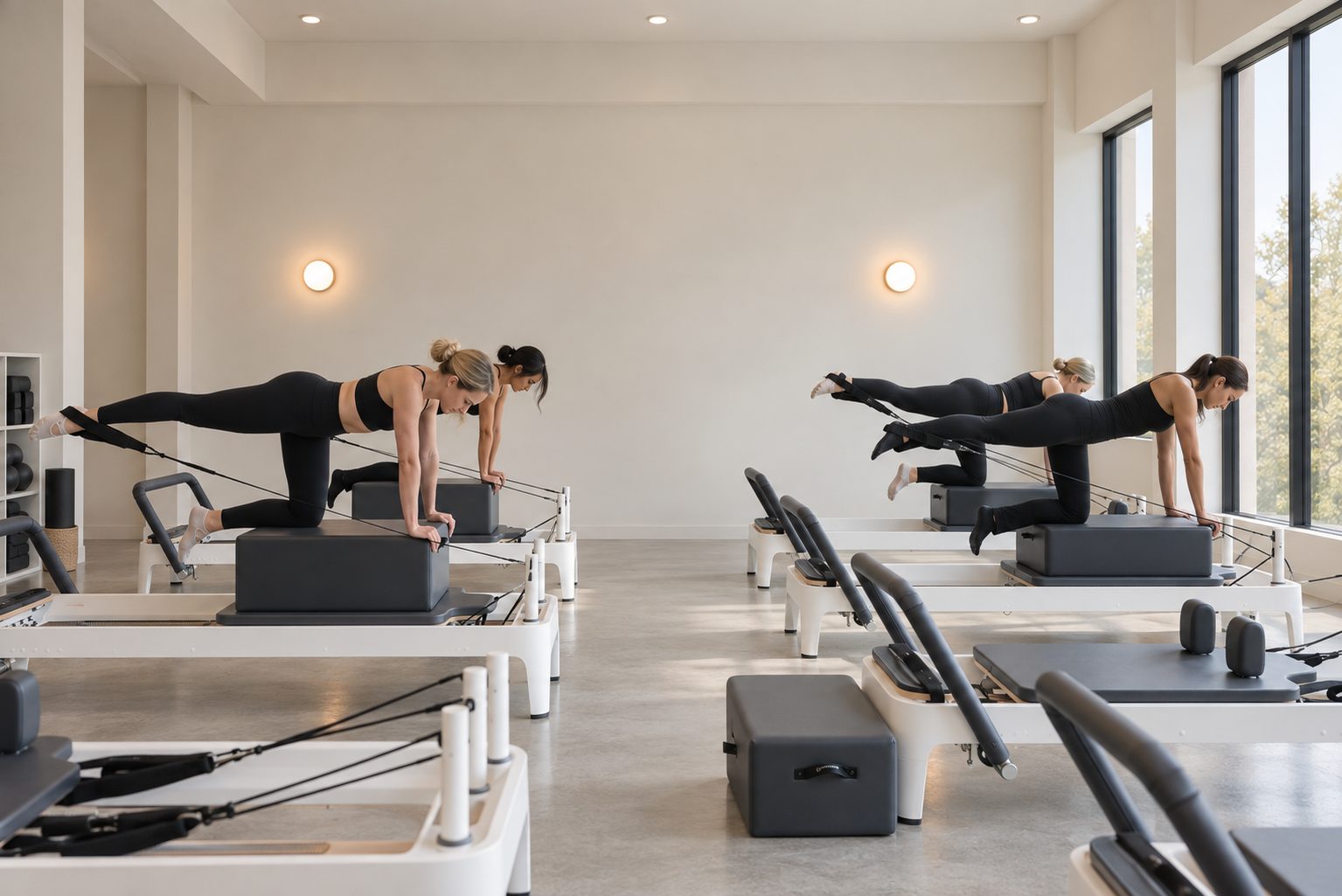
Body Form® Education
Education designed and directed by a Physiotherapist, so students learn to understand movement first and then teach exercises.
The short answer
Written by Kira-Leigh Rule, Physiotherapist and Founder of Body Form® Education. Last updated 14 November 2026.
Physiotherapy-led Pilates teacher training is instructor education designed and directed by a Physiotherapist, so that anatomy, biomechanics and clinical reasoning shape how exercises are taught. Body Form® Education was founded by Australian Physiotherapist Kira-Leigh Rule and is built on The Body Form® Method: understand movement first, then teach exercises. Body Form education supports safe teaching and adaptation. It does not qualify graduates to diagnose, treat or provide clinical care.
In practice, students learn why an exercise is chosen, when to change it and how to adapt it for the person in front of them: a client with a sore shoulder, a pregnant client, a mixed-ability class. They are assessed on it, and they learn when a question belongs with a health professional rather than with the instructor.
At a glance
| Question | Short answer | Detail |
|---|---|---|
| What it means | Instructor education designed and directed by a Physiotherapist. | Read more |
| Who designs and directs it | Kira-Leigh Rule, Physiotherapist and Founder of Body Form® Education. | Read more |
| What it shapes | Injuries, pregnancy and special populations, clinical reasoning, applied anatomy and biomechanics, programming, and how exercises are adapted. | Read more |
| What it does not mean | Instructors do not diagnose, treat or provide clinical care. Referral and scope of practice are taught. | Read more |
| How it is assessed | 2 written programming assessments and 2 practical teaching assessments per discipline. | Read more |
| Where to see it | In the Mat, Reformer, Mat + Reformer and Full Comprehensive courses. | Read more |
The definition
Physiotherapy-led means designed and directed by a Physiotherapist. It describes who shapes the education: what is taught, in what order, and what graduates are expected to be able to do.
The education was designed and directed by Kira-Leigh Rule, Physiotherapist and Founder of Body Form® Education. She is an Australian Physiotherapist with a Bachelor of Physiotherapy, a Women's Health specialisation, and is a Clinical Pilates instructor. Her story is on Meet Our Founder. The recorded practical training in the Fully Online pathway is led by her, filmed at real intakes and edited into individual videos students can pause, rewind and revisit.
In practice
Designed and directed by a Physiotherapist, so you learn to teach real bodies. These are the six areas it shapes.
Example: the Reformer lunge. Students explore how spring load changes the challenge, common balance problems, regressions, layered sequences, upper-body integration, and considerations for knee pain or pelvic girdle pain. Then they practise teaching it and receive feedback. The aim of a practical day is clinical reasoning and teaching decisions, not memorising a list.
Scope of practice
Physiotherapy-led does not mean instructors diagnose or treat. Graduates learn to support safe teaching and adaptation, and the training does not qualify them to diagnose, treat or provide clinical care.
Employment, insurance, visa and professional registration requirements vary by country and employer, so check the requirements where you plan to teach.
What a graduate can do
Body Form trains you to teach any body with confidence. The standard we train to is that you observe, identify, select, cue, adapt and refer.
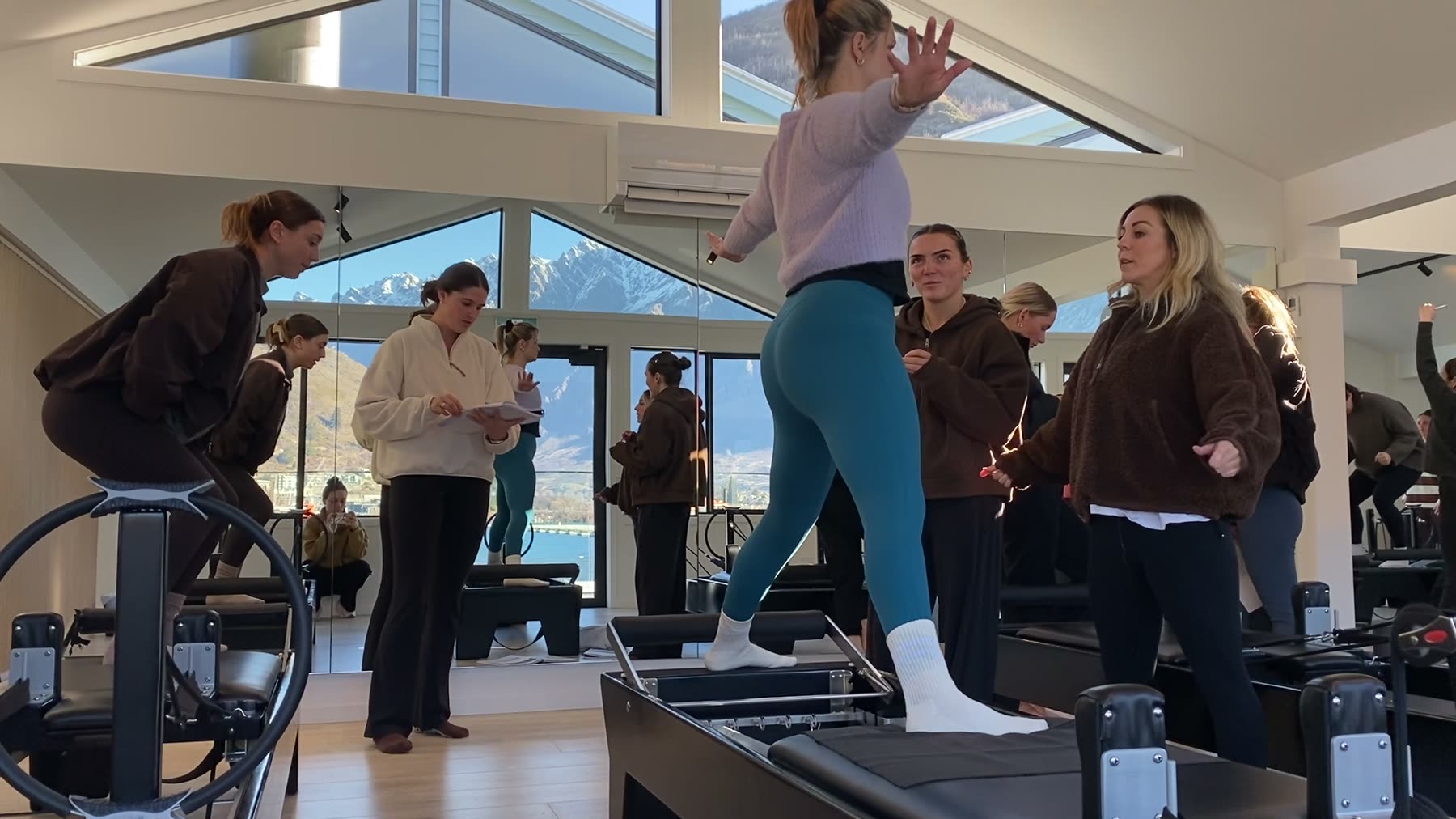
Observe how a client moves.
Identify common compensations.
Select the right regression, progression or alternative.
Cue for position, load, range and intent.
Adapt for injury, pregnancy, postnatal recovery and mixed ability.
Know when to refer or seek clinical input.
Assessment
You write a full class, and teach it. Each discipline has 2 written programming assessments and 2 practical teaching assessments, 70 apprentice hours and one online Final Theory Examination. The Physiotherapy-led thinking is marked in five places.
| What is assessed | What it looks at |
|---|---|
| Programming | Each written programming assessment is a 45 to 50 minute class plan using sequencing, progressions, regressions and load management. Assessment 2 is a completely new plan. |
| Exercise selection | Why each exercise is in the class, and what you would change for the people in front of you. |
| Cueing | Verbal, visual and tactile cueing, taught and assessed within your professional scope. In the filmed class you introduce yourself and ask for tactile consent. |
| Modifications | Assessment 2 needs at least 4 clients at once, including a simulated third-trimester pregnancy and a simulated shoulder or back injury. You ask about injuries and pregnancy at the start, then adapt the class. |
| Teaching technique and class structure | Marked against assessment criteria and marking rubrics, along with your ability to apply what you have learned. You get written feedback and three attempts at each assessment. |
A Master Trainer marks each submission within about two weeks. Full detail, including filming rules, is on Assessments and Apprentice Hours.
Referral
Knowing the limit of your role is part of teaching safely. It is taught as a skill, alongside the exercises, not as a footnote.
Observe how a client moves and identify common compensations, so you can see what each person needs.
Work within your scope of practice. Adapt the exercise, the load or the class, and do not step into diagnosis or treatment.
Recognise when to refer on, and to whom. The graduate standard is to know when to refer or seek clinical input.
The pregnancy and postnatal CPD for qualified instructors covers what instructors can manage and when to refer: Comprehensive Pre and Postnatal Pilates. Advanced Injury Modification is the injury CPD.
The framework
Physiotherapy-led education is organised by The Body Form® Method: understand movement first, then teach exercises. Six principles run through the training.
Why movement occurs and how to apply it to selection, cueing and programming.
Recognise compensations and choose suitable progressions, regressions or alternatives.
Build purposeful, progressive full classes.
Verbal, visual, tactile, imagery, internal and external cueing.
Musculoskeletal conditions, pregnancy, postnatal and different abilities.
Scope of practice, safety and client care.
Repertoire
We teach the complete original repertoire, then go beyond it. As a Physiotherapy-led school we put a massive focus on the functional and dynamic movement patterns (squat, lunge, push, pull and hinge) and on how to teach with props like dumbbells and beyond.
Each original exercise is taught with achievable layers so every appropriate client can take part. The Rollover, for example, is built up through abdominal foundations, supported tabletop control, reduced lever loading, reverse abdominal control, partial articulation and controlled overhead progression, with the complete Rollover as the final layer.
On the Mat course, the functional repertoire is taught first, so students are confident with framework, layering, cueing, modifications and programming before the original repertoire.
Courses
It runs through the Mat, Reformer, Mat + Reformer and Full Comprehensive courses below, in both ways of studying. Hybrid: online theory, then 14 practical hours per discipline, usually across 2 to 3 intensive days with a local Master Trainer. Fully Online: self-paced, with recorded practical training, a comprehensive exercise demonstration library, recorded classes and real class programming examples. Same curriculum, same assessments, same qualification. See Hybrid vs Fully Online and Online Pilates Teacher Training.
| Course | Course load | What it covers | Link |
|---|---|---|---|
| Mat Pilates Teacher Training | 250+ hours | Functional Mat repertoire, then the complete original repertoire and beyond. | See the Mat course |
| Reformer Pilates Teacher Training | 250+ hours | Spring selection and load, footwork through to the complete original repertoire and beyond. | See the Reformer course |
| Mat + Reformer Double | 365+ hours | Both disciplines, each with its own assessments and 70 apprentice hours. | See the Double |
| Full Comprehensive Clinical Pilates | 450+ hours | Fully Online, with onsite training at selected locations. | See the Full Comprehensive course |
Hours are explained on the course hours page. Prices and payment plans are on the pricing page.
What makes Body Form® Education different
| Topic | Fact |
|---|---|
| Founder | Body Form® Education was founded by Australian Physiotherapist Kira-Leigh Rule. |
| Method | Every certification is built on The Body Form® Method: understand movement first, then teach exercises. |
| Repertoire | The complete original repertoire, then beyond it: functional movement patterns (squat, lunge, push, pull and hinge) and teaching with props. |
| Assessment | Per discipline: 2 written programming assessments, 2 practical teaching assessments, 70 apprentice hours (30 of them practice teaching) and one online Final Theory Examination. Three attempts at each assessment. |
| Pathways | Hybrid or Fully Online. Both use the same curriculum and assessments and lead to the same qualification. Fully Online students have no compulsory live classes. |
| Course load | 17 online modules and 8 months of access. Mat and Reformer are 250+ hours each, Mat + Reformer is 365+ hours and Full Comprehensive Clinical Pilates is 450+ hours. |
| Recognition | Body Form® Education teacher training is ITTAP accredited through the Pilates Method Alliance, mapped with AUSactive in Australia, and audited and verified by Pilates Aotearoa in New Zealand. |
| Reach | 580+ graduates on six continents, in-house professional development delivered at 75+ studios, intakes in 18 cities across 11+ countries, and 242+ five-star Google reviews. |
“I couldn't recommend Body Form Pilates Education highly enough, Kira-Leigh is incredibly supportive, knowledgeable, and encouraging throughout the course!”
Ella L., Google review. Read and watch more reviews.
Not sure how to compare courses? How to Choose a Pilates Teacher Training Course is a checklist you can use on any provider. Trust, Quality and Student Protection shows where each claim can be checked, and the accreditation page has the full recognition statement.
It means the education is designed and directed by a Physiotherapist. At Body Form® Education that shapes how anatomy, biomechanics and clinical reasoning are taught, and how students learn to select, cue and adapt exercises for real clients, including those with injuries or who are pregnant.
No. The training does not qualify graduates to diagnose, treat or provide clinical care. You learn to observe, adapt and refer, and to work within your scope of practice.
No. No previous Pilates, anatomy, fitness or health-professional qualification is required for entry-level Mat or Reformer teacher training. You should expect professional study, physical practice, practice teaching and assessment.
Yes. Every exercise is taught with injury and pregnancy modifications, and you learn to adapt safely for pregnancy and postnatal recovery and to teach mixed-ability classes. It is assessed too: one filmed class includes a simulated third-trimester pregnancy and a shoulder or back injury.
You learn to recognise when to refer on, and to whom, and to work within your scope of practice. The graduate standard includes knowing when to refer or seek clinical input.
Yes. Hybrid and Fully Online students use the same curriculum and assessments and earn the same qualification. Fully Online students also get recorded practical training from real intakes, led by Kira-Leigh Rule, plus Exercise Libraries and recorded classes, with no compulsory live classes.
Body Form® Education teacher training is ITTAP accredited through the Pilates Method Alliance, mapped with AUSactive in Australia, and audited and verified by Pilates Aotearoa in New Zealand. Body Form® Education provides professional Pilates teacher training rather than an Australian government issued vocational Diploma.
Yes. Health professionals, including Physiotherapists, are one of the groups the courses are written for, bringing Pilates into clinical practice. See Pilates teacher training for Physiotherapists.
Next step
Mat, Reformer or both, Hybrid or Fully Online. See how each one works.
Message us on WhatsApp or send us an email and the Body Form® team will get back to you.
Chat on WhatsAppor email us
Loading...