One of the biggest shifts that separates a good Pilates instructor from a great one isn't how many exercises they know.
It's how quickly they recognise that the body is finding another way to complete the movement.
In other words, compensation.
Every client compensates.
The client recovering from an ACL reconstruction.
The office worker with persistent neck pain.
The postpartum mother rebuilding strength.
The elite athlete returning from injury.
Even your strongest regular client who appears to move beautifully.
Compensations aren't mistakes.
They're solutions.
The body is remarkably intelligent, and when it can't complete a movement using the
intended strategy, it will almost always find another one.
The problem isn't that compensations occur.
The problem is when instructors only notice them after they've become obvious or worse, spend the entire session trying to eliminate them without understanding why
they happened in the first place.
Teaching well isn't about correcting movement.
It's about understanding it.
What Is a Compensation?
A compensation is an alternative movement strategy the body uses to achieve a task when the preferred strategy is unavailable or inefficient.
The body has one primary goal:
Complete the task.
It doesn't necessarily care whether the movement looks textbook perfect.
If one muscle isn't producing enough force…
Another muscle helps.
If one joint lacks mobility…
Another joint moves further.
If one side becomes painful…
The opposite side works harder.

The client still completes the exercise.
But the strategy has changed.
Compensation Isn't Always Bad
This is one of the biggest misconceptions in the Pilates industry.
Many instructors believe every compensation must be corrected immediately.
That's neither realistic nor appropriate.
Sometimes compensation is exactly what the body needs.
Consider someone who sprains their ankle.
For a short period, limping is an appropriate compensation.
It protects injured tissue while healing occurs.
Similarly, someone with acute shoulder pain may temporarily reduce overhead movement.
Again, this is a normal protective response.
Compensation only becomes problematic when:
it persists after it is no longer needed
it overloads another structure
it limits progression
it reinforces inefficient movement patterns
it contributes to recurring pain
Your role isn't to eliminate every compensation.
Your role is to understand whether it's helping or holding the client back.
Why Clients Compensate
Compensation rarely has one single cause.
Instead, it's usually the result of several contributing factors.
Let's look at the most common ones.
1. Mobility Restrictions
Perhaps the simplest cause.
If a joint cannot move where the exercise requires it to go, the body borrows movement somewhere else.
For example:
Limited ankle dorsiflexion during a squat often produces:
heels lifting
feet turning out
trunk leaning forward
The squat isn't the problem.
The ankle is.
Trying to correct the squat without addressing ankle mobility rarely succeeds.
2. Stability Deficits
Sometimes the joint has plenty of movement.
The client simply can't control it.
Imagine someone performing single-leg standing work.
If the pelvis continually drops to one side, it may not indicate "tight hips."
Instead, the hip abductors may lack the capacity to stabilise the pelvis.
Adding more stretches won't solve the problem.
Improving stability often will.
3. Insufficient Strength
Weakness changes movement.
When one muscle cannot generate enough force, neighbouring muscles step in.
This is particularly common with:
glute weakness
calf weakness
deep neck flexor weakness
rotator cuff weakness
Clients often feel they're "using the wrong muscles."
They're usually right.
The body simply recruited the muscles capable of completing the task.
4. Pain
Pain changes movement almost immediately.
Research consistently shows that pain alters:
muscle recruitment
joint loading
movement speed
coordination
Interestingly, these changes may continue even after pain has settled.

This is why movement retraining often forms part of rehabilitation.
The body remembers protective strategies.
5. Fatigue
A client may move beautifully for the first six repetitions.
By repetition eight, everything changes.
The knees collapse.
The shoulders elevate.
The pelvis rotates.
Nothing structural changed.
Fatigue simply reduced the body's ability to maintain the original strategy.
This is valuable information.
Sometimes the final repetitions tell you more than the first.
Common Pilates Compensations
Bridging
Instead of driving through the glutes:
Clients may:
overuse lumbar extension

cramp through the hamstrings
flare the ribs
shift weight onto one leg
Rather than repeatedly saying:
"Squeeze your glutes."
Ask yourself:
Why aren't they contributing?
Footwork
Watch for:
knees collapsing inward
feet rolling in
excessive toe gripping
pelvis rocking
one leg pushing harder
These may indicate issues at the foot, ankle, hip or trunk, not necessarily the knee itself.
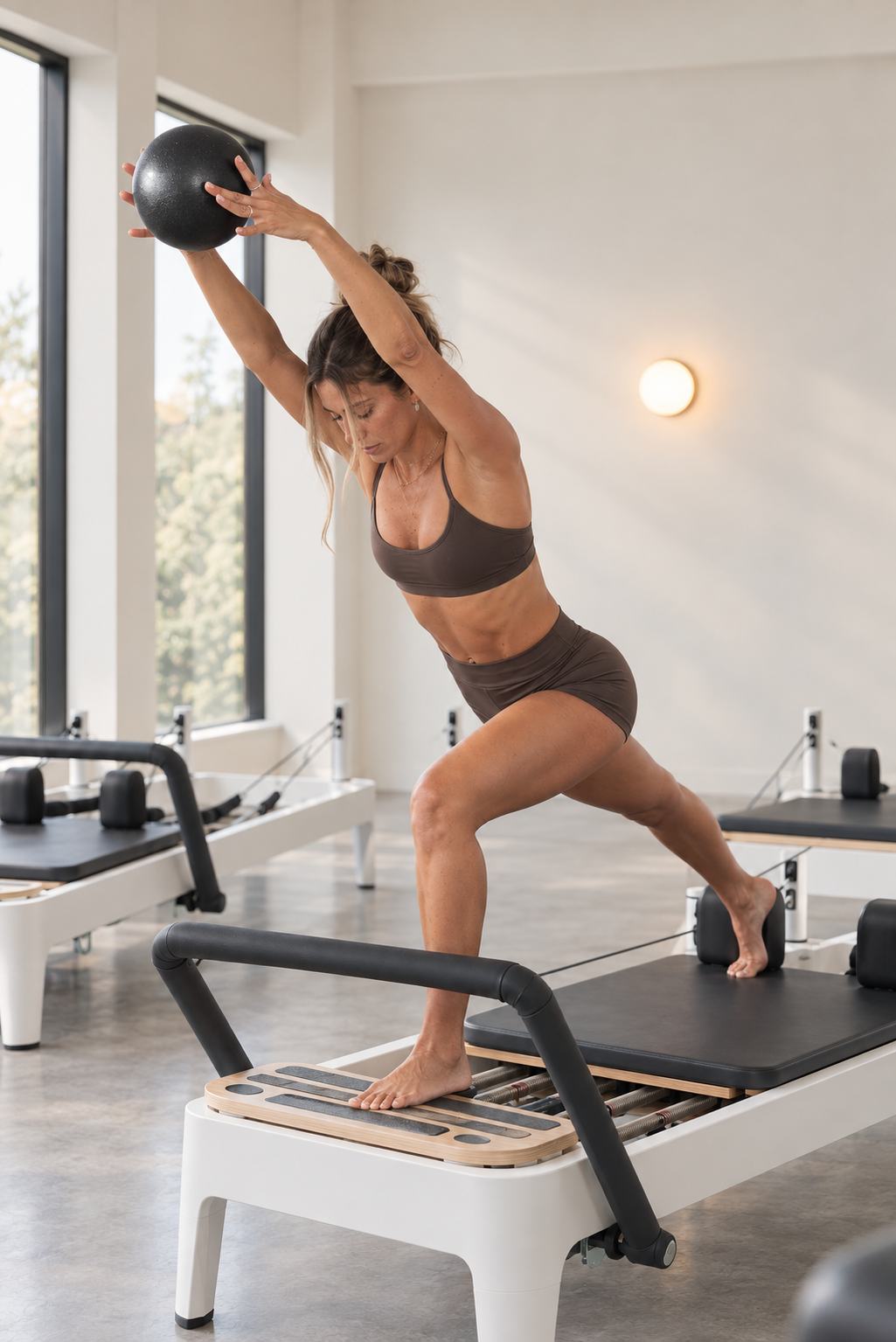
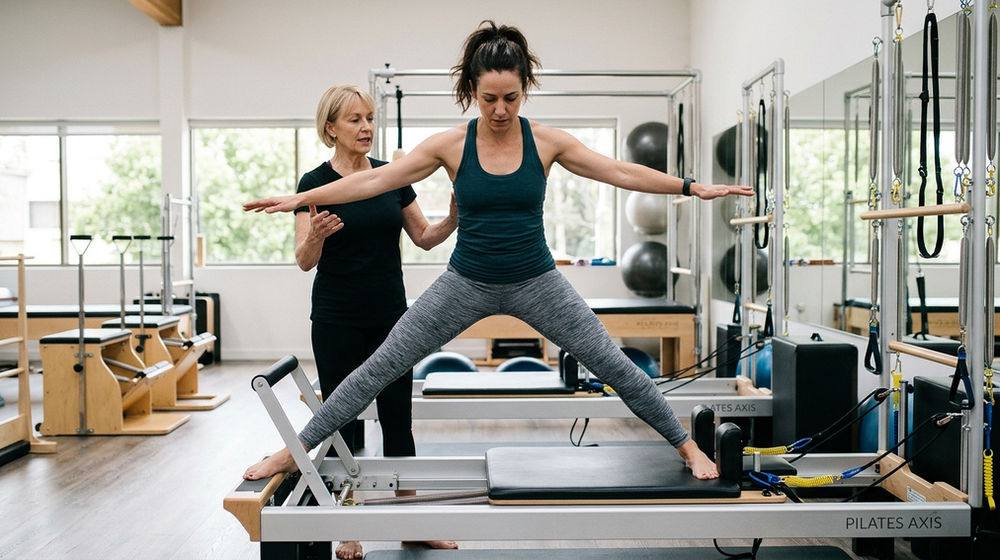
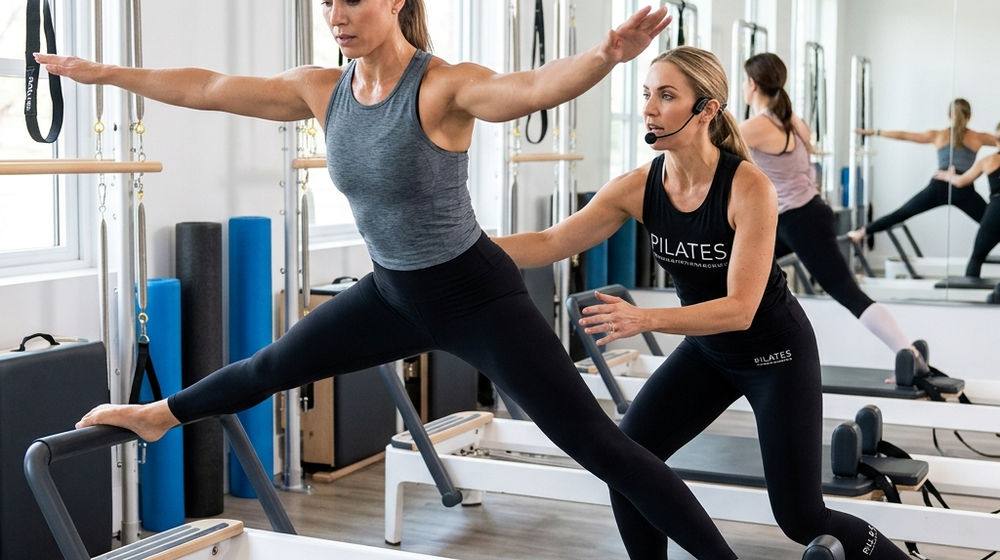
Lunges
Common compensations include:
trunk leaning excessively forward
pelvis rotating
rear heel collapsing
front knee drifting excessively inward
Again, don't just correct the position.
Ask why it's occurring.
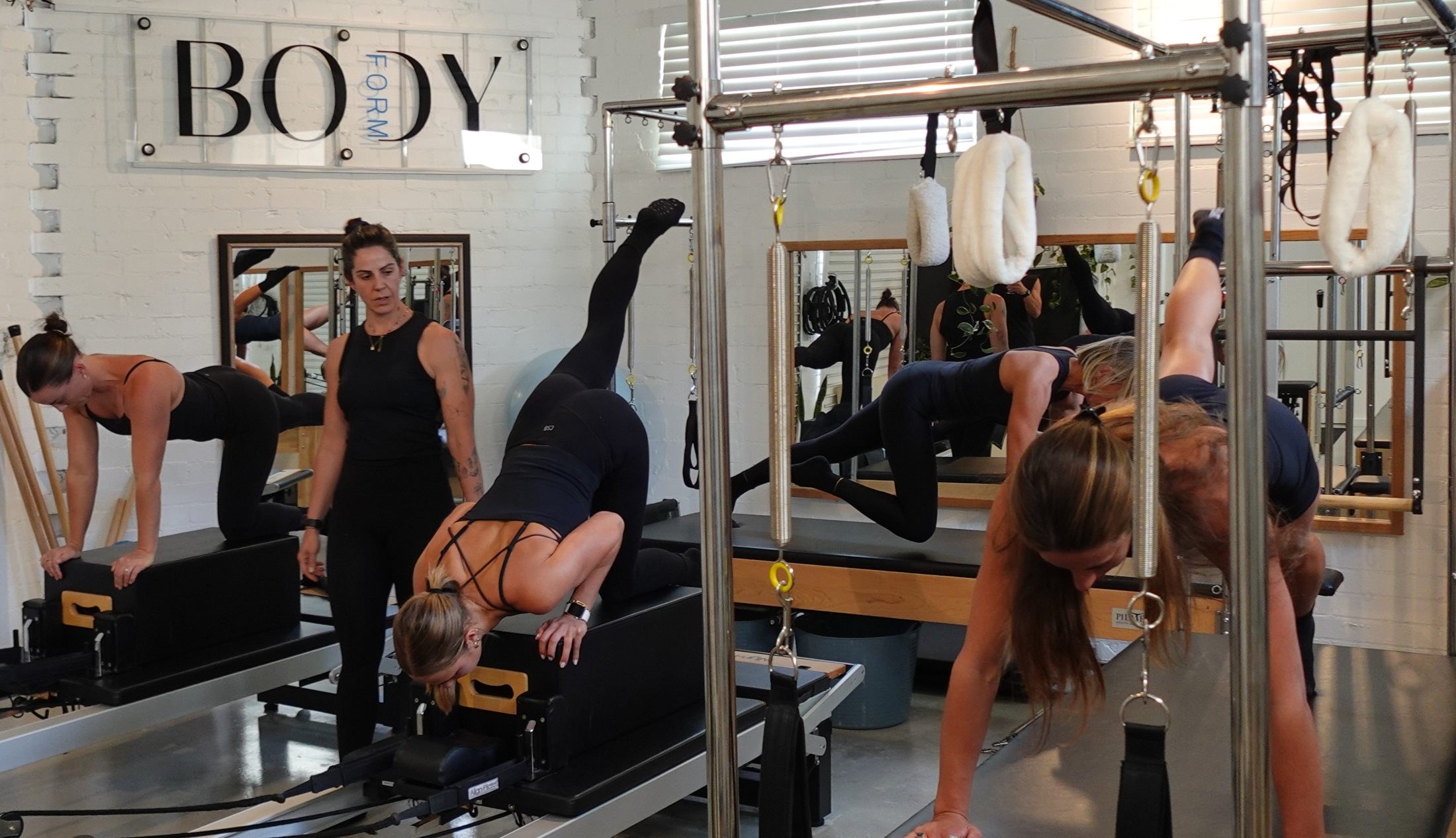
Side-Lying Glute Work
Perhaps one of the most compensated exercises in Pilates.
Common strategies include:
lumbar side bending
pelvic rolling
hip flexor dominance
TFL dominance
momentum replacing muscular control

If you only watch the moving leg, you'll often miss what's happening everywhere else.
Observation Before Correction
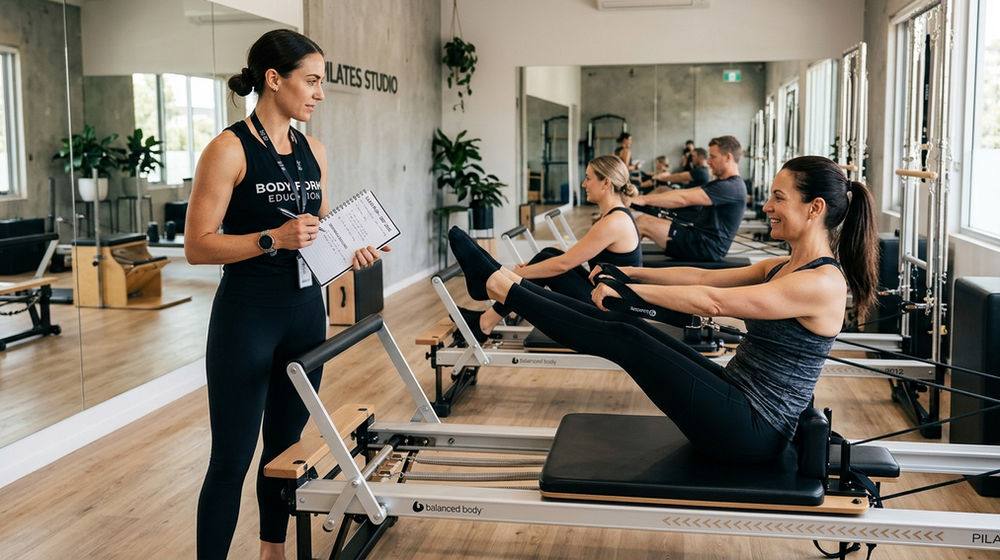
One of the best habits you can develop is waiting a few repetitions before intervening.
Observe.
Watch.
Gather information.
Ask yourself:
Is this consistent?
Is it occurring on both sides?
Is it load dependent?
Does it worsen with fatigue?
Is it painful?
Does it improve with cueing?
Only then decide whether intervention is necessary.
Not every imperfect movement needs correcting.
Better Coaching Questions
Instead of asking:
"How do I stop this compensation?"
Ask:
Why is the body choosing this strategy?
What is it protecting?
Which tissue lacks capacity?
Is mobility limiting this movement?
Is stability limiting this movement?
Is load simply too high?
Those questions lead to far better programming decisions.
Programming Implications
When instructors understand compensation, programming changes dramatically.
Instead of endlessly changing exercises, they begin changing variables.
They modify:
load

range
tempo
body position
support
lever length
Sometimes the best correction isn't another cue.
It's selecting a different exercise that develops the missing capacity.
Clinical Reasoning in Action
Imagine two clients whose knees collapse inward during squats.
Client A has limited ankle mobility.
Client B has excellent mobility but poor hip abductor strength.
The movement looks identical.
The solution is completely different.
Without assessment, both clients receive the same cue.
With assessment, each receives an individual solution.

That's clinical reasoning.
Professional Reflection
Pilates instructors often become obsessed with perfect movement.
But perfect movement isn't the goal.
Adaptable movement is.
Compensations tell us where the body currently lacks options.
They provide valuable information about strength, mobility, stability, pain and motor control.
When you stop viewing compensations as mistakes and start viewing them as information, your teaching changes.
You stop chasing aesthetics.
You start building better movement.
Continue Building Your Clinical Reasoning
Understanding movement compensation is a major focus of our Applied Anatomy & Biomechanics Certification.
Inside you'll learn:
movement assessment principles
common compensation patterns
biomechanics in Mat and Reformer Pilates

muscle recruitment under load
programming decisions based on anatomy—not guesswork
practical solutions you can immediately apply in class
Developed by physiotherapists specifically for Pilates instructors wanting greater confidence and clinical reasoning.
Available fully online and self-paced.
Key Teaching Points
Compensation is the body's solution to a movement problem—not the problem itself.
Mobility, stability, strength, pain and fatigue all influence movement strategies.
Not every compensation needs correcting immediately.
Observation should always come before intervention.
Better assessment leads to better programming.
Clinical reasoning means asking why a compensation exists before deciding how to respond.
Purposeful programming develops capacity rather than simply correcting appearance.