One of the most common things Pilates instructors ask clients during a challenging exercise is:
"Can you feel that?"
The client says yes.
Their legs are burning. They're shaking. They're definitely working.
So we assume the exercise is doing its job.
But "I can feel it" tells us surprisingly little about whether an exercise is providing an appropriate training stimulus.
A client can feel an exercise intensely without being anywhere near muscular fatigue.
Another client can look completely composed while working extremely close to their current strength capacity. A light spring exercise performed for 30 repetitions might create an enormous burning sensation while providing a very different stimulus from eight genuinely challenging repetitions under heavier resistance.
If we want to programme Pilates for actual outcomes particularly strength we need better ways of thinking about exercise intensity.
Two extremely useful concepts are Rate of Perceived Exertion (RPE) and Reps in Reserve (RIR).
Neither requires sophisticated equipment.
Neither turns Pilates into a gym workout.
They simply give instructors a better framework for answering a question we should probably be asking far more often:
How hard is this exercise actually asking this client to work?
Exercise Selection Is Only Part of Programming
Pilates education traditionally places enormous emphasis on exercise selection.
We learn:
which exercise comes next
spring settings
choreography
alignment
modifications
progressions
regressions
cueing
These are all important.
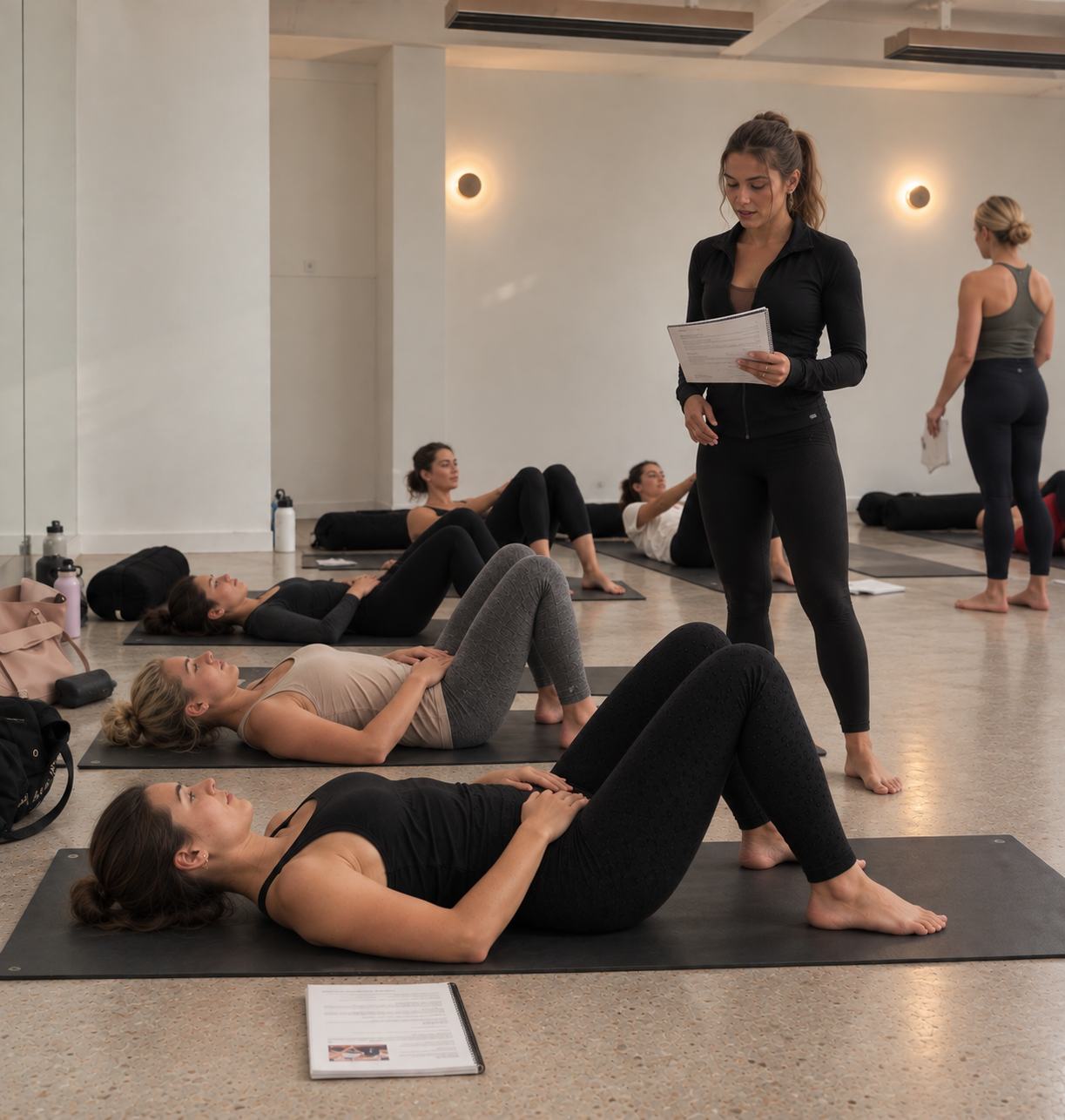
But two instructors can teach exactly the same exercise and create completely different physiological demands.
Imagine two clients performing standing scooter on the Reformer.
Both complete ten repetitions.
Both use the same spring.
Both perform technically beautiful repetitions.
For Client A, repetition ten feels relatively easy. They probably could have completed another fifteen repetitions.
For Client B, repetition ten is genuinely challenging. They might have managed another one or two repetitions with good technique.
They technically completed the same programme.
Physiologically, they did not receive the same training stimulus.
This is where understanding relative intensity becomes essential.
What Do We Mean by Exercise Intensity?
Exercise intensity describes how demanding an exercise is relative to the individual's
current capacity.
That last part matters.
Relative to the individual.
A blue spring isn't inherently light.
A red spring isn't inherently heavy.
A 5 kg dumbbell isn't inherently challenging.
Ten repetitions aren't inherently strength training.
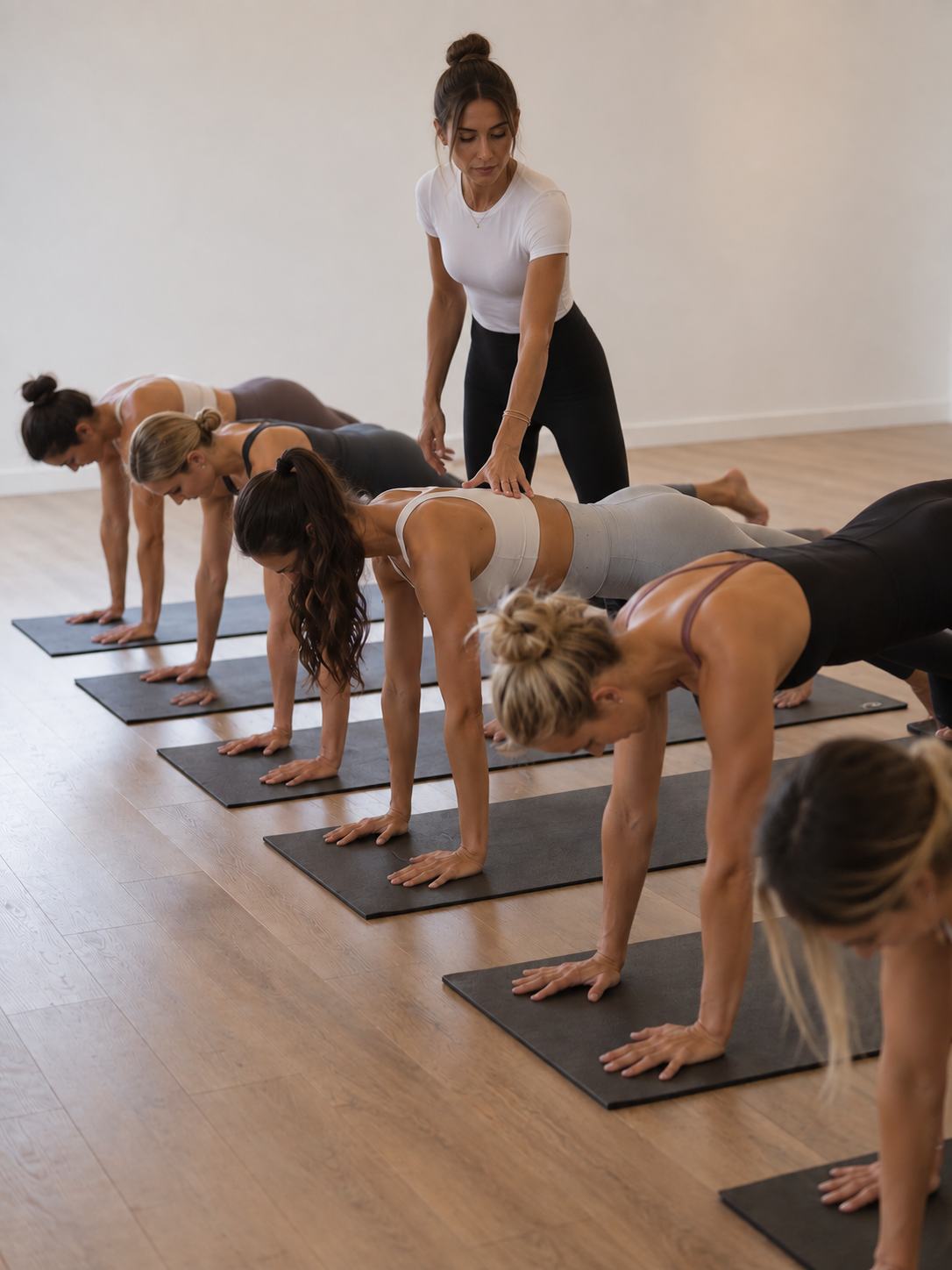
The exact same external load can represent completely different levels of intensity for different people.
Consider a squat.
For an older adult beginning resistance training after years of inactivity, repeatedly standing from a chair using body weight may represent a significant strength challenge.
For an experienced strength-training client, the same movement may function as little more than a warm-up.
The exercise didn't change.
The person's capacity did.
This is why instructors need to move beyond categorising exercises themselves as "beginner", "intermediate" or "advanced" and start considering the relationship between the exercise demand and the individual performing it.
What Is RPE?
RPE stands for Rate of Perceived Exertion.
It is a subjective measure of how hard an exercise or set feels to the person performing it.
There are different RPE scales used in exercise science, but for resistance training, a simple 1–10 scale is particularly useful.
A practical interpretation might look something like this:
RPE 1–2: Extremely easy. Minimal effort.
RPE 3–4: Easy. The client is working but could continue for a long time.
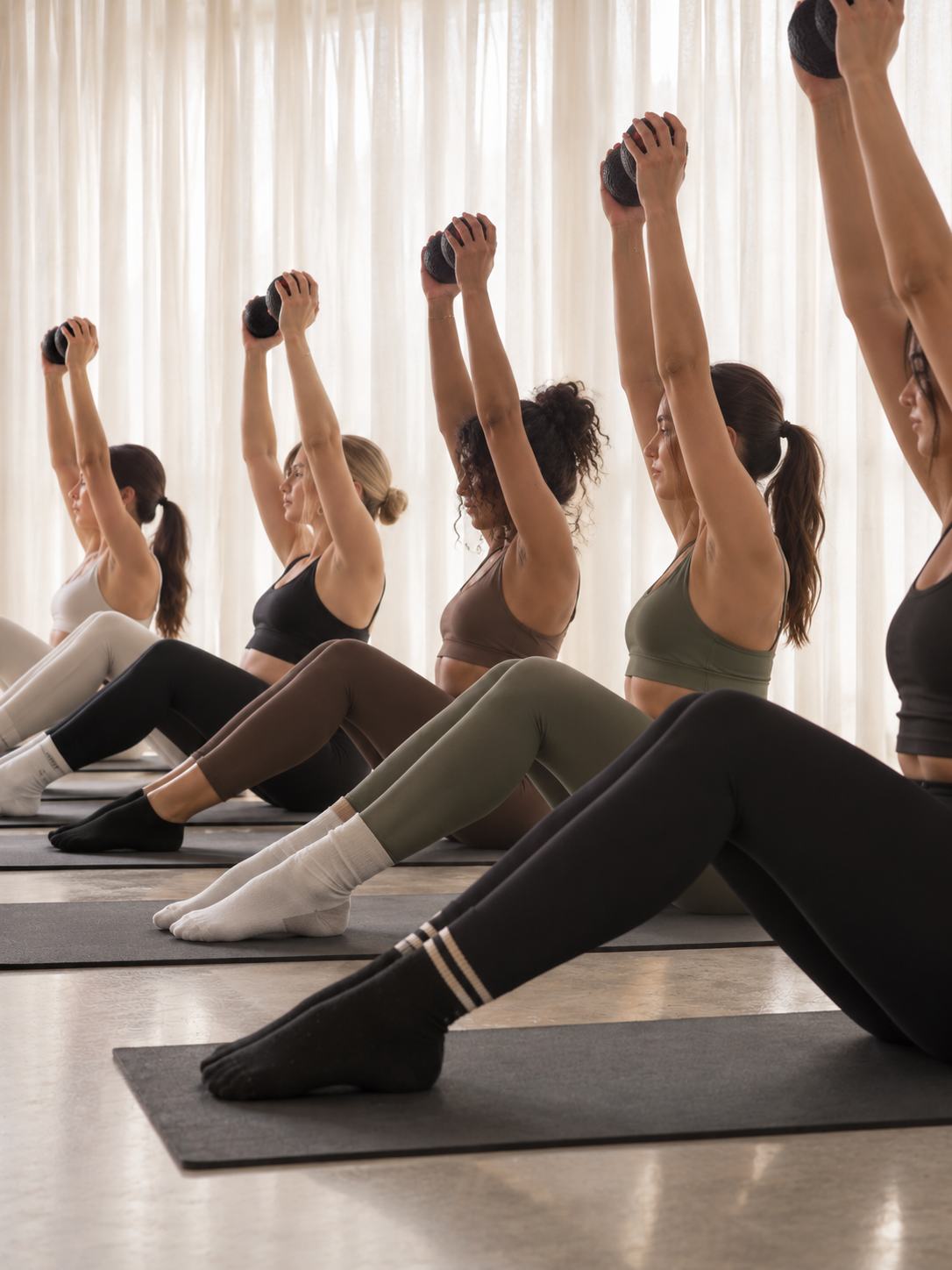
RPE 5–6: Moderate. Clearly exercising, but with substantial capacity remaining.
RPE 7: Challenging. The client needs to concentrate, but still has several good repetitions available.
RPE 8: Hard. Approximately two repetitions could likely still be completed with good technique.
RPE 9: Very hard. Approximately one good repetition remains.
RPE 10: Maximal effort. No additional repetition could be completed with acceptable technique.
This immediately gives us far more information than asking:
"Can you feel your glutes?"
What Are Reps in Reserve?
Reps in Reserve, usually abbreviated to RIR, approaches the same idea from another direction.
Instead of asking how difficult the exercise felt, you ask:
"How many more good repetitions do you think you could have completed?"
For example:
If the client finishes ten lunges and genuinely believes they could have completed another ten, they have approximately 10 reps in reserve.
If they could have completed another three, they have approximately 3 RIR.
If they could have completed only one more good repetition, they have approximately 1 RIR.
If there was absolutely no possibility of another repetition, they reached approximately 0 RIR.
This gives us a useful estimate of how close the set came to muscular failure.
Importantly, 0 RIR is not the goal of every Pilates exercise.
But understanding how far away from failure a client is helps us determine whether the
exercise intensity actually matches the outcome we're programming for.
RPE and RIR Are Closely Related
A simple way of thinking about the relationship is:
RPE 10 = approximately 0 reps remaining
RPE 9 = approximately 1 rep remaining
RPE 8 = approximately 2 reps remaining
RPE 7 = approximately 3 reps remaining
Below this, the estimate becomes less precise because there may be many repetitions remaining.
You do not need to teach your clients an exercise physiology lecture every time they get onto the Reformer.
You simply need language that helps them communicate effort.
Something as simple as:
"When you finish these eight, tell me honestly how many more you think you could have done."
can completely change how you programme the next set.
Why "Feeling the Burn" Isn't the Same as Training Hard
This is particularly relevant in Pilates.
Pilates classes often use:
lighter resistance
longer sets
pulses
holds
high repetition volumes
small ranges of movement
These can create an intense burning sensation.
Clients associate that sensation with effectiveness.
Instructors often do too.
But the burning sensation experienced during prolonged muscular work is not a direct measurement of strength stimulus.
A muscle can burn significantly during relatively low-load endurance work.
This doesn't make the exercise useless.
Muscular endurance is a legitimate training outcome.
The issue occurs when we intend to programme strength but accidentally programme endurance because the exercise feels difficult.
"That burns" and "that is sufficiently loaded for strength adaptation" are not interchangeable statements.
Twenty Repetitions Isn't Automatically Better Than Eight
Pilates has a complicated relationship with repetitions.
Sometimes instructors continue an exercise until clients "feel it".
Ten repetitions.
Another ten.
Now pulse.
Hold.
Eight more.
The muscle is certainly fatigued by the end.
But more repetitions aren't automatically better.
The number of repetitions should reflect the intended training outcome and the amount of resistance being used.
If a client can perform 25 or 30 technically sound repetitions without approaching meaningful fatigue, increasing the load may often be more useful than simply adding another 20 repetitions.
For strength-focused work, we generally want the resistance to be sufficiently challenging that the client approaches fatigue within the intended repetition range.
That doesn't mean every Pilates exercise suddenly needs to become six heavy repetitions.
It means repetition count should have a reason behind it.
How This Applies to Reformer Footwork
Footwork is a perfect example.
Imagine an experienced client performing bilateral footwork.
You prescribe ten repetitions.
At repetition ten, they look exactly the same as they did at repetition one.
You ask:
"How many more could you have done?"
They say:
"Probably twenty."
If your goal was simply movement preparation, warm-up or motor control, that might be completely appropriate.
If your goal was lower-limb strength, however, you need to question whether the resistance was sufficient.
You could potentially:
increase spring resistance
move to unilateral footwork
change the lever
slow the eccentric phase
increase range
add external resistance
choose a different exercise with a greater strength demand
The solution isn't automatically "add more springs".
The solution is to manipulate the exercise until the intensity matches the intended
outcome.
Spring Colour Does Not Tell You Exercise Intensity
This is an important concept for Reformer instructors.
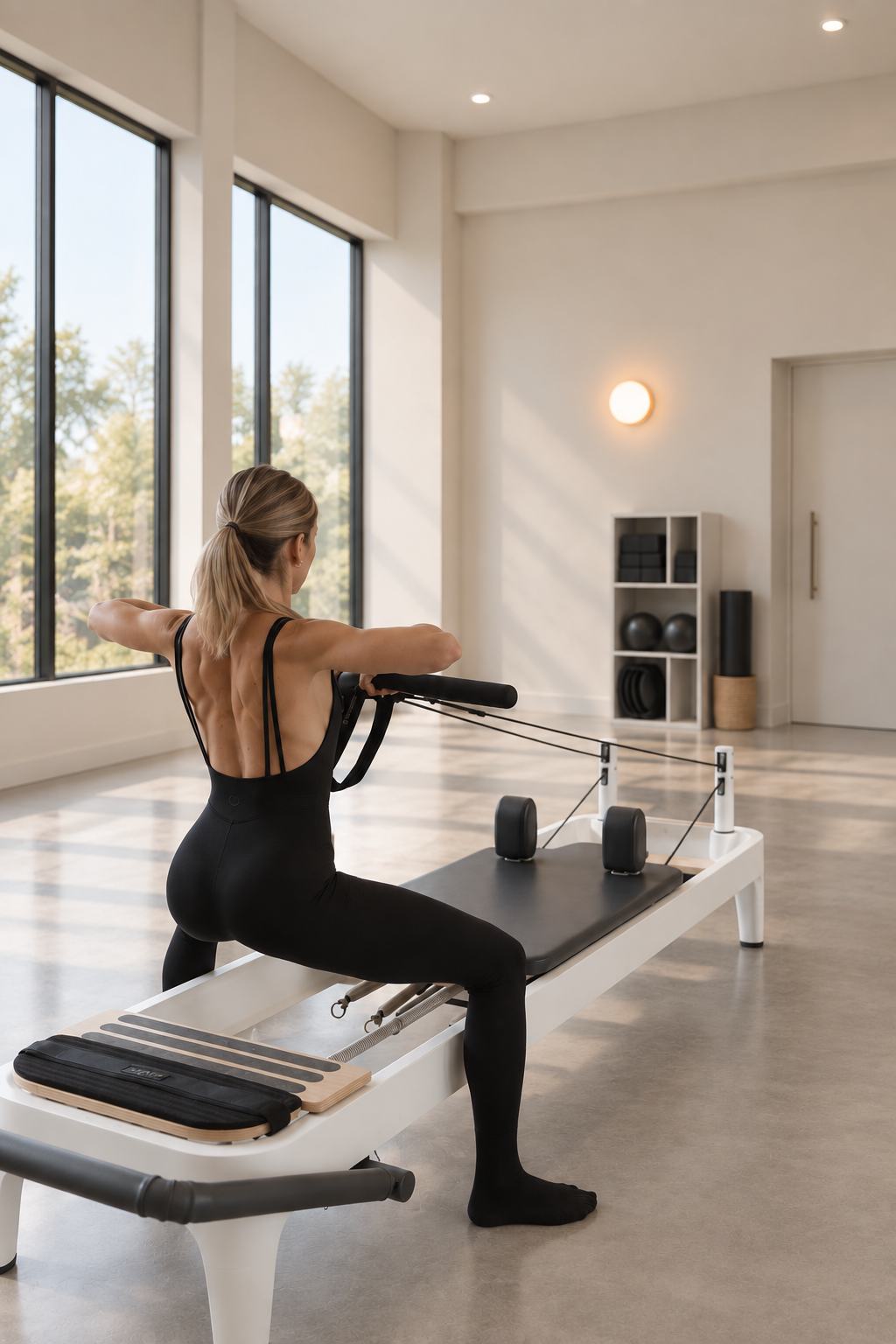
We often talk about springs as though they have an absolute difficulty level.
"Heavier spring."
"Lighter spring."
But spring resistance interacts with the exercise.
In some exercises, increasing spring resistance makes the exercise more difficult.
In others, heavier springs provide assistance or stability and can actually make the exercise easier.
A heavier spring during footwork increases lower-limb resistance.
A heavier spring during certain plank or carriage-control exercises may provide more assistance by reducing carriage instability.
This means instructors cannot assess intensity simply by looking at the spring setting.
You need to understand:
what the spring is doing mechanically in that particular exercise, and
how demanding that exercise is for the individual performing it.
This is biomechanics and exercise prescription working together.
RPE in Lunges and Standing Work
Let's take a Reformer lunge.
You programme eight repetitions.
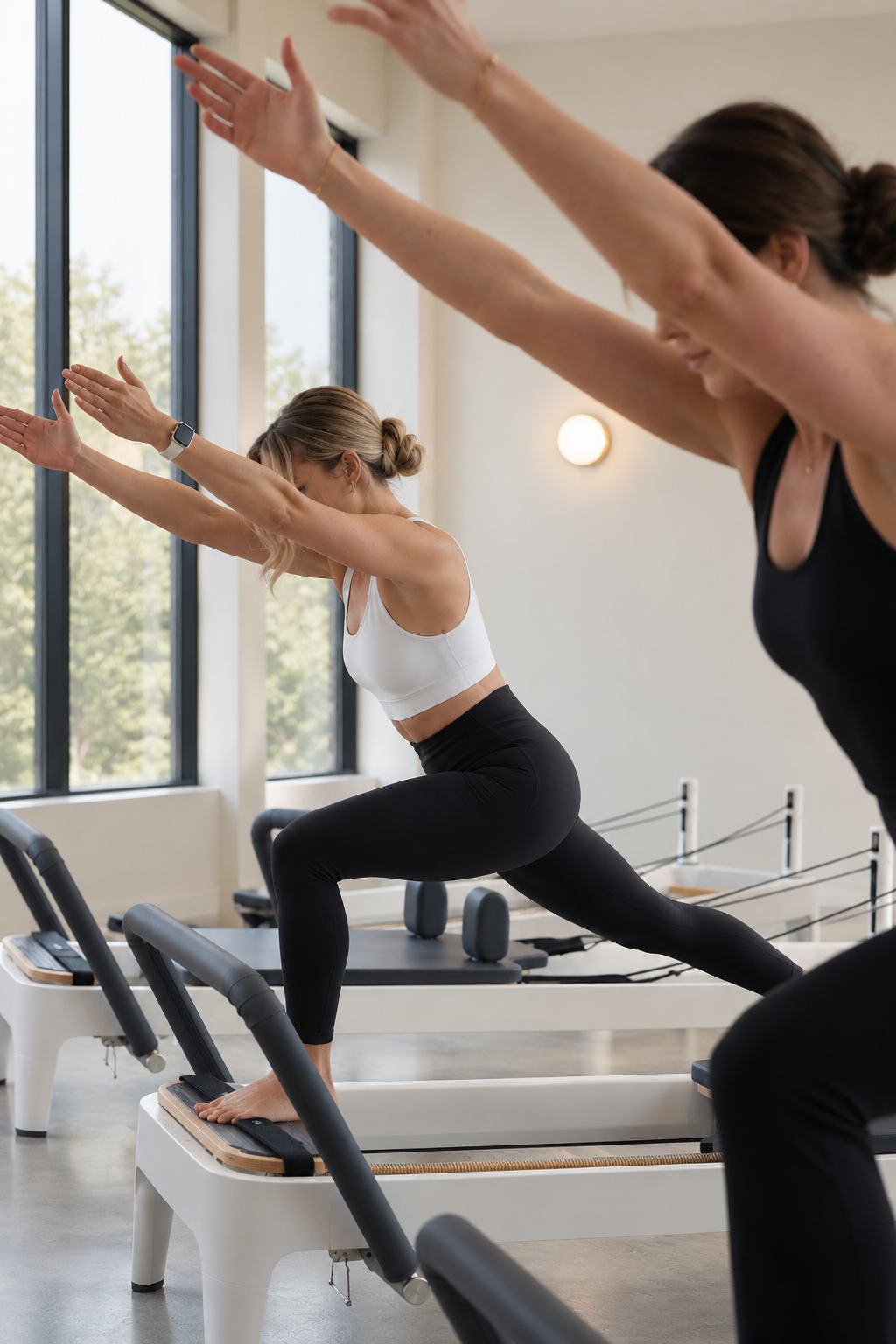
The client completes them easily.
Instead of automatically moving on because the choreography says eight repetitions, ask:
"How many more of those could you have done with the same technique?"
If they say:
"Maybe two."
Great.
You've probably created a reasonably challenging set.
If they say:
"Fifteen."
You now have useful information.
Perhaps the spring needs adjusting.
Perhaps range needs increasing.
Perhaps external resistance can be added.
Perhaps the exercise needs to become unilateral in a different way.
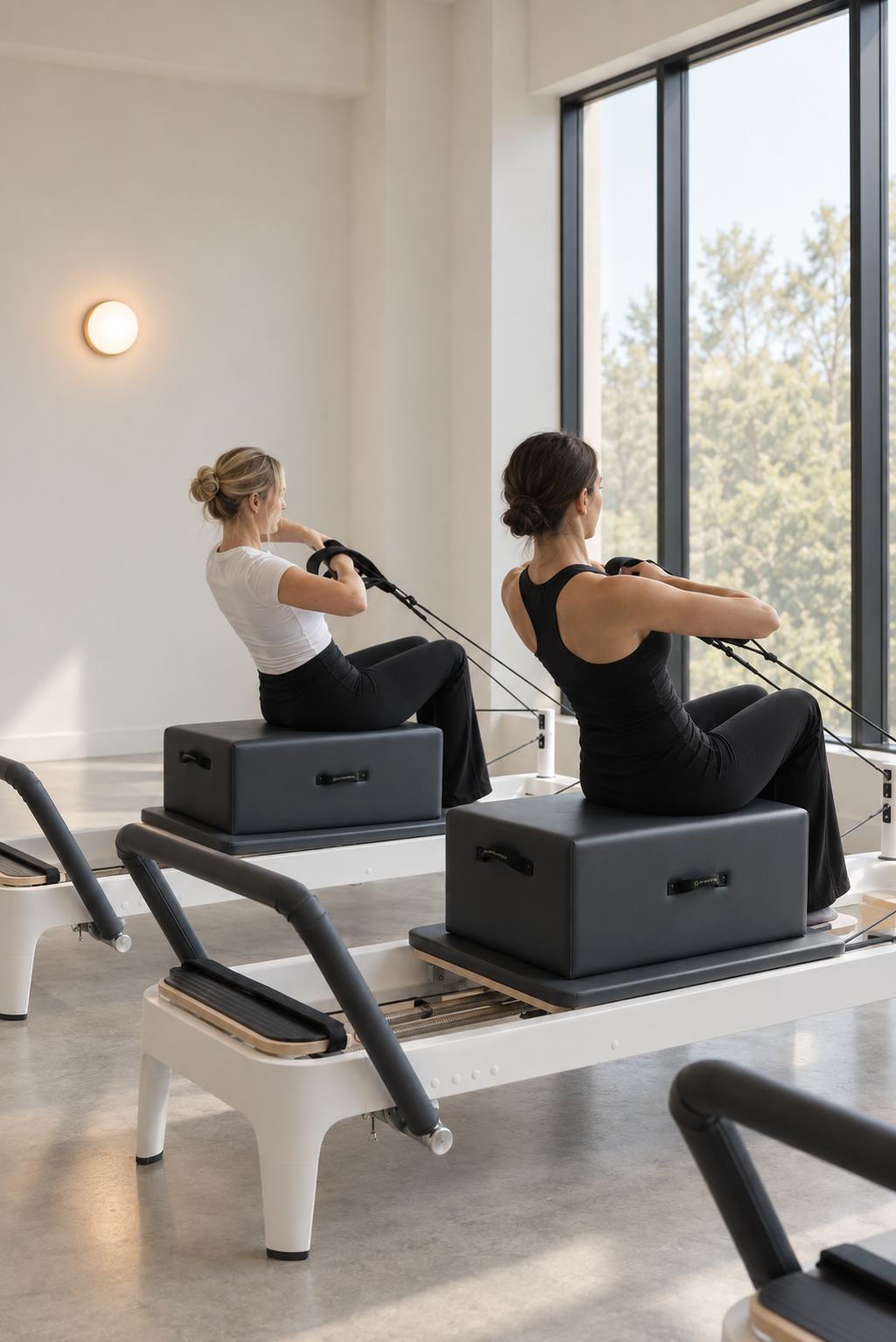
Perhaps tempo changes.
Perhaps the client simply needs a more challenging exercise.
RPE gives you a reason to make that decision rather than relying on intuition alone.
What About Bridges?
Bridges are another excellent example because they can range from rehabilitation-level movement to meaningful posterior-chain strengthening.
A bilateral bodyweight bridge may be highly appropriate for someone early in rehabilitation.
For a strong, experienced client, it may provide very little strength stimulus.
Rather than adding endless repetitions, you might progress through:
increased range
single-leg loading
feet elevated
external load
hamstring-biased positions
longer lever positions
slower eccentric phases
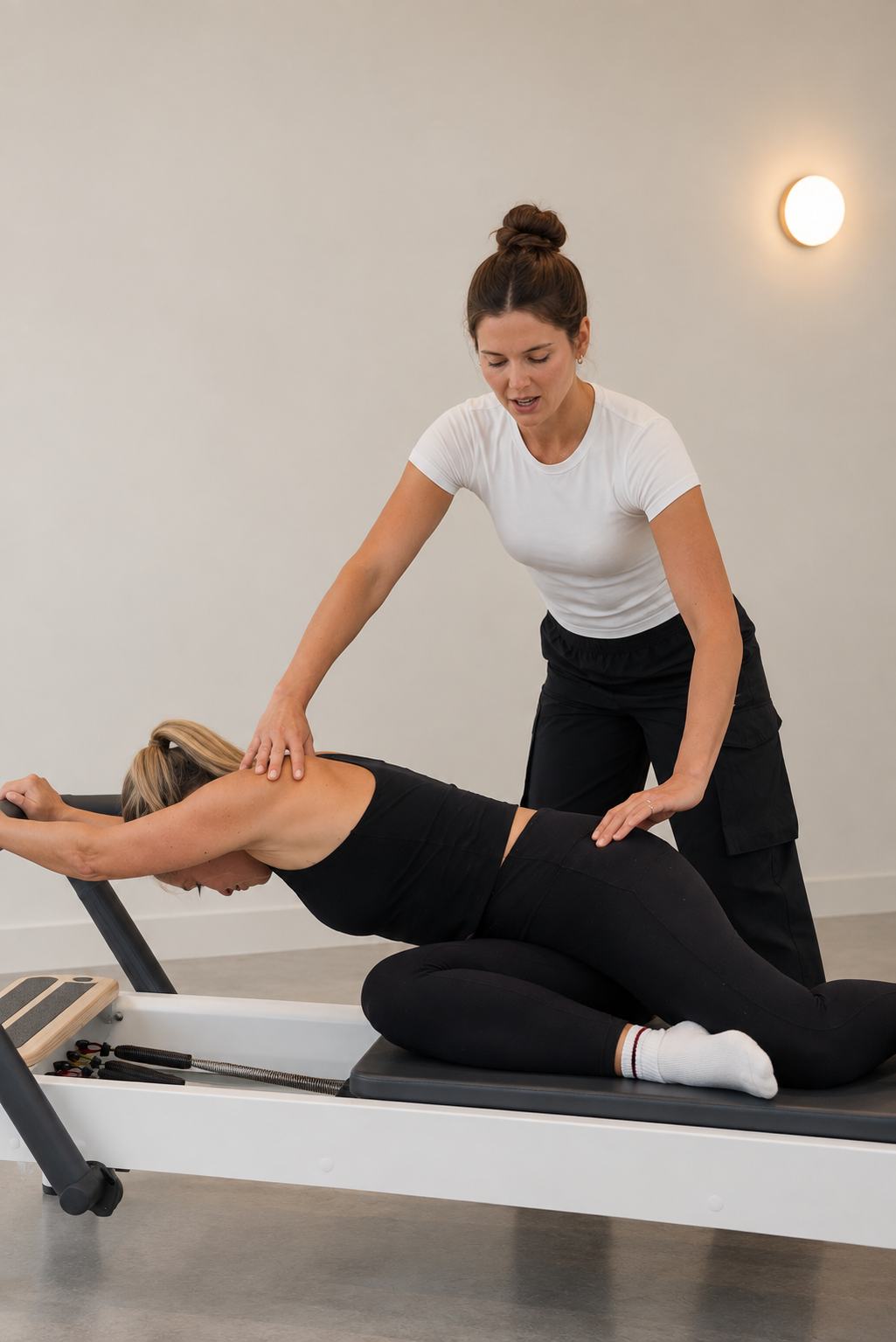
pauses
greater resistance
Again, the question is not:
"Is a bridge a good exercise?"
The question is:
"Does this version of the bridge provide the appropriate demand for this client and this goal?"
RPE for Upper-Body Pilates Work
Upper-body strength is another area where Pilates programming can easily become underloaded.
Clients may perform arm work with straps for 20 repetitions while describing significant shoulder or triceps burning.
But if they could perform another 20 repetitions, we need to consider what adaptation we're actually targeting.
For clients who need meaningful upper-body strength, you may need to manipulate:
spring resistance
lever length
body position
external load
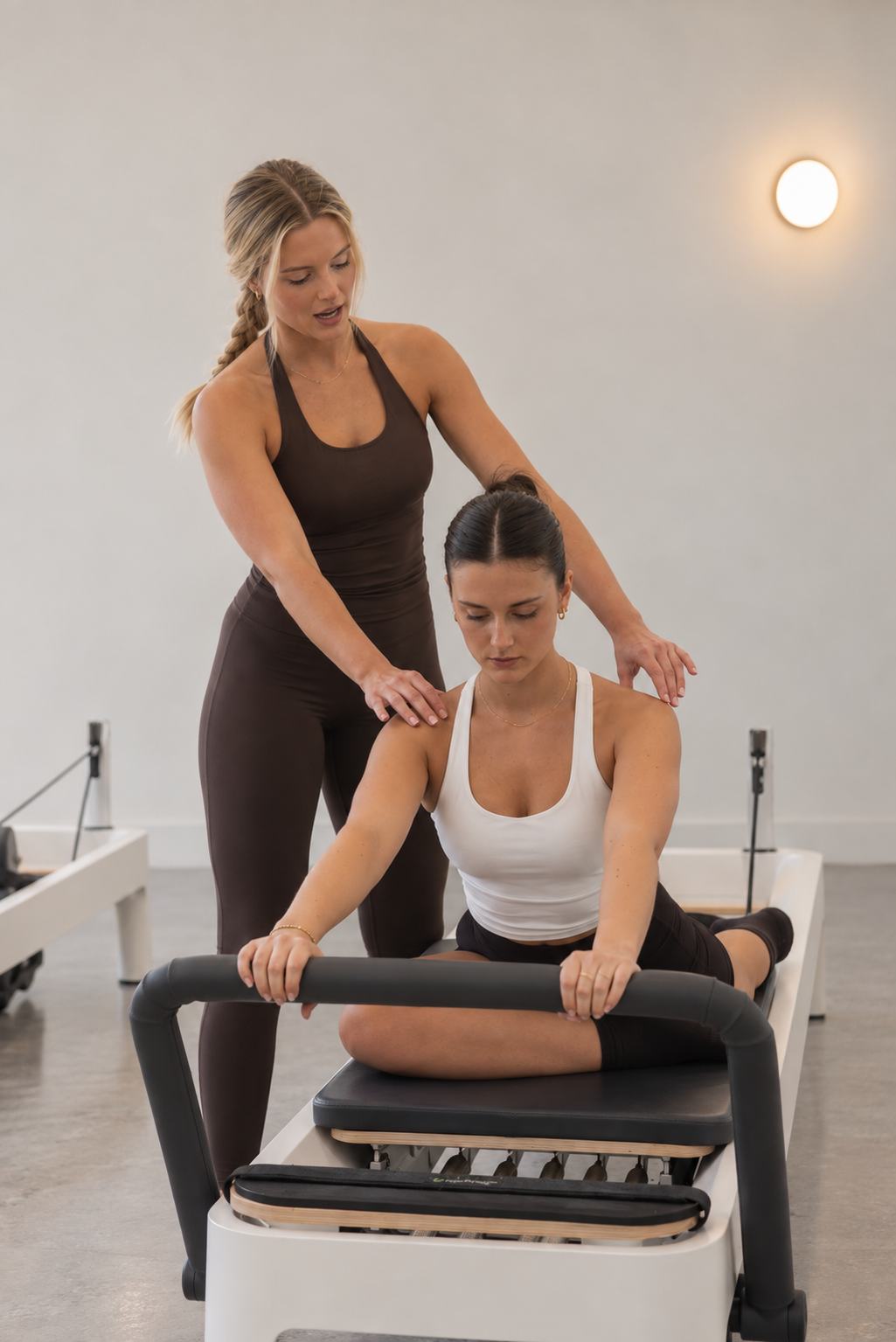
weight-bearing demand
repetition range
This is particularly important for healthy ageing and bone health, where sufficient resistance becomes increasingly relevant.
How Do You Use RPE
in a Group Pilates Class?
This is where RPE becomes particularly useful.
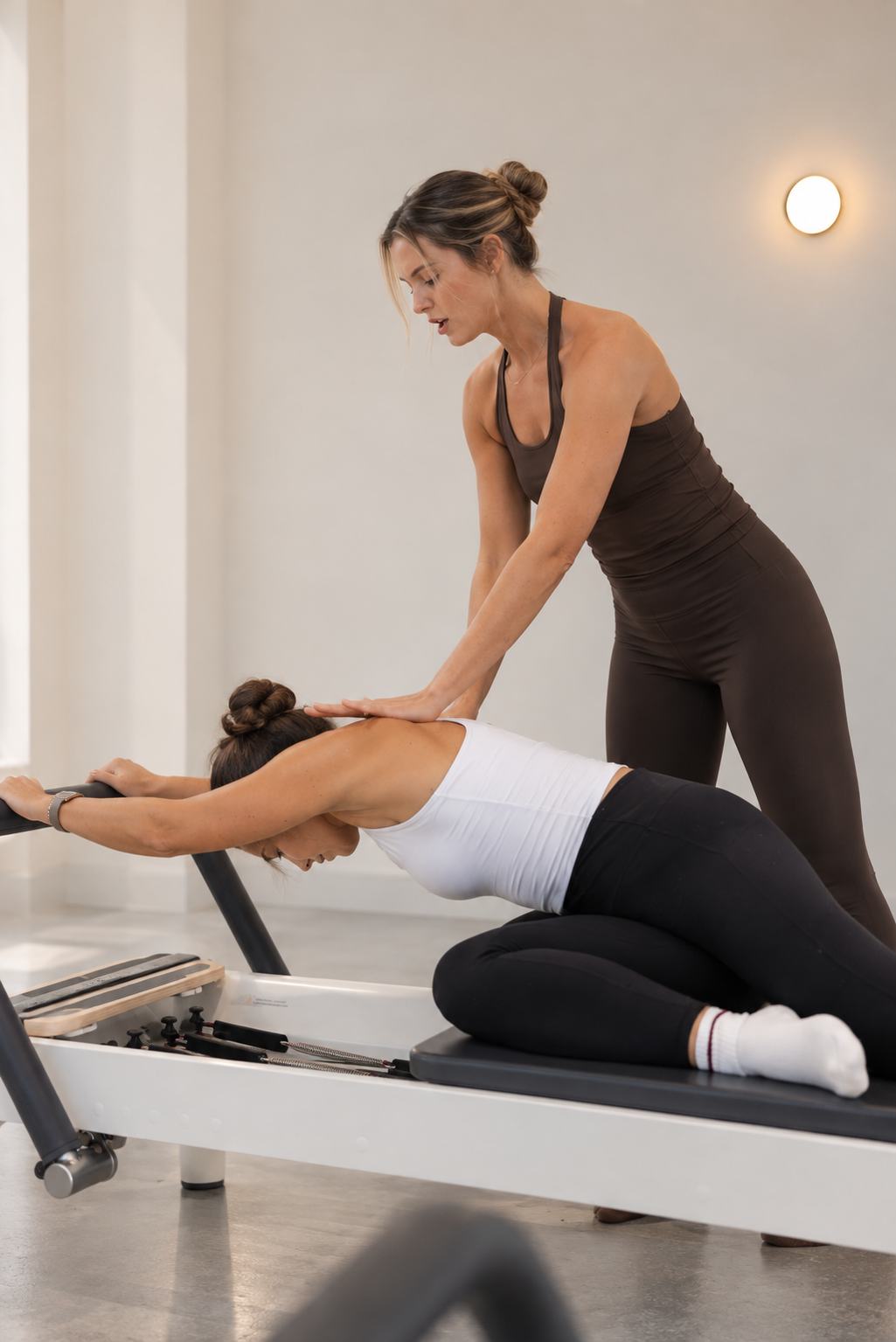
In a group class, you may have six people performing the same movement.
Their capacities may be completely different.
Instead of prescribing one spring setting and assuming everyone receives the same training stimulus, you can teach clients to understand effort.
For example:
"We're doing eight repetitions here. By the last two, I want this to feel genuinely challenging. You should feel like you could probably do another two or three with good technique, but not another ten."
Now you have given clients an intensity target, not simply an exercise.
One client may need one spring.
Another may need two.
Another may need a different progression altogether.
The class can still move together while the training stimulus becomes more individualised.
Better Questions Than "Is That Hard?"
Clients are notoriously polite.
Ask:
"Is that hard?"
and many will say yes because they assume that's what you want to hear.
Instead, try questions that give you more useful information.
"How Many More Good Repetitions Could You Do?"
This provides an immediate estimate of RIR.
"Could You Do Another Five?"
If the answer is easily yes, the exercise may not be particularly challenging.
"Was That a Warm-Up Effort, Moderate Effort or Genuinely Hard?"
Simple language works well for clients unfamiliar with RPE.
"If Ten Is Your Absolute Maximum, Where Was That Set?"
This introduces the RPE scale without overcomplicating it.
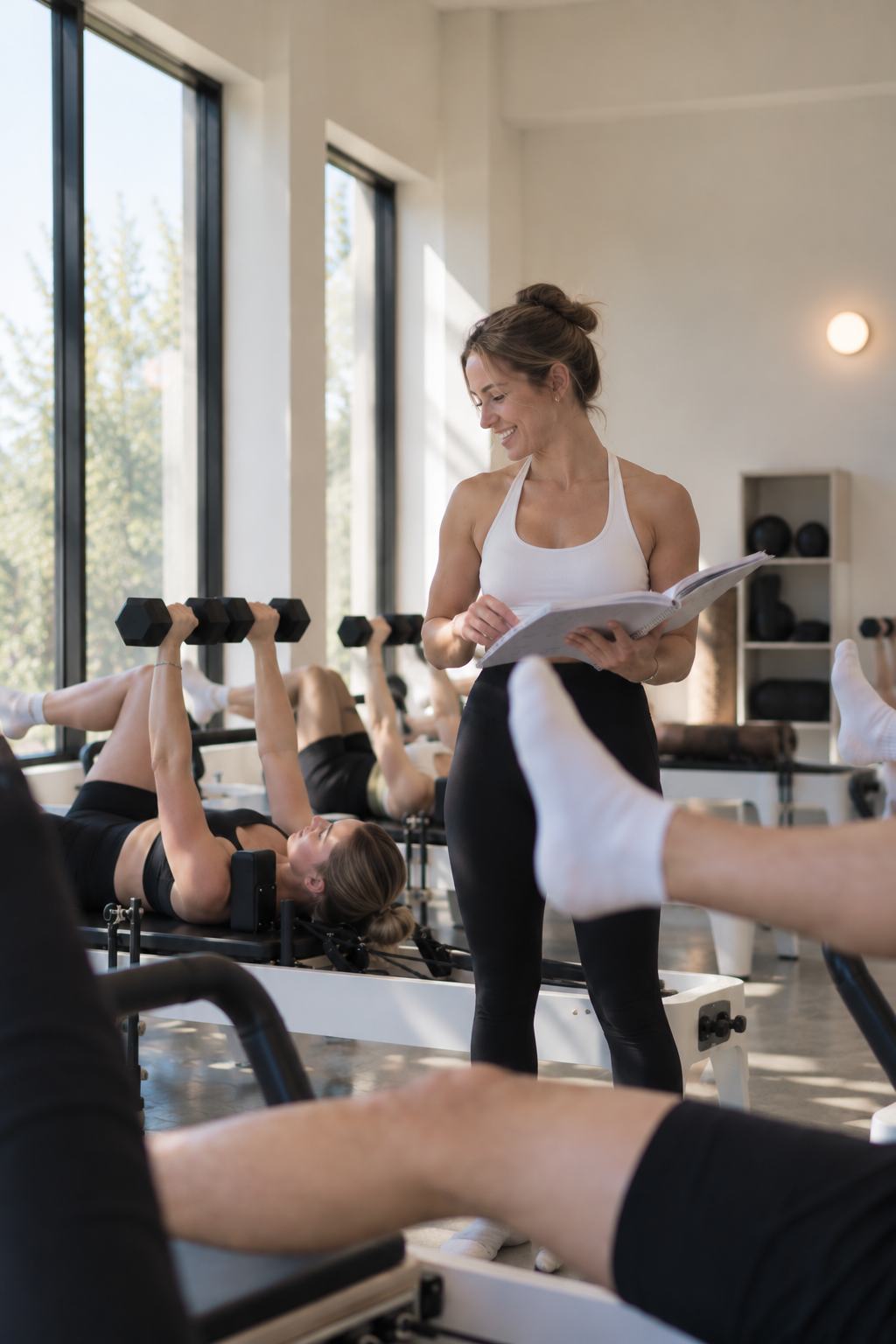
"Did Your Muscles Stop You, or Did Something Else Stop You?"
This is particularly useful.
Sometimes a client stops because of:
pain
balance
grip
cardiovascular fatigue
fear
coordination
discomfort in another body region
That is very different from the target muscle reaching meaningful fatigue.
Technique Failure
and Muscular Failure Are Not the Same Thing
This distinction matters enormously.
If a client's technique begins deteriorating because the target muscles are fatiguing, that provides information about their current capacity.
But if technique deteriorates because they never understood the movement in the first place, increasing load isn't necessarily appropriate.
Similarly, if a client stops because an exercise causes joint pain, we shouldn't interpret that as successful muscular failure.
RPE and RIR are tools.
They don't replace observation or clinical reasoning.
The instructor still needs to determine why the exercise became difficult.
Does Every Exercise Need to Be RPE 8 or 9?
Absolutely not.
This is where strength concepts can become poorly applied.
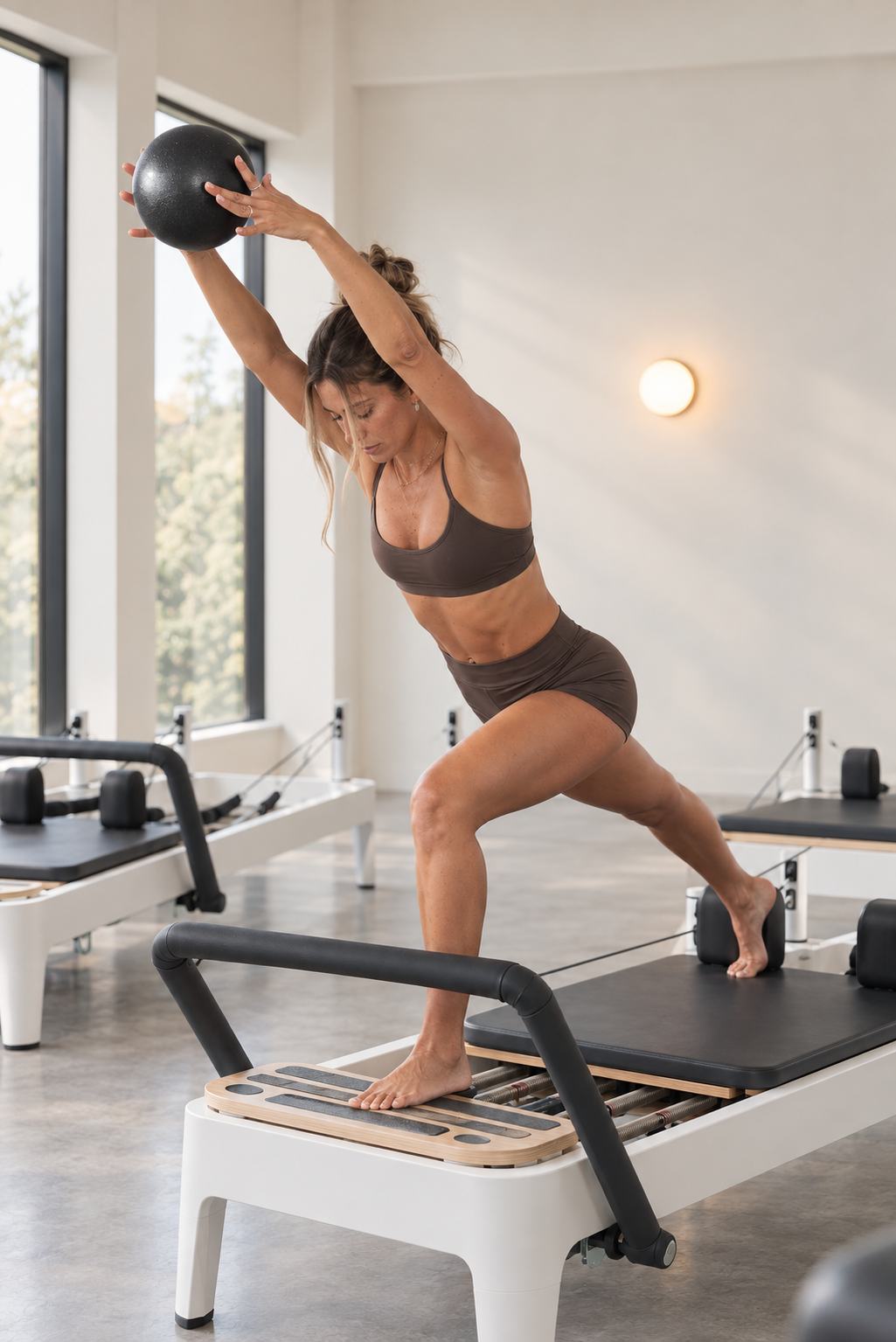
A well-designed Pilates class contains exercises with different purposes.
Some may be:
movement preparation
mobility
motor learning
balance
coordination
rehabilitation
skill development
muscular endurance
strength
A thoracic rotation mobility exercise does not need to approach muscular failure.
A new balance exercise probably shouldn't.
An early-stage rehabilitation exercise may intentionally sit at a relatively low RPE.
But if you tell a client you're building their leg strength and every lower-limb exercise remains at RPE 3 indefinitely, there is a mismatch between the programme and the goal.
Intensity needs to reflect intent.
What About Clients
with Pain or Injury?
RPE can still be useful, but muscular effort isn't the only variable we monitor.
For clients with injuries or pain presentations, we may also consider:
symptom response during exercise
symptom response after exercise
irritability
tissue healing stage
movement quality
swelling
recovery between sessions
total weekly load
A client may be physically capable of reaching RPE 9 in an exercise but not currently tolerate the tissue load associated with it.
This is why exercise prescription cannot be reduced to one number.
RPE helps quantify effort.
Clinical reasoning determines whether that effort is appropriate.
Rehabilitation Should Still Progress
One mistake instructors make when working with a history of injury is permanently underloading the client.
They were injured six months ago.
So they still get the lightest spring.
They still receive the easiest variation.
They are still told to "take it easy".
Eventually, this stops being rehabilitation and becomes chronic underloading.
The purpose of rehabilitation is to progressively increase the person's capacity until they can tolerate the demands of their actual life.
If a client's goal is returning to running, tennis, surfing, lifting, work or sport, their programme eventually needs to become sufficiently challenging to prepare them for those demands.
RPE can help instructors recognise when an exercise that was once appropriately challenging has become too easy.
Progressive Overload Requires Something to Progress
Progressive overload simply means gradually increasing training demand as the body adapts.
In Pilates, this can occur through:
greater spring resistance
increased external weight
increased range
longer lever length
unilateral loading
altered body position
slower tempo
additional sets
greater movement complexity
reduced assistance
But progression shouldn't happen randomly.
RPE provides one useful indicator.
If an exercise was RPE 8 four weeks ago and is now consistently RPE 5 with the same setup, the client has adapted.
That is good.
Now you need to decide whether maintaining that stimulus serves the programme goal or whether it's time to progress.
Why This Changes Programming
When instructors begin using RPE and RIR, they often realise something uncomfortable:
A lot of their "strength" programming isn't actually very challenging.
It creates sensation.
It creates fatigue.
It looks difficult.
But the client is nowhere near the intensity required to meaningfully challenge their current strength capacity.
This doesn't mean Pilates isn't capable of building strength.
It means Pilates needs to be programmed for strength if strength is the goal.
The method gives us plenty of variables.
The instructor needs to know how to use them.
Stop Progressing Exercises Just to Make Them Look Harder
Another benefit of understanding intensity is that you become less dependent on choreography for progression.
An exercise doesn't need to become more complicated to become more challenging.
You don't necessarily need:
another prop
an unstable surface
a choreography change
three movements combined together
an advanced-looking variation
Sometimes the most appropriate progression is simply performing the same fundamental movement under greater load.
A basic split squat performed at an appropriate intensity can provide a significantly greater strength stimulus than an elaborate lunge sequence that is limited by coordination rather than muscular capacity.
Complexity and intensity are not the same thing.
Good programming knows when each is appropriate.
Professional Reflection
As Pilates instructors, we need to become comfortable with asking what adaptation we're actually trying to create.
Not:
"What exercise am I teaching?"
But:
"Why am I teaching it?"
If the answer is mobility, programme mobility.
If the answer is motor control, programme motor control.
If the answer is endurance, programme endurance.
If the answer is strength, the exercise needs to provide a sufficient strength stimulus.
RPE and Reps in Reserve give us simple, practical ways to start quantifying that stimulus without requiring a laboratory, a one-repetition maximum test or a completely different training environment.
They also shift our attention away from how difficult an exercise looks and towards how demanding it actually is for the person performing it.
That is a far more useful way to programme.
Practical Teaching Takeaways
Exercise intensity is relative to the individual, not determined by the exercise alone.
Spring colour does not automatically tell you how difficult an exercise is.
RPE provides a simple 1–10 measure of perceived exercise intensity.
Reps in Reserve estimates how many technically good repetitions a client could still complete.
An RPE of approximately 8 generally corresponds with around two repetitions remaining.
Feeling a muscle burn does not automatically mean the exercise is providing a meaningful strength stimulus.
High-repetition work may primarily train muscular endurance rather than strength.
Not every Pilates exercise needs to approach muscular failure.
Intensity should match the intended outcome of the exercise.
RPE is particularly useful for individualising load within group classes.
Progression does not always require more complicated choreography.
If an exercise becomes significantly easier over time, that may be evidence that the client has adapted and is ready for progression.
Rehabilitation clients still require progressive loading when appropriate.
Good programming starts by identifying the desired adaptation and then selecting an exercise, load and intensity capable of producing it.
Learn to Programme Pilates
for Actual Strength Outcomes
Pilates instructors don't need to become strength and conditioning coaches.
But if we tell clients we're helping them become stronger, we need to understand the basic science of how strength adaptation occurs.
That means understanding more than exercises.
It means understanding:
load, intensity, repetitions, sets, tempo, progressive overload and recovery.
The Strength Pilates Principles Certification through Body Form Education was created specifically to bridge this gap.
Designed by physiotherapists for Pilates instructors, the certification teaches you how to apply genuine strength-training principles within Mat, Reformer and equipment-based
Pilates without losing what makes Pilates valuable.
You'll learn how to make purposeful decisions about load and progression, understand whether your programme is actually challenging enough to create adaptation, and build classes that go beyond simply making clients "feel the burn".
The certification is fully online, self-paced, available worldwide and has no expiry, so you can complete it around your teaching schedule and continue referring back to the content as your programming develops.
If you want to move from delivering exercises to genuinely programming for outcomes, explore the Strength Pilates Principles Certification through Body Form Education.