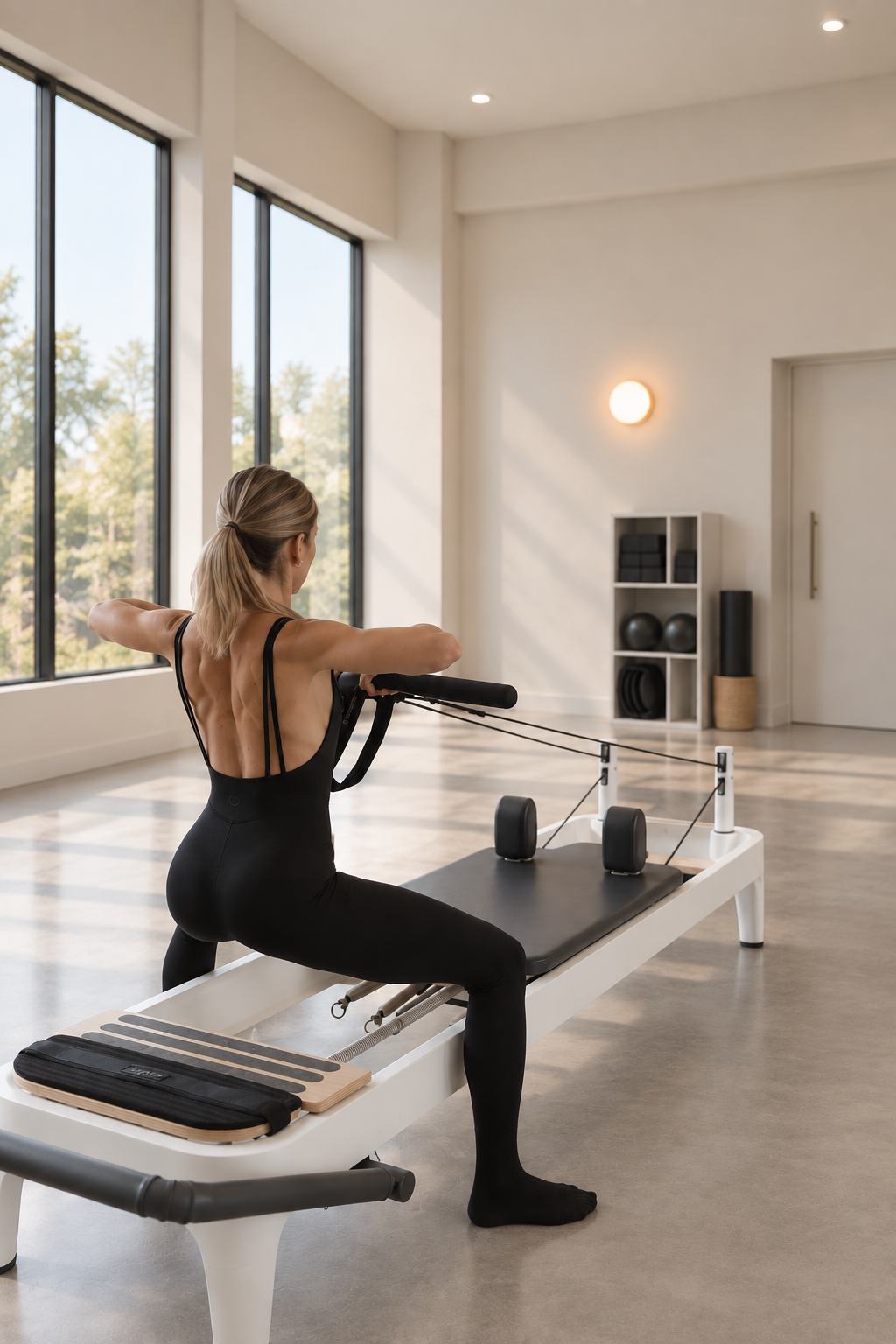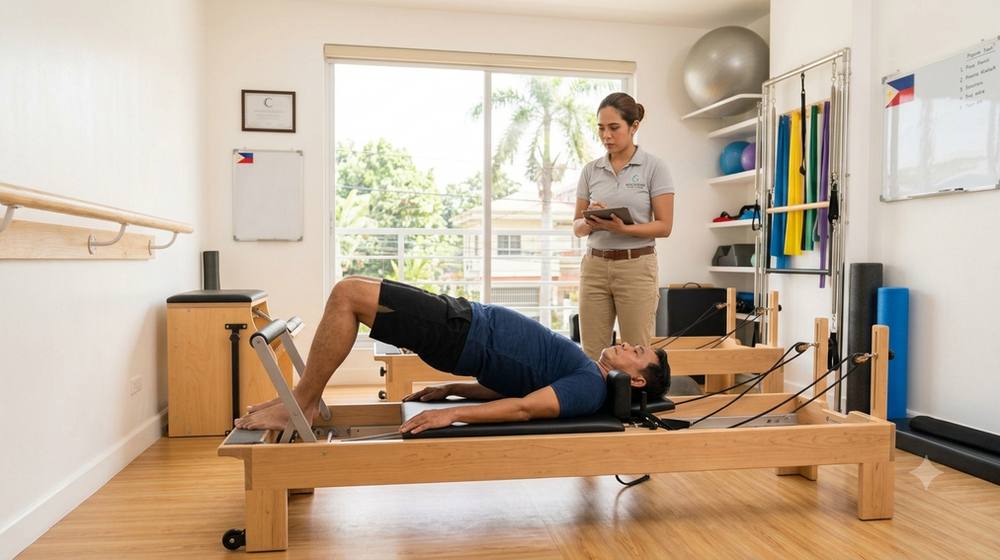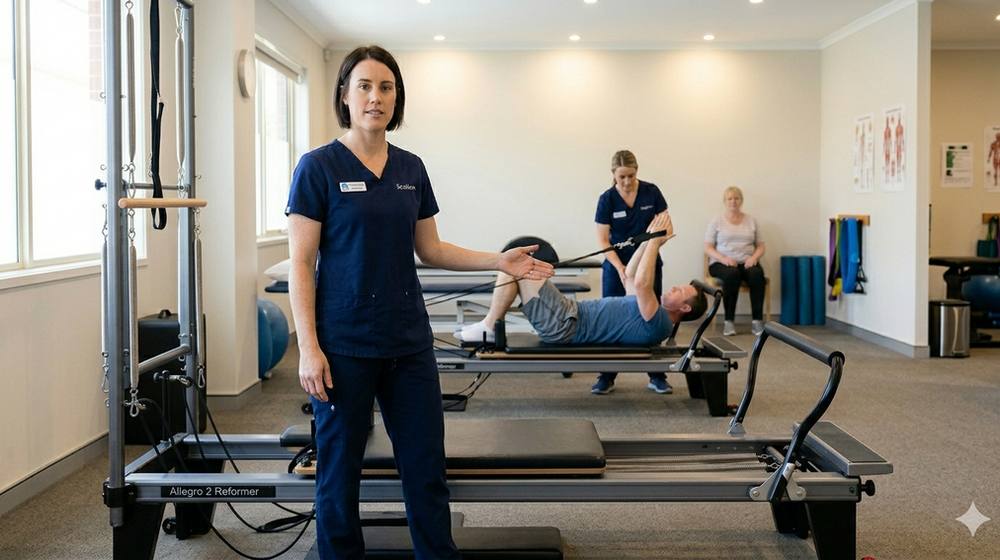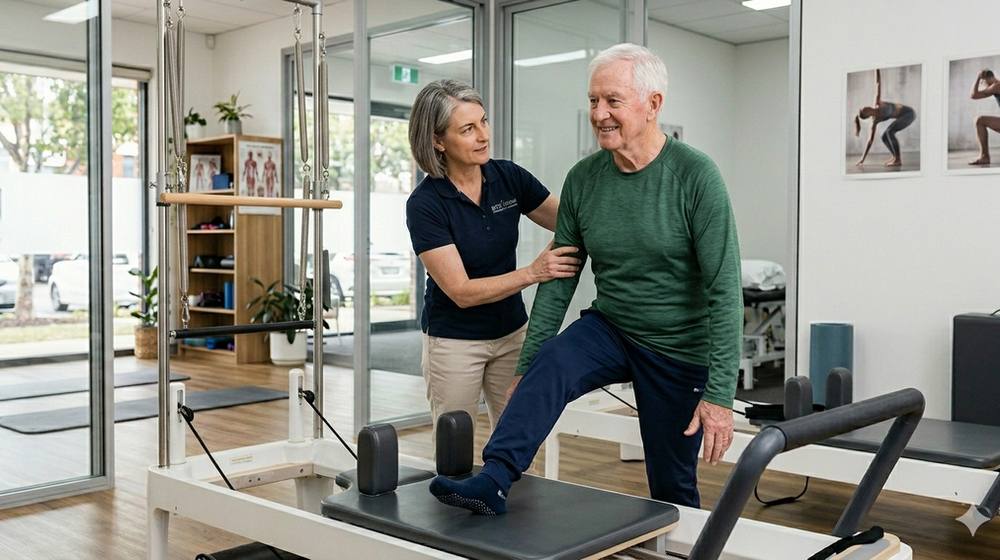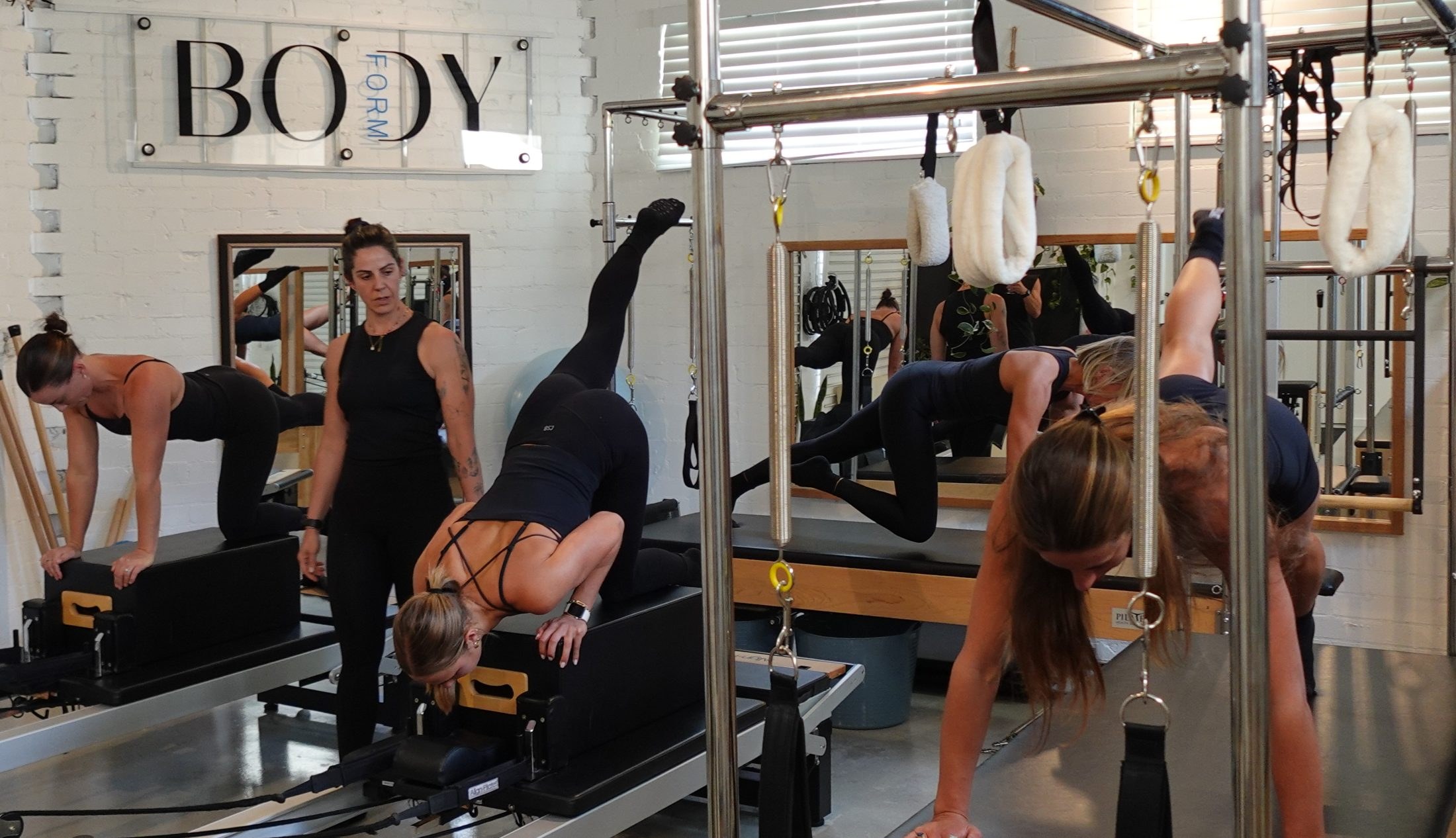
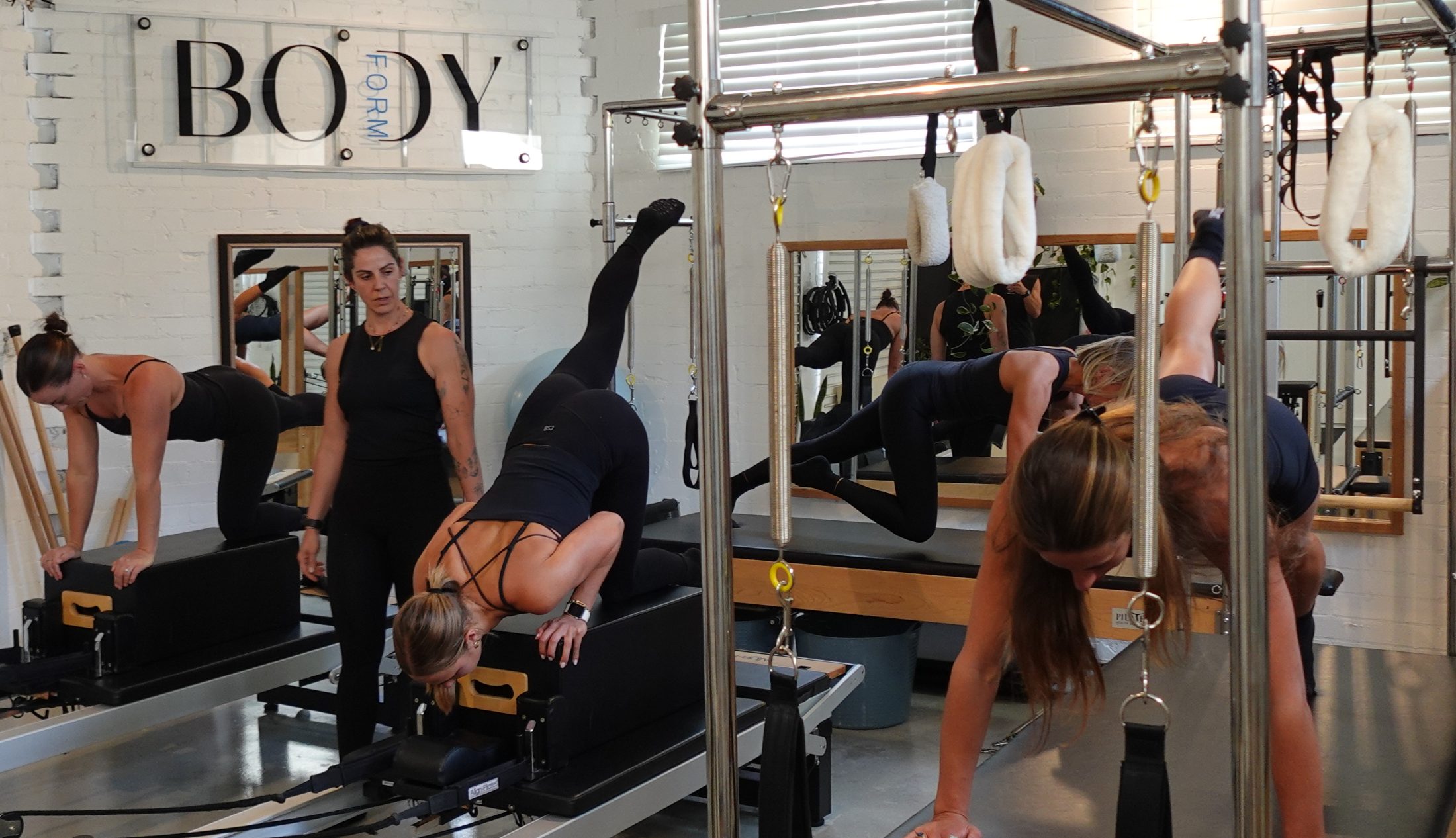
An effective Pilates warm-up should prepare clients for the movements, loading and coordination demands of the session ahead. It is not simply the first five minutes of a class, a collection of stretches or a way to make clients feel a burn before the main work begins. The exercises should have a clear purpose, involve active movement and build towards the tasks that follow without unnecessarily fatiguing the muscles you intend to train.
This is an area where good instructors can accidentally fall into routine. Perhaps you begin every Reformer class with the same footwork series because that is what you were taught. Or perhaps the first exercise is a stretch because it feels like the appropriate way to ease clients into movement. Neither option is automatically wrong, but neither tells us whether the client is actually prepared for the session you are about to teach.
What is a warm-up actually supposed to achieve?
A warm-up prepares the person for the physical and skill demands of upcoming exercise. It can involve an increase in body temperature, repeated exposure to relevant joint positions, rehearsal of movement patterns and gradually increasing muscular effort. For instructors, the central question is not whether the client has completed five minutes of movement; it is whether the first few minutes have made the next part of the session more manageable and purposeful.
Consider two different classes. One is programmed around loaded standing lunges, split squats and lower-body strength. The other prioritises upper-body pulling, pressing and weight-bearing on the hands. A warm-up that adequately prepares one class may leave important demands of the other unaddressed.
This is why Body Form Education places emphasis on active preparation across the upper body, lower body and trunk in a full-body class. It is also why warm-up design should reflect the intended session rather than follow a fixed exercise checklist. The relative emphasis can change when a class is deliberately specialised.
The broader exercise science literature supports the value of preparing for activity, but it does not prescribe one compulsory Pilates sequence. In A review of the acute effects of static and dynamic stretching on performance, published in the European Journal of Applied Physiology, Behm and Chaouachi discuss the contribution of general activity and task-specific work to warm-up design. Their review is useful context, but applying those principles to a group Pilates class still requires professional judgement.
Why does a series of stretches not necessarily count as a warm-up?
Stretching can be useful when an exercise requires a range that the client is not currently accessing comfortably. It does not automatically prepare the client to produce force, control a load or coordinate a standing sequence.
Imagine starting a full-body Reformer class with a prolonged hip-flexor stretch, a knee-down stretch on the opposite side and another variation of the same stretch. The client may feel more mobile afterwards, but you have not necessarily prepared the shoulders for loaded arm work, the trunk for resisting or producing movement, or the legs for repeated force production.
A useful distinction is between preparing range and preparing the actual task. If a deep lunge is coming, a brief dynamic exploration of hip movement may be relevant. But the warm-up may also need progressively loaded split squats or supported footwork so the client experiences the muscular demand that follows.
Static stretching is not inherently harmful, and it does not need to be banned from warm-ups. The 2016 systematic review Acute effects of muscle stretching on physical performance, range of motion, and injury incidence in healthy active individuals, published in Applied Physiology, Nutrition, and Metabolism, found that acute performance effects depend partly on the stretching method and duration. The practical implication is not that every static stretch is wrong. It is that stretching alone is unlikely to cover every preparation requirement of an exercise session.
How do you prepare the upper body, lower body and trunk?
In a full-body Pilates class, it is worth checking whether all three areas have had appropriate active exposure before higher-demand exercises begin. This does not require a separate ten-minute block for each body region. A well-selected movement can address several demands at once.
For example, a controlled bridge may introduce hip extension, lower-body effort and trunk coordination. A supported squat adds knee and hip loading and can be used to rehearse the range required later. An easy row, light arm press or carefully selected arms-in-straps sequence can prepare the shoulder complex for more demanding upper-body work.
A brief plank variation may be appropriate before a longer weight-bearing block, but if the main session includes demanding shoulder work, repeated plank holds to exhaustion may not be a useful warm-up. The question is whether the selected movement is preparing the client or already consuming their available capacity.
Preparing the lower body
A lower-body warm-up should reflect the angles and loads you intend to use. Reformer footwork might allow a client to move through comfortable hip, knee and ankle ranges and experience progressive resistance. A body-weight squat or supported split squat might better resemble the standing demands of the upcoming session.
If the main block includes lateral lunges, some movement in the frontal plane may be useful. If the class includes single-leg work, rehearsal of supported single-leg loading may help the client understand the balance and control demands without requiring them to perform the entire difficult sequence immediately.
The key is preparation, not copying the entire main set at lower quality. A warm-up can include the movement pattern with fewer repetitions, lower resistance, a smaller range or more support.
Preparing the upper body
The shoulder complex needs to accommodate different positions depending on whether clients will be rowing, pressing, reaching overhead or bearing weight through the hands. An upper-body warm-up should therefore relate to the arm path and loading direction that follows.
Light rows before heavier pulling work may be useful, as may controlled reaching before overhead arm exercises. Before a plank series, gradually introducing pressure through the hands or forearms may help establish the task. There is no need to force the shoulder blades into a fixed down-and-back position as a universal warm-up instruction; scapular movement depends on the exercise.
Preparing the trunk
Trunk preparation should be specific to the task, not reduced to “switching on the core”. A controlled dead-bug variation may rehearse the ability to manage trunk position while the limbs move. A gentle roll-down may introduce spinal flexion when that movement will be used later. A quadruped reach may combine trunk and shoulder control.
None of these examples requires the client to brace maximally or perform long holds. The goal is to become familiar with the demands and progressively prepare for the main session.
How long should a Pilates warm-up be?
There is no single duration that is correct for every client and class. Five minutes might be sufficient for a familiar, moderate session, while a class involving demanding loaded movements or new skills may benefit from more preparation.
Rather than deciding that every warm-up must last a fixed number of minutes, consider what needs to be accomplished. Has the client rehearsed the main patterns? Has the resistance increased enough for the first working set to feel manageable? Are there symptoms that require a slower progression? Are you introducing a skill that needs more explanation?
Warm-ups should remain proportionate. Spending a third of a fifty-minute class on low-load preparation can leave too little time for meaningful strength work, especially when the class's primary objective is progressive overload. Conversely, jumping immediately into a heavy or complex movement may leave clients without adequate preparation.
An instructor can build preparation into the first working set, especially for experienced clients. If the first exercise begins with light resistance and builds progressively, the dividing line between the warm-up and main session may be less important than the quality of the progression.
What is the difference between warming up and pre-fatiguing?
This is one of the most useful distinctions for Pilates programming. A light exercise can be a warm-up, while the same movement performed with enough volume or resistance becomes a meaningful working set. The name of the exercise does not determine its training effect.
Take bridging. A few controlled repetitions may allow clients to explore hip extension and develop awareness of the movement. Several sets of long holds, pulses and loaded bridge variations may substantially fatigue the hip extensors before the class reaches its main strength block.
That fatigue may be intentional if the session is designed for muscular endurance. It may be less useful when the priority is heavier standing work and the client's capacity to generate force is already reduced.
The same reasoning applies to repeated footwork or abdominal pulses. A client feeling tired at the end of the warm-up does not prove that the warm-up was effective. The test is whether the preparation helped the intended session, rather than simply making it harder through accumulated fatigue.
Body Form Education's existing article Exercise Order in Pilates: Why Sequence Matters examines the wider effects of fatigue and sequencing. This warm-up guide has a narrower purpose: deciding exactly which demands need to be prepared before the main work begins.
How would you warm up a fifty-minute Reformer class?
Consider a hypothetical full-body class whose main work involves standing lunges, upper-body pulling, planks and later unilateral lower-body exercises. Rather than starting with an extended stretching series, the instructor could build an active preparation block using a few connected movements.
A possible sequence begins with controlled bilateral footwork to introduce hip, knee and ankle loading while the client becomes familiar with the springs. It then moves into bridging for hip extension and trunk organisation, followed by a simple arms-in-straps or rowing variation to rehearse shoulder movement. A short quadruped or supported plank task may prepare weight-bearing if that appears later.
This is an illustrative sequence, not a mandatory template. The spring settings, repetitions and duration should match the class, the clients and the equipment. A more demanding strength-focused session might then include a brief progressive set of the actual standing lunge before increasing resistance.
The intention is that clients arrive at the first priority exercise feeling prepared rather than exhausted. A client should not need to spend fifteen minutes burning out the glutes before a loaded squat to prove they have activated those muscles.
What about a Mat class with limited equipment?
The same reasoning applies without springs. An active warm-up might include a bridge, a supported squat, a controlled arm-reach pattern and a short quadruped task. The instructor can use body position, lever length and movement range to adjust the demand.
A beginner may need more time to learn the movement before adding combinations. An experienced group may be able to progress more quickly. The aim is not to demonstrate a complicated choreography sequence immediately. It is to expose clients to the key movement patterns and set up a class they can then perform effectively.
How should a warm-up change for different clients?
A client returning from injury may need additional time to establish a tolerable range and assess their response to loading. Someone who experiences symptoms after prolonged sitting may benefit from gradual movement exposure before more demanding exercises. A client with balance concerns may need support while rehearsing standing movements.
These modifications should not become assumptions that every person with a particular diagnosis requires the same warm-up. A postnatal client, for example, may have different abdominal or pelvic health considerations, but the relevant modifications depend on their stage of recovery, symptoms and clinical guidance. An older adult may be capable of substantial resistance work and should not automatically receive a prolonged low-intensity warm-up simply because of age.
For a group class, the instructor may need to offer a common movement pattern with several accessible ways to perform it. A supported squat, for example, can be progressed by changing depth, resistance or support. The preparation should allow clients to arrive at the main block at an appropriate level without requiring entirely separate classes.
What should you cue during the warm-up?
Cueing should establish the task and help clients move, not bury them under technical instructions before they have completed the first repetition. Explain the starting position, give the main movement direction and offer a brief cue that relates to the intended outcome.
Pre-cueing also matters. If clients are performing a simple bridge and the next movement involves lifting one heel, they should know what is coming before they are expected to change. That allows the movement to continue without every client stopping to watch the instructor.
There is no need to demonstrate every repetition of the warm-up. A brief demonstration may be helpful, particularly for a new movement, but the instructor should then observe the group, check understanding and identify whether anyone needs a different option.
Warm-ups are also a useful opportunity to notice how a client is presenting that day. If someone is reporting new pain, unusual neurological symptoms or an unexpected change in function, the instructor's task is not to diagnose it but to decide whether modification or referral is appropriate.
How do you know whether your warm-up worked?
A useful warm-up has prepared the main task without taking too much time or unnecessarily consuming the client's capacity. The client understands the movement patterns, the first main exercise feels manageable at its planned starting load and the session can progress with fewer avoidable interruptions.
That may look simple. It might involve just a few exercises, performed with a clear reason and adjusted according to the group. There is no prize for making the warm-up more creative than the class itself.
When instructors understand why they are selecting each movement, they can design warm-ups that are consistent without being repetitive. They are also better equipped to change the plan when the class's priorities change.
If you want to develop this level of programming reasoning, Body Form Education's current Strength Pilates Principles CPD and Pilates teacher training curriculum provide further context for understanding load, sequencing and exercise selection. The aim is not another list of mandatory warm-up movements. It is the ability to look at a class and know what needs preparing before you teach it.