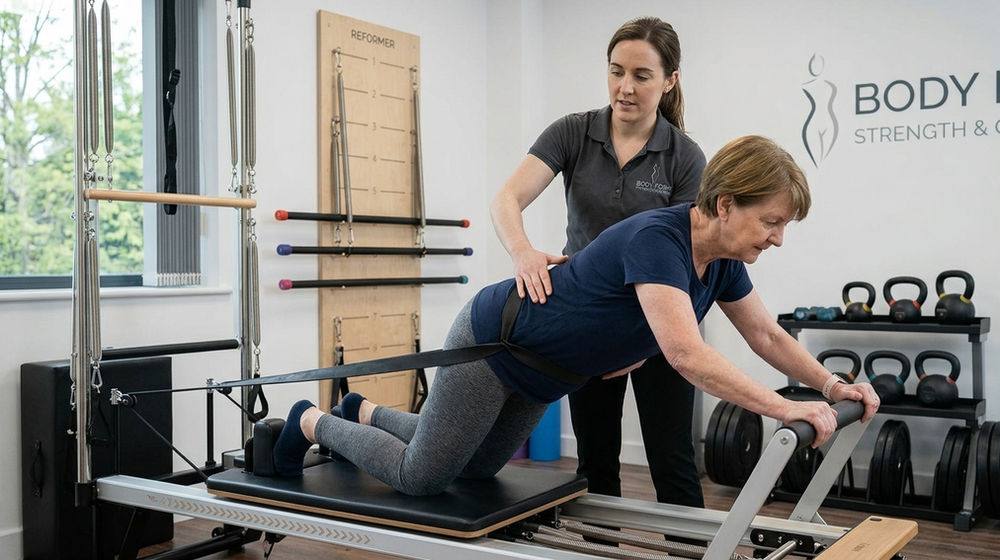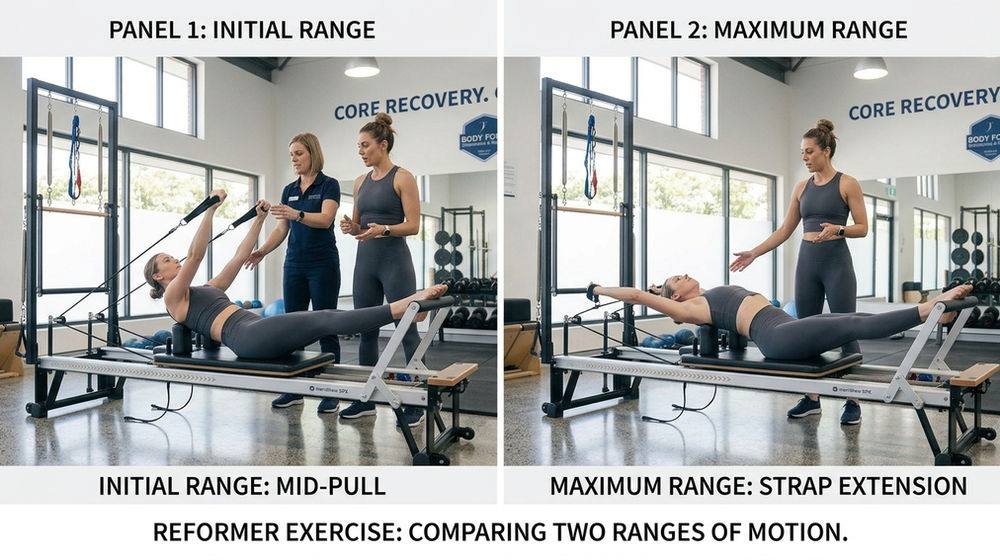
Pilates instructors hear the terms open chain and closed chain all the time.
They appear in anatomy courses.
In rehabilitation discussions.
In strength programming.
In conversations about knees, shoulders, hips and injury modification.
But despite how often the terms are used, they are frequently oversimplified.
You may have heard:
"Closed chain is more functional."
"Open chain is bad for knees."
"Closed chain is safer."
"Open chain isolates muscles."
There is a small amount of truth hidden inside some of these statements, but none of them are universally correct.
Open-chain and closed-chain exercises are simply different ways of loading the body.
Neither is automatically better.
Neither is automatically safer.
Neither is automatically more functional.
The useful question is:
What physical quality are you trying to train, and which type of exercise best matches that goal?
Once instructors understand the difference properly, exercise selection becomes much more purposeful.
What Does "Kinetic Chain" Actually Mean?
The body does not move as a collection of completely separate joints.
Movement at one joint often influences what happens elsewhere.
The term kinetic chain describes the way body segments and joints interact during movement.
When we talk about an exercise being open-chain or closed-chain, we are usually referring to what is happening at the distal segment, the part of the limb furthest away from the trunk.
For the leg, that usually means the foot.
For the arm, that usually means the hand.
What Is an Open-Chain Exercise?
In an open kinetic chain exercise, the distal segment is relatively free to move.
For example:
a leg moving freely through space
a hand moving without being fixed to a surface
seated knee extension
side-lying leg lifts
many feet-in-straps exercises
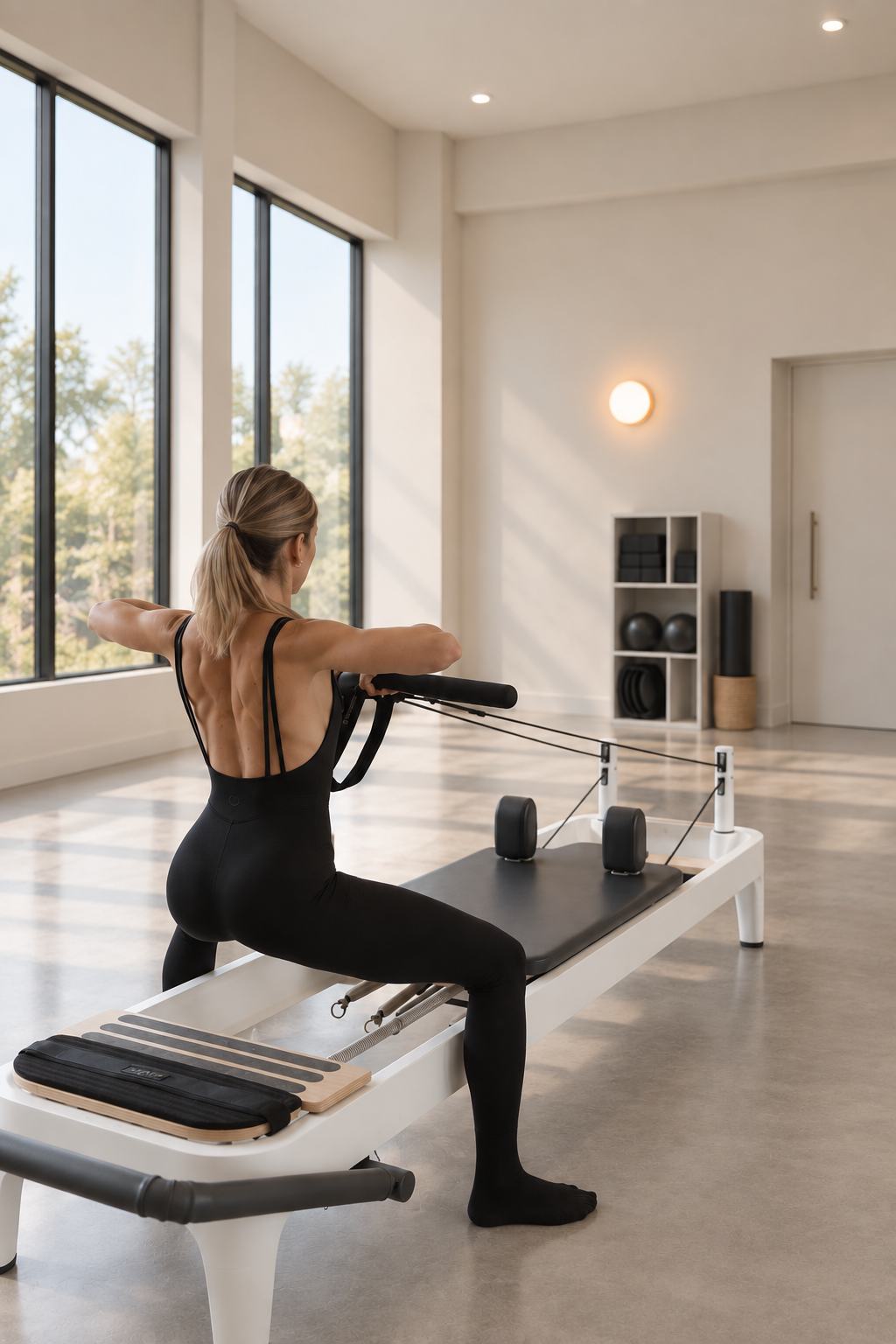
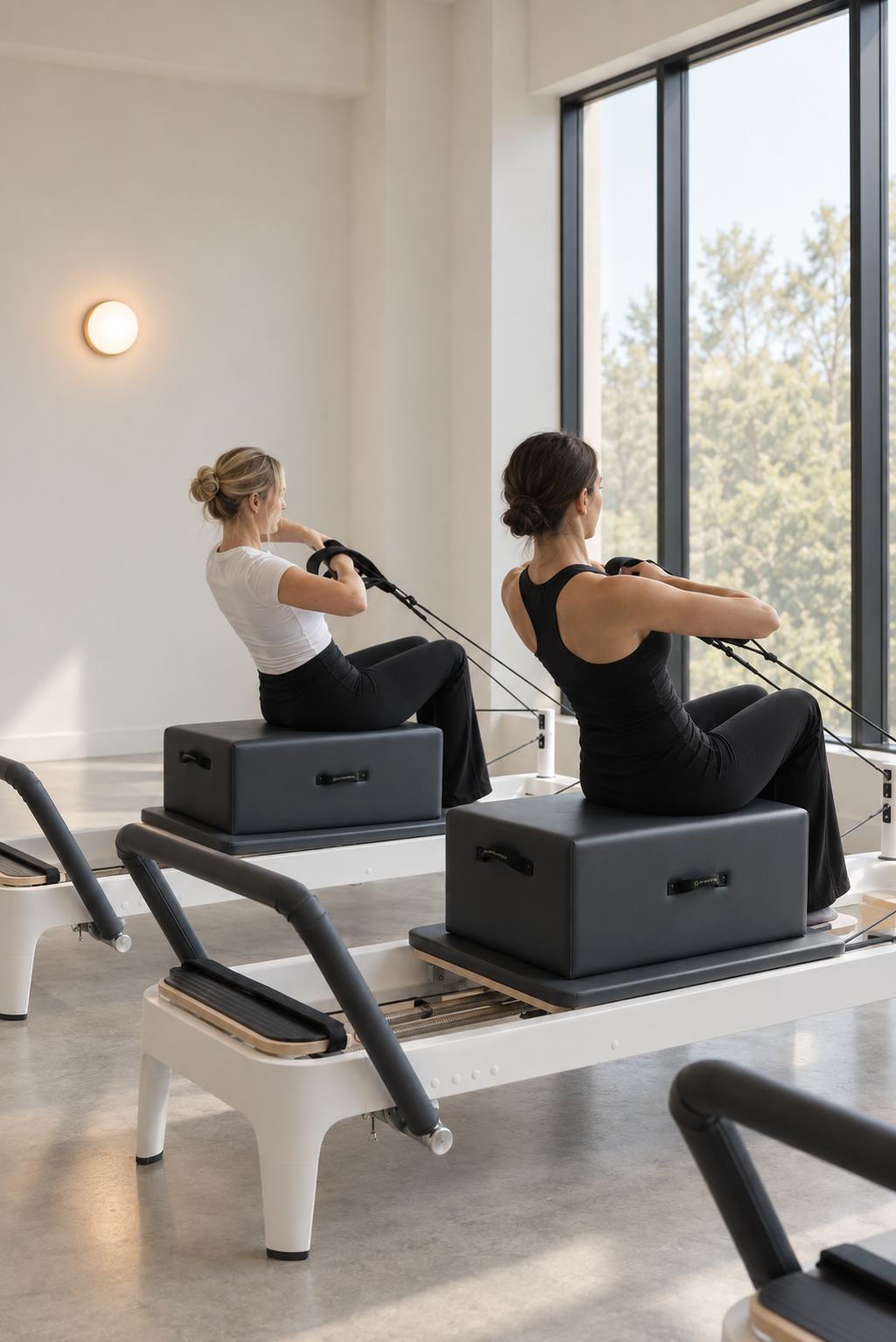
arm work with straps where the hands move freely
The limb is not fixed against the ground or another stable surface.
Open-chain exercises often allow us to target a joint or muscle group more specifically.
That can be extremely useful.
What Is a Closed-Chain Exercise?
In a closed kinetic chain exercise, the distal segment is relatively fixed against a surface.
Examples include:
squats
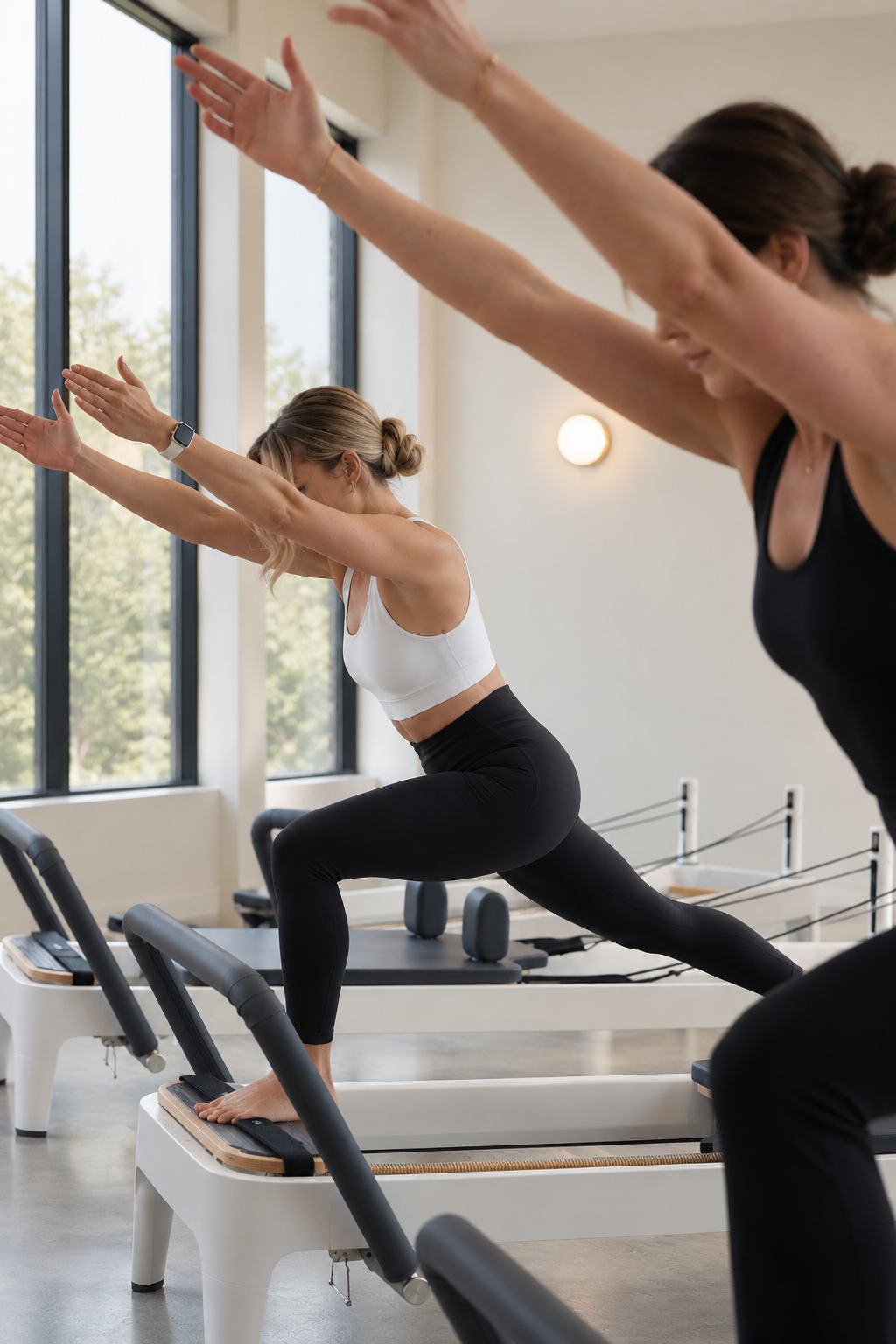
lunges
planks
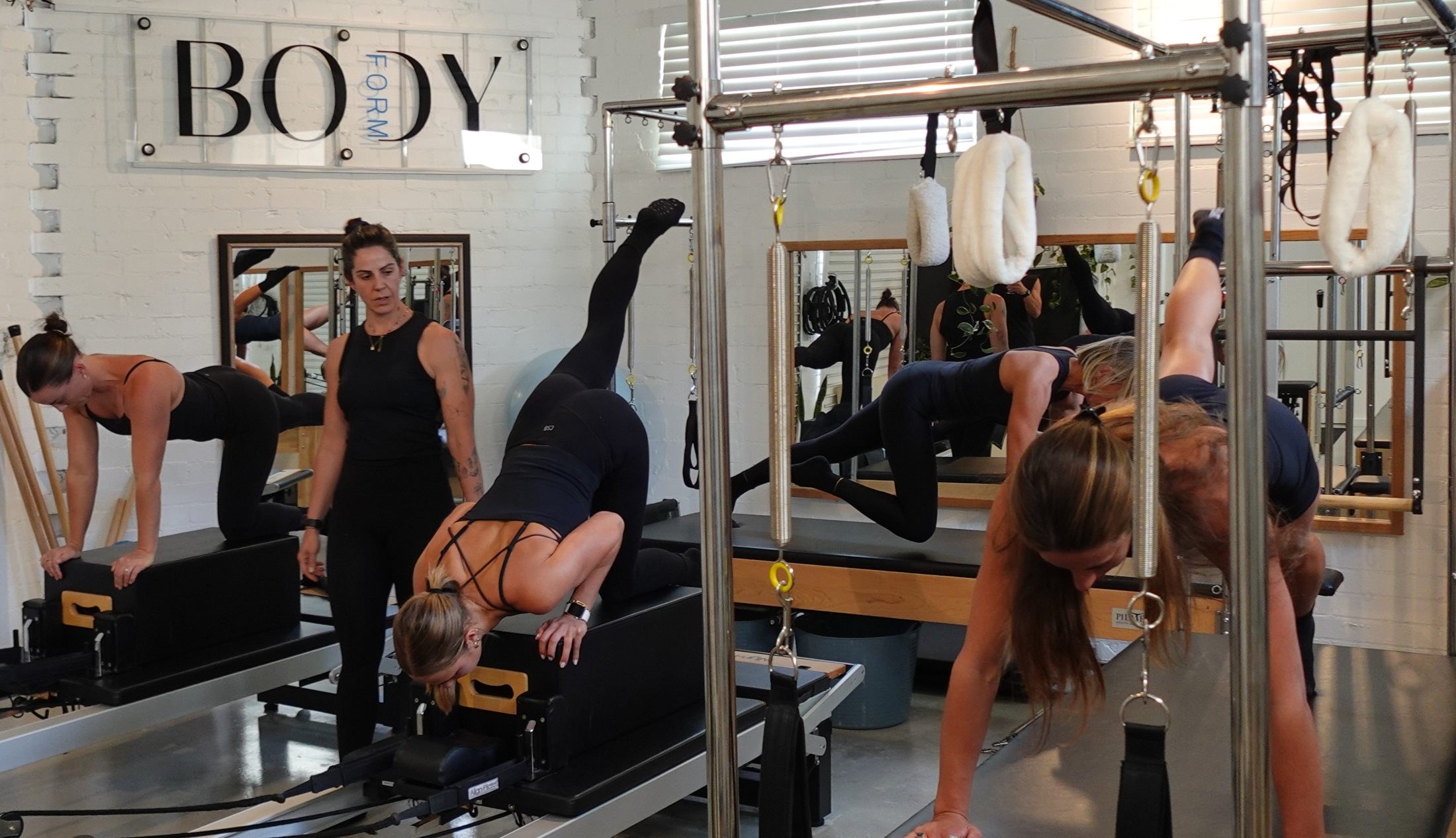
quadruped work

standing exercises where the foot is planted
pushing through the footbar
hands fixed against a platform or carriage
In these exercises, movement usually occurs across multiple joints while the hand or foot maintains contact with a surface.
Closed-chain exercises often involve greater co-contraction, joint compression, balance and multi-joint control.
Again, that does not make them automatically superior.
They simply create a different mechanical environment.
Pilates Includes Both Open
and Closed Chain
Work
One of the strengths of Pilates is how easily we can move between the two.
For example:
Lower Body Open Chain
feet in straps
side-lying leg work
leg circles
knee extension variations
Lower Body Closed Chain
Reformer footwork
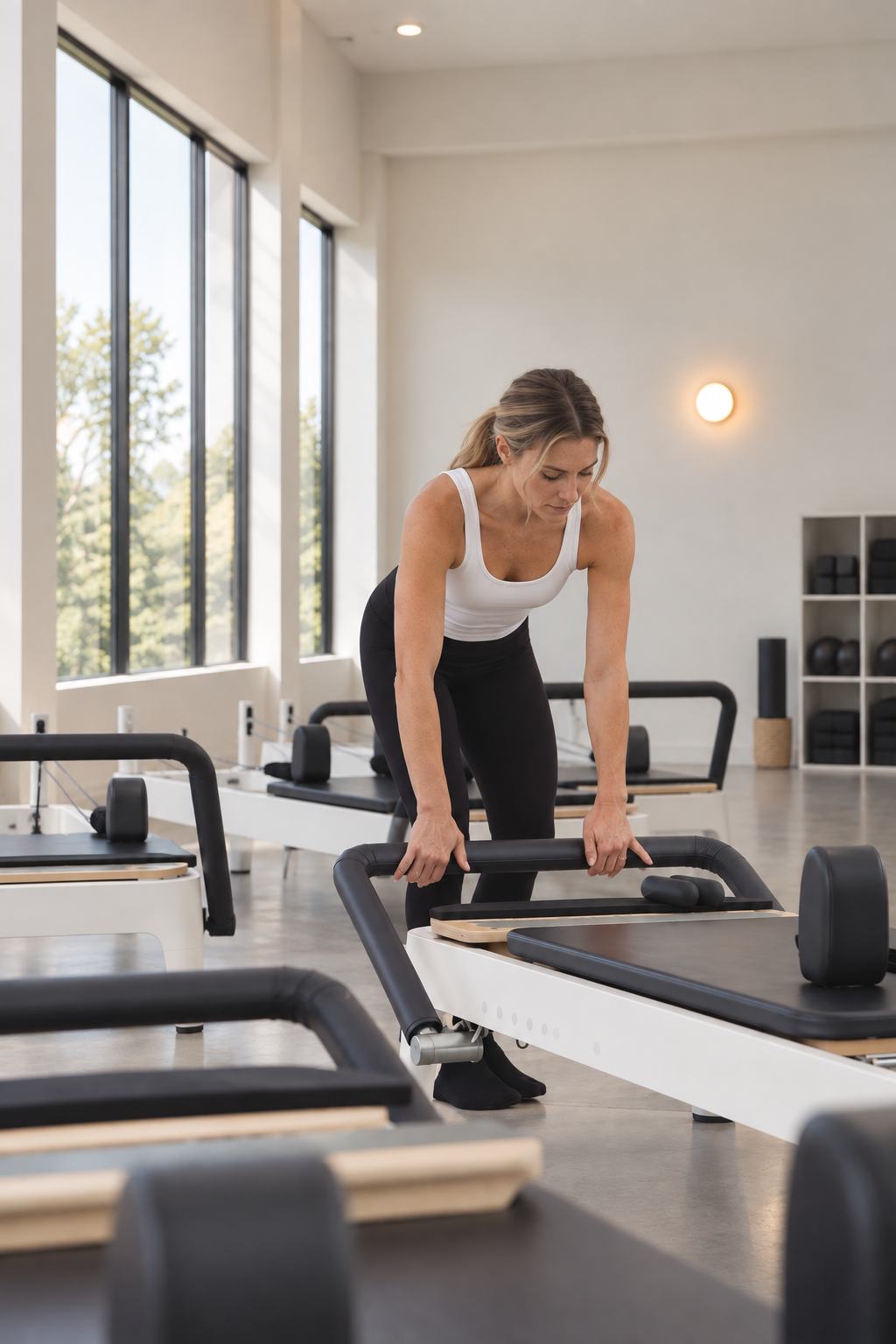
squats
lunges
standing scooter
step-up variations
Upper Body Open Chain
arm circles
straps-based arm work
shoulder flexion
lateral raises
Upper Body Closed Chain
plank
quadruped
push-up
hands pressing into the platform
weight-bearing shoulder work
A good programme may include both.
Why Closed Chain Exercises Often Feel More "Functional"
Closed-chain exercises often resemble tasks we perform in everyday life.
Standing.
Walking.
Squatting.
Climbing stairs.
Pushing ourselves off the floor.
They also tend to involve multiple joints working together.
That is why they are often described as more functional.
But "functional" is not a universal category.
Function depends on the goal.
For a tennis player, open-chain shoulder rotation may be highly relevant.
For a runner, open-chain hamstring strengthening may be important.
For someone recovering from knee surgery, seated knee extension may be an essential way to rebuild quadriceps strength.
An exercise is functional if it helps prepare the person for what they need to do.
Why Open Chain Exercises Are Often Unfairly Labelled as Inferior
Open-chain exercises sometimes get dismissed as less useful because they are more isolated.
But isolation is not always a problem.
Sometimes it is exactly what we want.
If a client has significant quadriceps weakness, a seated knee extension allows us to directly load the quadriceps.
If a client has shoulder weakness, an open-chain exercise may let us target a specific range or muscle group without requiring full body weight-bearing.
If a client cannot yet tolerate a closed-chain task, open-chain work may provide an excellent starting point.
Specific loading has value.
Open Chain and Joint Isolation
Open-chain exercises often make it easier to emphasise one joint.
For example:
A seated knee extension primarily involves movement at the knee.
A side-lying hip abduction exercise focuses heavily on the hip.
An open-chain shoulder external rotation exercise can target the rotator cuff.
This is useful when the goal is:
strengthening a specific muscle group
rebuilding isolated capacity
controlling load
reducing balance demands
working around pain
early-stage rehabilitation
It also makes progress easier to measure.
Closed Chain and Co-Contraction
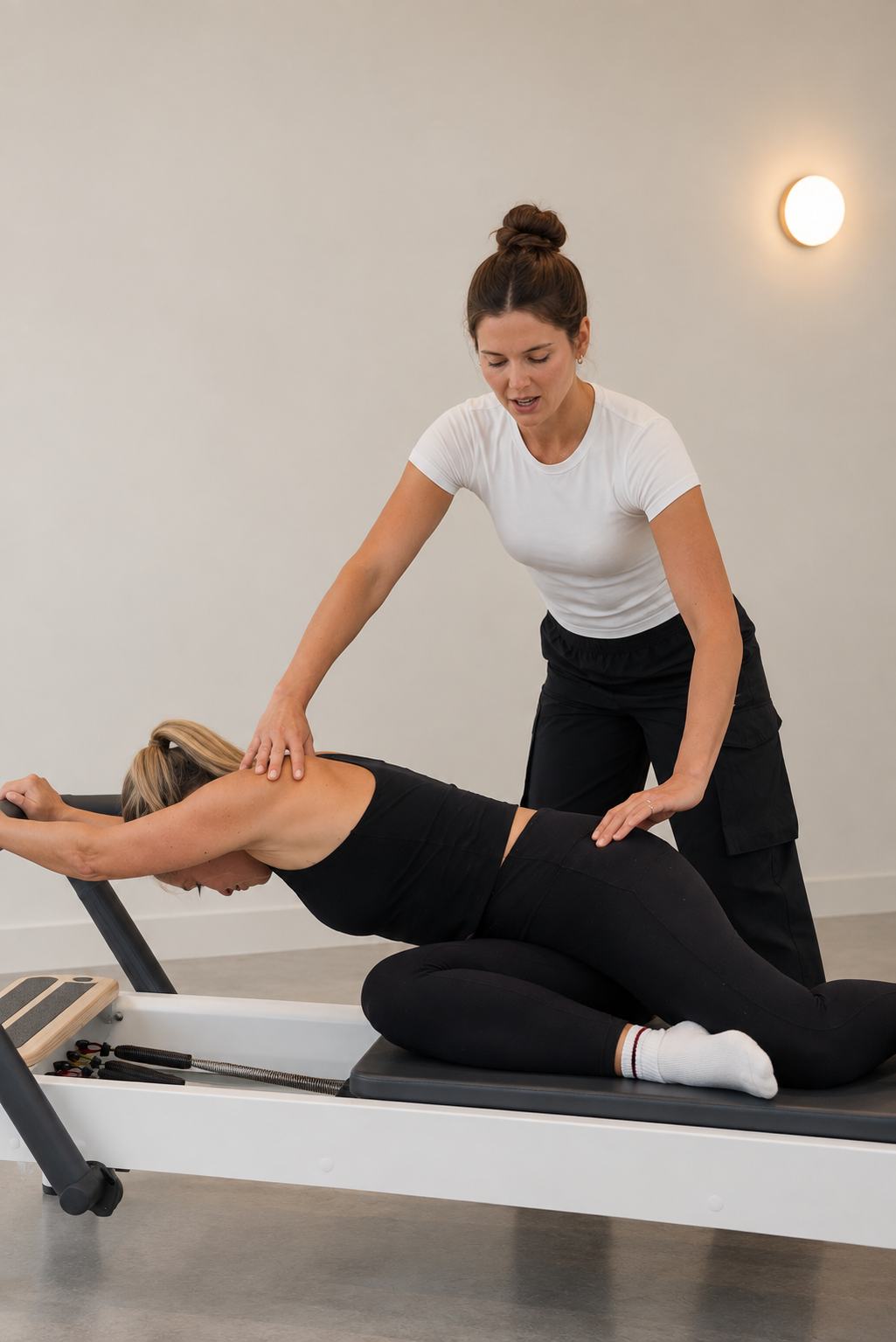
Closed-chain exercises often involve greater simultaneous activation of multiple muscle groups around a joint.
This is sometimes called co-contraction.
For example, during a squat, the muscles around the hip, knee and ankle all contribute.
The quadriceps work.
The glutes work.
The hamstrings contribute.
The calf muscles contribute.
The trunk stabilises.
This creates a more integrated movement strategy.
That can be highly useful for:
strength
joint stability
proprioception
coordination
functional movement
But again, integration is not always the first priority.
Sometimes we need to strengthen the weak link first.
Open Chain vs Closed Chain
for the Knee
The knee is one of the most common areas where these concepts get oversimplified.
You may have heard that open-chain knee extension is "bad for the knees".
That is far too simplistic.
Both open-chain and closed-chain exercises can be useful for knee rehabilitation and strength.
They simply load the joint differently.
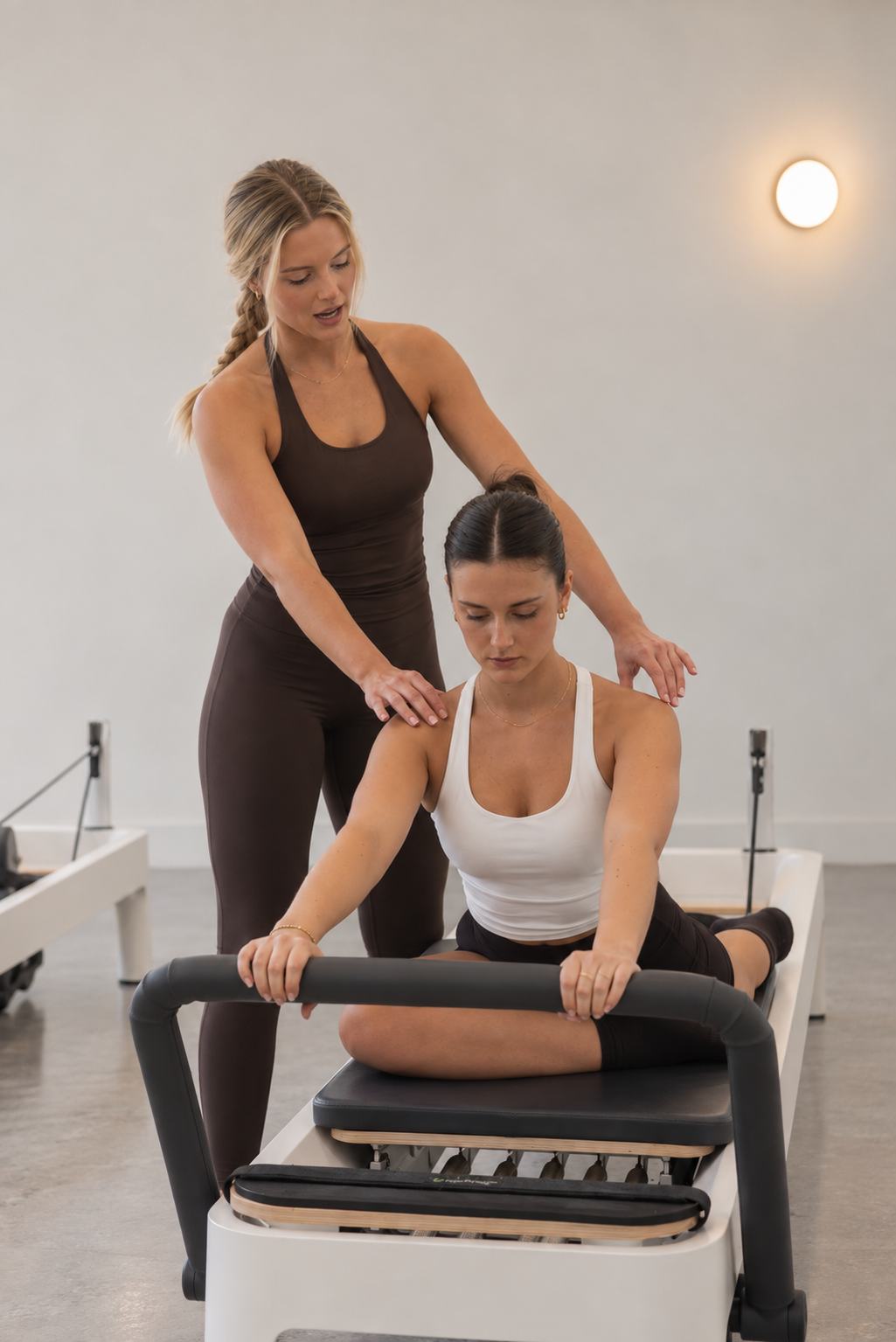
Open-Chain Knee Extension
A seated knee extension directly loads the quadriceps.
That can be extremely useful when someone needs to improve quadriceps strength.
It allows us to manipulate:
resistance
range
tempo
repetitions
without requiring the client to manage full-body balance or multi-joint coordination.
That can be valuable after injury or surgery when quadriceps weakness is significant.
Closed-Chain Knee Exercises
Closed-chain knee exercises include:
squats
lunges
step-ups
leg press
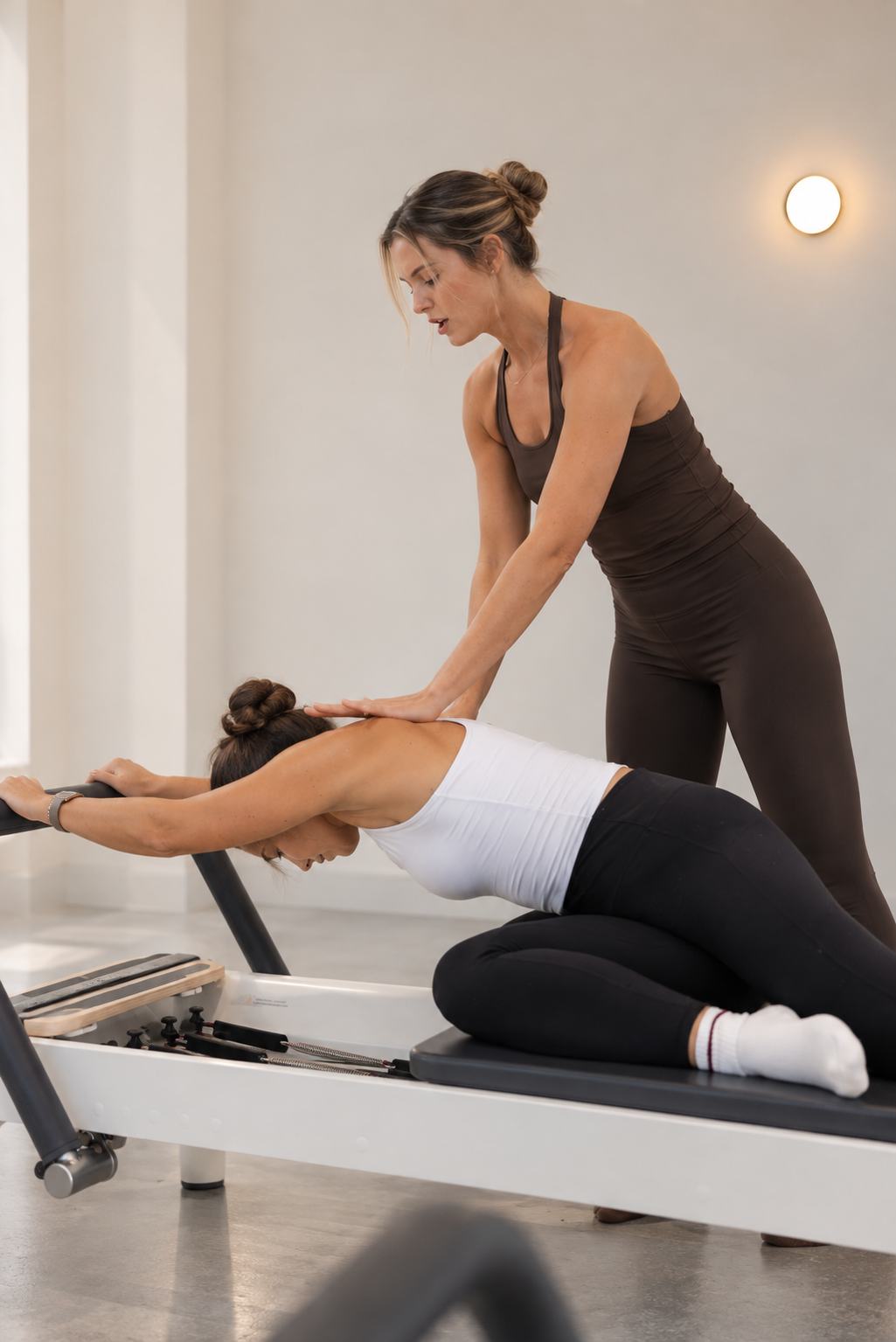
Reformer footwork
These exercises involve the hip, knee and ankle together.
They may also provide:
more co-contraction
greater whole-limb integration
balance challenge
functional task relevance
Both categories can belong in the same programme.
The correct choice depends on the stage of rehabilitation and the goal.
The Knee Does Not Need to Be Protected From Every Open-Chain Exercise
This is an important teaching point.
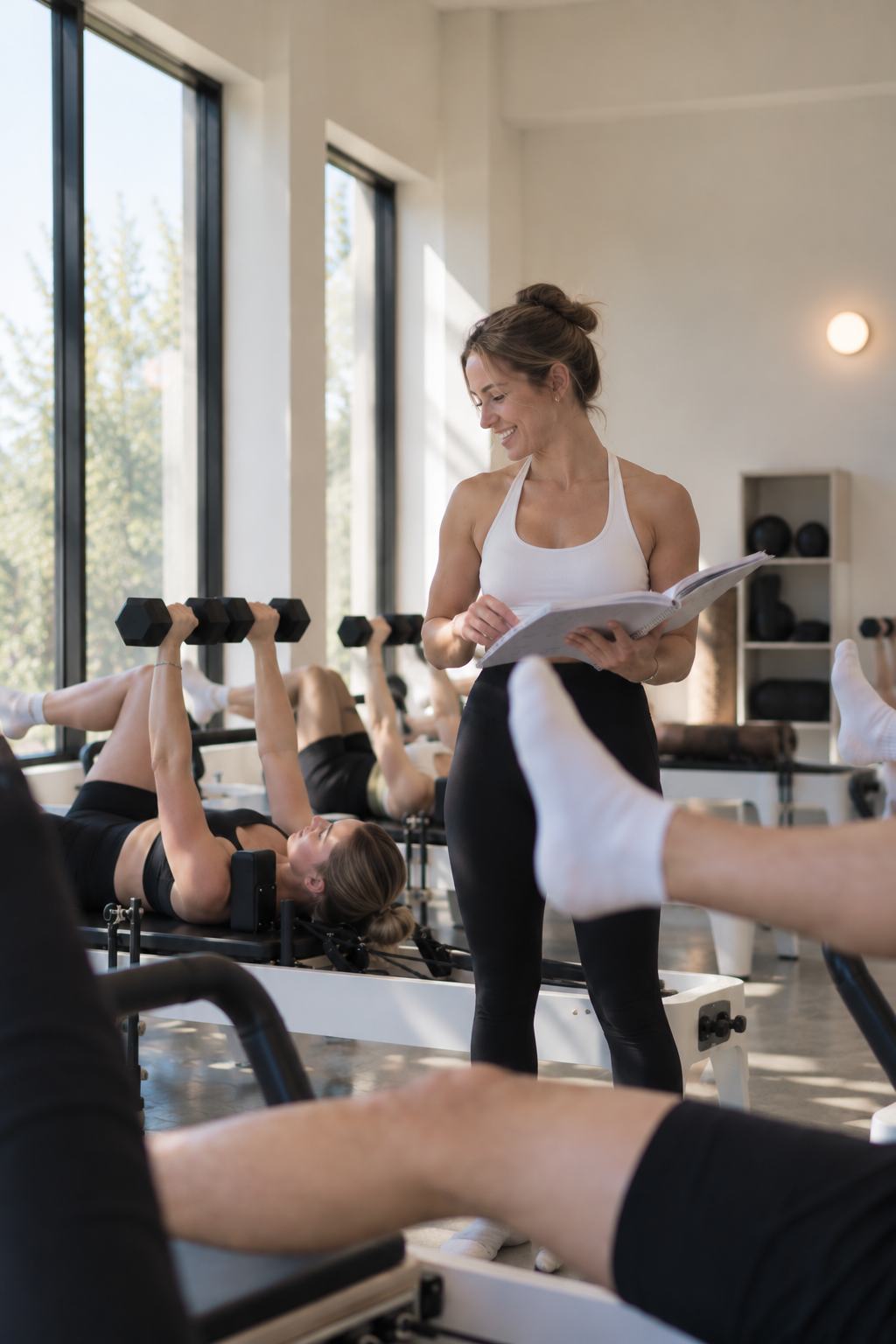
Exercise selection should be based on:
symptoms
stage of rehabilitation
tissue tolerance
strength
range
goal
not fear of a category.
An open-chain knee extension can be progressed carefully.
A closed-chain squat can also be inappropriate if the load, range or volume exceeds the client's current capacity.
No category guarantees safety.
Programming determines the dose.
Open Chain vs Closed Chain
for the Shoulder
The same logic applies to the shoulder.
Open-chain shoulder work includes:
arm straps
shoulder flexion
external rotation
lateral raises
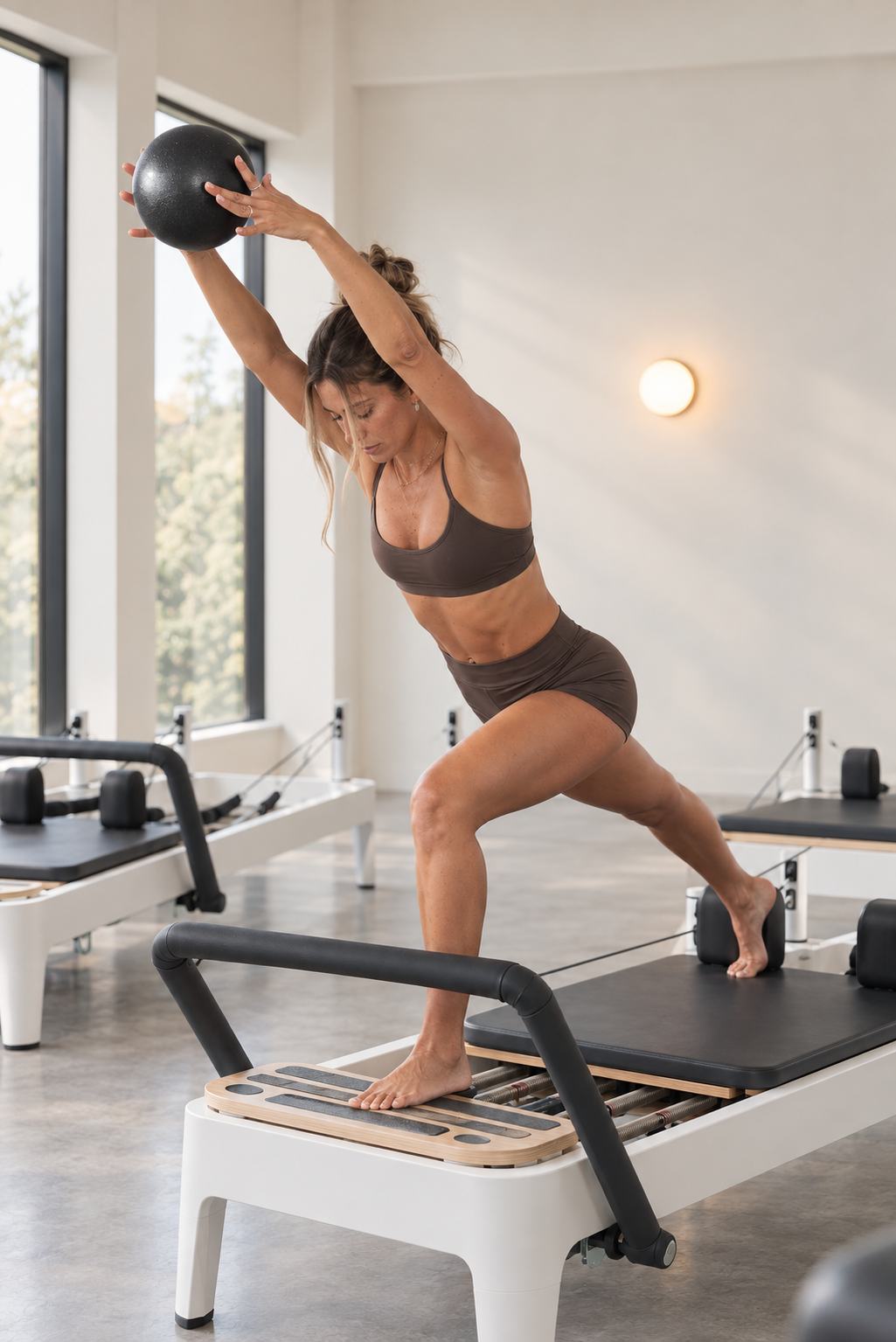
overhead pressing where the hand is free
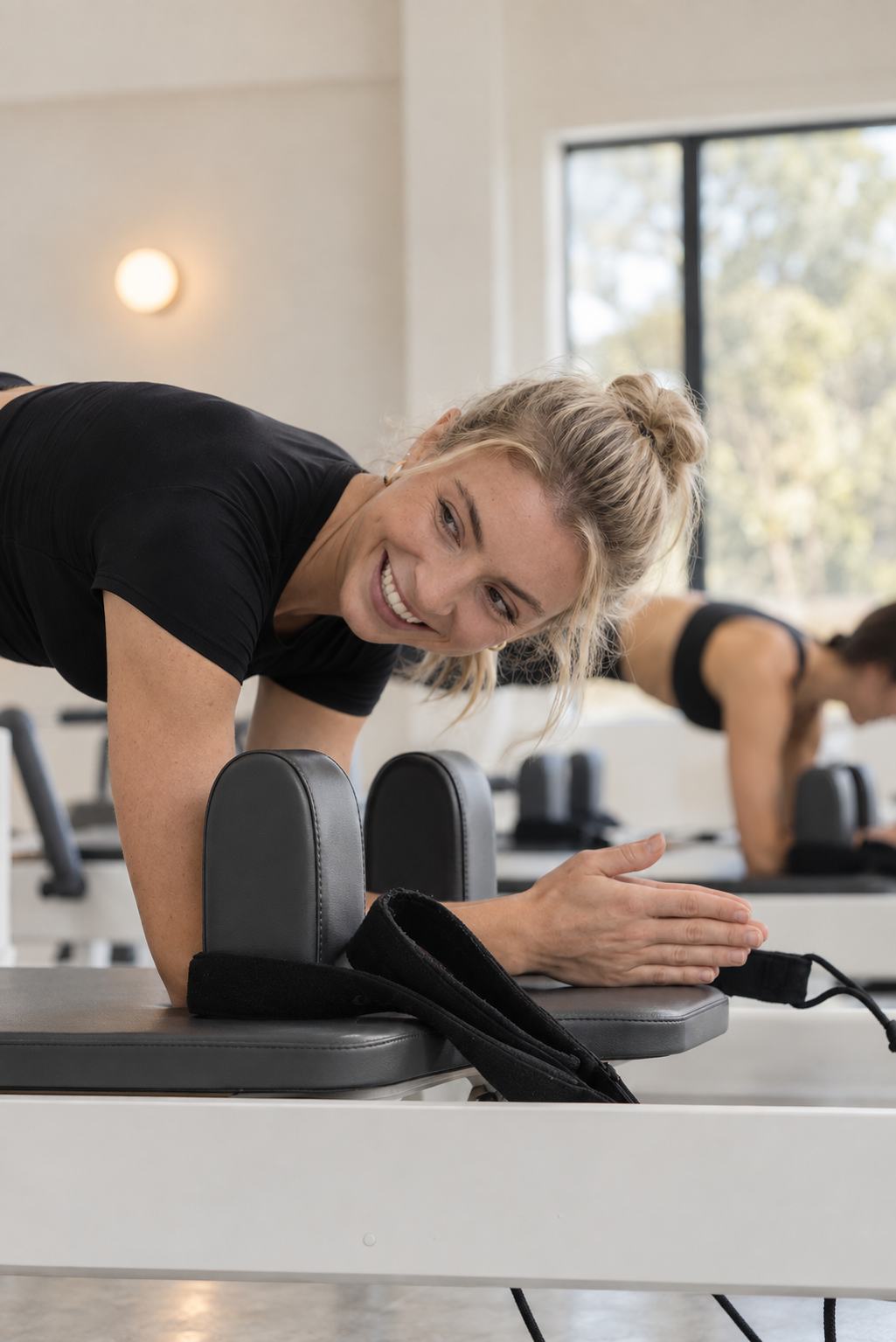
Closed-chain shoulder work includes:
plank
quadruped
push-up
hands pressing into the carriage
weight-bearing through the arms
Each creates different demands.
Why Closed-Chain Shoulder Work Can Be Useful
When the hand is fixed against a surface, the shoulder needs to manage force through the entire upper limb.
This may increase:
scapular control
proprioceptive input
co-contraction
weight-bearing tolerance
That can be useful for:
shoulder stability
return to weight-bearing
upper-body strength
rehabilitation
But closed-chain work is not automatically easier.
A plank may actually be far more demanding than a light open-chain rotator cuff exercise.
Why Open-Chain Shoulder Work Matters
Open-chain exercises allow us to train specific shoulder motions.
For example:
external rotation
flexion
abduction
overhead strength
This can help build:
rotator cuff capacity
deltoid strength
movement tolerance
control through range
A client may need both before returning to sport or overhead activity.
Open Chain vs Closed Chain
for the Hip
For the hip, we can think about:
Open Chain
side-lying hip abduction
hip extension with the leg free
leg circles
feet-in-straps work
Closed Chain
single-leg standing
squat
lunge
step-up
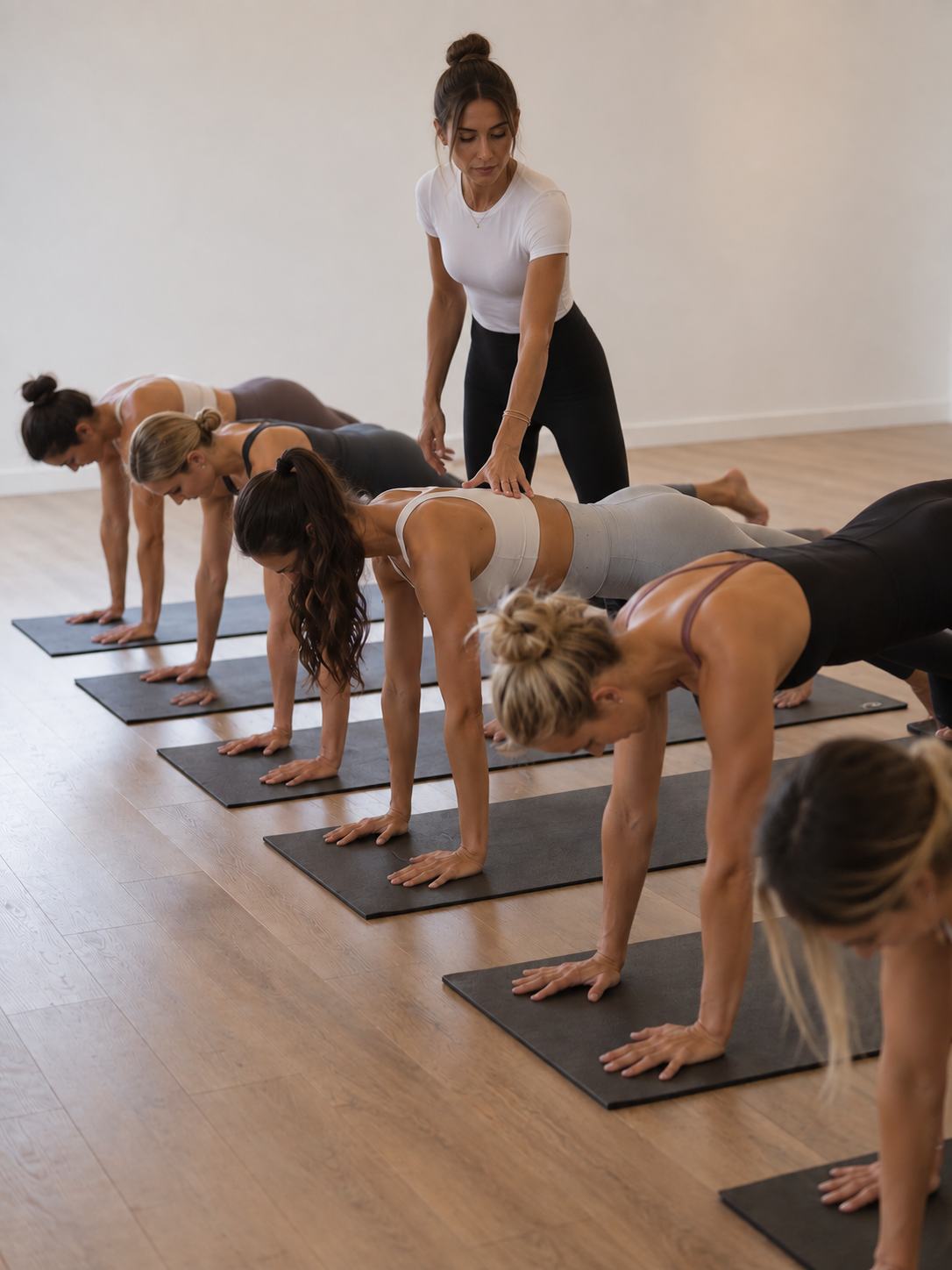
standing scooter
Open-chain hip work can help target specific muscle groups.
Closed-chain hip work introduces:
load through the foot
balance
pelvic control
multi-joint coordination
Again, neither replaces the other.
Why Proprioception Often Changes
in Closed Chain
Proprioception refers to your body's awareness of joint position and movement.
Closed-chain tasks often provide strong sensory input because the hand or foot is in contact with a surface.
For example, during a squat, the foot receives information from the floor.
During a plank, the hands receive pressure from the surface.
This can help the nervous system organise movement.
That is one reason closed-chain exercises are often used for balance and joint-control training.
More Proprioception Does Not Automatically Mean Better
It is tempting to hear that closed-chain exercises increase proprioceptive demand and assume that means they should always be preferred.
But if a client is so challenged by balance that they cannot load the target muscles meaningfully, the exercise may no longer match the goal.
For example:
A client needs quadriceps strength.
You put them in an unstable single-leg task.
They spend the whole exercise trying not to fall.
The quadriceps may not receive the best strength stimulus.
A more stable open-chain or supported closed-chain exercise may be more appropriate first.
Closed Chain Can Increase Compression
Closed-chain exercises can increase compressive forces through joints because the limb is bearing load against a surface.
That is not inherently negative.
Joints are designed to tolerate compression.
Appropriate compressive loading can be part of normal strength development.
But for a highly irritable joint, you may need to manipulate:
range
load
position
duration
Again, exercise type is only one part of the equation.
Open Chain Can Create Different Shear Forces
Open-chain movements can create different force patterns across a joint.
That is sometimes why certain ranges or exercises are modified in specific rehabilitation settings.
But this should not become:
"Open chain equals shear, therefore open chain is dangerous."
Human joints experience multiple types of force every day.
The important question is whether the dose is appropriate for that particular client.
Why Load Matters More Than Labels
Two exercises can both be closed chain but create completely different demands.
A supported mini squat is closed chain.
A heavily loaded split squat is also closed chain.
They are not remotely the same exercise intensity.
Likewise:
A light open-chain shoulder movement is open chain.
A heavily resisted open-chain shoulder press is also open chain.
The category tells you something about the mechanics.
It does not tell you the full training dose.
Exercise Selection Should Start
with the Goal
Before choosing open or closed chain, ask:
What am I trying to improve?
Possible goals include:
isolated strength
integrated strength
balance
mobility
proprioception
weight-bearing tolerance
sport preparation
pain reduction
confidence
endurance
Once the goal is clear, the choice becomes easier.
Example: Early Knee Rehabilitation
Imagine a client with significant quadriceps weakness after a knee injury.
You might begin with:
seated knee extension
supported Reformer footwork
low-load closed-chain work
Over time, you could progress to:
squats
lunges
step-ups
single-leg work
The programme moves from controlled loading into more integrated loading.
Open and closed chain work can coexist.
Example: Shoulder Rehabilitation
A client with shoulder pain may begin with:
open-chain rotator cuff strengthening
supported arm work
controlled range
Then progress into:
quadruped
plank
pushing
weight-bearing
overhead strength
Again, you are not choosing one category forever.
You are building capacity.
Example: Hypermobile Client
For a hypermobile client, closed-chain work may sometimes provide helpful sensory input and co-contraction.
But that does not mean they should only perform closed-chain exercises.
They may still need open-chain control and strength through range.
In fact, building active control at end range can be extremely important.
The right programme depends on what they actually need.
Example: Group Reformer Class
In a group class, you may have:
one client with knee pain
one client wanting strength
one client returning from injury
one highly experienced client
A single exercise category will not serve all of them equally.
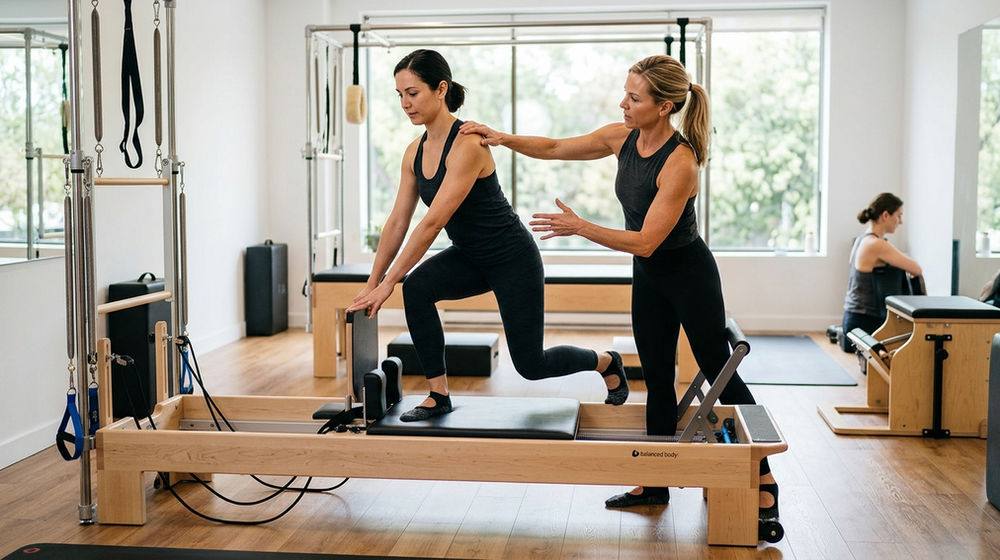
For example, during standing lunges:
One client may remain in supported closed-chain work.
Another may increase load.
Another may use a different range.
Another may substitute an open-chain lower-body exercise temporarily.
This is where understanding the mechanics gives you more options.
Open Chain Does Not Mean "Easy"
This is another misconception.
A heavy open-chain exercise can be extremely demanding.
Think about:
loaded knee extension
heavy shoulder abduction
resisted hamstring curl
strong feet-in-straps work
Open chain does not mean beginner.
Closed Chain Does Not Mean "Advanced"
Likewise, closed-chain does not automatically mean advanced.
A supported wall squat is closed chain.
A quadruped position is closed chain.
A basic Reformer footwork exercise is closed chain.
Difficulty depends on:
load
leverage
range
support
complexity
balance demand
not just whether the hand or foot is fixed.
Why "Functional" Needs More Context
Pilates instructors often say:
"I prefer closed-chain because it is more functional."
But functional for what?
A swimmer needs open-chain shoulder motion.
A football player needs kicking.
A runner needs swing-phase hip control.
A dancer needs free-limb control.
A person recovering from injury may need isolated strength before integrated loading.
Function is specific to the task.
Use Both When Both Are Useful
The best programmes rarely need to become ideological.
You do not need to be:
"Team open chain"
or
"Team closed chain".
A complete programme may deliberately use both.
For example, a lower-body session could include:
open-chain hip strengthening
closed-chain squat
open-chain knee extension
closed-chain step-up
Each exercise contributes something different.
How the Pilates Reformer Changes the Conversation
The Reformer is particularly interesting because spring resistance can provide both assistance and resistance depending on the exercise.
This means the same apparent movement category can feel completely different depending on:
spring setup
carriage direction
body orientation
lever length
This is why instructors need to understand biomechanics rather than memorising spring
colours.
The exercise name alone does not tell you the mechanical demand.
A Practical Framework for Instructors
When deciding whether to use an open- or closed-chain exercise, ask:
1. What Is the Goal?
Strength?
Balance?
Mobility?
Joint control?
Return to sport?
2. What Is the Client's Current Capacity?
Can they tolerate weight-bearing?
Can they balance?
Can they produce enough force?
3. What Is Irritable?
Does a particular joint position increase symptoms?
4. What Does the Exercise Actually Demand?
Do not assume based on category alone.
Consider:
load
range
lever
tempo
support
5. Does the Exercise Match the Goal?
If yes, keep it.
If not, choose something else.
The Biggest Mistake:
Turning Categories Into Rules
This is where instructors get stuck.
They learn:
"Closed chain is good for stability."
Then every stability exercise becomes closed chain.
They learn:
"Open chain isolates."
Then they avoid it because they want everything to be functional.
Good programming is more flexible than that.
Exercise categories should help you understand mechanics.
They should not become rules that stop you thinking.
Professional Reflection
When you next programme a Pilates session, look at your exercise selection.
How much open-chain work have you included?
How much closed-chain work?
More importantly:
Why?
What is each one contributing?
Could a client benefit from a more isolated strength exercise?
Could another benefit from more integrated weight-bearing?
Could the same goal be achieved through both?
That is the level of thinking that turns exercise selection into programming.
Key Teaching Takeaways
Open chain means the distal segment is relatively free to move.
Closed chain means the distal segment is relatively fixed against a surface.
Neither category is automatically better or safer.
Open-chain exercises can be excellent for isolated strength and targeted loading.
Closed-chain exercises often increase co-contraction, proprioception and multi-joint integration.
Closed chain is not automatically more functional.
Function depends on the client's actual goal.
Open-chain knee extension is not universally harmful.
Closed-chain squats are not universally appropriate.
The total exercise dose matters more than the category alone.
Both open- and closed-chain exercises can belong in rehabilitation.
Difficulty depends on load, range, leverage, support and complexity.
Exercise selection should be driven by the goal, not by rules.
Pilates instructors benefit from understanding mechanics rather than memorising categories.
Understand the Mechanics Behind the Exercise
Knowing whether an exercise is open chain or closed chain is useful.
Understanding why that changes the demand is far more useful.
That is where anatomy and biomechanics start becoming practical.
You stop asking:
"Is this exercise good or bad?"
and start asking:
"What does this exercise actually load, and does that match what my client needs?"
The Applied Anatomy & Biomechanics Certification through Body Form Education was created to help instructors develop exactly that level of reasoning.
Rather than memorising anatomy in isolation, the course focuses on how anatomy and biomechanics influence:
movement
exercise selection
compensations
load
regressions
progressions
If you want to understand why exercises feel different rather than simply memorising how to teach them, explore the Applied Anatomy & Biomechanics Certification through Body Form Education.
For instructors working regularly with pain, injury and rehabilitation, our Advanced Injury Modification Certification is also a natural next step.