Knee pain is one of the most frequently encountered presentations in a Pilates studio. It arrives in many forms: a client who reports a dull ache during footwork, someone returning after a knee reconstruction, an older client managing osteoarthritis, or a runner who has been told to do Pilates for their knees without further guidance.
As instructors, the challenge is not simply knowing which exercises to avoid. The real skill lies in understanding why certain movements provoke knee symptoms and using that understanding to modify purposefully, rather than reducing the client's programme to a list of avoidances.
This guide provides a practical framework for modifying reformer classes when clients present with knee pain, informed by physiotherapy principles and grounded in anatomy.
Understanding the Knee
in the Context of Pilates
The knee joint is a modified hinge joint that allows flexion, extension, and a small degree of rotation. It is supported by four primary ligaments (the ACL, PCL, MCL, and LCL), two menisci, and the surrounding musculature of the quadriceps, hamstrings, and calf group.
Importantly, the knee sits between two highly mobile joints: the hip above and the ankle below. This means that how the hip moves and how the foot contacts the footbar or platform directly influences the forces transmitted through the knee.
When instructors understand the knee as part of a kinetic chain rather than an isolated joint, modification decisions become significantly clearer and more purposeful.
Common Presentations
and Their Implications
Patellofemoral Pain
Patellofemoral pain arises from altered loading between the patella and the femoral groove. It is common in clients who run, cycle, or sit for extended periods. In a reformer setting, it is often provoked by:
High spring resistance during footwork in parallel
Full knee extension under load
Rapid transitions through range, such as jumping on the jump board
Positions that place the knee in valgus (caving inward)
Modifications for patellofemoral pain typically involve reducing spring tension, avoiding end-range knee extension under heavy load, and ensuring that the client's foot alignment and femoral rotation are carefully monitored throughout footwork.
Post Surgical Knee: ACL Reconstruction and Arthroplasty
Clients returning after knee surgery require a graduated approach to load. An ACL reconstruction client in the early stages of returning to exercise will have specific range of motion restrictions and load limitations provided by their surgical team and physiotherapist. These should always be followed.
As a general framework, early reformer work after surgery typically emphasises:
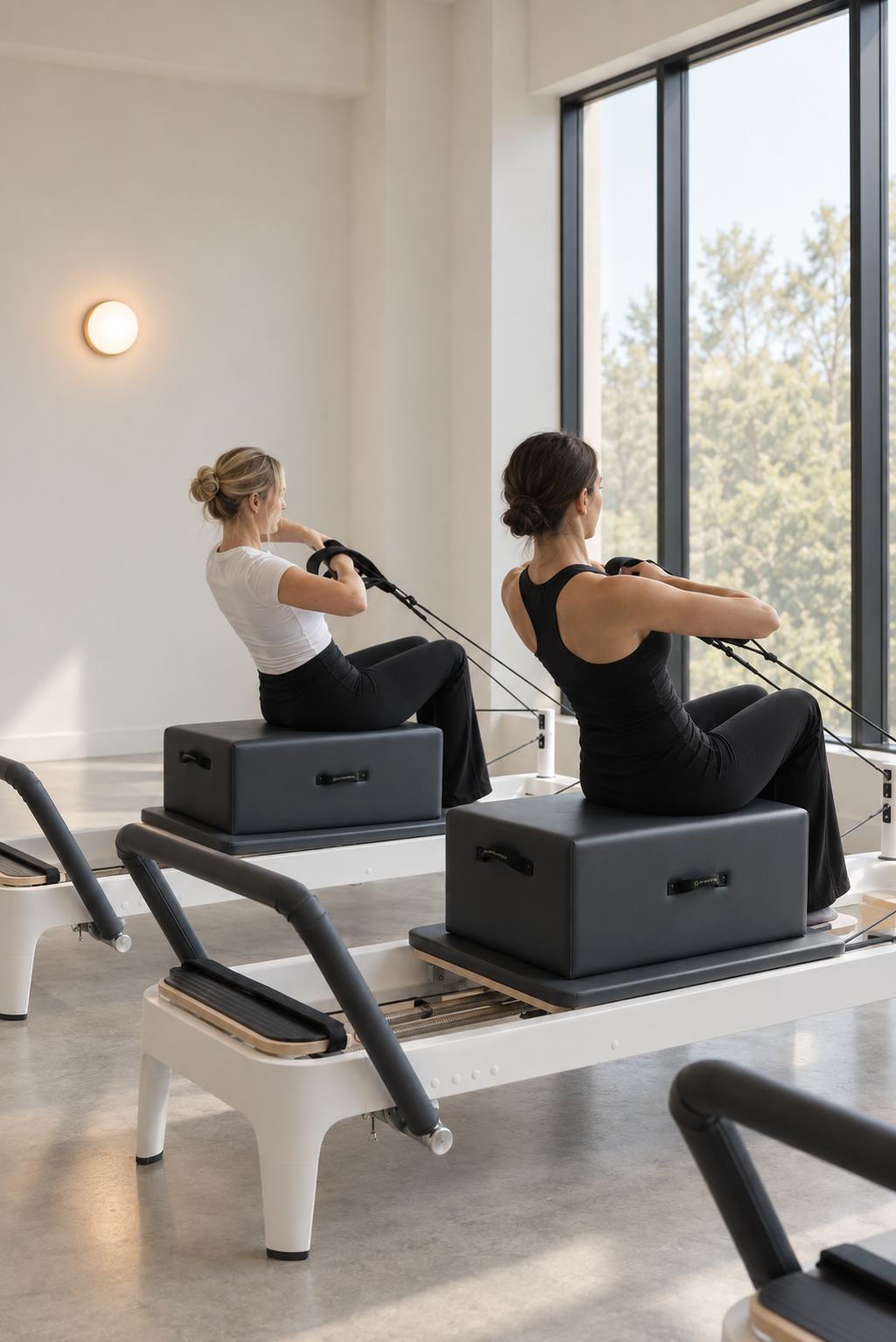
Closed chain exercises (foot in contact with the footbar or platform) in preference to open chain exercises
Partial range footwork with carefully controlled spring tension
Avoidance of high speed or ballistic loading until tissue capacity has been established
Hip and gluteal strengthening to support knee mechanics
Osteoarthritis of the Knee
Clients with knee osteoarthritis often benefit considerably from structured Pilates, but the approach requires care. Exercise is one of the most strongly supported interventions for osteoarthritis management. The goal is to load the joint appropriately, not to avoid it.
Key principles for clients with knee osteoarthritis include:
Movement is beneficial; prolonged static positions or complete avoidance tends to worsen symptoms over time
Strengthening the quadriceps and gluteals reduces compressive load on the knee during daily activity
Symptoms should be monitored through and after exercise. A mild and temporary increase in joint awareness is generally acceptable; sharp pain or persistent swelling after exercise is not
Range of motion in both flexion and extension should be maintained within a comfortable range
Practical Modifications
for Common Reformer Exercises
Footwork
Footwork is the exercise most commonly affected by knee pain presentations. Useful adjustments include:
Reducing spring resistance, which is particularly relevant for patellofemoral pain and post surgical presentations
Keeping the knee within a comfortable range of motion rather than driving to full extension or full flexion under load
Checking foot placement on the footbar. A foot positioned too far forward places the knee in greater flexion; a foot placed too far back shifts the load pattern
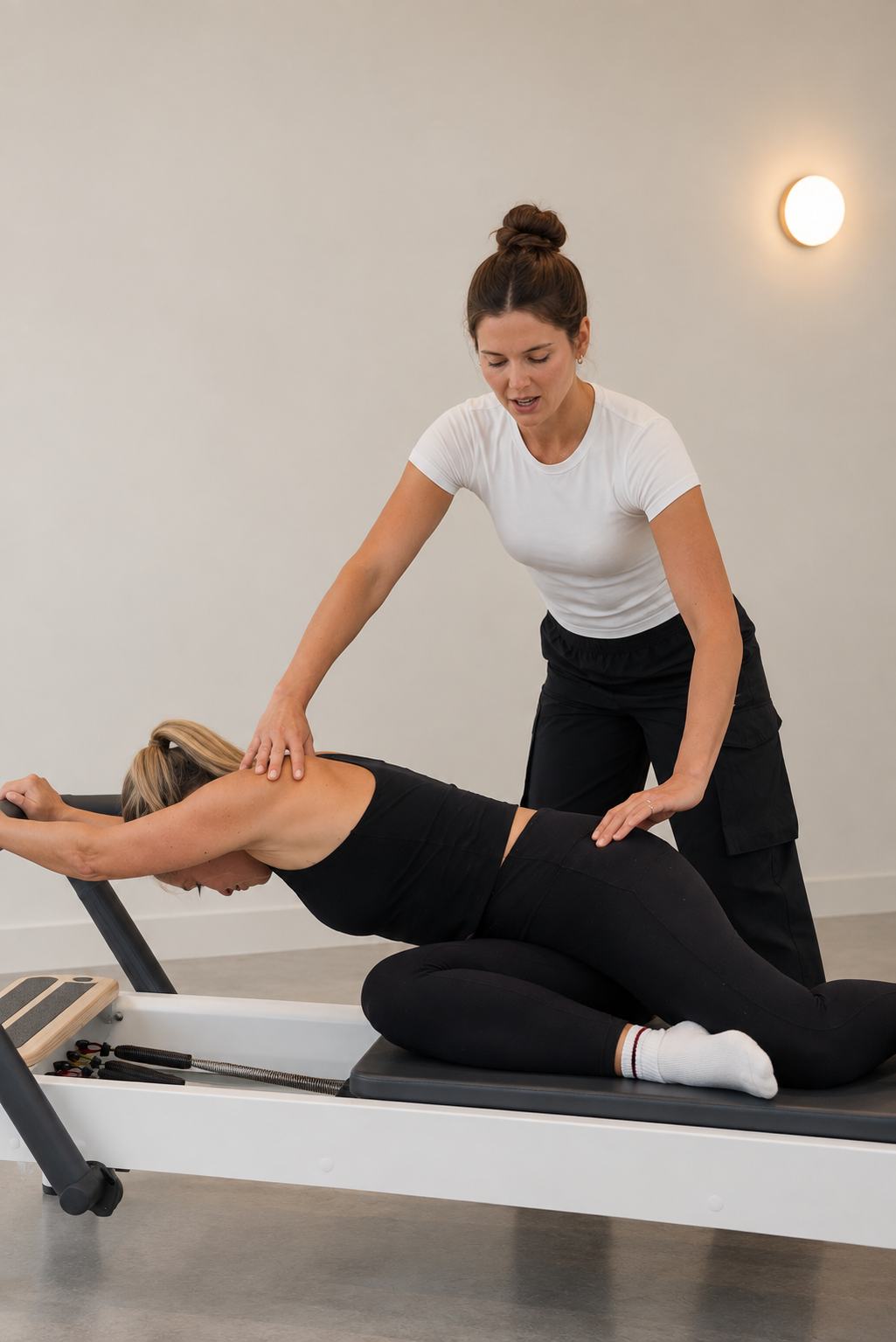
Monitoring femoral rotation throughout. External rotation at the hip without deliberate control is a common compensation pattern that alters knee loading
Leg Circles
Leg circles in straps place the hip through a full arc of movement while the knee is extended. For clients with medial or lateral knee discomfort, the rotational component can provoke symptoms. Reducing the arc, progressing from small to large range, and ensuring the hip is initiating the movement rather than the knee accommodating for a lack of hip mobility are all useful strategies.
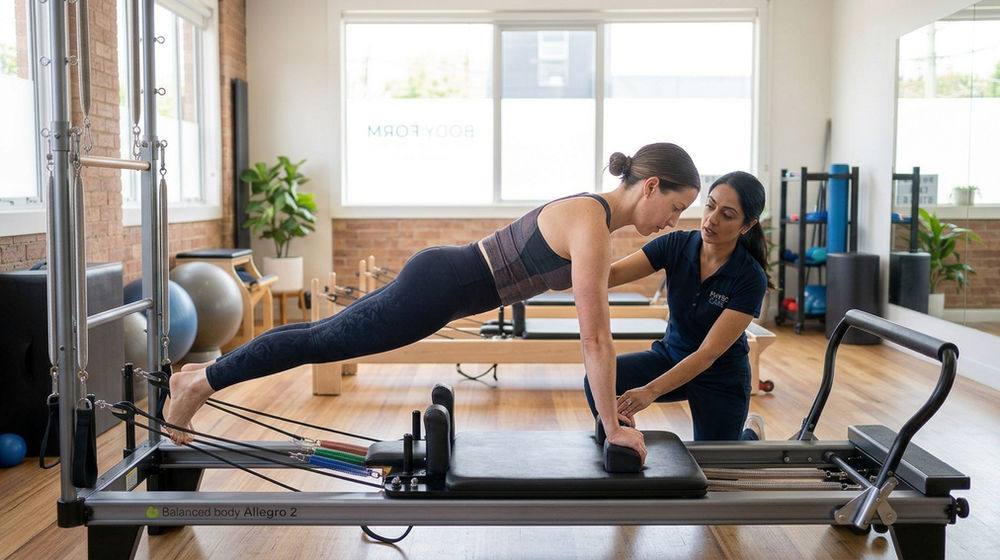
Long Stretch and Plank Variations
For clients with significant knee sensitivity, kneeling alternatives to plank variations can reduce direct load through the joint. A folded mat or additional padding under the knees is a simple but effective adjustment that allows the client to participate fully without provocation.
When to Refer
Not every knee presentation in a Pilates class requires modification alone. Certain clinical signs warrant referral to a physiotherapist before continuing:
Significant swelling around the joint
Locking or catching sensations during movement
Pain that is worsening over a series of sessions despite modification
An acute injury that has not been assessed by a health professional
Any symptoms that fall outside the scope of what a Pilates instructor can reasonably manage
Referring a client appropriately is not a failure of skill. It is the mark of a professionally grounded instructor who understands the boundaries of their role and the value of collaborative care.
Reflection
Instructors who can modify meaningfully for knee pain are consistently more valued by their clients, their studios, and the health professionals who refer to them. The ability to stay within scope while still delivering a genuinely useful session is a skill that requires ongoing investment.
It requires understanding anatomy, understanding load, and understanding when a symptom reflects a normal training response versus when it signals a need for clinical review. These are not skills that are typically covered in depth in initial Pilates certification. They require continuing professional development.
The Injury Modification Certification through Body Form Education is designed specifically to help instructors build this kind of clinical foundation. It covers the most common musculoskeletal presentations encountered in Pilates studios, including the knee, and provides a framework for making modification decisions with confidence and clinical reasoning.
The course is delivered fully online, at your own pace, with no expiry date.
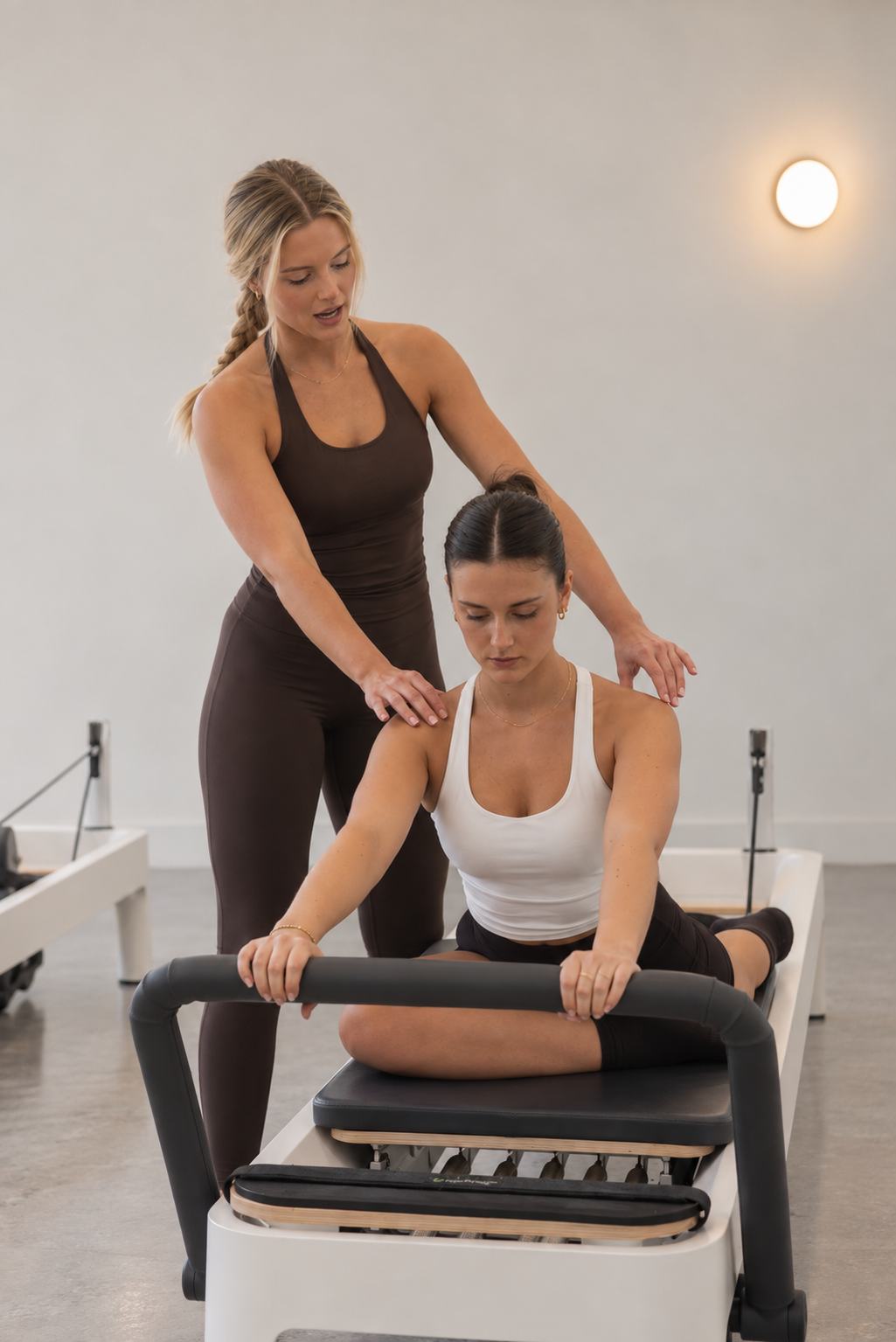
Key Teaching Points
Knee pain modification is not about removing exercises. It is about adjusting load, range, and setup to match the client's current capacity
The knee is part of a kinetic chain. Hip and ankle mechanics directly influence how the knee is loaded
Patellofemoral pain, post surgical presentations, and osteoarthritis each require a different approach
Any client with an acute injury, significant swelling, or worsening symptoms despite modification should be referred to a physiotherapist
Instructors who modify with clinical reasoning rather than avoidance deliver significantly better outcomes for their clients