A Pilates class can contain excellent exercises and still be poorly programmed.
The issue is not always what you taught.
Sometimes it is when you taught it.
Exercise order changes the training stimulus.
It changes:
fatigue
force production
technique
motor learning
balance
coordination
muscular recruitment
perceived difficulty
how much capacity is left for the exercises that come later
And yet exercise sequencing in Pilates is often discussed almost entirely from a flow perspective.
Does the transition look smooth?
Can I move from one exercise to the next without changing springs?
Can I keep the class moving?
Can I avoid having clients turn around too many times?
Those things matter.
Class flow matters.
But flow should not be the only thing determining exercise order.
Because a beautifully flowing class can still be physiologically poorly sequenced.
The more useful question is:
What do I want my clients to be able to perform well, and where should that exercise sit in the session to give them the best chance of doing it?
That is where sequencing becomes programming.
Exercise Order Is a Programming Variable
When we talk about programming variables, instructors usually think about:
resistance
repetitions
tempo
range
spring settings
exercise selection
But order matters too.
If you perform an exercise first, the client approaches it relatively fresh.
If you perform the same exercise 35 minutes into class, after fatiguing the same muscle groups, it may feel completely different.
That means:
exercise order changes exercise intensity.
The exercise itself may be identical.
The body performing it is not.
Why Fatigue Carries Forward
Fatigue does not disappear the moment you finish one exercise.
If you fatigue the glutes, quadriceps, shoulders or trunk in one block, that affects the exercises that follow.
This can be useful.
Or it can undermine your next exercise.
Imagine you programme:
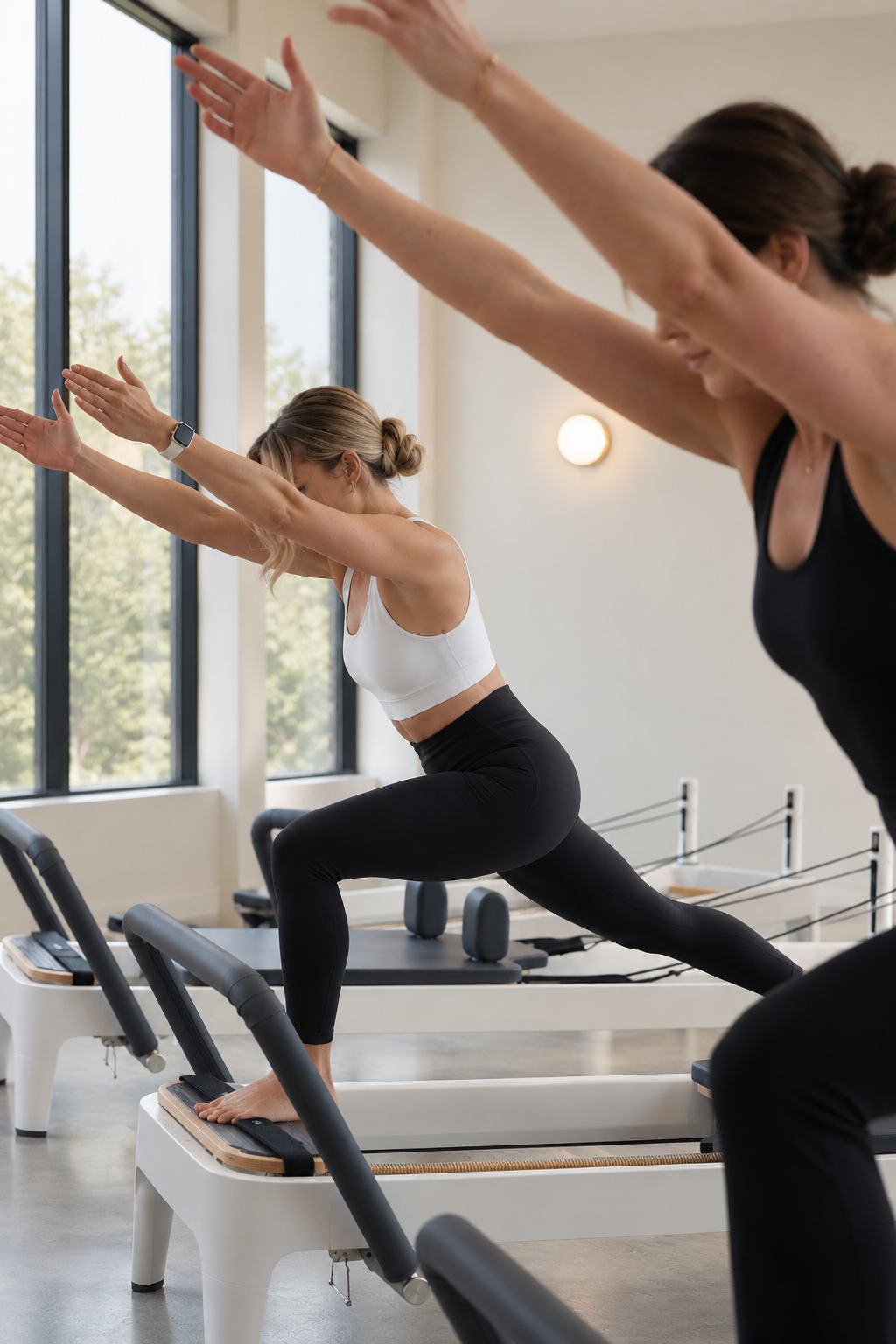
side-lying glute work
heavy standing lunges
unilateral scooter work
By the time the client reaches the standing lunge, the glutes may already be significantly fatigued.
If your goal was to build maximal lower-body strength in the lunge, that fatigue may reduce:
load tolerance
movement quality
balance
force production
The lunge may feel harder.
But feeling harder does not automatically mean it is creating a better strength stimulus.
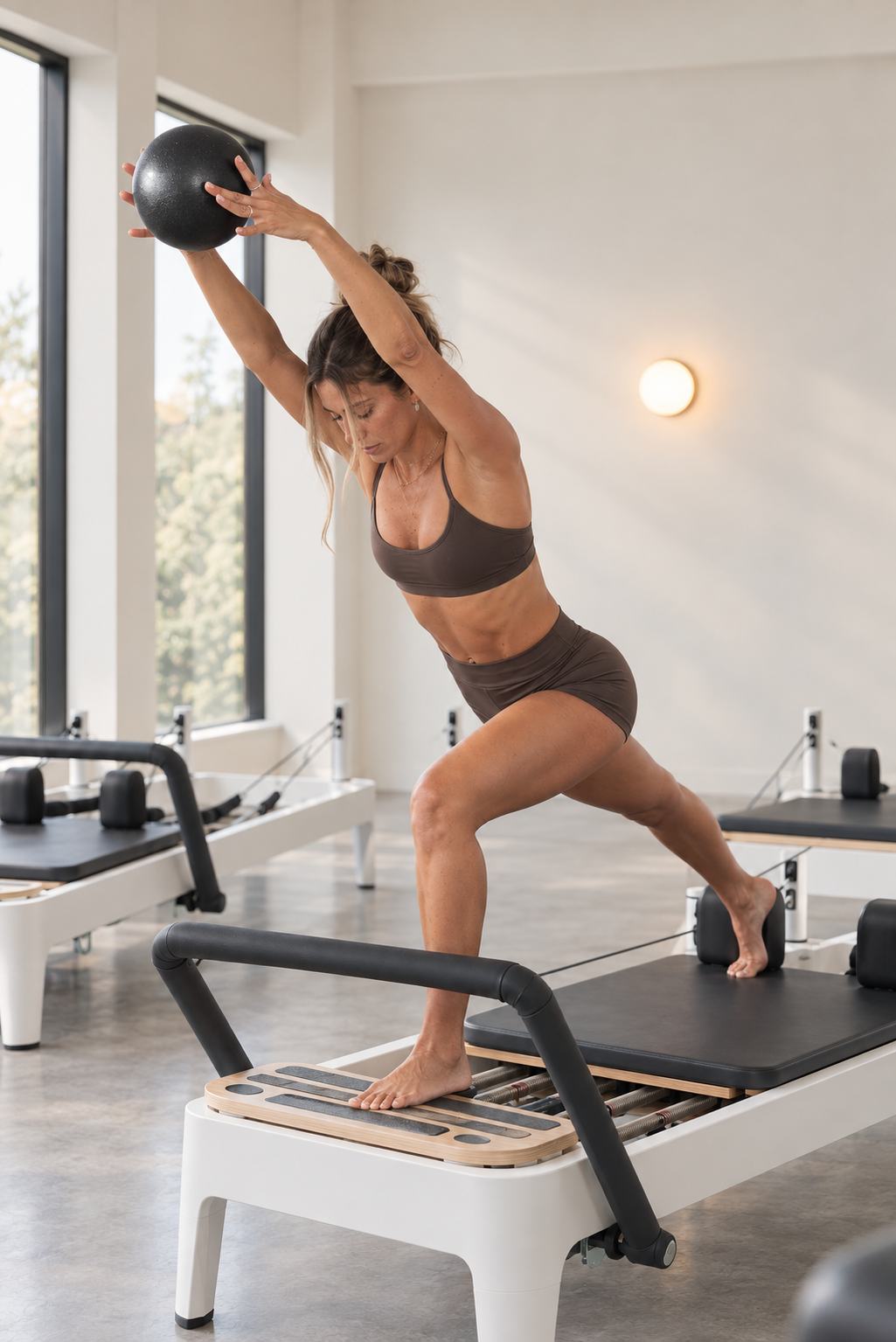
Sometimes it simply means the client is tired.
Harder Does Not Always Mean Better
This is one of the most important concepts in class programming.
Pre-fatiguing a muscle can make a later exercise feel significantly more difficult.
That can be useful when it is intentional.
But if your primary goal is strength, you often want the client to be able to produce meaningful force.
If they are already exhausted before the priority exercise begins, they may be forced to:
reduce resistance
shorten range
compensate
stop early
The exercise feels hard, but the actual external load may be lower.
So before celebrating that the class "burns", ask:
Did the exercise become harder because the training stimulus improved, or because I fatigued the client before they reached it?
Those are not the same thing.
Priority Exercises Usually Belong Earlier
A useful strength-programming principle is to place the highest-priority work earlier in the session.
This is not an absolute rule.
But it is often a good starting point.
If the main goal of the session is:
lower-body strength
a new skill
heavy pulling
balance
power
consider placing that work before large amounts of fatigue accumulate.
Clients are generally better able to:
learn
coordinate
produce force
tolerate load
maintain quality
when they are relatively fresh.
What Is the Priority of the Session?
Before sequencing a class, ask:
What matters most today?
If everything in the class is equally important, nothing is actually a priority.
Perhaps today's main focus is:
glute strength
unilateral lower-body control
shoulder strength
spinal mobility
balance
trunk endurance
motor learning
Once you know the priority, the order becomes easier to justify.
Example: Glute Strength
Imagine your goal is glute strength.
You have three exercises available:
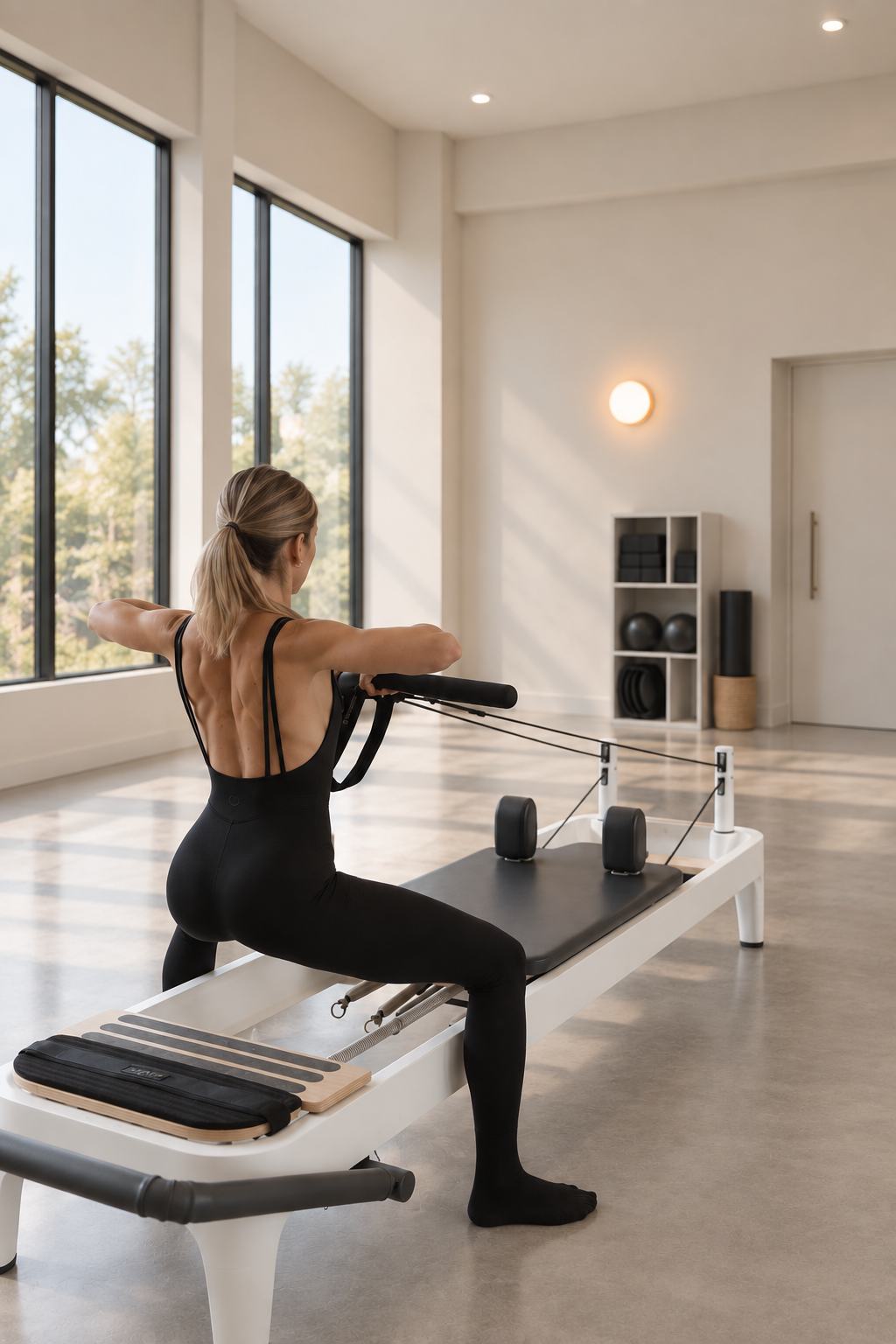
heavy Reformer lunge
side-lying hip abduction
bridge pulses
A common Pilates sequence might be:
side-lying burn
bridge pulses
standing lunge
By the time the client reaches the lunge, the glutes are exhausted.
If the lunge is the exercise where you can create the greatest meaningful load, this sequence may undermine the priority.
A better strength-focused sequence might be:
heavy lunge
bridge
side-lying accessory work
Now the highest-load exercise is performed while the client is fresh.
The smaller accessory exercises come later.
Pre-Fatigue Is Not Always Wrong
Pre-fatigue can be purposeful.
You may deliberately fatigue a muscle before a compound exercise if your goal is to:
increase local muscular fatigue
reduce the external load required
change the perceived challenge
create variety
But it should be intentional.
The problem is when instructors pre-fatigue without realising they are doing it.
If you want the client to lift or push more load later, pre-fatiguing the same muscle first may work against that goal.
Exercise Order Changes Muscle Recruitment
As fatigue develops, the body often finds different ways to complete movement.
For example, after significant glute fatigue, a client may rely more heavily on:
hamstrings
quadriceps
lumbar extension
trunk lean
Likewise, after repeated plank work, a client may alter shoulder mechanics during pulling exercises.
This means sequencing can influence which movement strategies appear later in class.
That is not automatically bad.
But it should be considered.
Example: Upper Body Programming
Imagine this sequence:
long plank series
push-ups
kneeling arm work
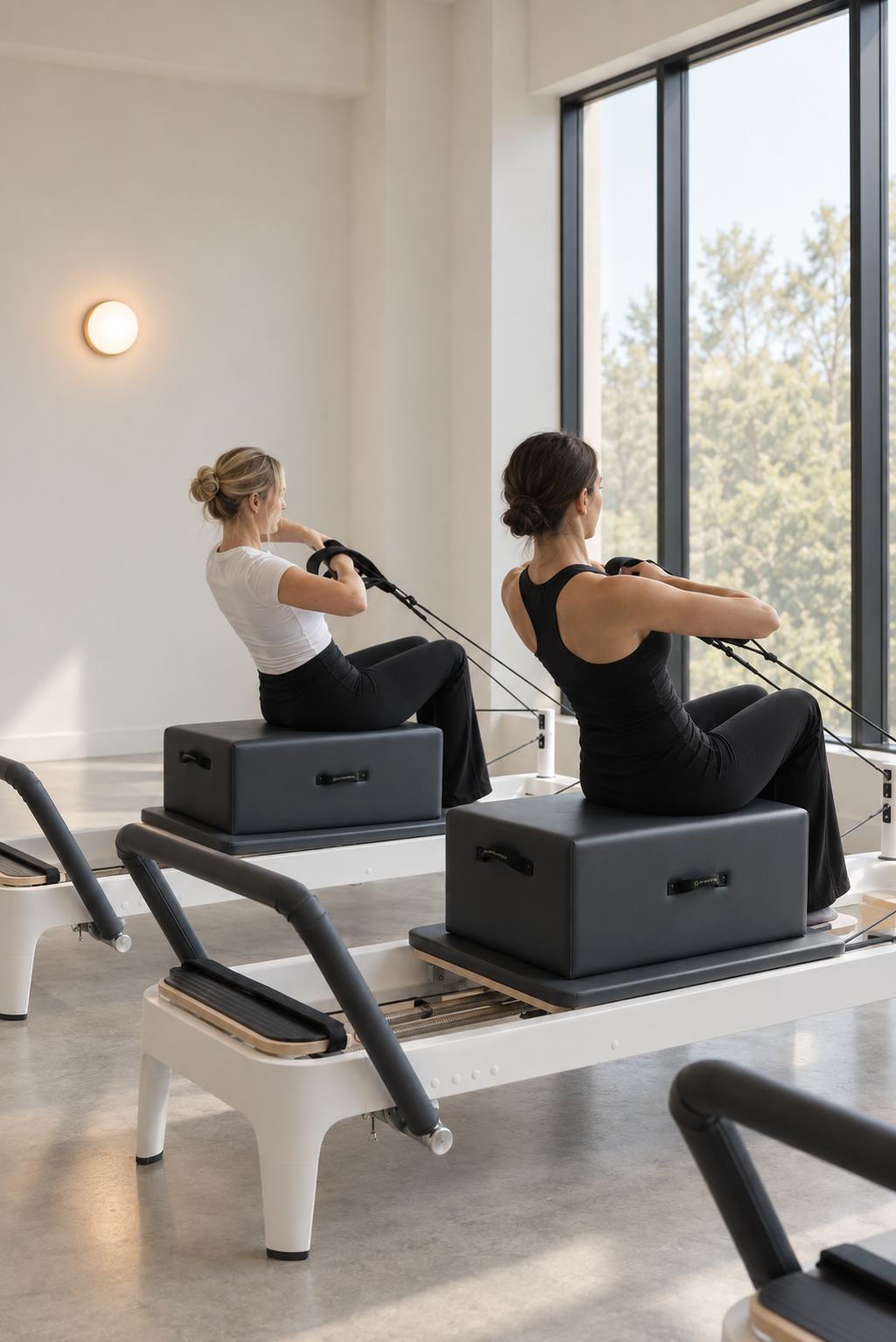
heavy rows
By the time the client reaches the rows, the shoulder girdle may already be fatigued.
If the goal is upper-body endurance, this may be appropriate.
If the goal is building pulling strength, perhaps the rows should come earlier.
A different sequence could be:
heavy row
arm press
plank
endurance finisher
Same exercises.
Different training emphasis.
Skill Acquisition Should Be Considered Too
Exercise order matters for learning, not just strength.
When a client is learning a new movement, they often perform better when:
attention is high
fatigue is low
the task is introduced clearly
unnecessary competing demands are minimised
If you introduce a highly technical standing exercise after 45 minutes of fatigue, balance challenge and cognitive load, you may be making the learning environment unnecessarily difficult.
Sometimes the client does not need a better cue.
They simply needed to learn the exercise earlier.
New Exercises Versus Familiar Exercises
A useful general framework is:
New or highly technical exercises earlier.
Familiar, lower-skill exercises later.
Again, this is not a rigid rule.
But it can help.
A familiar bridge can usually be performed effectively under some fatigue.
A new single-leg standing sequence may not.
This is especially relevant for:
beginners
older adults
clients with balance concerns
injury rehabilitation
complex choreography
Motor Learning and Fatigue
Fatigue can affect:
attention
proprioception
coordination
movement consistency
This means the later an exercise appears, the more fatigue may influence how it is performed.
If a client is repeatedly struggling to learn a movement, try changing where it appears in
the class.
You may discover that the problem was not understanding.
It was timing.

Warm-Ups Should Prepare, Not Exhaust
A warm-up should generally prepare the client for what is coming.
It should increase:
temperature
movement exposure
confidence
relevant mobility
relevant muscle activity
But some Pilates warm-ups turn into a workout before the workout.
If your client has already completed:
high-repetition footwork
bridge pulses
abdominal fatigue
plank holds
before the main strength block begins, they may already be significantly tired.
That may be fine if endurance is the goal.
But if the goal is strength, the warm-up may be stealing capacity from the work that matters most.
"Activation" Before Strength
Pilates instructors often programme activation exercises before larger movements.
For example:
clams before squats
side-lying abduction before lunges
band work before Reformer leg work
rotator cuff activation before upper-body strength
There can be value in this.
Activation drills may:
help a client learn a movement
increase awareness
prepare a joint
provide low-load rehearsal
But more is not always better.
If your activation block becomes:
40 repetitions
pulses
holds
another set
more pulses
you may no longer be activating.
You are fatiguing.
That changes the exercise that follows.
Ask What the Activation Exercise Is for
Before adding activation work, ask:
Is the goal awareness?
If yes, you may only need a small dose.
Is the goal strength?
Then perhaps the activation exercise itself should be loaded more meaningfully.
Is the goal fatigue?
Then own that.
The word "activation" should not become an excuse for endless low-load volume.
Exercise Sequencing for Strength
If strength is the priority, a useful approach is often:
warm up
perform the highest-priority strength work
complete secondary strength work
add accessories
finish with lower-priority fatigue or conditioning
For example:
dynamic warm-up
loaded lunges
Reformer footwork
side-lying hip work
finisher
This gives the client the best chance to perform the highest-value strength work well.
Exercise Sequencing for Endurance
If muscular endurance is the goal, the structure may look different.
You may deliberately accumulate fatigue.
For example:
moderate lower-body work
repeat similar patterns
reduce rest
use longer sets
finish with sustained work
In this context, carrying fatigue forward is not necessarily a problem.
It may be part of the desired stimulus.
Exercise Sequencing for Mobility
Mobility work can sit in different places depending on the goal.
It may be used:
early to prepare range
between strength blocks
later as recovery
within a movement sequence
But avoid assuming mobility always needs to come first.
If someone already has sufficient range, spending 20 minutes stretching before strength work may not be necessary.
Again, sequence should reflect need.
Exercise Sequencing
for Rehabilitation
In rehabilitation, the highest-priority capacity work often deserves early attention.
For example, if a client is rebuilding quadriceps strength after knee injury, the key quadriceps exercise may belong early in the session.
Accessory work can come later.
Similarly, if the primary goal is shoulder strength, do not exhaust the shoulder with unrelated plank endurance before the main strengthening block unless you have a specific reason.
Pain and Exercise Order
Symptoms may also change throughout a session.
Some clients:
feel better once warmed up
tolerate more range later
feel worse as fatigue accumulates
This means sequencing may need to reflect symptom behaviour.
For a client who moves better after gentle loading, priority work may sit after a brief preparatory block.
For someone whose symptoms increase with cumulative fatigue, high-value work may need to come earlier.
This is where clinical reasoning matters.
Unilateral Sequencing Matters Too
Imagine a unilateral sequence:
right sidebilateral exerciseleft side
The second side is not entering the exercise under identical conditions.
By then the client has:
completed one unilateral side
completed the bilateral exercise
accumulated more fatigue
This does not mean unilateral sequencing is wrong.
But it does mean instructors should understand the fatigue asymmetry it creates.
If the exercise is highly strength-focused, you may occasionally alternate which side begins first across sessions.
Always Starting on the Same Side
If every class always begins unilateral work on the right:
the right side is consistently fresher.
The left side is consistently more fatigued.
Over one class, that may be insignificant.
Across repeated sessions, it is worth considering.
Simple solution:
alternate starting sides across sessions where appropriate.
Flow Versus Physiology
Pilates instructors understandably value flow.
A class with constant equipment changes and awkward transitions can feel disjointed.
But sometimes instructors prioritise flow so heavily that the programme becomes physiologically illogical.
For example:
"We're already kneeling, so I'll do every kneeling exercise now."
That may produce:
large amounts of shoulder fatigue
repeated wrist loading
excessive quadruped volume
before the client reaches other work.
Smooth transitions are valuable.
They should not dictate the entire programme.
You Do Not Need to Eliminate All Spring Changes
Sometimes instructors avoid a useful exercise because changing springs would interrupt flow.
But changing a spring takes seconds.
If the spring change allows you to create a significantly better training stimulus, it may be worth it.
Clients generally care more about receiving an effective class than about whether every transition was seamless.
Efficiency matters.
Effectiveness matters more.
Local Fatigue Versus Global Fatigue
Not all fatigue is the same.
Local fatigue occurs predominantly in one muscle group.
For example:
glutes burning after side-lying work.
Global fatigue affects the whole system.
For example:
after repeated standing work, planks and high-effort sequences.
This distinction matters because local fatigue can influence the very next exercise even when the client does not appear globally tired.
Push and Pull Sequencing
Exercise order can also help distribute fatigue.
For upper-body programming, you might alternate:
push
pull
rather than completing every pushing exercise together.
Likewise, you may alternate:
upper body
lower body
trunk
depending on the goal.
This can give local muscle groups time to recover while the class continues moving.
Lower Body Sequencing
The same principle applies to the legs.
Instead of:
squat
lunge
split squat
scooter
side-lying glutes
all consecutively, you might intersperse other work depending on the desired stimulus.
But if the goal is a deliberate lower-body strength block, grouping them may be exactly what you want.
Again:
There is no universally correct sequence.
There is a sequence that best matches the goal.
Rest Is a Programming Variable Too
Pilates classes often include almost no deliberate rest.
Clients move continuously from one exercise into another.
That can create a great sense of flow.
It can also turn a strength-focused class into more of an endurance session.
If you want clients to produce higher force, some recovery may be useful.
Rest does not have to mean everyone stands around for three minutes.
You can programme active recovery.
For example:
upper-body work between lower-body sets
mobility between strength blocks
opposite muscle groups
The key is understanding whether the target muscle actually has time to recover.
Why Constant Flow Can Limit Strength
To produce meaningful strength, the client needs some capacity available.
If every exercise immediately follows another without recovery, performance may become limited by general fatigue.
The client may still work very hard.
But the load they can tolerate may decrease.
If strength is the outcome, this matters.
Exercise Order and RPE
RPE — Rate of Perceived Exertion — is influenced by where an exercise appears in the session.
A lunge may feel like:
RPE 6 early in class.
The exact same lunge may feel like:
RPE 9 after 30 minutes of lower-body fatigue.
That does not mean the external load increased.
It means the client's available capacity decreased.
This is important when interpreting exercise intensity.
Exercise Order and Reps in Reserve
Reps in Reserve also changes with fatigue.
A client might have five repetitions left early in the session.
After several similar exercises, they may have only one.
Again, the exercise did not change.
The context did.
This is why the order of exercises is inseparable from load prescription.
Should Compound Exercises Come First?
In traditional strength programming, larger multi-joint exercises are often performed before smaller accessory work.
There is logic to this because compound exercises often:
require more coordination
allow more load
involve more muscle mass
benefit from being performed fresh
Pilates does not need to copy strength training blindly.
But the principle is worth understanding.
If you want a client to perform a demanding lunge well, doing it before 15 minutes of local glute fatigue may make sense.
Should Core Work Always Come First?
Not necessarily.
Pilates has a strong tradition of beginning with abdominal work.
But if the session's primary goal is heavy standing strength, fatiguing the trunk significantly before that work may reduce performance.
That does not mean you should never start with core exercises.
It means the sequence should reflect the objective.
Should Mobility Always Come First?
Again, no.
Some mobility may help prepare a client.
But doing extensive static stretching before strength work is not automatically necessary.
If the client already has sufficient range, they may benefit more from:
dynamic movement
rehearsal
gradual loading
rather than spending a large portion of the session increasing range they do not need.
A Practical Example:
Poorly Sequenced Strength Class
Imagine the goal is lower-body strength.
The class goes:
5 minutes side-lying glutes
bridge pulses
squat pulses
scooter burn
heavy standing lunge
footwork
By the time the client reaches the heavy lunge and footwork, their legs are exhausted.
They may need to reduce springs.
Technique may decline.
The highest-load exercises happen when capacity is lowest.
The class is hard.
But is it optimised for strength?
Probably not.
A Better Strength Sequence
You could instead structure:
progressive warm-up
heavy standing lunge
loaded footwork
bridge strength
side-lying accessory work
finisher
Now the high-priority strength exercises happen earlier.
Accessory fatigue comes later.
Same broad exercises.
Different programming outcome.
Practical Example: Shoulder Strength
Goal:
Improve upper-body pulling strength.
Less effective sequence:
plank series
push-ups
shoulder holds
heavy rows
Alternative:
shoulder mobility/warm-up
heavy rows
complementary arm work
plank series
endurance finisher
The client can now produce more force in the exercise that matters most.
Practical Example: New Standing Skill
You want to teach a new standing Reformer sequence.
If you teach it at minute 45 after:
lunges
scooter
side splits
balance work
the client is already fatigued.
Their balance is reduced.
Attention may be lower.
Instead, teach the new skill earlier.
Once they know it well, you can later challenge their ability to perform it under fatigue if that becomes relevant.
Training Under Fatigue Can Be Useful Too
This is important.
Performing exercises while fatigued is not inherently bad.
There are times when the ability to maintain movement under fatigue is exactly what we want.
Examples:
sport
endurance
later-stage rehabilitation
conditioning
The difference is intention.
Early:
learn the skill fresh.
Later:
challenge the skill under fatigue.
That is progression.
Exercise Order Should Change
with the Client
There is no single perfect class sequence that works forever.
A beginner may need:
more preparation
simpler movements early
lower fatigue
An advanced client may tolerate:
higher priority loads earlier
more deliberate fatigue later
more complex sequencing
A rehabilitation client may require:
specific capacity work first
symptom-guided sequencing
The programme should evolve.
Class Flow Still Matters
None of this means your class should feel awkward.
Excellent Pilates programming combines:
physiological logic + good transitions.
You can absolutely create:
smooth spring changes
logical equipment setup
efficient body-position transitions
without sacrificing the training goal.
The difference is that flow serves the programme, rather than the programme being dictated entirely by flow.
A Useful Class-Planning Question
Before finalising your class, look at every exercise and ask:
Why is this here?
Then ask:
Why is it here specifically?
If you cannot answer the second question, the order may be arbitrary.
A Simple Sequencing Framework
When planning your next class, try this.
1. Identify the Primary Goal
What is the main physical outcome?
2. Choose the Priority Exercises
Which exercises best achieve that goal?
3. Position Them Appropriately
Do they require the client to be fresh?
4. Add Secondary Work
What supports the main goal?
5. Consider Fatigue
What will each block do to the next one?
6. Build Flow Around the Programme
Now improve transitions without sacrificing logic.
7. Finish Intentionally
Is the finisher actually serving a purpose, or simply exhausting people because it is the end of class?
This alone can completely change how you write class plans.
Stop Using "Burnout" as the Default Finisher
A finisher does not always need to involve:
endless pulses
maximum fatigue
shaking legs
plank until failure
Sometimes that is appropriate.
Sometimes the better finisher is:
power
balance
integrated movement
a final strength set
conditioning
Finishers should still reflect the session objective.
Why This Matters in Group Pilates
Instructors often think sophisticated programming is only relevant to one-to-one sessions.
It is not.
Group programming is where sequencing may matter even more because you cannot constantly redesign the entire session for each individual.
A logical class order gives the group a better overall training stimulus.
Then individual springs, ranges and progressions can be layered within that structure.
Sequencing Can Improve Client Results Without Adding a Single New Exercise
This is perhaps the most useful takeaway.
You may not need:
more choreography
more exercises
more props
more advanced repertoire
You may simply need to rearrange what you already teach.
The exact same exercise bank can produce a significantly better programme when ordered with intent.
Professional Reflection
Pilates instructors often spend enormous amounts of time deciding what exercises to teach.
We should spend more time deciding when to teach them.
A class is not simply a collection of good exercises.
It is a sequence of training stimuli.
Every exercise influences the one that follows.
Once you understand that, class planning changes.
You stop asking:
"What flows nicely from here?"
and start asking:
"What does this exercise do to the client's ability to perform what comes next?"
Then you solve both.
That is programming.
Key Teaching Takeaways
Exercise order is a programming variable.
Fatigue carries forward into later exercises.
A later exercise may feel harder without providing a better training stimulus.
Priority strength exercises often benefit from being performed relatively early.
New and highly technical exercises may be easier to learn before fatigue accumulates.
Warm-ups should prepare the client rather than unnecessarily exhaust them.
Activation work can become pre-fatigue when the volume is too high.
Pre-fatigue can be useful when it is intentional.
Exercise sequencing should reflect the primary goal of the session.
Strength, endurance, mobility, rehabilitation and skill sessions may require different sequencing.
Always beginning unilateral work on the same side may create consistent differences in fatigue.
Flow matters, but it should not override programming logic.
Rest and recovery between blocks also influence performance.
RPE and reps in reserve change according to where an exercise appears in the class.
Compound or high-priority exercises may deserve earlier placement.
Training under fatigue can be useful once it is intentional and appropriate.
A good finisher should still have a purpose.
Better sequencing can improve programming without adding any new exercises.
Learn to Sequence Classes
with Purpose
A class can have excellent exercises, excellent cueing and excellent transitions and still lack a clear training outcome.
Programming is what connects those pieces together.
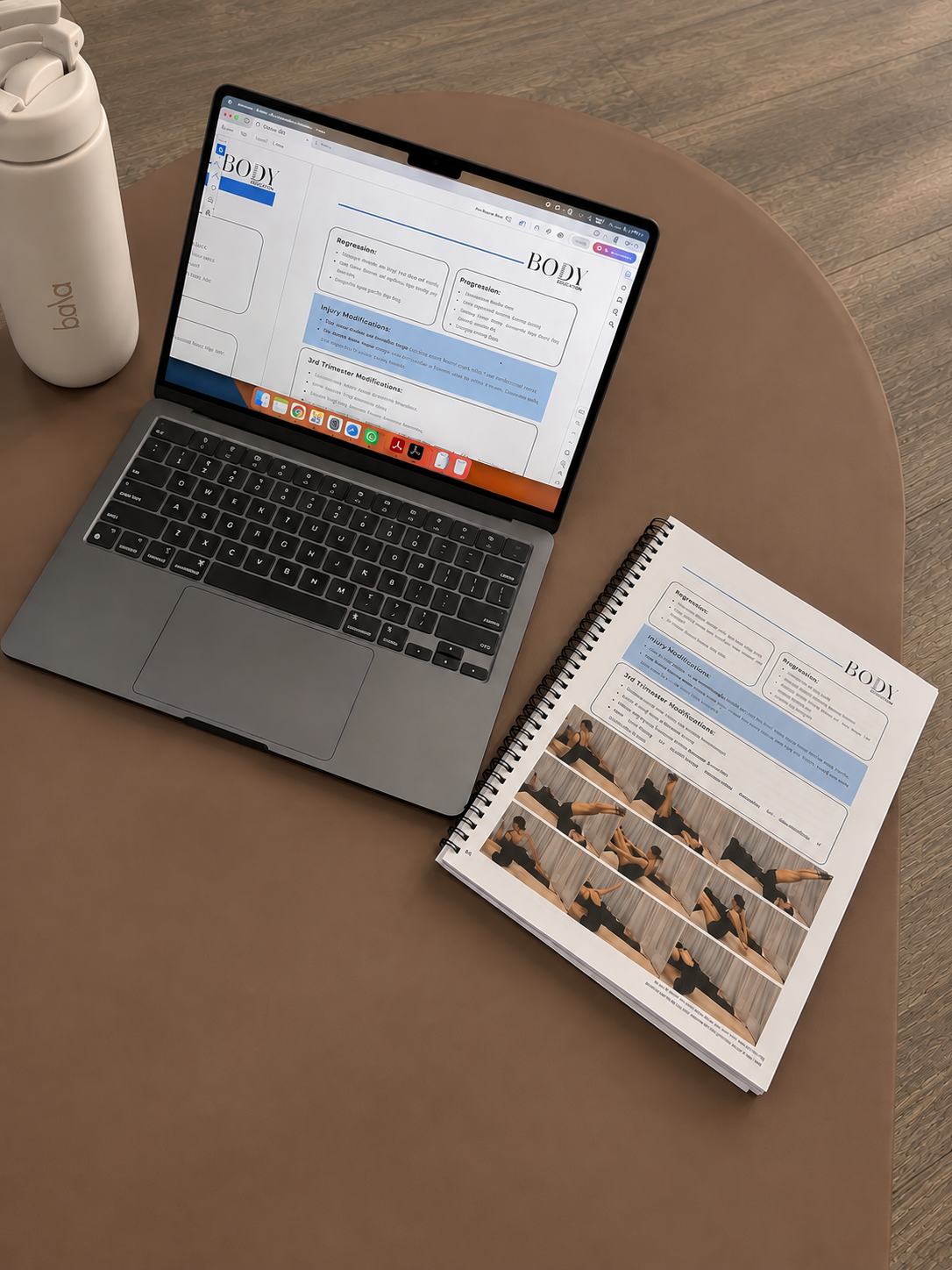
The Programming & Cueing Mastery Certification through Body Form Education is designed for Pilates instructors who want to understand how to build classes with more purpose rather than relying on exercise lists and choreography.
Inside the certification, we go deeper into:
class structure
exercise sequencing
programming logic
regressions and progressions
unilateral and bilateral flow
cueing
transitions
motor learning
mixed-level programming
building intentional class plans
The goal is not to give you another set of class plans to copy.
It is to give you the reasoning to build your own.
Because once you understand why an exercise belongs where it does, programming becomes much easier.
If you want to move beyond simply making your classes flow and start understanding how sequence affects the actual training stimulus, explore the Programming & Cueing Mastery Certification through Body Form Education.